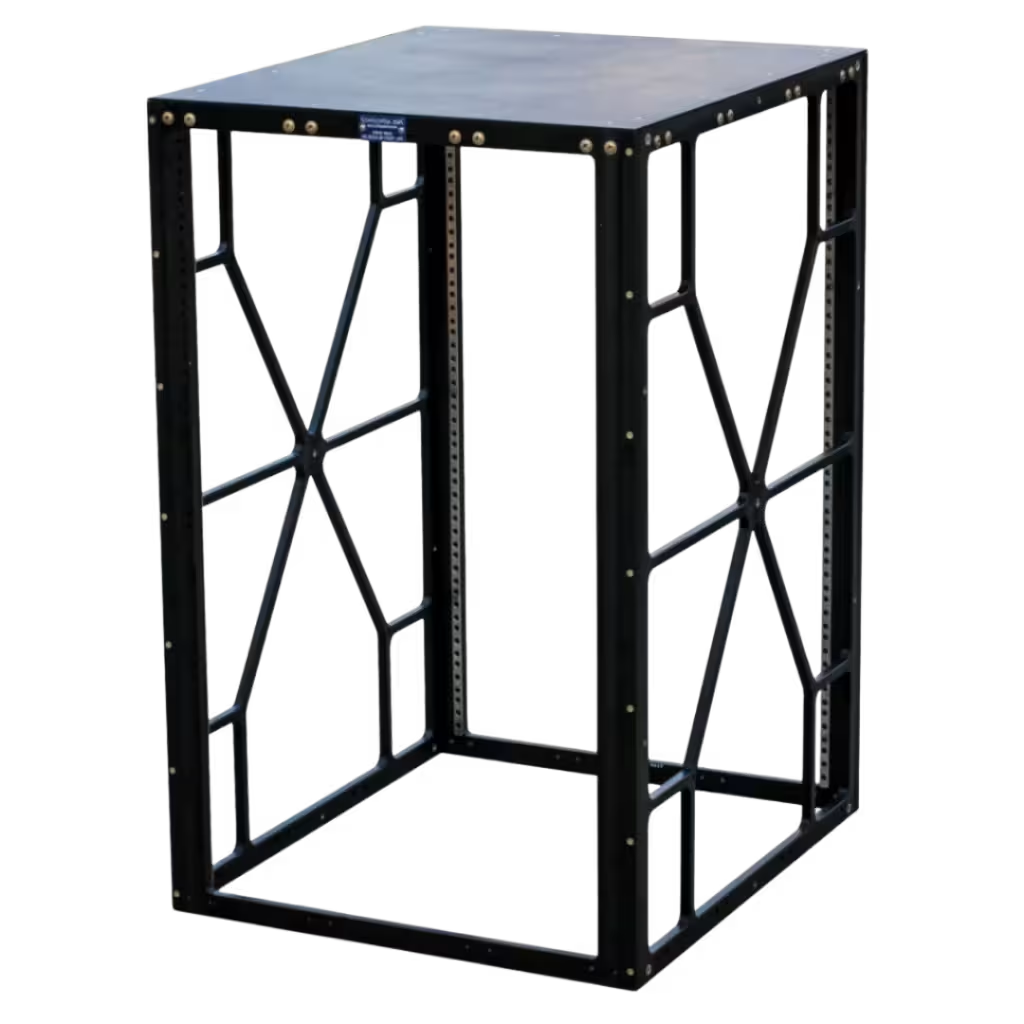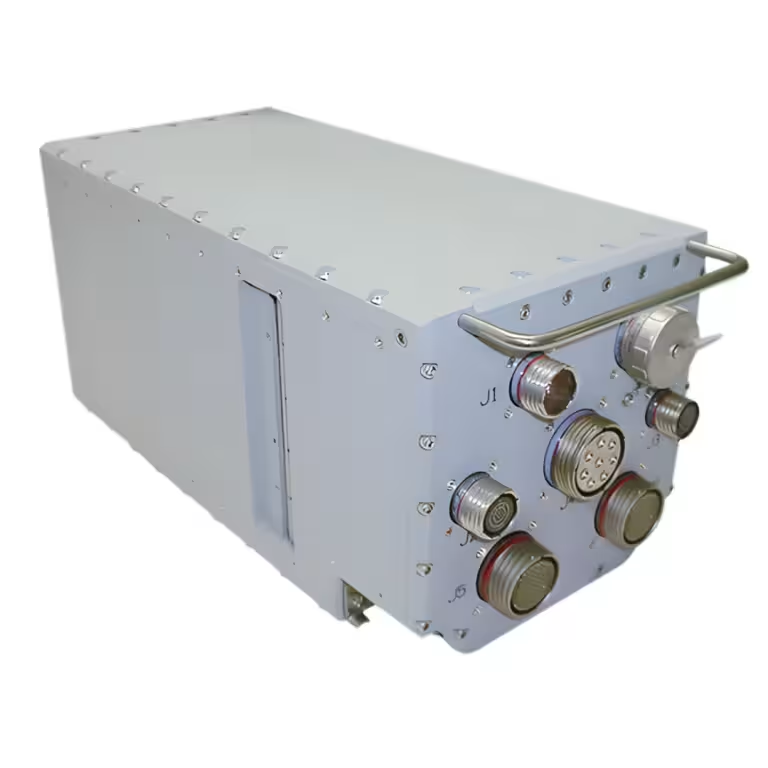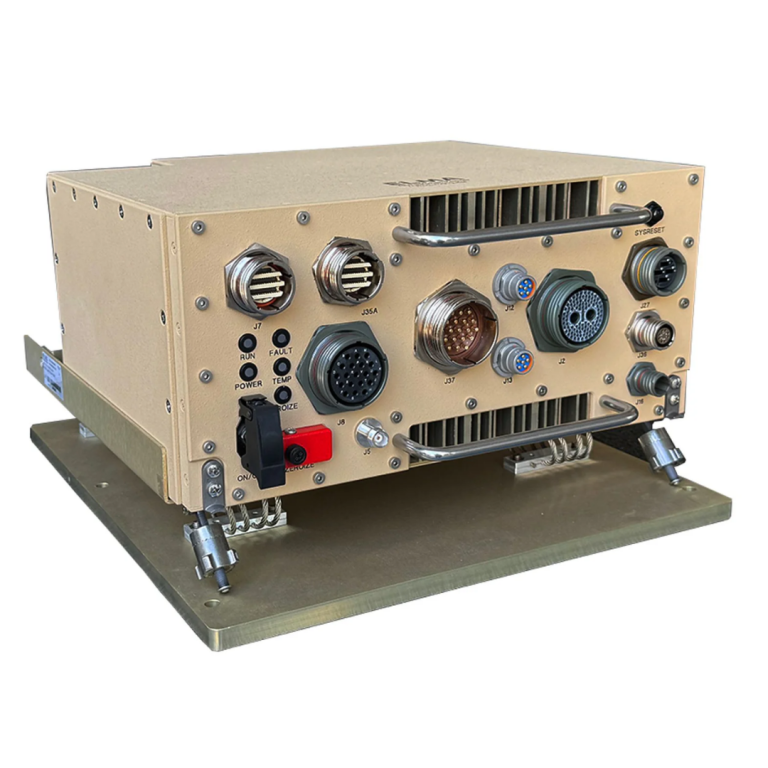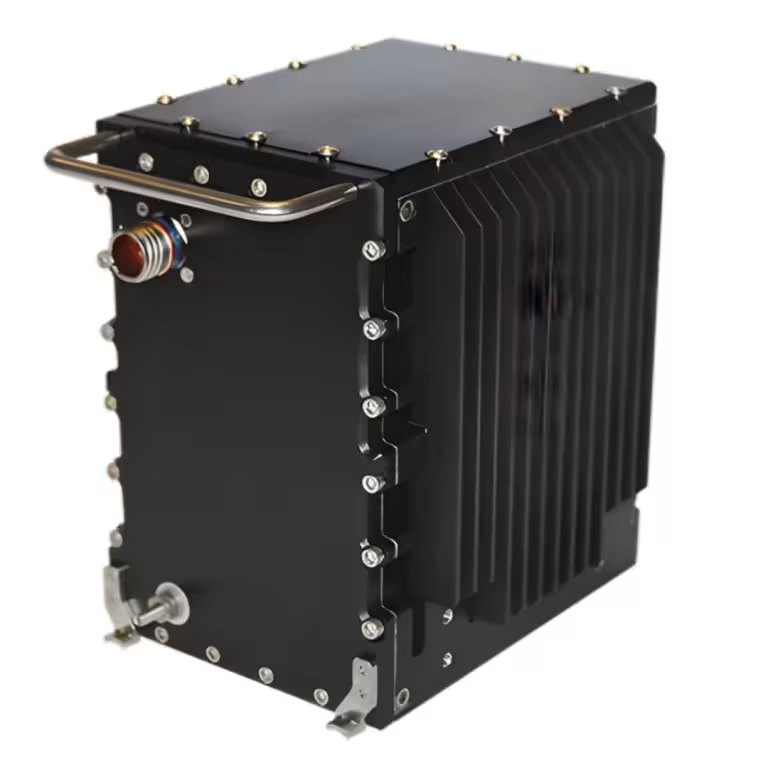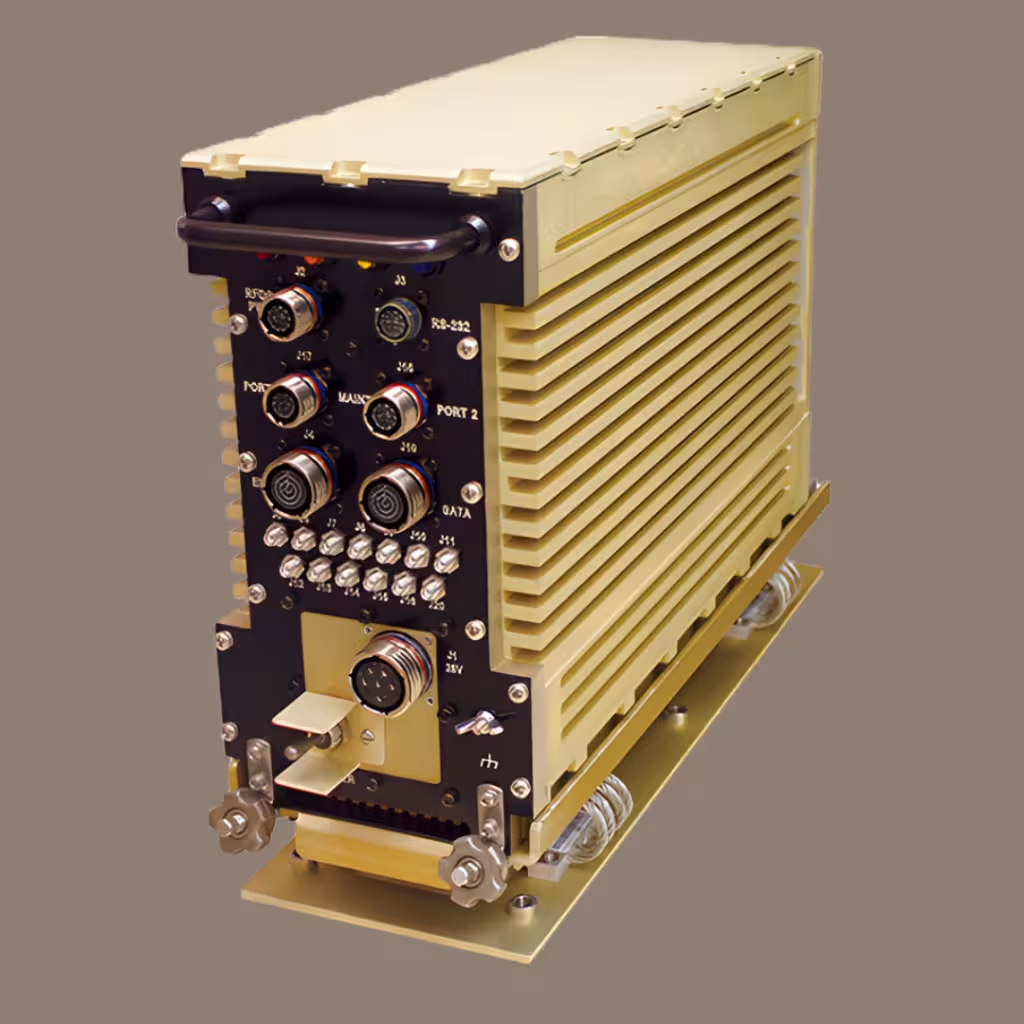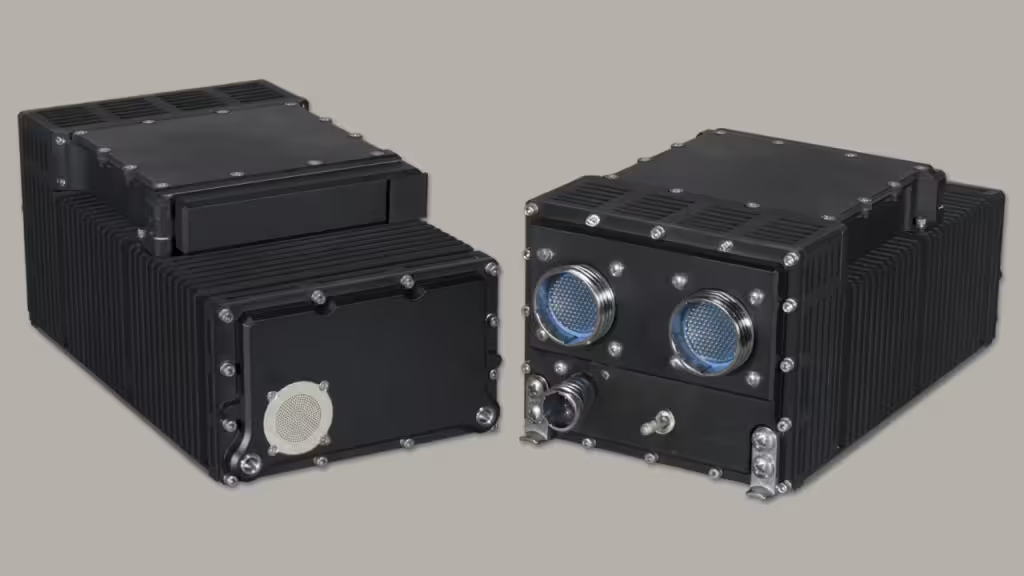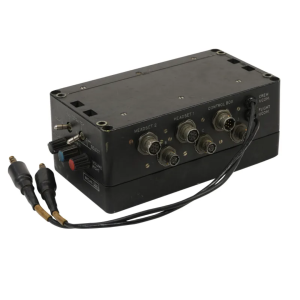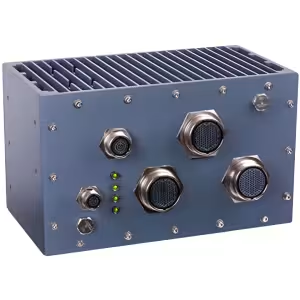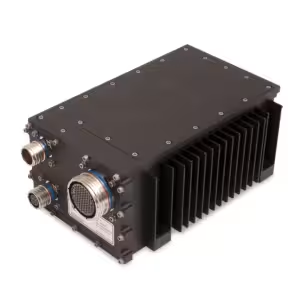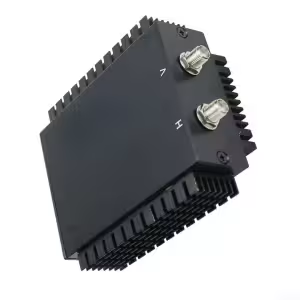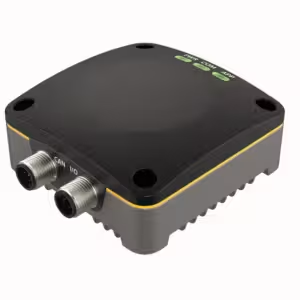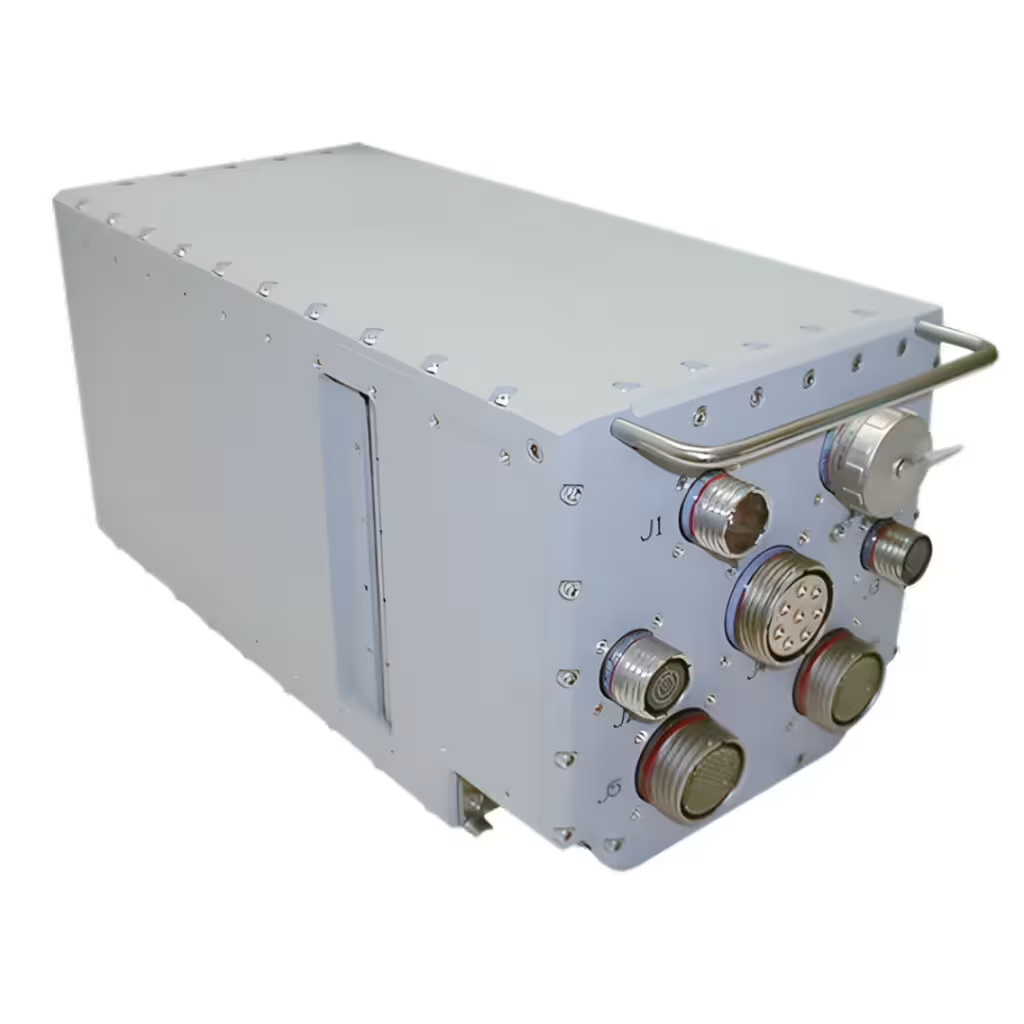
Defense/Aerospace ATR Enclosure

If avionics systems require standardized packaging enabling interchangeable modules across multiple aircraft platforms, Air Transport Rack configurations provide dimensionally-controlled housings. Defense/Aerospace ATR Enclosures deliver precision-machined chassis for mission computers, radar processors, and communication systems meeting ARINC 404A specifications. 
HY D R O L Y SIS RESIS T ANCE
Material & Grade
  • Aluminum Alloy – 6061-T6, 5052
  • Stainless Steel – SS304, SS316
  • Titanium Alloy – Ti-6Al-4V (weight-critical)
  • Cold Rolled Steel – SPCC
  • Sheet thickness – Up to 3.0mm capable
  • Maximum capable – ATR Standard chassis sizes
  • 3/4 ATR Short – 133mm (H) x 149mm (W) x 241mm (D)
  • 3/4 ATR Long – 133mm (H) x 149mm (W) x 368mm (D)
  • 1 ATR Short – 177mm (H) x 198mm (W) x 241mm (D)
  • Customizable based on avionics requirements
  • Hard Anodizing (MIL-A-8625 Type II/III)
  • Chromate Conversion Coating (MIL-DTL-5541) 
  • Alodine coating
  • Electroless Nickel Plating
  • Conductive coating (EMI/RFI)
  • CNC Precision Machining (±0.025mm)
  • TIG Welding (aerospace-grade)
  • Precision Forming
  • EMI gasket groove machining 
  • Wedgelock rail integration
  • Hermetic sealing provisions
  • Stainless Steel 316/A286 Hardware
  • Captive screws (MS/NAS standard)  
  • Wedgelock mechanisms
  • EMI/RFI gasket hardware
  • Grounding provisions  
  • Anti-vibration fasteners

Product Description

Rack-mounted configurations accommodate electronic modules with standardized footprints from 3/4 ATR through full ATR dimensions while maintaining electromagnetic shielding. Aluminum construction provides thermal conductivity essential for conduction-cooled installations where forced airflow becomes unavailable in sealed avionics bays. Through wedgelock retention and hermetic sealing, these enclosures enable reliable avionics operation across commercial aviation and military aircraft applications. 

Mounting Type
  • ARINC 404A Standard Rack Mount 
  • Wedgelock rail mounting
  • Conduction-cooled interface
  • Air-cooled configurations
  • Shock-isolated mounting provisions 
  • Avionics bay integration
  • Static Load – 20-50 kg per chassis
  • Dynamic Load – Flight-rated per RTCA DO-160
  • Card slot capacity – 4-20 slots
  • PCB retention systems  
  • Weight distribution provisions
  • Front/Rear connector panels
  • MIL-DTL-38999 connector provisions
  • EMI backshell integration
  • Cable routing channels
  • Strain relief provisions
  • Fiber optic compatibility
  • Conduction-cooled (cold plate interface)
  • Forced air cooling (front-to-rear)  
  • Natural convection provisions
  • Heat sink integration
  • Operating Altitude – Up to 15,000 meters
  • Thermal interface specifications
  • Removable front/rear panels
  • EMI-shielded access doors
  • Quick-release mechanisms 
  • Wedgelock card retention
  • Tool-required or tool-less access
  • Transparent windows
  1. ARINC 404A (Avionics Rack Mount)
  2. RTCA DO-160 (Airborne Equipment Environmental)
  3. MIL-STD-810 (Environmental Engineering)
  4. MIL-STD-461 (EMI/EMC Requirements)
  5. MIL-STD-704 (Aircraft Electric Power)
  6. AS9100D Manufacturing
  7. ITAR/EAR Controlled

Technical Advantages

Conduction-cooled avionics installations transfer component heat through chassis walls to aircraft cold plates rather than relying on airflow cooling. Addressing this requirement, precision-machined thermal interfaces maintain flatness tolerances within 0.05mm ensuring continuous thermal contact across mounting surfaces. Wedgelock rail systems compress modules against cold plates applying uniform pressure distributing heat loads evenly preventing localized hot spots. 

Electromagnetic compatibility demands comprehensive shielding preventing avionics systems from interfering with aircraft navigation and communication equipment. Frigate engineers continuous RF gasket compression around removable panels maintaining shielding effectiveness exceeding 60dB across frequency ranges from 10kHz to 40GHz. Multi-pin connector backshells with 360-degree shield termination prevent high-frequency energy from coupling between interconnected avionics modules through cable interfaces. 

Let's Get Started

Need reliable Enclosures for your next project? Get in touch with us today, and we’ll help you find exactly what you need!

Industry Applications

Fighter Aircraft Avionics

Houses radar processors, mission computers, and electronic warfare systems in high-performance platforms experiencing extreme flight envelopes.

Transport Aircraft Systems

Contains flight management computers, navigation systems, and communication processors in cargo and passenger aircraft. 

Helicopter Mission Equipment

Protects sensor fusion systems, targeting processors, and tactical communication equipment in rotary-wing combat platforms.

Unmanned Aerial Vehicles

Secures autopilot systems, payload controllers, and datalink processors in autonomous aircraft operating beyond visual range. 

Maritime Patrol Aircraft

Manages radar signal processors, sonobuoy receivers, and multi-sensor correlation systems during anti-submarine warfare missions. 

Airborne Early Warning Platforms

Consolidates surveillance radar processors, identification friend-or-foe systems, and data fusion computers in command aircraft. 

Defense/Aerospace ATR Enclosure

Engineered for Flight Dynamics

Avionics architectures vary from simple line-replaceable units to complex federated systems with multiple interconnected chassis. Defense/Aerospace ATR Enclosures arrive in standard 3/4 ATR, 1 ATR, and larger configurations with internal card slot arrangements matched to specific processing requirements. 

Hermetic sealing provisions enable altitude operation exceeding 15,000 meters preventing moisture condensation during rapid pressure changes. We manufacture chassis meeting RTCA DO-160 environmental testing requirements including temperature extremes, vibration spectra, and explosive decompression scenarios ensuring airworthiness certification compliance. 

Defense/Aerospace ATR Enclosure

Having Doubts? Our FAQ

Check all our Frequently Asked Questions

What precision-machined thermal interface tolerances does Frigate maintain in Defense ATR Enclosures ensuring continuous cold plate contact?

Frigate machines thermal interface surfaces to tight flatness and parallelism tolerances so conduction-cooled modules maintain uniform contact with cold plates. Interface tolerances are aligned to card size, clamp force, and heat flux defined in the thermal design data. 

How does Frigate achieve continuous RF gasket compression in Aerospace ATR Enclosures maintaining shielding effectiveness exceeding 60 dB?

Frigate maintains continuous RF gasket compression through – 

  • Precision-controlled flange geometry 
  • Uniform fastener spacing and torque strategy 
  • Conductive elastomer gasket selection 

Compression targets and gasket profiles are set to the shielding requirement and access-cycle expectations in your spec. 

Are wedgelock rail systems compatible with both conduction-cooled and air-cooled module configurations in these enclosures?

Yes. Rail layouts can support conduction-cooled cards with wedgelocks or air-cooled modules using card guides and airflow spacing. Frigate adapts slot geometry and retention hardware to the cooling method defined in the module specification. 

What multi-pin connector backshell specifications does Frigate integrate in Defense/Aerospace ATR Enclosures achieving 360-degree shield termination?

Frigate supports 360-degree shield termination using – 

  • EMI backshells with circumferential clamp rings 
  • Conductive adapter plates bonded to the chassis 
  • Short ground paths between connector and enclosure 

Backshell type and termination method are selected to match the connector family and EMC requirements.

How does Frigate validate hermetic sealing in Aerospace ATR Enclosures enabling altitude operation exceeding 15,000 meters?

Hermetic interfaces are validated through leak testing and pressure differential analysis to confirm seal integrity under low-pressure conditions. Frigate aligns leak-rate acceptance criteria to altitude profile, dwell time, and thermal cycling defined for the mission. 

Do these enclosures meet RTCA DO-160 explosive decompression requirements for pressurized aircraft cabin installations?

Compliance can be supported by designing controlled venting paths and structural margins that withstand rapid pressure changes. Frigate incorporates decompression considerations early when DO-160 test categories and installation location are specified. 

What card slot retention mechanisms does Frigate engineer in Defense ATR Enclosures preventing module dislodgement during flight vibration?

Frigate prevents module dislodgement using – 

  • Wedgelock systems with defined preload 
  • End retainers or card latches 

Retention force is matched to vibration spectra and card mass defined in your requirement set. 

How does Frigate address thermal interface flatness in Defense ATR Enclosures preventing localized hot spots in conduction-cooled applications?

Hot spot risk is reduced through – 

  • Controlled machining of cold plate surfaces 
  • Verification of interface flatness across slots 
  • Consistent clamp force distribution 

Flatness targets are tied to allowable temperature gradients in the thermal model you specify. 

Are MIL-DTL-38999 connector provisions integrated in these enclosures supporting standard avionics interconnection protocols?

Frigate enables 38999 integration through – 

  • Panel cutouts sized for shell variants 
  • Grounded mounting interfaces for EMI control 
  • Clearance for backshells and strain relief 

Connector placement can be adapted to harness drawings, pin density, and service access requirements.

What aluminum alloy specifications does Frigate employ in Aerospace ATR Enclosures balancing weight reduction against structural rigidity?

Frigate typically selects alloys by balancing – 

  • Strength and stiffness for vibration loads 
  • Machinability for tight tolerance features 
  • Thermal conductivity for heat spreading 

Alloy choice and wall thickness are set against mass limits and structural requirements defined for the program. 

Get Clarity with Our Manufacturing Insights

We'd love to Manufacture for you!

Submit the form below and our representative will be in touch shortly.

LOCATIONS

Registered Office

10-A, First Floor, V.V Complex, Prakash Nagar, Thiruverumbur, Trichy-620013, Tamil Nadu, India.

Operations Office

9/1, Poonthottam Nagar, Ramanandha Nagar, Saravanampatti, Coimbatore-641035, Tamil Nadu, India. ㅤ

Other Locations

GENERAL ENQUIRIES

Get Quote
Support All File Formats Including - STEP | STP | SLDPRT | STL | DXF | IPT | X_T | X_B | 3DXML | CATPART | PRT | SAT | 3MF | JT files

LOCATIONS

Registered Office

10-A, First Floor, V.V Complex, Prakash Nagar, Thiruverumbur, Trichy-620013, Tamil Nadu, India.

Other Locations

GENERAL ENQUIRIES

Get Your Quote Now

New Get Quote form

Defense/Aerospace ATR Enclosure

Need reliable wires and cables for your next project? Get in touch with us today, and we’ll help you find exactly what you need!

Get Latest Price

Get Price Form

Defense/Aerospace ATR Enclosure

Need reliable Machining for your next project? Get in touch with us today, and we’ll help you find exactly what you need!

Get Latest Price

Get Price Form