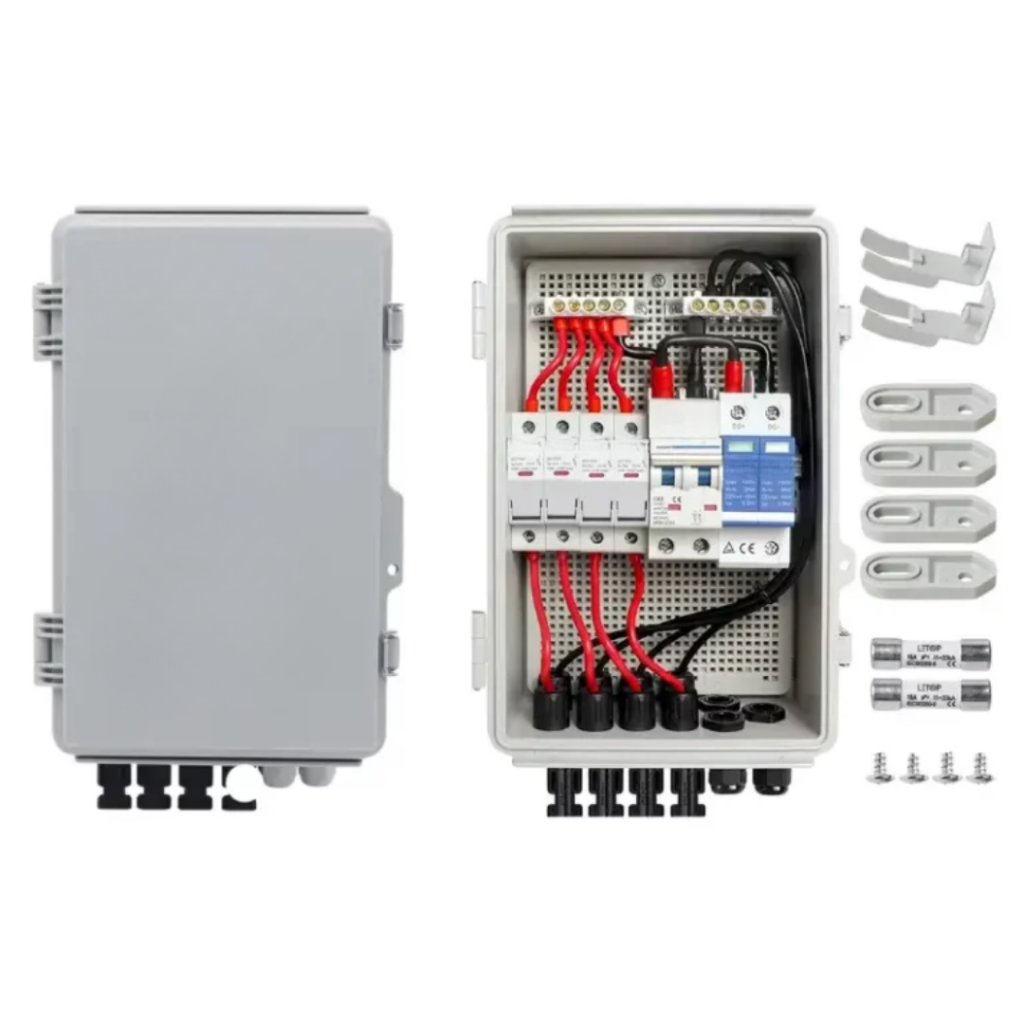
Solar Combiner Boxes

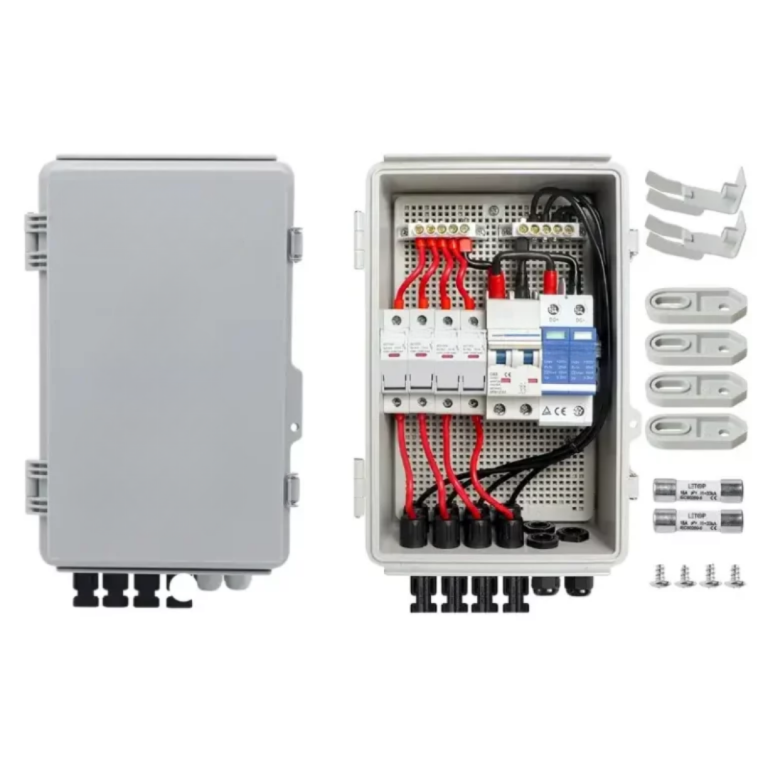
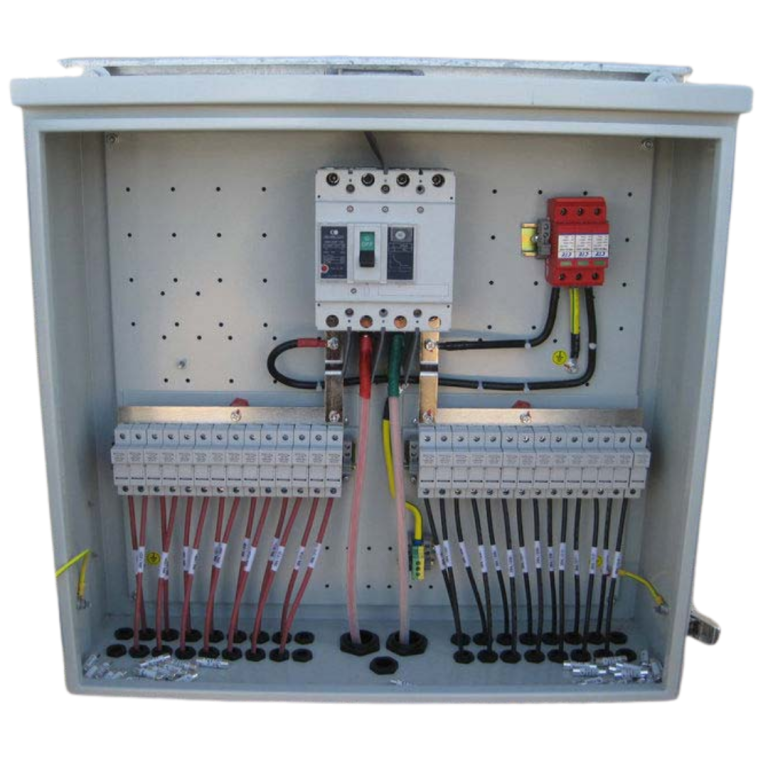
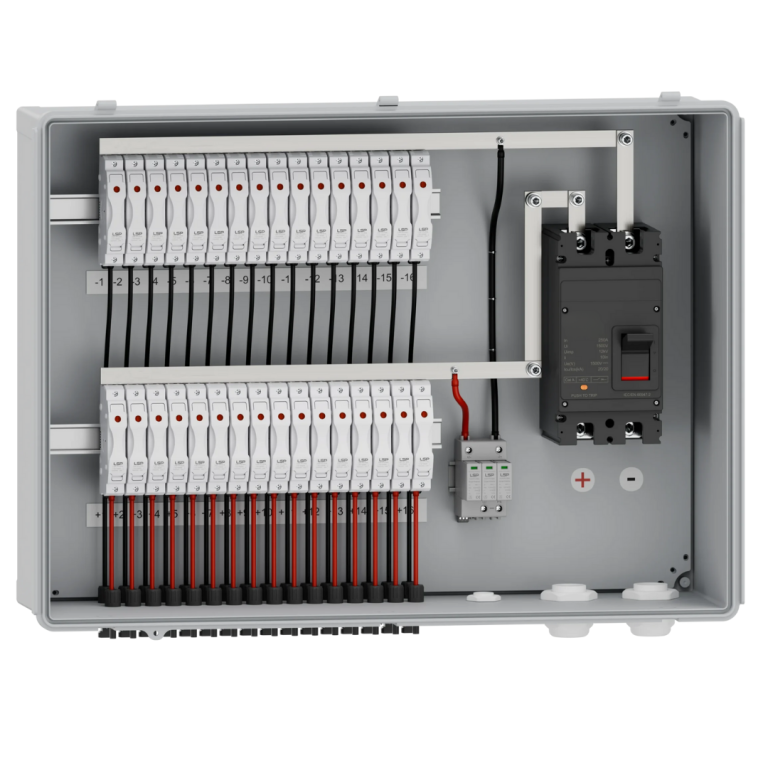
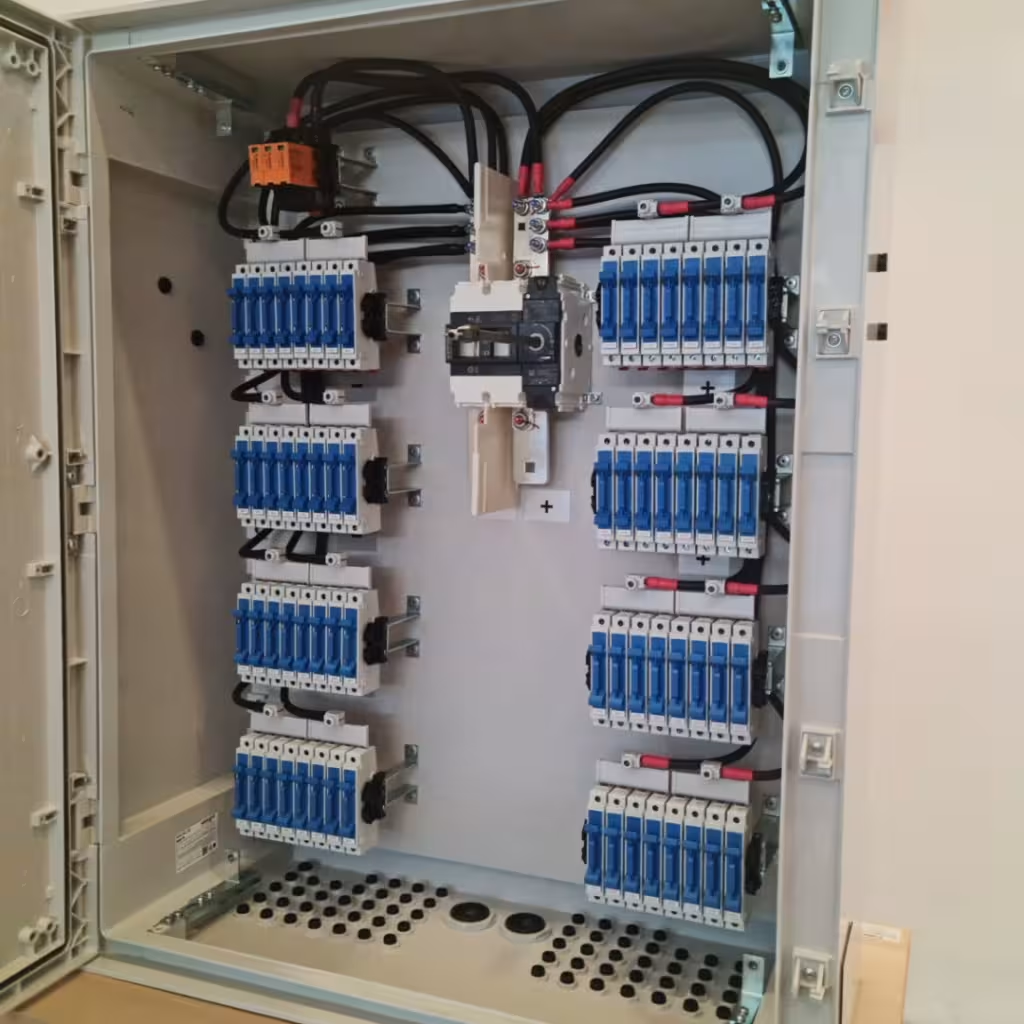
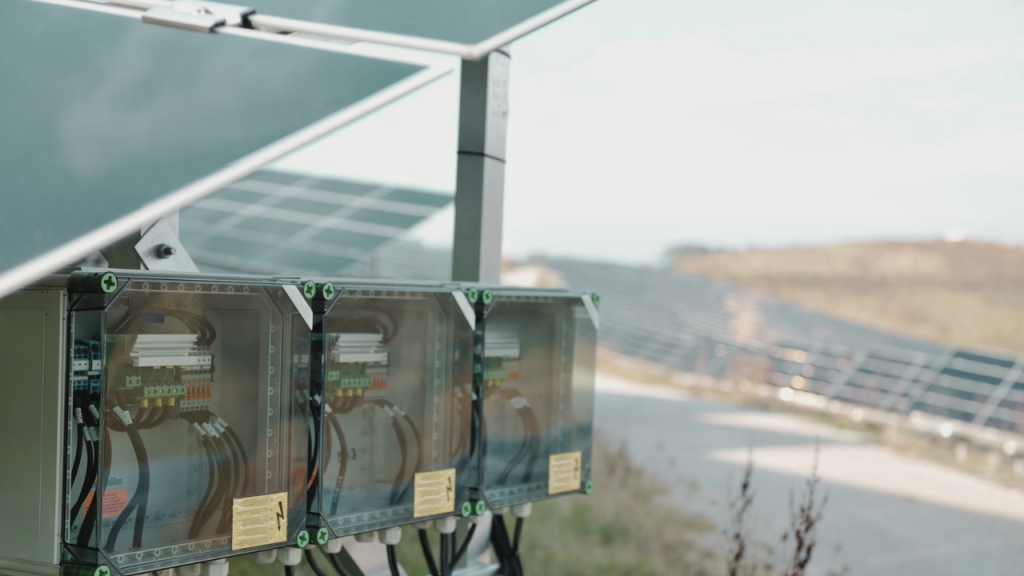
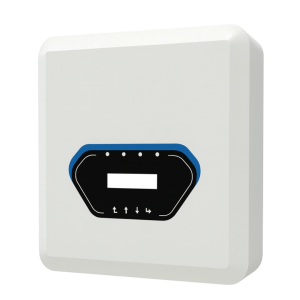
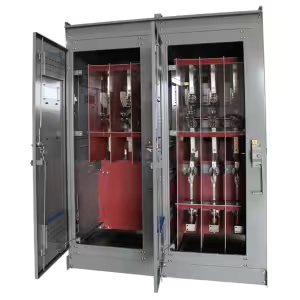
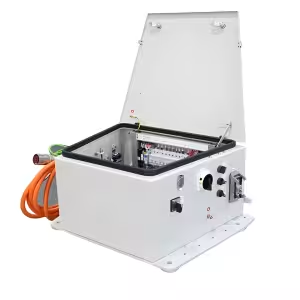
Aggregating DC power from multiple photovoltaic strings into centralized junction points reduces wiring complexity across utility-scale solar farms. Solar Combiner Boxes consolidate 6 to 24 string inputs within weatherproof enclosures housing fused protection and monitoring circuits. 
HY D R O L Y SIS RESIS T ANCE
Material & Grade
  • Cold Rolled Steel (CRS) – SPCC
  • Galvanized Steel – SGCC
  • Stainless Steel – SS304, SS316
  • Aluminum Sheet – 5052, 6061
  • Sheet thickness: Up to 3.0mm capable
  • Maximum capable: 1200mm (H) x 1000mm (W) x 400mm (D)
  • Custom sizes per string configuration 
  • Powder Coating – RAL 9005, RAL 7035, Custom RAL colors
  • Thickness: 80-120 microns (outdoor grade)
  • Hot-Dip Galvanizing + Powder Coating
  • Marine-grade coating for coastal areas
  • UV-resistant finish
  • CNC Laser Cutting
  • CNC Punching & Bending
  • TIG/MIG Welding
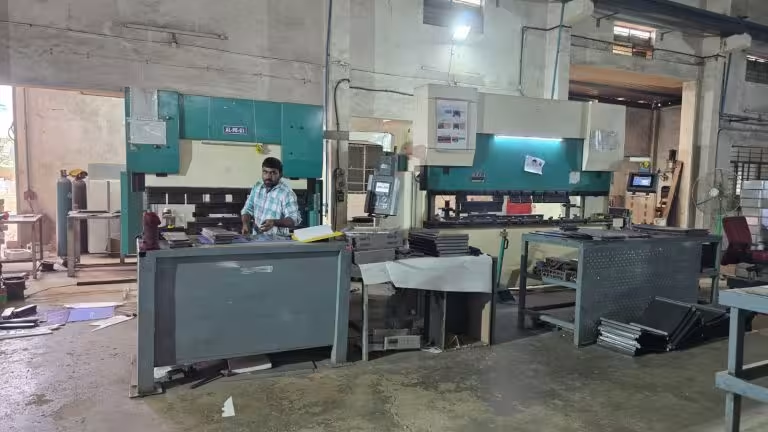
  • CNC Press Brake Forming
  • Seam welding for weatherproofing 
  • Gasket groove forming
  • Stainless Steel 304/316 Hardware
  • Anti-corrosion fasteners
  • Weather-sealed hinges 
  • Padlockable latches
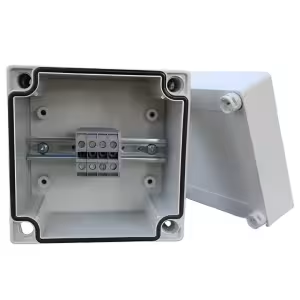
  • DIN rail mounting hardware
  • Grounding lugs & busbars 

Product Description

Our enclosures accommodate combiner capacities from 200A to 1000A DC with voltage ratings reaching 1500V systems. Frigate builds IP65-rated housings using galvanized steel or marine-grade stainless steel that withstand desert heat, coastal corrosion, and hail strikes throughout 25-year array lifespans. 

Mounting Type
  • Wall Mount (standard)
  • Pole Mount with U-bolts
  • Ground/Pad Mount with base plate
  • Rooftop mounting brackets  
  • Adjustable tilt mounting
  • Array structure integration
  • Standard: IP54 (dust/splash protected)
  • Enhanced: IP55 (dust/water jet protected)
  • Premium: IP65 (dust-tight/water jet protected)
  • IP66 available for harsh environments
  • Operating Temperature: -40°C to +80°C capable
  • UV Resistance: 3000+ hours
  • Salt Spray: 1500+ hours resistance
  • Rain/Snow/Hail protection 
  • Humidity: Up to 95% non-condensing
  •  IK08 (5 Joules impact energy)
  • IK09 (10 Joules impact energy)
  • IK10 (20 Joules – enhanced protection)
  • Reinforced construction for hail resistance
  • Cable glands: M16, M20, M25, M32, M40
  • Bottom/Top/Side entry configurations
  • Strain relief systems
  • MC4 connector feed-through provisions
  • Internal cable management brackets
  • Conduit knockout sizes: 20mm to 63mm
  • IEC 61439 (Low-voltage Switchgear)
  • UL 1741 (Inverters & Converters)
  • IEC 60529 (IP Rating)
  • NEC 690 Compliant (PV Systems)
  • CE Marked
  • RoHS Compliant
  • ISO 9001:2015 Manufacturing

Technical Advantages

Hot-dip galvanizing creates zinc barrier coatings exceeding 85 microns before powder coat application. Outdoor-grade finishes withstand UV exposure beyond 3000 hours without chalking or color shift. Seam-welded construction with continuous gaskets maintains IP65 protection against dust infiltration and pressurized water jets. 

Operating temperatures from -40°C to +80°C address installations from Arctic research stations to Middle Eastern desert deployments. Frigate machines DIN rail mounting channels and busbar provisions to UL and IEC spacing standards for global component compatibility. 

Let's Get Started

Need reliable Enclosures for your next project? Get in touch with us today, and we’ll help you find exactly what you need!

Industry Applications

Utility-Scale Solar Farms

Combines power from ground-mounted array blocks before routing to central inverters in multi-megawatt installations spanning hundreds of acres. 

Commercial Rooftop Arrays

Consolidates string outputs from warehouse and distribution center rooftop systems where scattered panel locations require strategic junction points. 

Floating Solar Installations

Protects combiner electronics on pontoon-mounted arrays where constant water exposure and humidity demand superior ingress protection ratings. 

Agricultural Agrivoltaic Systems

Houses string combiners between crop rows in dual-use farmland where equipment must resist dust, irrigation spray, and fertilizer chemicals.

Off-Grid Industrial Sites

Manages power collection from remote mining or telecommunications solar arrays operating without utility grid backup infrastructure. 

Community Solar Gardens

Segregates subscriber allocations through metered combiner sections in shared solar facilities serving multiple offtake customers.

Customized Solutions for Array Configurations

String counts, fuse ratings, and monitoring requirements vary significantly between residential retrofits and utility-scale greenfield projects. Our Solar Combiner Boxes ship in wall-mount or ground-mount formats with internal layouts accommodating 6 to 24 string positions. 

Frigate provides mounting hardware including pole clamps, grounding lugs, and cable gland assortments sized for MC4 feedthroughs and conduit entries. Marine-grade stainless steel construction suits coastal wind-solar hybrid sites, ensuring combiner integrity matches the installed array’s operational timeline. 

Having Doubts? Our FAQ

Check all our Frequently Asked Questions

How does string fusing configuration affect Solar Combiner Boxes internal layout design?

String protection requires individual fuse holders positioned on DIN rails with adequate spacing for heat dissipation. Frigate calculates internal volume based on fuse amperage ratings and NEC clearance requirements. Typically, 15A string fuses need 25mm spacing while 20A fuses require 30mm intervals. Consequently, a 12-string combiner demands minimum 400mm internal width to accommodate components and maintenance access. 

What grounding provisions does Frigate integrate within Solar Combiner Boxes enclosures?

Proper grounding prevents lightning-induced surges from damaging array electronics and ensures personnel safety during maintenance. Frigate installs copper grounding busbars rated for 200A fault current capacity with multiple connection points. Equipment grounding conductors, array frames, and enclosure bodies all terminate to this central busbar. Additionally, external grounding lugs accept #6 AWG to 4/0 AWG conductors for earth electrode connections. 

Can Solar Combiner Boxes accommodate both fused and non-fused string monitoring configurations?

Modern arrays increasingly deploy electronic monitoring without traditional fuse protection in certain architectures. Frigate manufactures combiner boxes with modular internal panels supporting either fused disconnect switches or direct busbar connections. String-level current sensors mount on DIN rails regardless of fusing strategy. Therefore, the same enclosure platform adapts to evolving array protection philosophies without redesign. 

How does Frigate address thermal management in Solar Combiner Boxes under peak solar irradiance?

Internal temperatures can reach 70-80°C in sealed enclosures exposed to desert sun and ambient heat. Frigate incorporates ventilation baffles that permit airflow while maintaining IP65 ingress protection. Heat dissipation calculations account for I²R losses from busbars and fuse holders at maximum rated current. Moreover, aluminum construction provides superior thermal conductivity compared to steel equivalents. 

What cable entry methods does Frigate provide for different conduit and cable types?

Multiple entry configurations address varying installation preferences and local electrical codes: 

  • MC4 pass-through glands: Direct PV cable entry without conduit for rooftop installations 
  • Threaded conduit hubs: EMT or rigid metal conduit connections meeting NEC requirements 
  • Cable gland compression fittings: Flexible cable entry with strain relief and IP sealing 
  • Knockout provisions: Field-customizable openings from 20mm to 63mm diameter 

Each method maintains the enclosure’s ingress protection rating when properly installed. 

How does material selection impact Solar Combiner Box longevity in coastal environments?

Coastal installations face accelerated corrosion from salt-laden air and fog exposure. Stainless steel grade SS316 with molybdenum content resists chloride-induced pitting far better than SS304. Frigate specifies marine-grade powder coating with 120-micron thickness for enhanced barrier protection. Consequently, SS316 combiners achieve 25-year service life in beachfront solar farms. 

Can Frigate manufacture combiner boxes compatible with bifacial solar panel configurations?

Bifacial panels generate additional current from rear-side irradiance, requiring uprated combiner components to handle increased power. Frigate sizes busbars and fuses based on bifacial gain factors typically ranging from 10-30% above nameplate ratings. Internal thermal management also accounts for elevated heat generation from higher current flows. Thus, bifacial-optimized combiners prevent premature component failures from unexpected overloading. 

What monitoring integration capabilities does Frigate incorporate into Solar Combiner Boxes designs?

Modern solar assets require granular performance data for operations and maintenance optimization. Frigate provisions DIN rail space for string-level monitoring hardware including current sensors and voltage measurement modules. Communication gateways using Modbus, Ethernet, or cellular protocols mount internally with weatherproof antenna feedthroughs. Furthermore, integrated monitoring eliminates separate monitoring enclosures, reducing overall balance-of-system costs significantly. 

How does Frigate ensure Solar Combiner Boxes accessibility during emergency disconnection procedures?

Emergency response personnel need rapid access to DC isolation points without specialized tools or training. Frigate positions main disconnect switches behind quarter-turn latches requiring no keys during urgent situations. External labeling clearly identifies combiner function and voltage warnings in multiple languages per jurisdiction requirements. Meanwhile, padlockable secondary latches prevent unauthorized access during normal operations. 

What testing protocols does Frigate employ to validate Solar Combiner Boxes weather resistance claims?

Accelerated aging tests simulate 25-year outdoor exposure in compressed timeframes to verify durability. Frigate subjects enclosures to 3000-hour UV exposure per ASTM G154 followed by salt spray testing per ASTM B117. Thermal cycling between -40°C and +80°C occurs over 500 cycles to detect coating delamination or gasket failures. Finally, IP rating validation involves water jet testing at 100 liters per minute from all angles. 

Get Clarity with Our Manufacturing Insights

We'd love to Manufacture for you!

Submit the form below and our representative will be in touch shortly.

LOCATIONS

Registered Office

10-A, First Floor, V.V Complex, Prakash Nagar, Thiruverumbur, Trichy-620013, Tamil Nadu, India.

Operations Office

9/1, Poonthottam Nagar, Ramanandha Nagar, Saravanampatti, Coimbatore-641035, Tamil Nadu, India. ㅤ

Other Locations

GENERAL ENQUIRIES

Get Quote
Support All File Formats Including - STEP | STP | SLDPRT | STL | DXF | IPT | X_T | X_B | 3DXML | CATPART | PRT | SAT | 3MF | JT files

LOCATIONS

Registered Office

10-A, First Floor, V.V Complex, Prakash Nagar, Thiruverumbur, Trichy-620013, Tamil Nadu, India.

Other Locations

GENERAL ENQUIRIES

Get Your Quote Now

New Get Quote form

Solar Combiner Boxes

Need reliable wires and cables for your next project? Get in touch with us today, and we’ll help you find exactly what you need!

Get Latest Price

Get Price Form

Solar Combiner Boxes

Need reliable Machining for your next project? Get in touch with us today, and we’ll help you find exactly what you need!

Get Latest Price

Get Price Form