


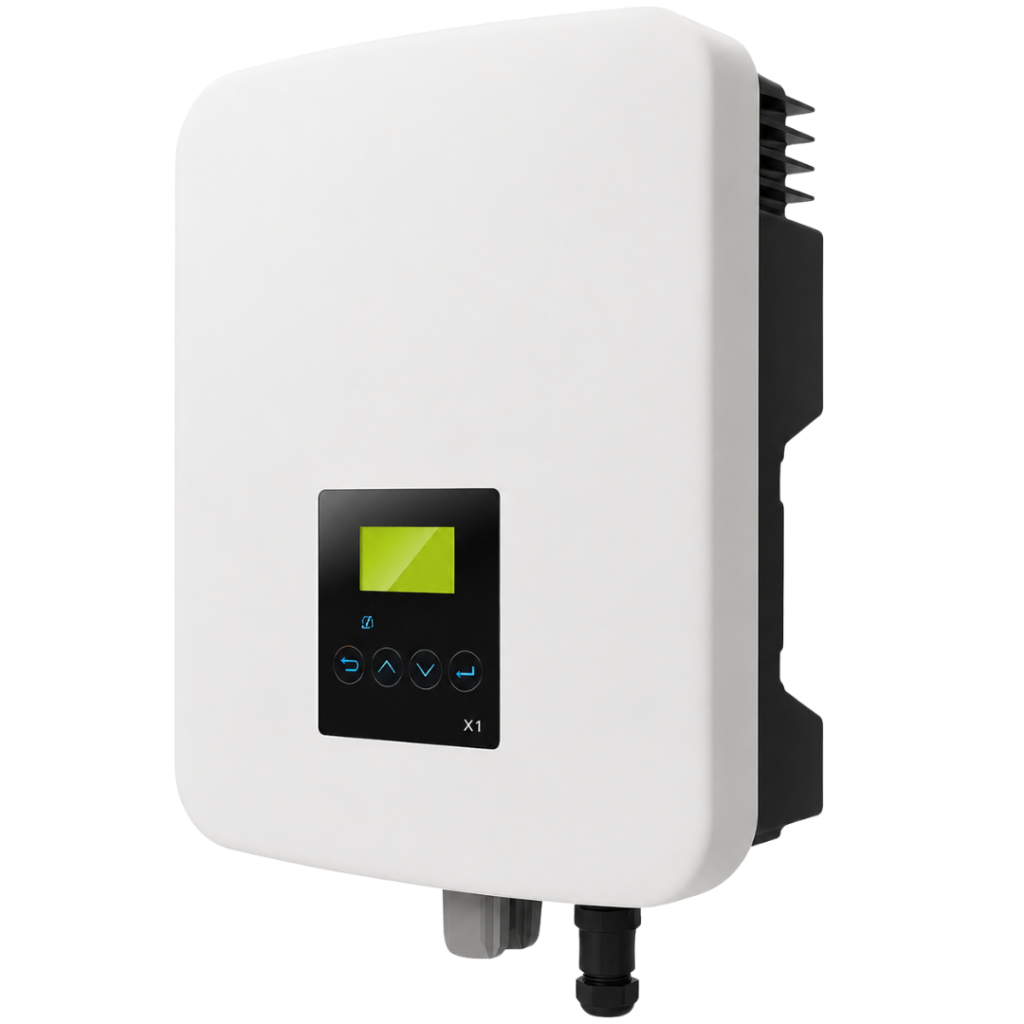
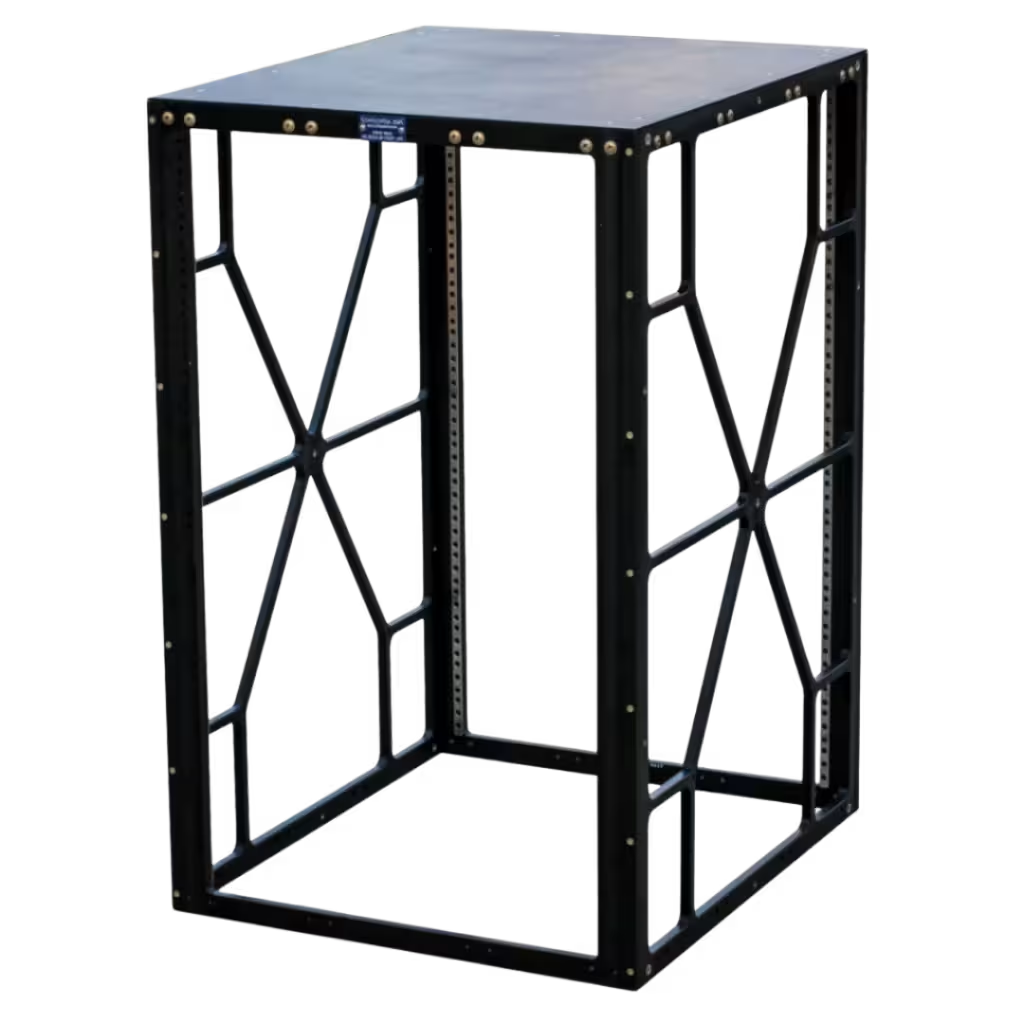



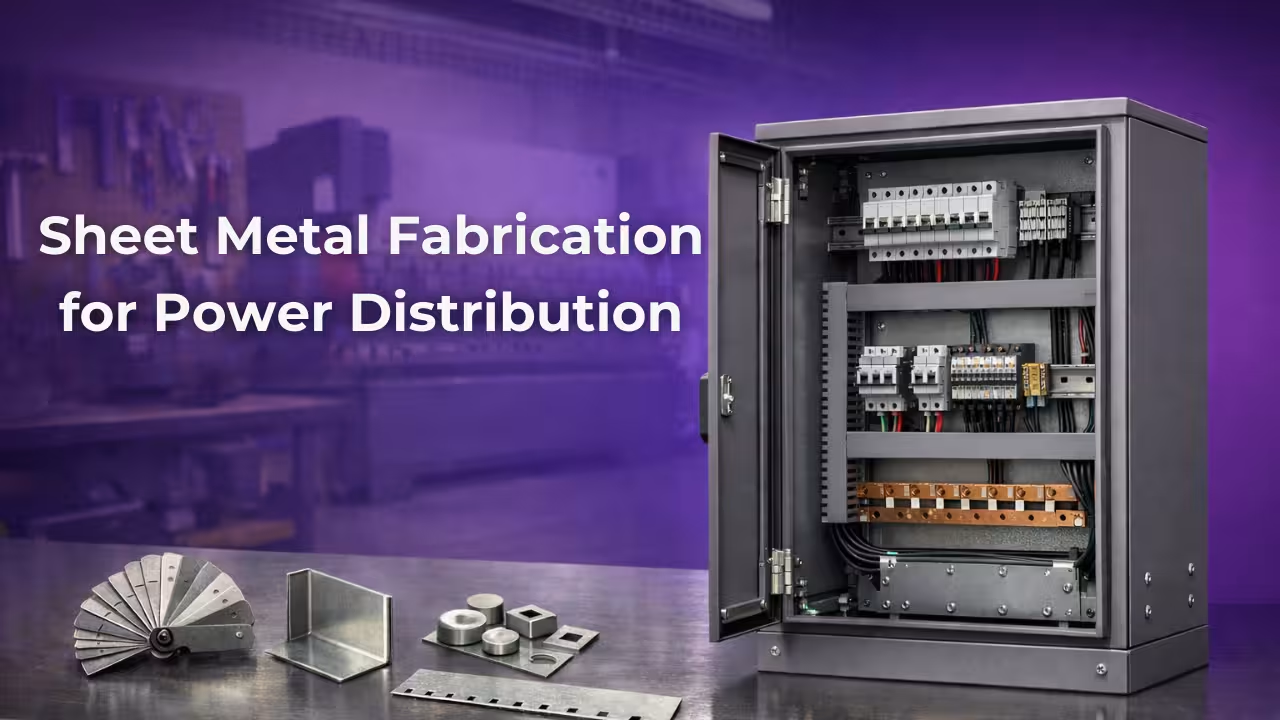
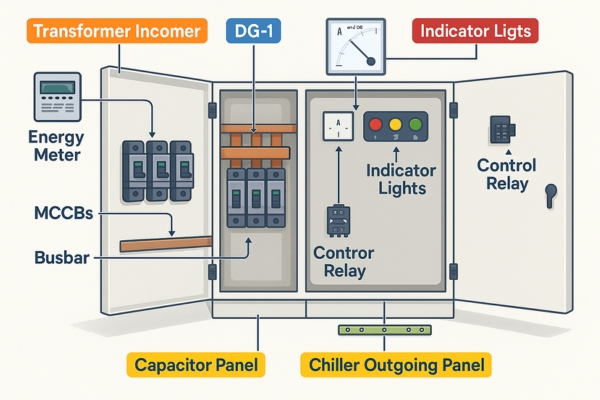
Electrical power distribution systems support manufacturing plants, data centers, hospitals, rail networks, renewable energy facilities, and commercial buildings. Electrical panels function as the control hub of these systems, housing breakers, busbars, relays, and protection devices. Their reliability directly affects uptime, safety, and compliance.
Around 28% of enclosure failures are linked to fabrication defects, including poor welding, dimensional errors, and coating breakdown. These issues can lead to overheating, moisture ingress, short circuits, and costly shutdowns, increasing lifecycle costs by 10–15%.
Quality-driven Sheet Metal Fabrication for Power Distribution ensures structural strength, environmental protection, and compliance with IEC, UL, and NEMA standards. Common project challenges include –
- Raw material variation
- Dimensional misalignment
- Corrosion due to coating failure
- Audit rejection
- Rework-related delivery delays
Strong process control in Sheet Metal Fabrication for Power Distribution minimizes these risks and improves long-term performance.
Why Quality Standards Matter in Electrical Panel Fabrication
Electrical panels operate under electrical, thermal, and mechanical stress every day. Fault currents generate strong electromagnetic forces. Temperature rise inside enclosures can exceed 70°C in certain load conditions. External environments may expose panels to rain, dust, salt, vibration, and UV radiation.
Quality standards create measurable benchmarks for performance and safety. Without defined standards, fabrication becomes inconsistent and unpredictable.
Strong quality standards ensure –
- Structural rigidity under short-circuit conditions
- Proper sealing to maintain IP ratings
- Corrosion resistance over 15–20 years
- Safe grounding and bonding continuity
- Smooth integration of internal components
Poorly fabricated enclosures may appear acceptable visually but fail under real operating conditions. Door misalignment can compromise IP protection. Weak weld joints can crack during vibration. Incorrect coating thickness can accelerate corrosion within two to three years.
Electrical infrastructure projects often carry strict contractual penalties. Delays due to enclosure rejection during inspection can extend commissioning timelines. Certification bodies require documented proof of dimensional control, welding qualification, and coating validation.
Reliable Sheet Metal Fabrication for Power Distribution transforms quality standards into controlled manufacturing processes. Documented procedures, inspection checkpoints, and traceability systems reduce uncertainty and strengthen compliance readiness.
Quality standards protect not only equipment but also long-term project profitability.
Why Material Selection Becomes the Foundation of Reliable Electrical Panels
Material quality defines structural reliability. Electrical enclosures must withstand mechanical loads, thermal stress, and environmental exposure for 15–25 years.
Common materials used include CRCA steel, HRPO steel, galvanized iron (GI), stainless steel (SS304/SS316), and aluminum alloys. Selection depends on application environment and IP requirements.
Critical technical parameters include –
- Yield strength and tensile strength as per ASTM, IS, or EN standards
- Sheet thickness tolerance typically within ±0.1 mm
- Zinc coating weight for GI sheets (80–120 GSM or higher for corrosive environments)
- Chemical composition consistency verified through Mill Test Certificates (MTC)
Material inconsistency creates bending inaccuracies and weld defects. A 0.2 mm deviation across a batch can result in visible misalignment after forming. High short-circuit rated panels demand stronger structural support because electrodynamic forces during faults can reach several kilo-newtons.
Corrosion remains a primary cause of enclosure degradation. Coastal installations show corrosion-related failures exceeding 35% within five years when improper material or coating is selected. Proper material selection strengthens the foundation of Sheet Metal Fabrication for Power Distribution and reduces warranty exposure.
How Dimensional Accuracy Directly Impacts Assembly, Safety, and Project Timelines
Dimensional precision ensures correct fitment of internal electrical components. Busbars require exact alignment to avoid mechanical stress and overheating. Breaker mounting plates must match OEM cut-out dimensions precisely.
Modern fabrication facilities deploy –
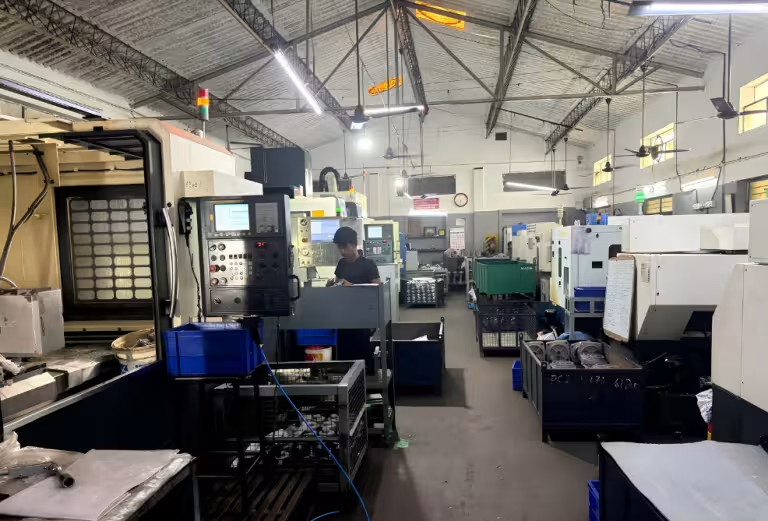
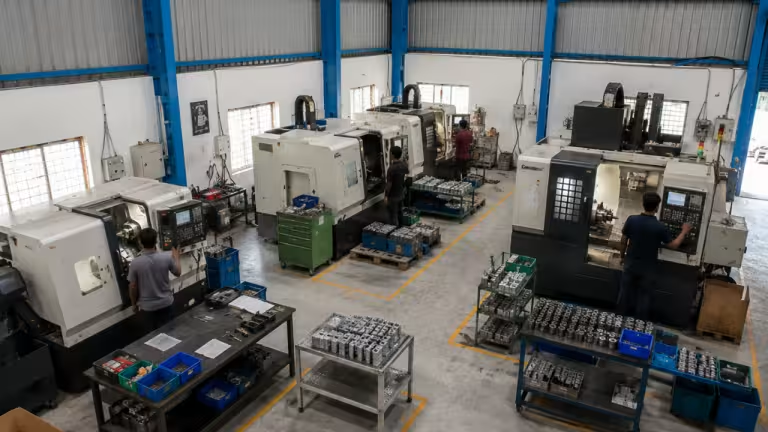
- CNC laser cutting systems with ±0.1 mm positioning accuracy
- Turret punching for repetitive hole patterns
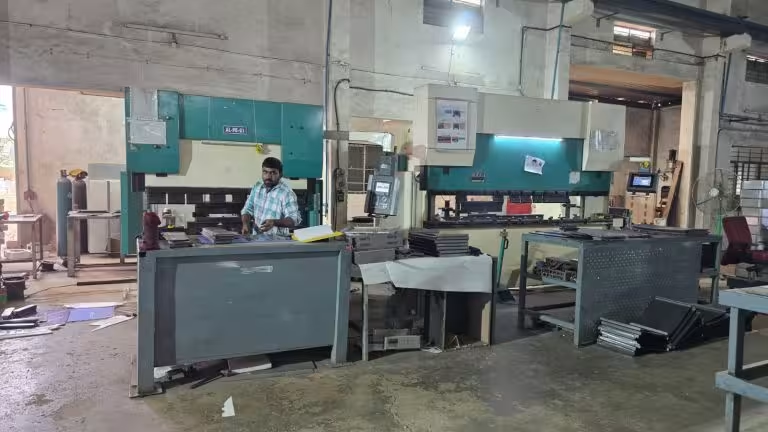
- CNC press brakes with programmable back gauges
- Automated panel bending lines
Tolerance benchmarks often include –
- Hole position tolerance – ±0.1 mm
- Bend angle tolerance – ±0.5°
- Flatness variation below 1.5 mm per meter
Improper tolerance control causes several operational problems –
- Door sealing gaps affecting IP ratings
- Misalignment of gland plates
- Difficulty during busbar installation
- Increased vibration during service
Batch production requires repeatability. Statistical Process Control (SPC) helps monitor dimensional variation and maintain Cp/Cpk values above acceptable thresholds. Dimensional rework can increase manufacturing cost by 6–8% per lot.
High-precision Sheet Metal Fabrication for Power Distribution reduces assembly cycle time and ensures smooth installation at project sites.
Why Welding Quality Determines Long-Term Structural Strength
Welding determines structural strength of electrical enclosures. Panels must resist vibration, mechanical impact, and short-circuit induced forces.
Common welding methods include MIG welding for structural joints, TIG welding for precision areas, and resistance spot welding for thin sheets.
Key quality factors include –
- Adequate weld penetration depth
- Uniform bead geometry
- Absence of cracks, undercuts, and porosity
- Controlled heat input to prevent distortion
Thermal distortion remains a common fabrication issue. Excessive heat causes warping, leading to squareness deviation and improper door alignment. Controlled welding sequences and fixtures help maintain dimensional stability.
Inspection protocols typically involve –
- Visual inspection as per welding standards
- Dye penetration testing for surface cracks
- Mechanical load testing for mounting brackets
- Vibration testing for structural stability
Reports indicate that 15–20% of enclosure structural issues stem from welding deficiencies. Robust welding procedures improve reliability within Sheet Metal Fabrication for Power Distribution, particularly for high-capacity or seismic-rated panels.
How Surface Treatment and Coating Protect Panels from Corrosion and Failure
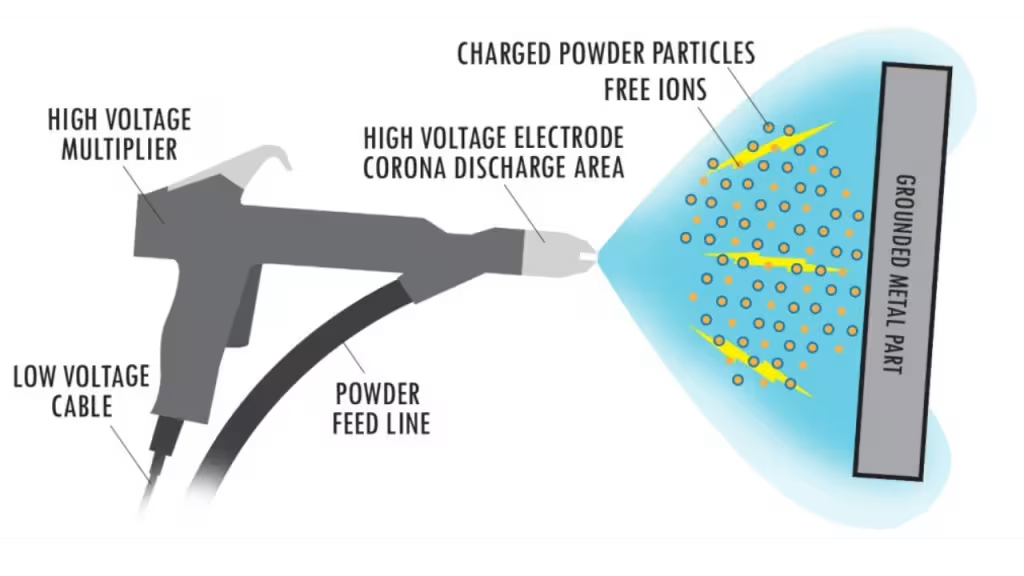
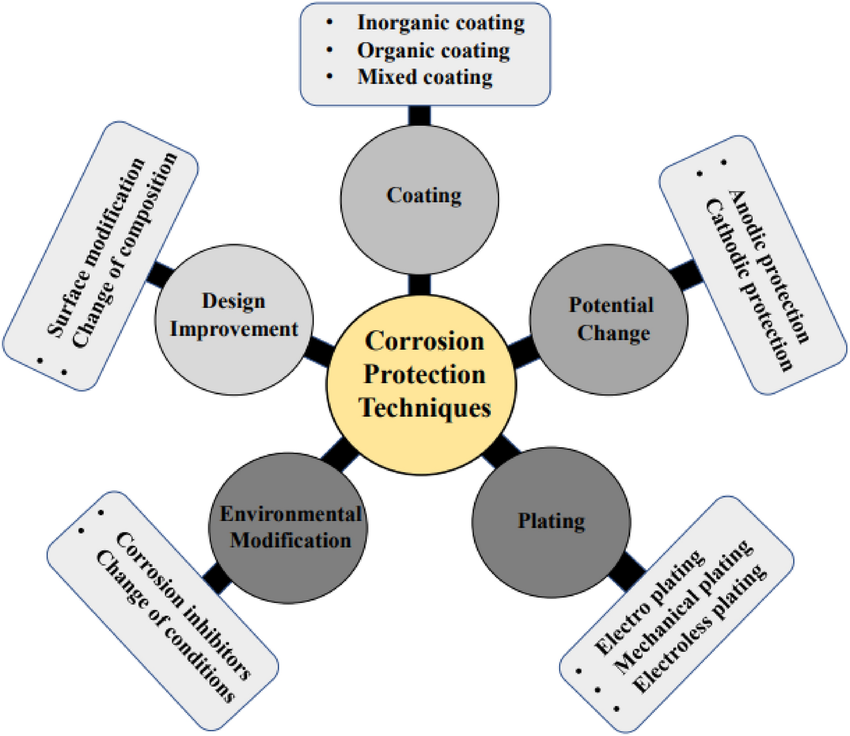
Surface treatment protects metal against corrosion and environmental damage. Proper pre-treatment ensures strong adhesion between substrate and powder coating.
Pre-treatment stages usually include –
- Alkaline degreasing
- Acid pickling or derusting
- Phosphating to improve adhesion
- Rinsing with demineralized water
- Controlled drying
Powder coating thickness generally ranges from 60 to 120 microns. Thickness below 60 microns increases corrosion risk. Excess thickness may cause surface defects or poor curing.
Performance validation involves –
- Salt spray testing for 500–1000 hours
- Cross-hatch adhesion testing
- Impact resistance testing
- Gloss and film thickness measurement
Outdoor enclosures require UV-resistant coatings and proper sealing to maintain IP54, IP65, or IP66 ratings. Coastal exposure demands enhanced corrosion resistance because chloride content accelerates rust formation.
Data shows nearly 30–35% of early outdoor enclosure failures relate to inadequate surface protection. Strong coating processes enhance durability in Sheet Metal Fabrication for Power Distribution and reduce lifecycle maintenance cost.
Why Compliance and Certification Readiness Cannot Be an Afterthought
Regulatory compliance determines market acceptance. Electrical panels must conform to international standards based on region and application.
Important certifications include IEC standards for electrical safety, UL certification for North America, NEMA enclosure classifications, and ISO 9001 for quality management systems.
IP rating requirements define environmental protection capability –
- IP54 protects against limited dust and splashing water
- IP65 protects against water jets
- IP66 protects against powerful water exposure
Short-circuit withstand capacity also influences enclosure design. Mechanical reinforcement must support internal components during fault conditions.
Documentation plays a critical role during audits. Required records typically include –
- Material test certificates
- Welding qualification records
- Coating inspection reports
- Dimensional inspection data
Audit rejection can delay commissioning by weeks and increase financial exposure. Structured compliance-driven Sheet Metal Fabrication for Power Distribution ensures smooth project approvals and reduces risk of penalties.
How Strong Quality Control Systems Reduce Rework, Delays, and Cost Overruns
Quality control must be integrated throughout the manufacturing cycle. Reactive inspection at the final stage is insufficient.
Comprehensive quality systems include –
- Incoming raw material inspection with thickness verification
- In-process dimensional checks during cutting and bending
- First Article Inspection (FAI) for new designs
- Final structural and cosmetic inspection
- Pre-dispatch verification and secure packaging
Mechanical and functional testing may involve –
- Door endurance cycle testing
- Hinge and latch strength testing
- Ground continuity testing
- Load-bearing validation
Traceability systems connect each enclosure to batch records. Root cause analysis becomes faster if defects appear in the field.
Facilities with weak process control report rejection rates above 10%. Controlled environments reduce rejection below 2%, improving profitability and delivery reliability. Consistent quality strengthens relationships across Sheet Metal Fabrication for Power Distribution supply chains.
How Frigate Delivers Consistent and Compliance-Driven Sheet Metal Fabrication for Power Distribution
Electrical panel enclosures must meet strict dimensional, structural, and environmental standards. Fabrication quality determines whether panels pass certification audits, maintain IP ratings, and withstand mechanical and thermal stress over long service life.
At Frigate, Sheet Metal Fabrication for Power Distribution is driven by a structured, audit-ready manufacturing approach. Each enclosure is built with defined checkpoints, documented validation, and full traceability. This process-focused discipline ensures consistent quality, compliance readiness, and reliable long-term performance.
The checklist below reflects how fabrication quality is controlled and verified at every stage.
Controlled Raw Material Validation Reduces Future Risk
Material inconsistency is one of the most common root causes of dimensional variation and corrosion issues. A strong fabrication partner ensures –
- Thickness verification against engineering drawings
- Mechanical property validation through Mill Test Certificates
- Surface inspection for scale, rust, or lamination defects
- Coating weight confirmation for galvanized sheets
- Full batch-level traceability
Traceability simplifies audit reviews and protects against future field failures.
Precision Manufacturing Protects Assembly Accuracy
Dimensional mismatch can delay assembly and reduce IP performance. Reliable Sheet Metal Fabrication for Power Distribution depends on calibrated CNC systems and process monitoring.
Quality-focused manufacturing environments maintain –
- Accurate hole pitch alignment for breaker and busbar mounting
- Controlled bend angles within tight tolerances
- Verified panel flatness for large enclosure doors
- Repeatable geometry across high-volume production
Repeatability reduces rework and supports predictable project timelines.
Structural Stability Ensures Performance Under Fault Conditions
Electrical panels experience vibration and short-circuit forces. Structural weakness can lead to deformation and compliance rejection.
High-quality fabrication systems verify –
- Frame rigidity and reinforcement positioning
- Minimal distortion during joining operations
- Proper hinge and latch mounting strength
- Load-bearing capacity validation
Strong structural control ensures durability in demanding industrial environments.
Corrosion Protection Determines Lifecycle Cost
Outdoor and coastal installations demand long-term resistance to moisture and salt exposure. Surface treatment quality directly impacts lifecycle performance.
Process-controlled environments monitor –
- Pre-treatment chemical parameters
- Coating film thickness at multiple inspection points
- Edge coverage consistency
- Curing temperature stability
- Adhesion and corrosion test results
Uniform coating application minimizes premature rusting and long-term maintenance cost.
Sealing Accuracy Protects IP Ratings
Environmental protection depends not only on gasket quality but also on fabrication geometry.
Reliable fabrication systems validate –
- Door-to-frame gap consistency
- Uniform gasket compression
- Gland plate alignment
- Mechanical interface precision
Controlled geometry ensures sustained IP54, IP65, or IP66 performance.
Electrical Bonding and Safety Readiness Strengthen Compliance
Proper grounding continuity is essential for safety approvals.
Audit-ready fabrication includes –
- Verified bonding points
- Clean contact areas free from insulating coating
- Low-resistance continuity testing
- Fastener torque verification
Such controls prevent certification delays and enhance operational safety.
Documentation Discipline Accelerates Certification
Certification-driven projects require structured documentation.
Quality-driven Sheet Metal Fabrication for Power Distribution environments maintain –
- Batch-linked inspection reports
- Calibration records for measuring instruments
- Process monitoring logs
- Non-conformance tracking systems
- Final inspection release documentation
Complete documentation simplifies third-party validation and reduces approval delays.
When fabrication partners operate with this level of process control, projects benefit from reduced rework, fewer compliance risks, stable delivery timelines, and extended enclosure lifespan. Structured and traceable Sheet Metal Fabrication for Power Distribution ultimately protects investment value while ensuring reliable electrical panel performance.
Conclusion
Electrical panel enclosures protect critical power infrastructure. Fabrication quality directly influences mechanical stability, corrosion resistance, compliance readiness, and service life. Material control, dimensional accuracy, welding integrity, surface treatment, and documented inspection systems together define reliability.
Poor fabrication increases downtime, warranty claims, and total project cost. Technically controlled Sheet Metal Fabrication for Power Distribution minimizes risk and ensures dependable performance under demanding conditions.
Frigate delivers precision-driven Sheet Metal Fabrication for Power Distribution backed by compliance-focused processes and strong quality control systems. Connect with Frigate to strengthen enclosure reliability, reduce project risk, and achieve long-term performance confidence.