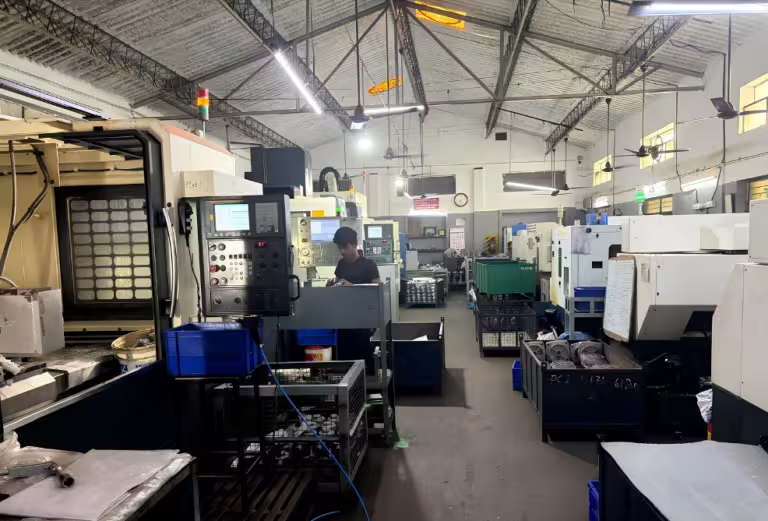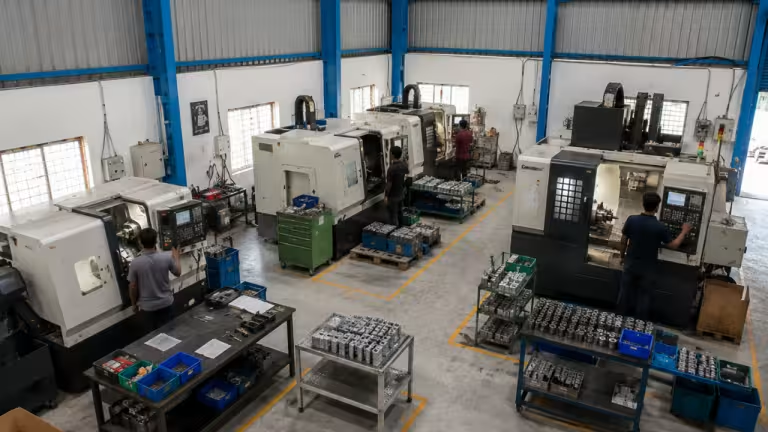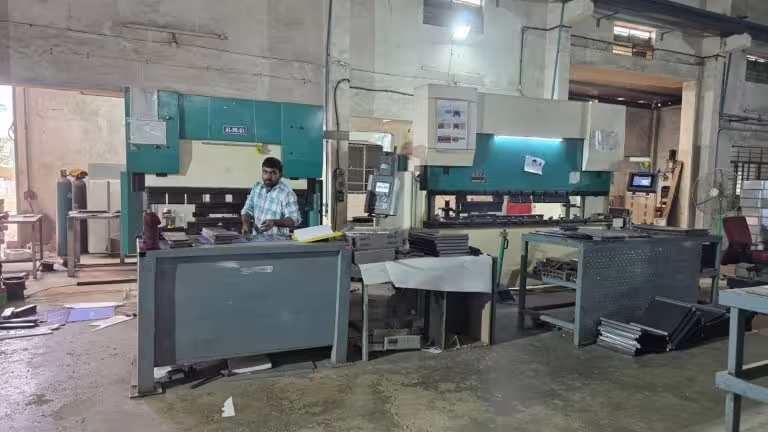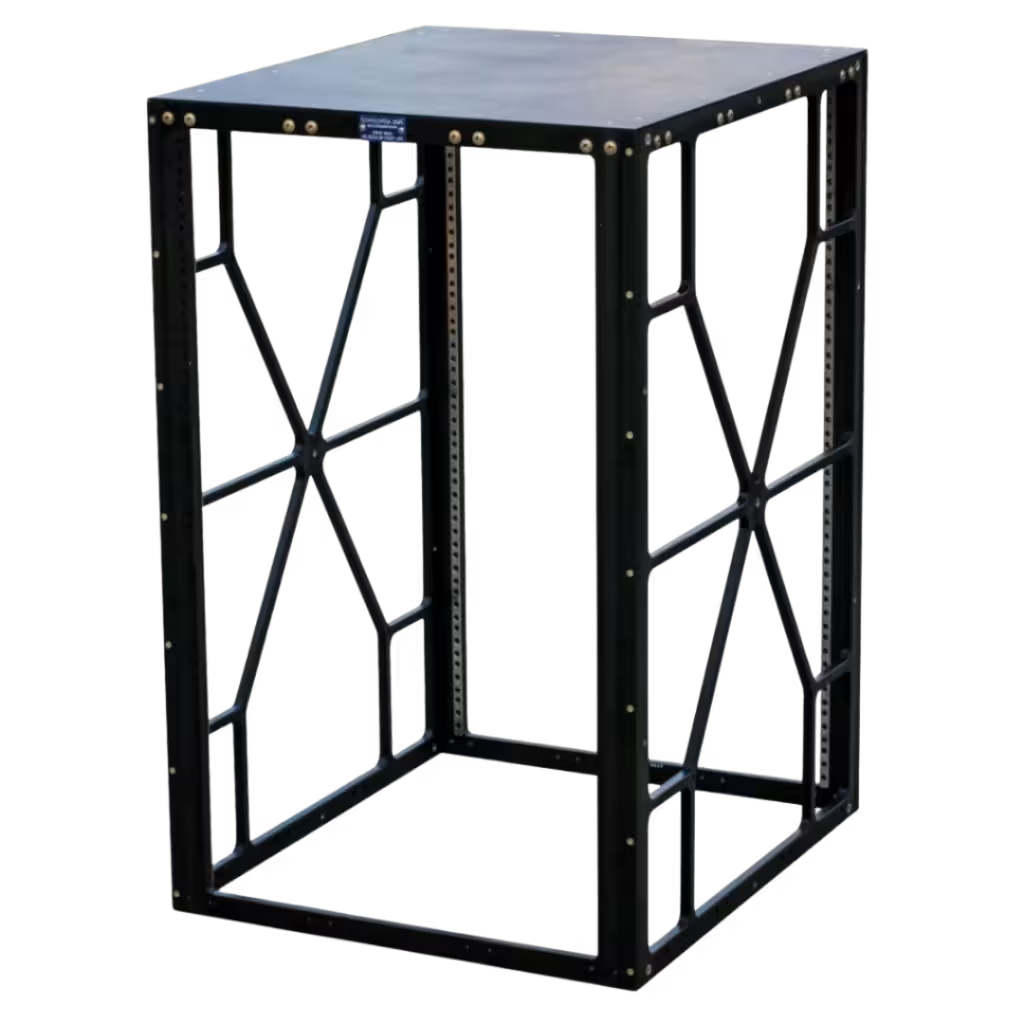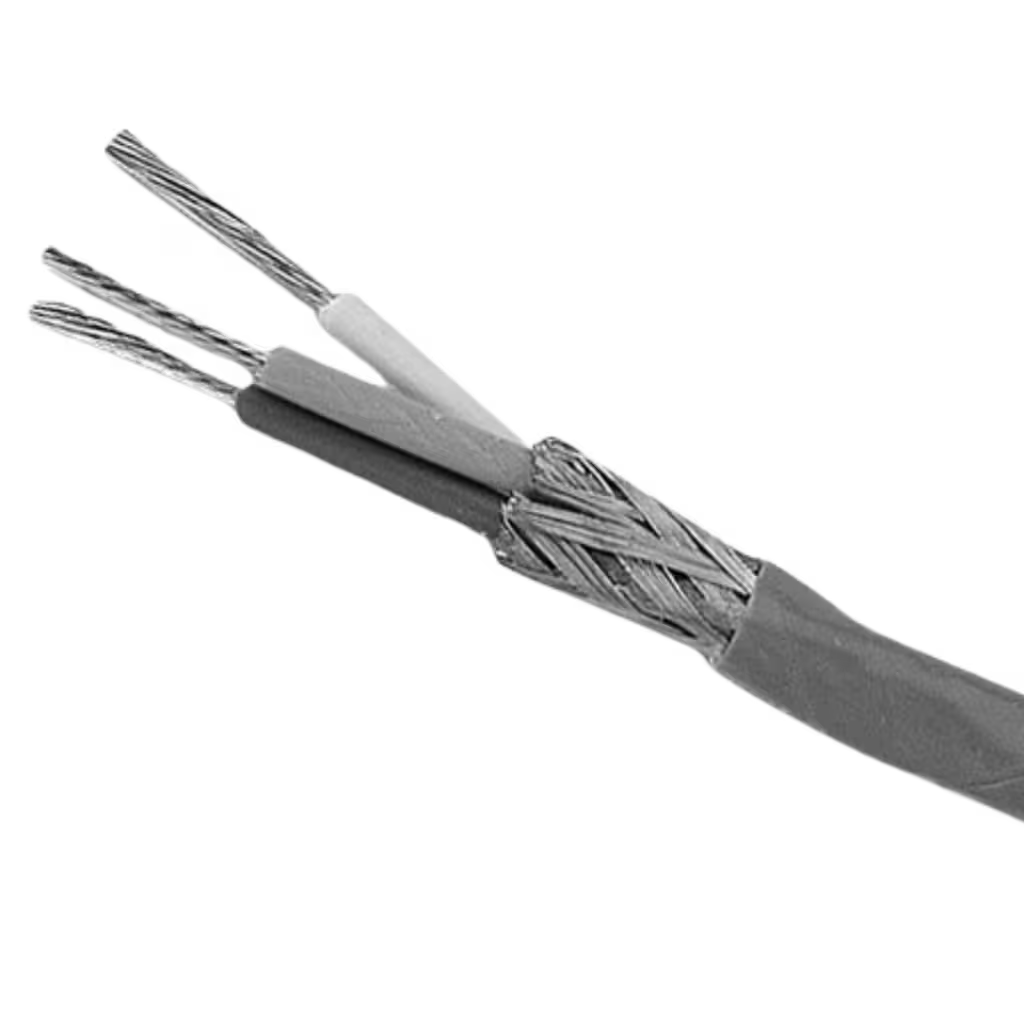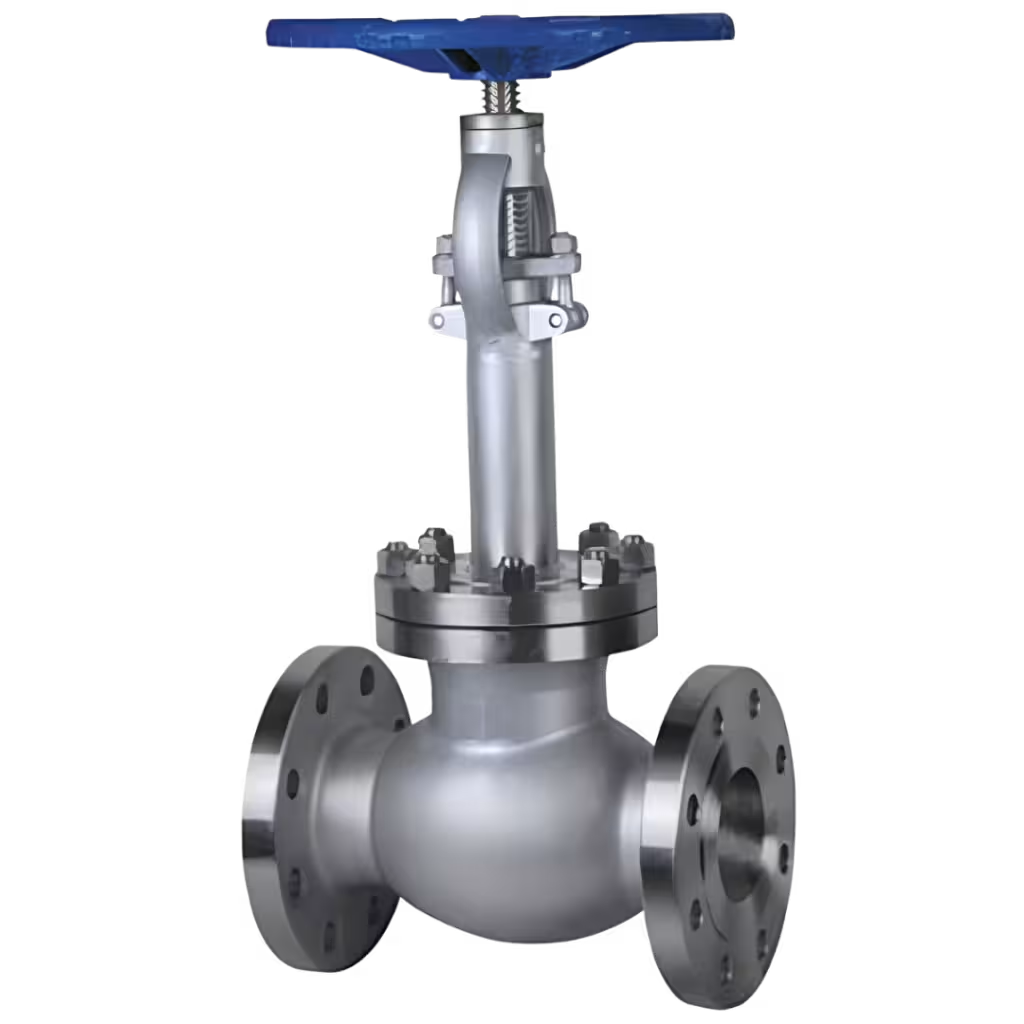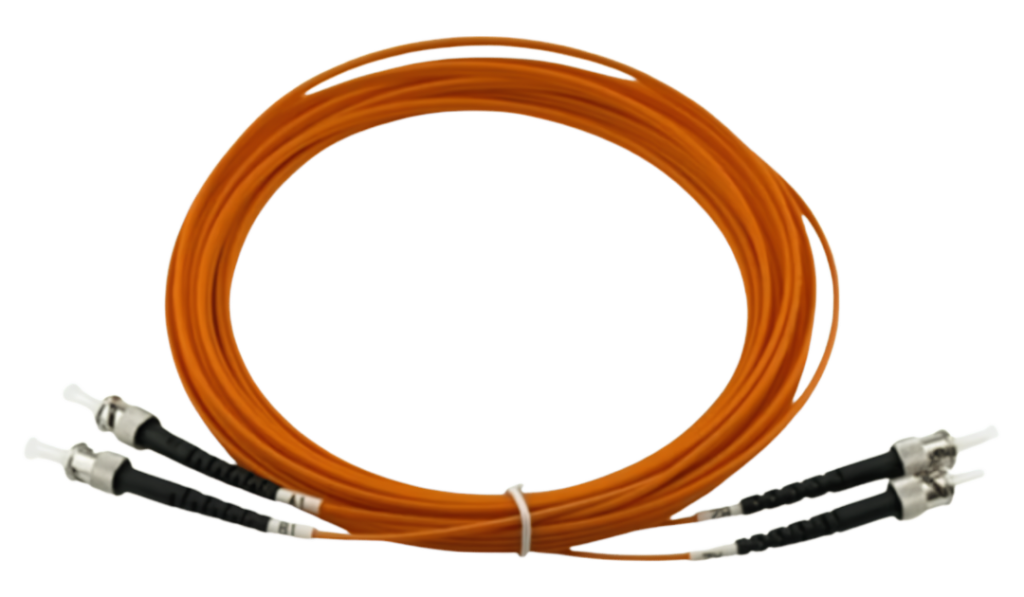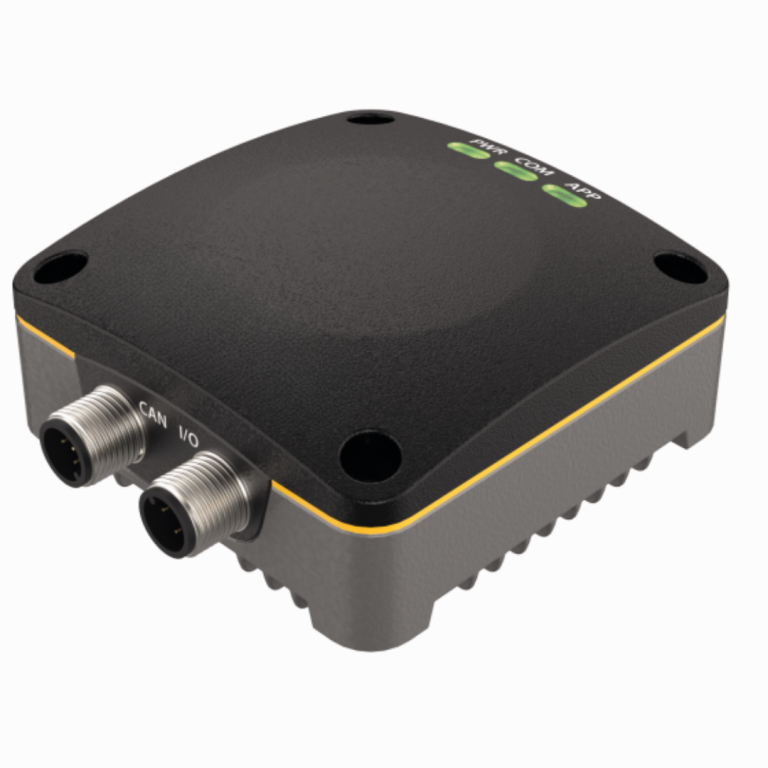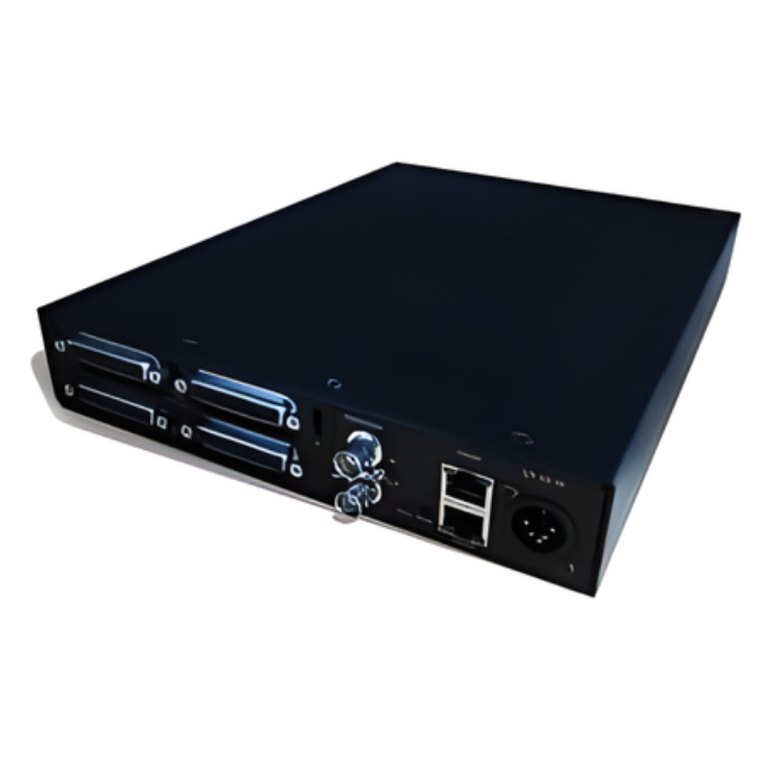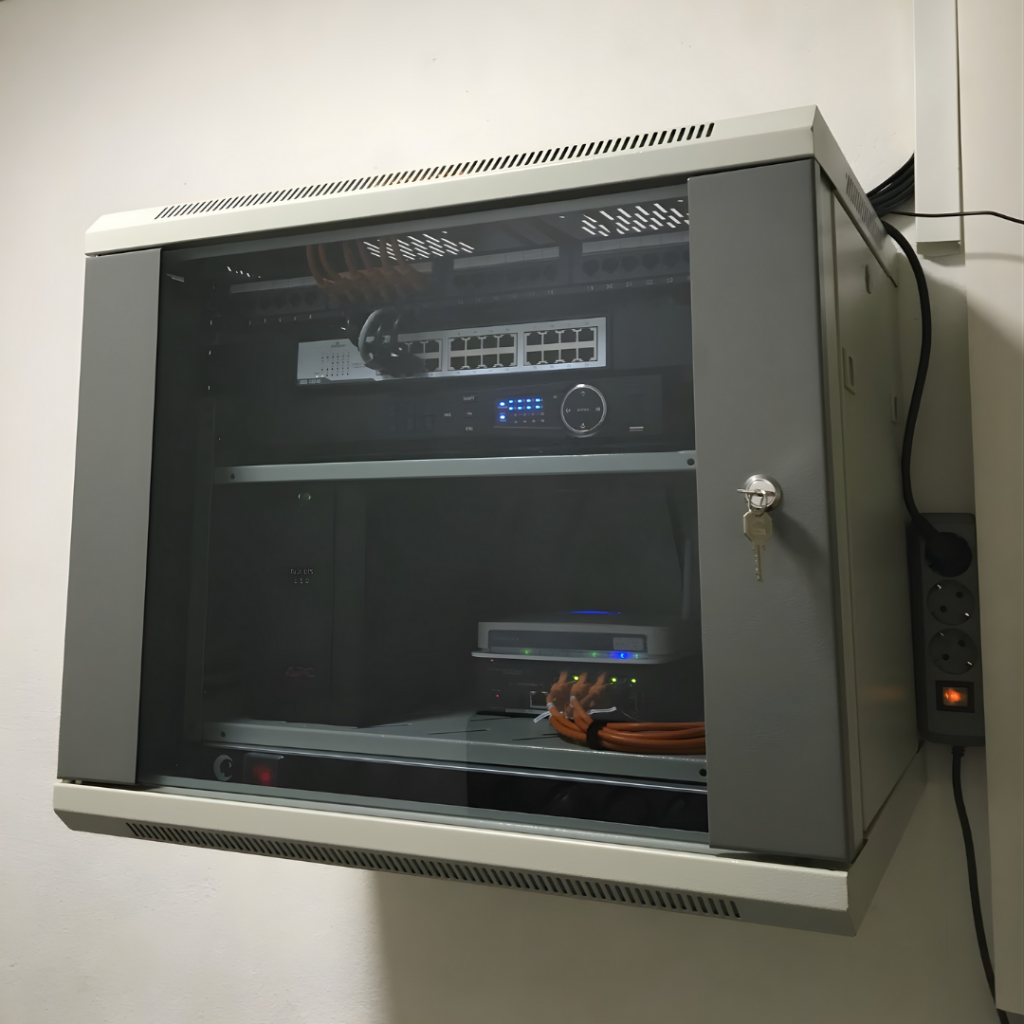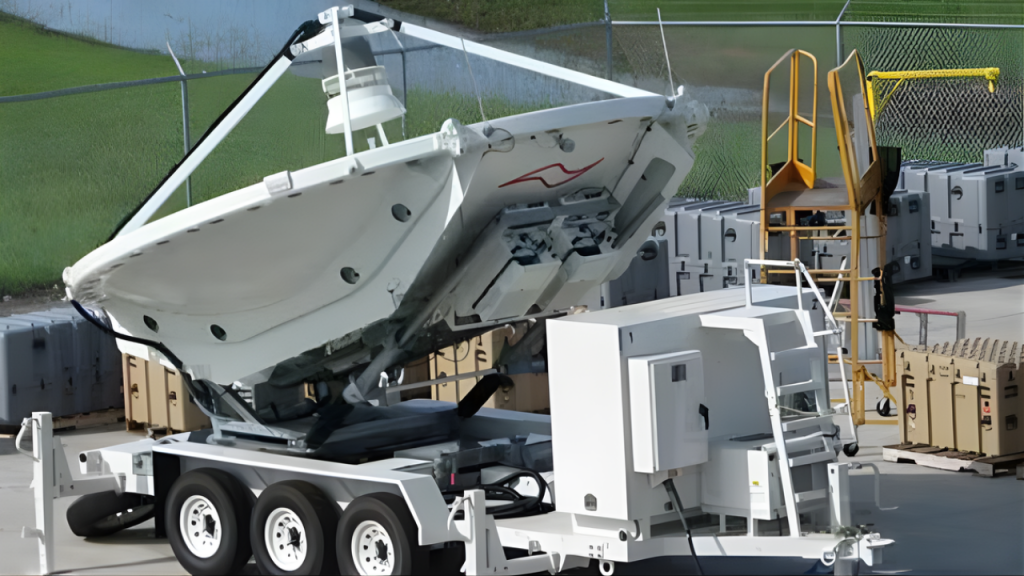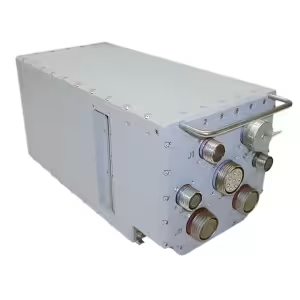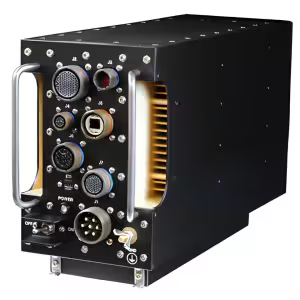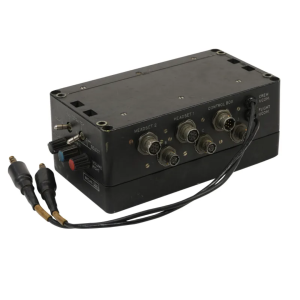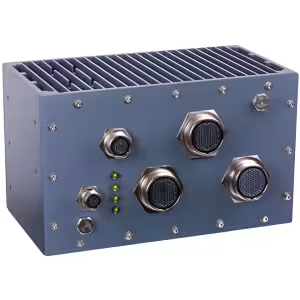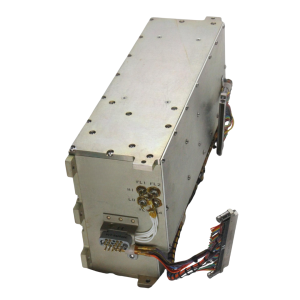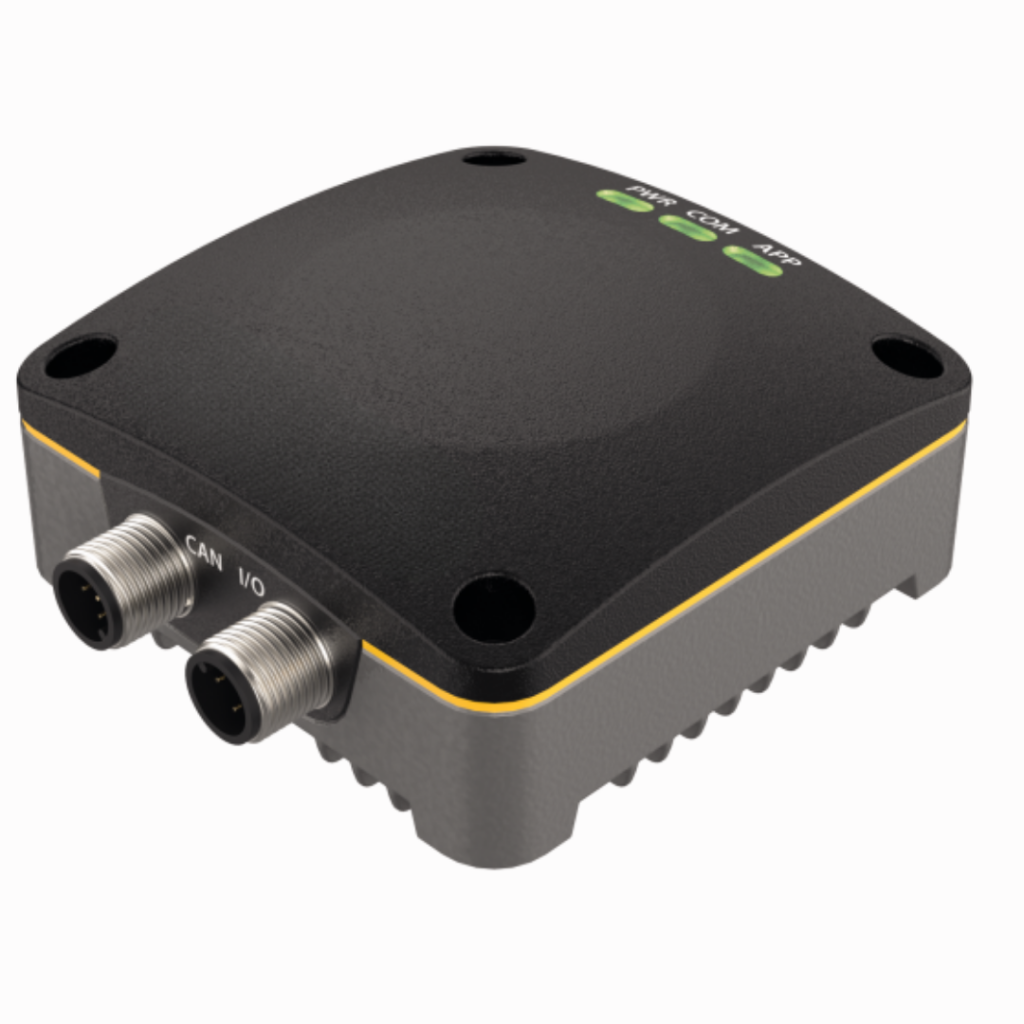
Radar Signal Converter Cabinet

When radar systems detect aerial threats, ground targets, or maritime vessels, raw RF signals require conversion to digital formats for processing and display. Radar Signal Converter Cabinets house analog-to-digital converters, signal processors, and power conditioning equipment transforming radar returns into actionable intelligence. 
HY D R O L Y SIS RESIS T ANCE
Material & Grade
  • Aluminum Alloy – 5052, 6061-T6
  • Stainless Steel – SS304, SS316
  • Cold Rolled Steel – SPCC (reinforced)
  • Copper-plated steel (RF shielding)
  • Sheet thickness – Up to 4.0mm capable 
  • Maximum capable – 2000mm (H) x 1500mm (W) x 900mm (D)
  • Customizable based on radar system configuration
  • Chemical Agent Resistant Coating (CARC)
  • Zinc-Nickel Plating (MIL-DTL-16232)
  • Chromate Conversion Coating (MIL-DTL-5541)
  • Conductive coating (EMI/RFI)
  • Corrosion-resistant finish 
  • CNC Precision Machining
  • TIG Welding (MIL-spec)
  • RF seam welding
  • Electromagnetic compatibility construction
  • Thermal management integration
  • Precision alignment provisions
  • Stainless Steel 316 Hardware
  • EMI/RFI gasket compression hardware 
  • Grounding studs and busbars
  • Shock-rated mounting provisions
  • RF connector bulkhead fittings
  • Waveguide flange hardware

Product Description

Floor-standing configurations accommodate signal processing hardware with internal dimensions reaching 2000mm while maintaining electromagnetic isolation. Aluminum or steel construction provides RF shielding preventing interference between high-power transmitter signals and sensitive receiver circuits. Through MIL-STD environmental sealing and thermal management, these cabinets enable continuous radar operation across combat theaters and maritime patrol zones. 

Mounting Type
  • Floor Standing with reinforced base
  • Shock-isolated mounting systems
  • Rack Mount (19″ MIL-spec)
  • Shipboard installation (naval-rated)
  • Transportable shelter integration
  • Seismic mounting provisions
  • IP65/IP66 Environmental Sealing
  • MIL-STD-810 sealed construction
  • Positive pressure provisions
  • Filtered air intake systems 
  • Humidity control integration
  • Desiccant breather provisions
  • MIL-STD-810 (Temperature, Humidity, Salt Fog)
  • Operating Temperature – -40°C to +65°C
  • Altitude – Up to 4,500 meters
  • Sand & Dust resistance
  • Rain/Water spray protection 
  • Explosive atmosphere rated
  • MIL-STD-810 Method 514 (Vibration)
  • MIL-STD-810 Method 516 (Shock)
  • MIL-S-901 (Naval Shock)
  • Vibration isolation mounting
  • Equipment rack shock mounting
  • Transportation shock rated
  • MIL-STD-461 Compliance
  • Shielding Effectiveness – 80-120 dB
  • RF honeycomb vents
  • Conductive gaskets (MIL-DTL-83528) 
  • Waveguide penetrations
  • TEMPEST-rated
  • MIL-STD-810 (Environmental Engineering)
  • MIL-STD-461 (EMI/EMC Requirements)
  • MIL-STD-167 (Mechanical Vibrations – Naval)
  • MIL-S-901 (Shipboard Shock)
  • NATO STANAG Compliance
  • RTCA DO-160 (Airborne)
  • ISO 9001:2015 + AS9100 Manufacturing

Technical Advantages

High-power radar transmitters generate electromagnetic fields exceeding 100V/m requiring cabinet shielding preventing interference with adjacent communication systems. Meeting this challenge, continuous welded seams create unbroken conductive paths with RF honeycomb ventilation panels maintaining airflow without compromising shielding effectiveness. Multi-layer conductive gaskets at door interfaces maintain 80-120dB attenuation across frequency ranges from 10kHz to 40GHz. 

Signal processing electronics dissipate substantial heat loads requiring forced air cooling or liquid cooling integration maintaining component temperatures within specifications. Frigate engineers internal airflow paths directing cooling air across equipment mounting zones before exhausting through filtered vents preventing dust accumulation on circuit boards. Waveguide penetrations for antenna feedlines use specialized flanges maintaining shield continuity while allowing RF signal transmission without degradation. 

Let's Get Started

Need reliable Enclosures for your next project? Get in touch with us today, and we’ll help you find exactly what you need!

Industry Applications

Air Defense Radar Systems

Contains signal processing equipment converting target returns from surveillance radars tracking aircraft and missiles at tactical air defense sites. 

Ground Surveillance Systems

Protects signal processing hardware in perimeter security radars monitoring border zones and critical infrastructure. 

Fire Control Radar Equipment

Manages tracking receivers and conversion electronics directing weapons systems during engagement sequences.

Weather Radar Installations

Secures signal processors analyzing precipitation patterns and at Consolidates signal analysis equipment detecting incoming artillery trajectories and calculating firing positions. mospheric conditions for military meteorological operations. 

Counter-Battery Radar Systems

Consolidates signal analysis equipment detecting incoming artillery trajectories and calculating firing positions. 

Radar Signal Converter Cabinet

Built for Signal Integrity

Radar configurations span portable ground surveillance units to fixed-installation early warning systems each requiring different cabinet footprints and cooling capacities. Radar Signal Converter Cabinets arrive in rack-mount formats for shelter integration or floor-standing configurations supporting standalone radar installations. 

Shock isolation provisions protect sensitive analog-to-digital converters from vibration during naval operations or mobile deployment on tactical vehicles. We manufacture TEMPEST-rated versions for classified installations preventing electromagnetic emanations that could reveal radar operating frequencies or signal processing techniques to adversarial electronic warfare systems. 

Radar Signal Converter Cabinet

Having Doubts? Our FAQ

Check all our Frequently Asked Questions

How does Frigate maintain 80–120 dB shielding effectiveness in Radar Signal Converter Cabinets across frequency ranges from 10 kHz to 40 GHz?

Frigate designs shielding as a system that combines continuous conductive seams, welded joints, and controlled bonding paths. Shield thickness, material choice, and seam treatment are adjusted to the required frequency range, with final architecture aligned to the shielding levels defined in the project specification. 

What RF honeycomb ventilation panel specifications does Frigate integrate in Radar Signal Converter Cabinets balancing airflow with electromagnetic isolation?

Frigate balances airflow and isolation using – 

  • RF honeycomb panels sized to cutoff frequency targets 
  • Conductive frame bonding around vent openings 
  • Panel depth selected to meet attenuation requirements 

Vent geometry is tuned to cooling demand and the EMI limits in your drawing. 

Does the cabinet support both forced air and liquid cooling integration for high-density signal processing configurations?

Yes. Cabinets can be configured for forced air, liquid cooling, or hybrid approaches depending on processing density. Cooling interfaces, mounting zones, and routing paths are planned so either method can be implemented without reworking the enclosure, and Frigate adapts the layout to the specified thermal architecture. 

What waveguide penetration techniques does Frigate employ in Radar Signal Converter Cabinets maintaining shield continuity during antenna feedline installation?

Shield continuity is preserved through – 

  • Waveguide-beyond-cutoff penetrations 
  • Flanged waveguide interfaces with conductive gasketing 
  • Controlled penetration spacing to limit leakage paths 

Penetration methods are selected to match waveguide size and band, with Frigate aligning to your RF interface requirements. 

How does Frigate address thermal management in Radar Signal Converter Cabinets housing equipment with heat loads exceeding 5 kW?

Frigate scales thermal design for >5 kW loads by zoning hot and sensitive sections, directing airflow or coolant through defined paths, and provisioning mounting for heat exchangers where needed. The approach is customized to your duty cycle, ambient conditions, and allowable internal temperature rise. 

What multi-layer conductive gasket compression does Frigate specify in Radar Signal Converter Cabinets achieving hermetic RF sealing?

Hermetic RF sealing is achieved using – 

  • Multi-layer conductive elastomer gaskets 
  • Controlled compression channels for repeatability 
  • Surface finishes that maintain conductivity 

Gasket stack-up and compression targets are matched to access frequency and shielding goals. 

How does Frigate prevent corrosion in Radar Signal Converter Cabinets deployed in maritime salt spray environments per MIL-STD-810?

Corrosion resistance is addressed through – 

  • Marine-grade materials and protective coatings 
  • Treated interfaces and sealed fasteners 
  • Drainage provisions that reduce moisture traps 

Frigate aligns the coating system to the exposure duration and MIL-STD-810 salt spray expectations. 

Does cabinet construction accommodate future radar system upgrades without requiring complete enclosure replacement?

Upgrade readiness is supported by – 

  • Spare internal volume and mounting capacity 
  • Modular panel and rail systems 
  • Reserved cable and cooling interface space 

Frigate can reflect your planned expansion paths in the initial layout when requirements are shared early. 

What shock isolation mounting systems does Frigate engineer in Radar Signal Converter Cabinets protecting analog-to-digital converters during mobile deployment?

Shock isolation uses elastomeric isolators, floating subframes, and controlled mass distribution to reduce transmitted loads into sensitive ADC assemblies. Frigate customizes isolator stiffness and travel to the transport vibration spectrum and shock pulses defined in your deployment requirements. 

Get Clarity with Our Manufacturing Insights

We'd love to Manufacture for you!

Submit the form below and our representative will be in touch shortly.

LOCATIONS

Registered Office

10-A, First Floor, V.V Complex, Prakash Nagar, Thiruverumbur, Trichy-620013, Tamil Nadu, India.

Operations Office

9/1, Poonthottam Nagar, Ramanandha Nagar, Saravanampatti, Coimbatore-641035, Tamil Nadu, India. ㅤ

Other Locations

GENERAL ENQUIRIES

Get Quote
Support All File Formats Including - STEP | STP | SLDPRT | STL | DXF | IPT | X_T | X_B | 3DXML | CATPART | PRT | SAT | 3MF | JT files

LOCATIONS

Registered Office

10-A, First Floor, V.V Complex, Prakash Nagar, Thiruverumbur, Trichy-620013, Tamil Nadu, India.

Other Locations

GENERAL ENQUIRIES

Get Your Quote Now

New Get Quote form

Radar Signal Converter Cabinet

Need reliable wires and cables for your next project? Get in touch with us today, and we’ll help you find exactly what you need!

Get Latest Price

Get Price Form

Radar Signal Converter Cabinet

Need reliable Machining for your next project? Get in touch with us today, and we’ll help you find exactly what you need!

Get Latest Price

Get Price Form