





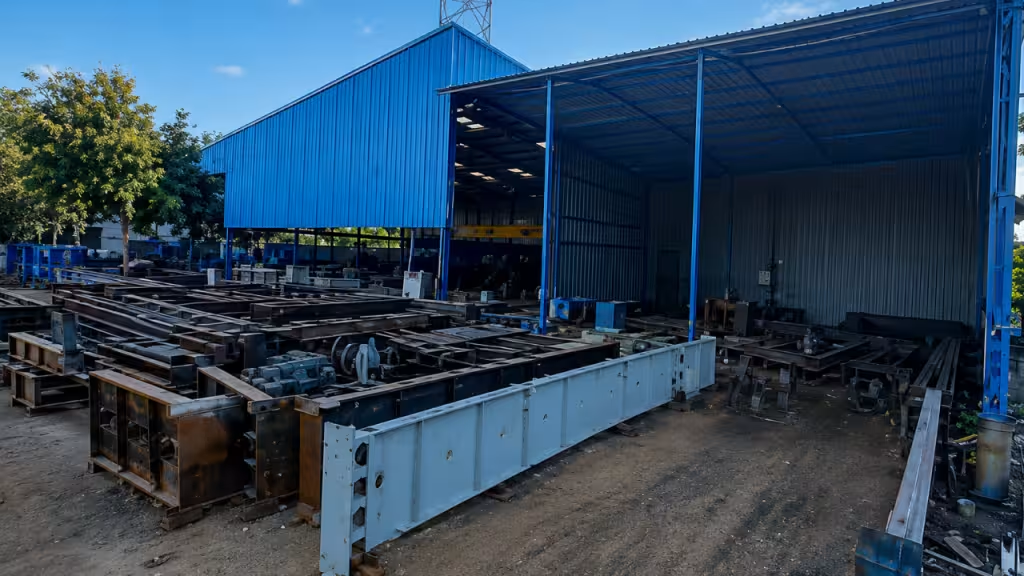

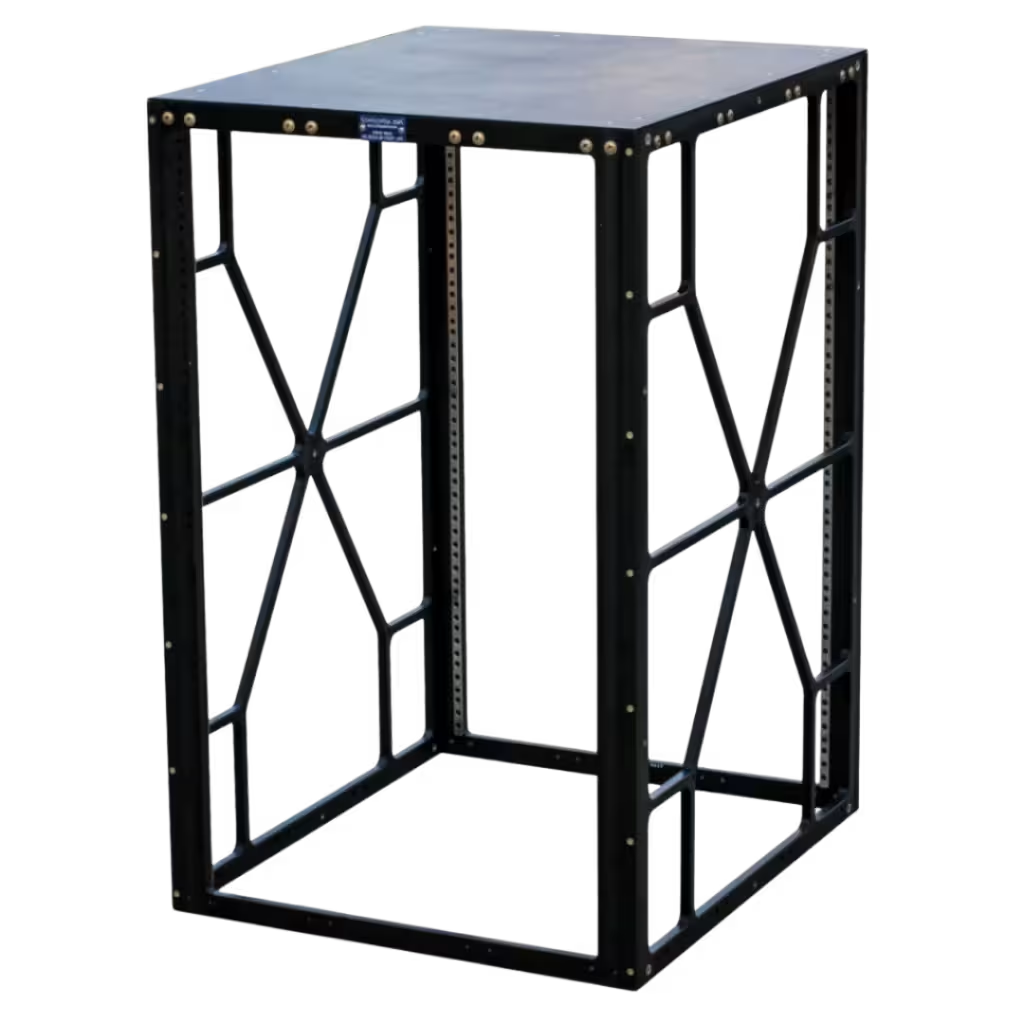




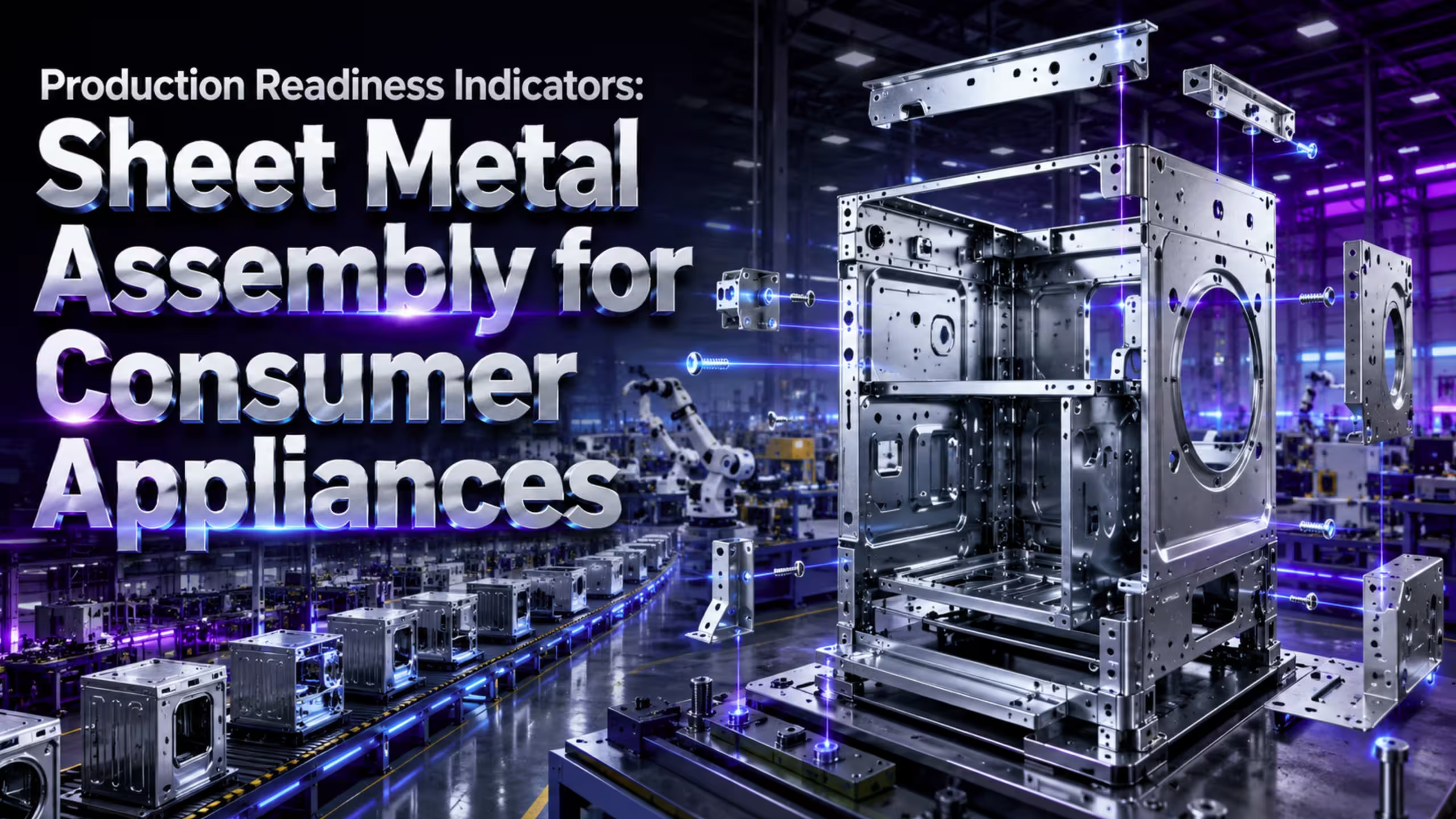
Home appliances are no longer simple mechanical products. Refrigerators now include inverter compressors and precision door sealing systems. Washing machines operate at high spin speeds exceeding 1,200 RPM. Ovens must withstand repeated thermal cycles above 200°C. Structural reliability in all these products depends heavily on Sheet Metal Assembly for Consumer Appliances.
Sheet metal forms the structural backbone of appliances. It supports rotating loads, absorbs vibration, protects electrical systems, and maintains dimensional stability over years of use. Even a 0.4 mm dimensional shift can impact assembly alignment. A weak weld joint can reduce fatigue life by more than 25%. Coating defects can accelerate corrosion, especially in humid regions.
Global appliance production exceeds 700 million units annually. High volumes mean small inefficiencies multiply quickly. A 2% scrap increase across a 500,000-unit program can translate into substantial material loss and margin erosion.
Production readiness indicators help prevent these losses. They provide measurable checkpoints before full-scale manufacturing begins. Strong readiness ensures cost stability, predictable quality, and scalable output in Sheet Metal Assembly for Consumer Appliances.
The following sections explain the technical parameters that define true production readiness.
Are Designs Truly Ready for Scalable Manufacturing in Sheet Metal Assembly for Consumer Appliances?
Design approval does not automatically mean manufacturing readiness. Digital CAD models must convert into repeatable, stable physical parts.
Design risks often include –
- Tolerances tighter than manufacturing capability
- Insufficient bend relief causing cracking
- Unaccounted material springback
- Excessive forming depth increasing residual stress
- Incompatible material grades
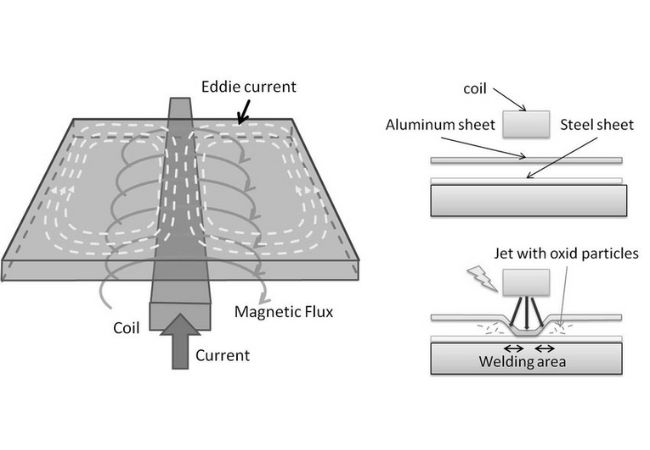
Springback compensation is critical during CNC bending. Stainless steel, CRCA steel, and aluminum all behave differently under forming loads. Bend allowance and K-factor must be validated using real production samples.
Tolerance stack-up becomes critical in multi-part assemblies. A refrigerator door may contain 10–15 individual sheet metal components. Small variations across each part can accumulate, causing sealing gaps or hinge misalignment.
Key readiness validations include –
- Design for Manufacturability (DFM) review completion
- Finite Element Analysis (FEA) for load-bearing areas
- Prototype dimensional verification reports
- CAD-to-CAM programming validation
- Formability and elongation testing for selected material grades
Industry data indicates that nearly 70% of production problems originate from early design-stage decisions. Robust validation reduces engineering change orders and avoids costly tooling modifications.
Strong design alignment ensures that Sheet Metal Assembly for Consumer Appliances transitions smoothly from development to high-volume production.
Is Fabrication Process Stability Strong Enough to Handle High Volumes?
Fabrication processes must deliver consistent accuracy over thousands of cycles per day. Laser cutting, turret punching, bending, welding, and finishing operations must remain statistically controlled.
Laser cutting tolerance typically needs to remain within ±0.1 mm for appliance-grade panels. Bending accuracy should remain within ±0.5°. Repeated deviation beyond this range creates fitment issues during assembly.
Critical process control indicators include –
- Statistical Process Control (SPC) implementation on key dimensions
- Process Capability Index (Cpk) above 1.33
- First Pass Yield (FPY) above 95%
- Controlled welding penetration depth
- Regular calibration of bending and cutting equipment
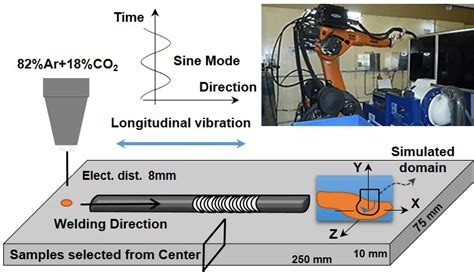
Welding stability directly impacts vibration durability. Spot weld nugget diameter must meet tensile strength standards. Robotic welding systems require periodic validation to prevent drift.
Scrap rates exceeding 5% significantly reduce profitability. High-volume appliance programs operating at 400,000–600,000 units annually cannot sustain uncontrolled variation.
Reliable process stability ensures consistent performance in Sheet Metal Assembly for Consumer Appliances under demanding production schedules.
Are Tooling, Fixtures, and Assembly Lines Fully Validated for Precision and Speed?
Tooling precision determines dimensional repeatability. Fixtures must securely hold parts during welding and fastening. Any misalignment at this stage affects final assembly quality.
Common tooling risks include –
- Fixture wear causing dimensional drift
- Progressive die degradation producing burrs
- Excessive changeover times reducing productivity
- Improper robotic alignment
Fixture capability studies validate repeatability under production cycle times. Positional tolerance must remain stable across thousands of operations.
SMED (Single-Minute Exchange of Die) practices reduce downtime. Lean manufacturing benchmarks target less than 15-minute changeovers for mixed production lines.
Additional readiness checks include –
- Tool life monitoring systems
- Preventive maintenance documentation
- Assembly line balancing analysis
- Takt time validation
- Ergonomic safety assessments
Uneven cycle time distribution lowers Overall Equipment Effectiveness (OEE). Balanced lines typically maintain OEE above 75%.
Well-prepared tooling ensures consistent throughput and dimensional control in Sheet Metal Assembly for Consumer Appliances.
Is the Supply Chain Prepared to Support Continuous Production Without Disruptions?
Material stability directly impacts structural reliability and coating quality. Sheet thickness variation beyond ±0.1 mm affects bending force and final geometry.
Supply chain risks include –
- Single-source dependency
- Inconsistent galvanization thickness
- Surface contamination affecting coating adhesion
- Delayed raw material deliveries
Material readiness indicators include –
- Approved vendor audits
- Chemical composition verification
- Mechanical property certification checks
- Lot traceability systems
- Dual-sourcing strategy validation
Powder coating adhesion depends heavily on substrate cleanliness. Surface defects increase rejection rates and shorten product life.
Organizations implementing supplier diversification strategies report nearly 30% fewer production interruptions.
Stable material flow strengthens operational continuity in Sheet Metal Assembly for Consumer Appliances.
Do Quality Systems and Compliance Frameworks Prevent Field Failures?
Quality assurance must be integrated into every stage of production. Final inspection alone cannot eliminate systemic defects.
Critical validation measures include –
- Production Part Approval Process (PPAP) documentation
- Surface roughness (Ra) validation
- Powder coating thickness testing (60–120 microns standard)
- Salt spray corrosion testing for 500–1000 hours
- Dynamic vibration endurance testing
Salt spray testing simulates long-term corrosion exposure. Vibration endurance testing replicates real washing machine operating cycles.
Warranty claims significantly reduce profit margins. Proactive validation reduces field failure rates by up to 40%.
Regulatory compliance also requires documentation and traceability. Proper documentation protects against recall risks.
Robust quality systems safeguard performance in Sheet Metal Assembly for Consumer Appliances.
Can Cost Structures and Capacity Scale Without Margin Erosion?
Scaling production requires predictable cost control. Volume increases must not increase defect rates or operational inefficiencies.
Primary cost drivers include raw material consumption, labor productivity, scrap rate, and machine utilization.
Key scalability indicators include –
- Overall Equipment Effectiveness (OEE) above 75%
- Scrap rate below 3%
- Stable labor-to-output ratio
- Automation ROI validation
- Capacity utilization maintained between 75–85%
Raw materials account for nearly 50–60% of total fabrication cost. Even minor scrap increases significantly impact margins.
Automation reduces human variability but must demonstrate measurable payback. Capacity overutilization above 90% increases breakdown risk.
Financial predictability ensures sustainable growth in Sheet Metal Assembly for Consumer Appliances.
How Does Frigate Ensure Production Readiness in Sheet Metal Assembly for Consumer Appliances?
Production readiness at Frigate is validated through engineering discipline, statistical control, and structured execution before scale-up approval. Every stage of Sheet Metal Assembly for Consumer Appliances is measured against defined technical benchmarks to ensure stability, repeatability, and scalability.
Below is a concise explanation of the core pillars.
Comprehensive DFM Validation Before Tool Release
Design for Manufacturability (DFM) ensures that product designs align with real manufacturing capability. Engineering teams evaluate bend radii, tolerance stack-up, weld accessibility, and material formability before tooling is finalized.
Validation includes –
- Springback compensation analysis
- Tolerance stack-up verification
- Weld distortion simulation
- Load-bearing FEA checks
Early DFM control reduces engineering changes, prevents tooling rework, and shortens ramp-up time in Sheet Metal Assembly for Consumer Appliances.
Process Capability Studies Before Mass Production
Capability studies confirm that machines consistently operate within tolerance limits.
Frigate conducts –
- Cp and Cpk analysis on critical dimensions
- First Article Inspection (FAI)
- Pilot production runs
- First Pass Yield (FPY) tracking
Target Cpk values above 1.33 ensure dimensional stability. Statistical validation prevents quality drift during high-volume production.
Precision Laser and CNC Bending Calibration
Dimensional accuracy depends on machine calibration and parameter control.
Calibration practices include –
- Laser alignment verification
- Tool wear compensation
- Angle correction programming
- Thickness-based parameter adjustment
Consistent calibration maintains ±0.1 mm cutting accuracy and ±0.5° bending repeatability, ensuring stable geometry across production cycles.
Robotic Welding Standardization and Validation
Weld strength directly impacts durability, especially for vibration-intensive appliances.
Frigate standardizes –
- Welding current and voltage parameters
- Robotic path accuracy
- Spot weld nugget size verification
- Penetration depth checks
Periodic destructive testing validates weld integrity, ensuring long-term structural reliability in Sheet Metal Assembly for Consumer Appliances.
Real-Time Production Monitoring and Data Tracking
Digital monitoring systems track performance indicators such as –
- Dimensional trends
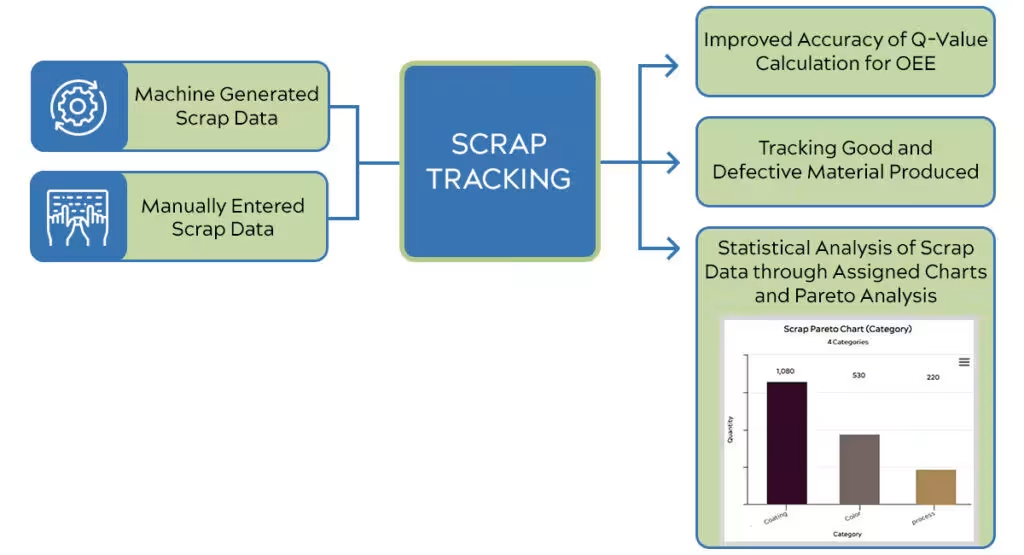
- Scrap rates
- OEE performance
- Downtime events
Trend analysis enables early correction before deviations affect large production volumes. Real-time visibility improves operational control.
Structured Supplier Audits and Material Traceability
Material consistency is controlled through –
- Supplier technical audits
- Mechanical and chemical certification review
- Incoming inspection testing
- Lot-level traceability
Traceability allows rapid containment if variation occurs. Dual sourcing improves supply stability and reduces disruption risk.
Fixture Repeatability and Preventive Maintenance
Fixtures are validated for positional accuracy and repeatability under full production load. Preventive maintenance schedules protect machine health and reduce downtime.
Controls include –
- Fixture alignment studies
- Tool wear monitoring
- Robotic recalibration checks
- Scheduled component replacement
Reliable fixtures and maintained equipment ensure consistent throughput and dimensional stability.
Integrated Model for Controlled Scaling
Frigate validates engineering readiness, statistical capability, supply chain stability, and equipment reliability before approving scale-up.
This structured approach reduces scrap, stabilizes cost per unit, improves yield performance, and strengthens durability in Sheet Metal Assembly for Consumer Appliances.
Scalable production becomes predictable because each technical variable is measured and controlled before expansion.
Conclusion
Production readiness is not a single checkpoint. It is a structured system combining engineering validation, stable processes, reliable supply chains, quality control, and cost discipline. Reliable Sheet Metal Assembly for Consumer Appliances depends on measurable indicators at every stage. Small dimensional errors can escalate into assembly failures. Minor coating issues can reduce durability. Process variation increases scrap and cost, especially in high volumes.
Frigate delivers scalable Sheet Metal Assembly for Consumer Appliances through validated engineering and controlled execution. Each stage is measured before full-scale production begins. Statistical capability studies reduce ramp-up risk and stabilize quality. This disciplined approach protects cost, reliability, and long-term performance. Connect with Frigate to assess readiness and build stable, high-volume manufacturing programs.