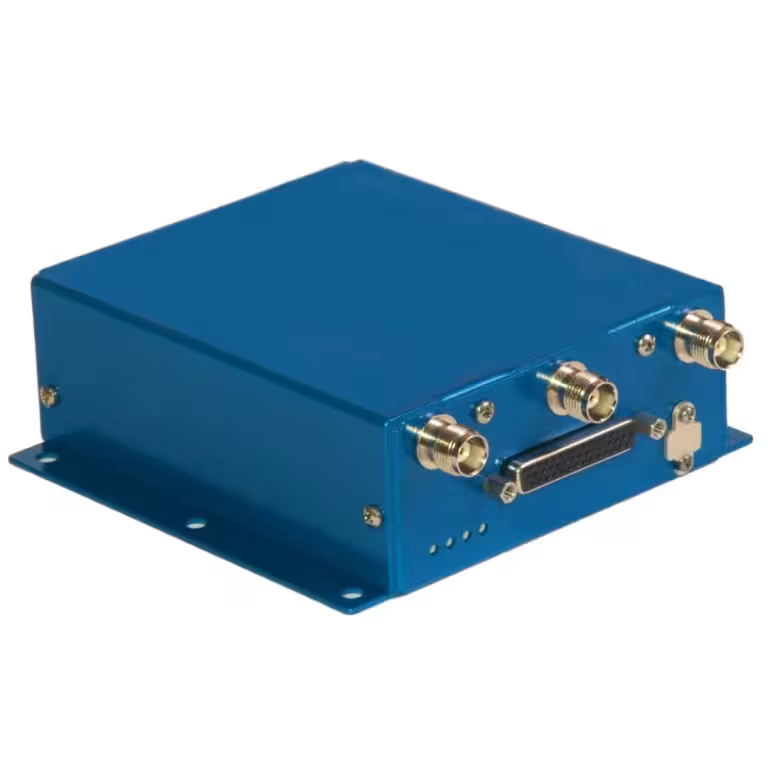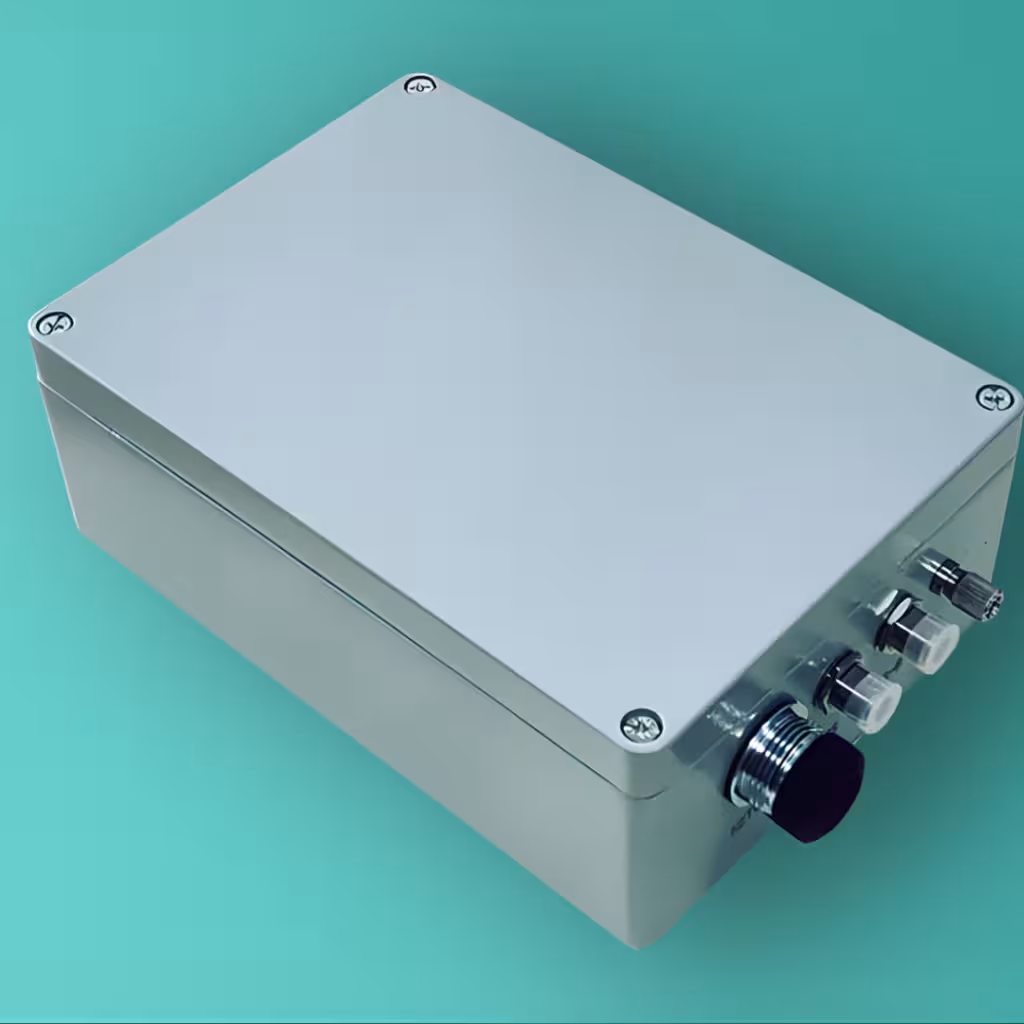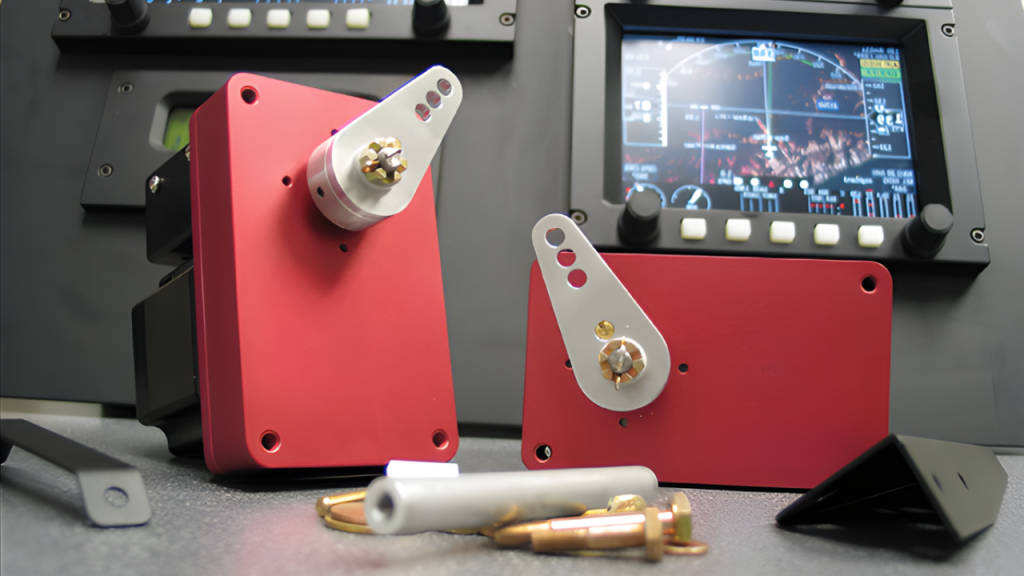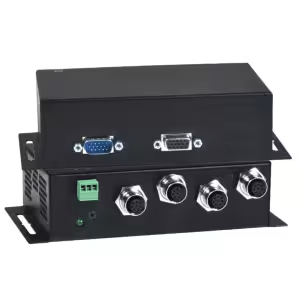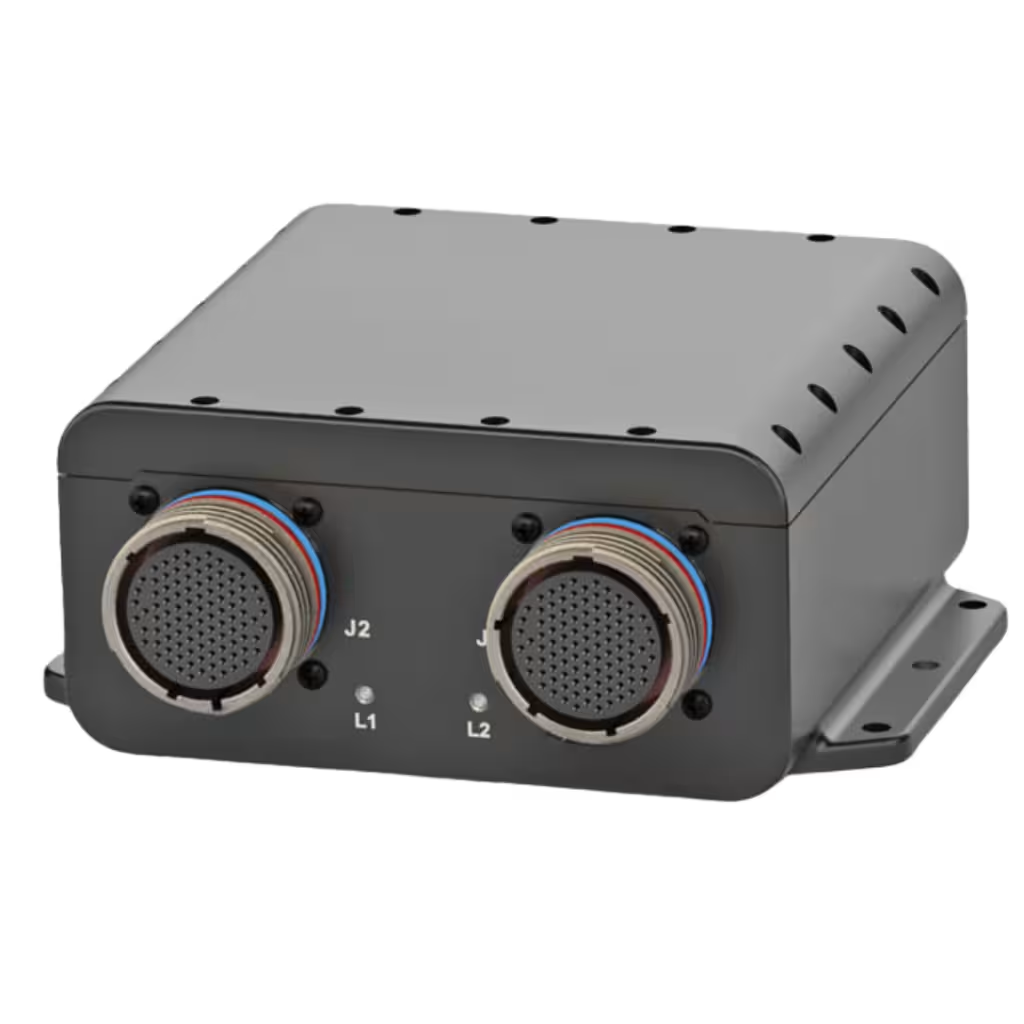
Avionics Bus Boxes

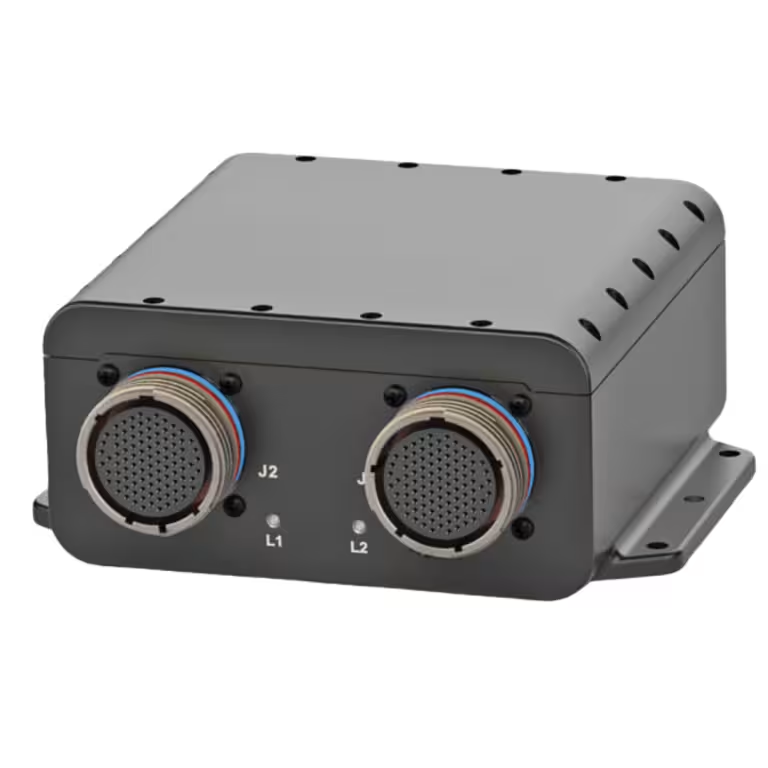
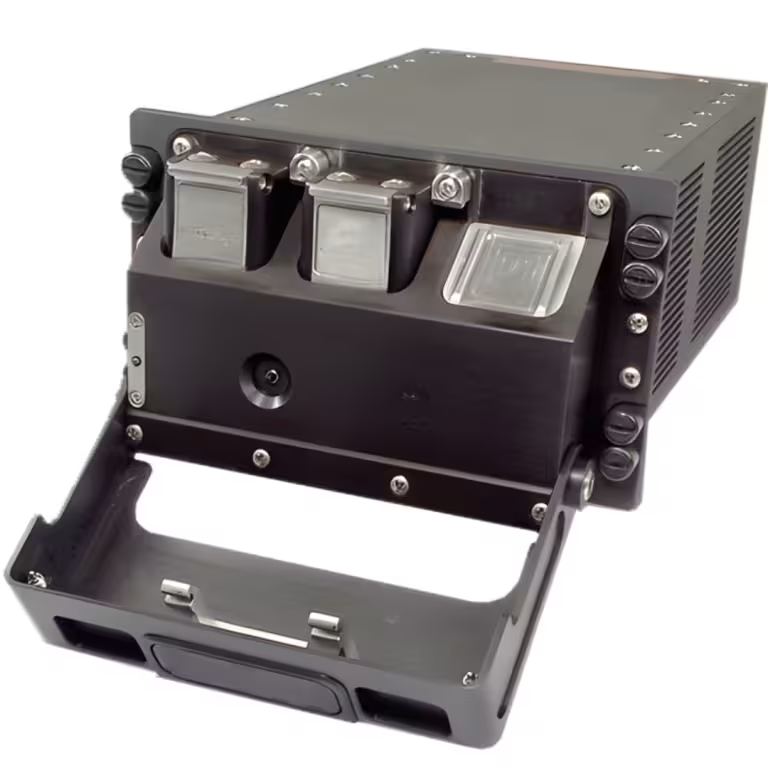
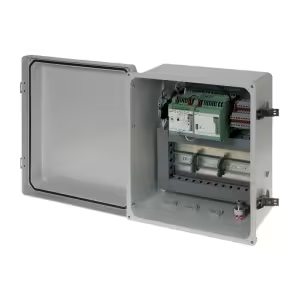
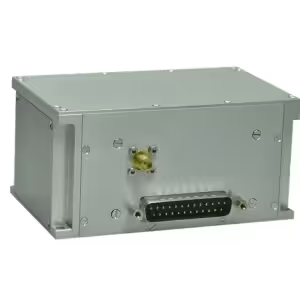
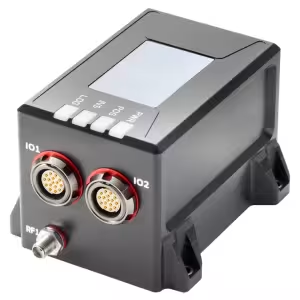
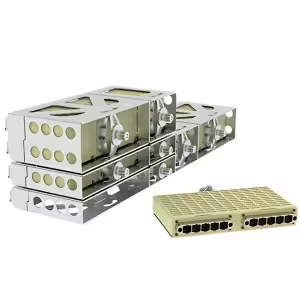
Electronic failures in aircraft avionics systems compromise navigation, communication, and flight control threatening mission success and passenger safety. Avionics Bus Boxes provide lightweight enclosures for data bus controllers, signal processors, and interface modules. 
HY D R O L Y SIS RESIS T ANCE
Material & Grade
  • Aluminum Alloy – 6061-T6, 7075-T6
  • Magnesium Alloy – AZ31B, AZ91D
  • Aerospace-grade aluminum
  • Lightweight high-strength materials
  • Sheet thickness – Up to 3.0mm capable
  • Maximum capable – 400mm (H) x 300mm (W) x 200mm (D)
  • Customizable based on avionics module configuration
  • Anodizing – MIL-A-8625 Type II, Type III
  • Chromate Conversion Coating – MIL-DTL-5541
  • Powder Coating – Aerospace-grade
  • Conductive coating (EMI shielding)
  • Corrosion-resistant finish
  • CNC Precision Machining (±0.025mm)
  • CNC Laser Cutting
  • TIG Welding (aerospace-grade)
  • CNC Press Brake Forming
  • EMI gasket groove machining
  • Weight reduction optimization
  • Aerospace-grade fasteners (AN/MS/NAS standards)
  • Titanium hardware (weight reduction)
  • EMI/RFI gasket hardware
  • Self-locking nuts (vibration-resistant)
  • Grounding provisions
  • Connector mounting provisions 

Product Description

Aircraft-mounted configurations accommodate avionics hardware with external dimensions reaching 400mm while minimizing weight penalties. We engineer aerospace-grade aluminum construction balancing electromagnetic shielding with strict weight limitations critical for aircraft performance. Through vibration isolation and environmental sealing, these boxes enable reliable avionics operation supporting commercial and military aviation. 

Mounting Type
  • Aircraft fuselage mounting
  • Avionics rack integration
  • Structural frame mounting
  • Vibration-isolated mounting
  • Panel mounting provisions
  • Quick-release mechanisms
  • EMI conductive gasket sealing
  • Environmental sealing (MIL-STD-810)
  • Altitude compensation vents
  • Pressure equalization provisions
  • Moisture barrier sealing
  • Multi-stage gasket systems
  • Operating Temperature – -55°C to +85°C
  • Storage Temperature – -62°C to +95°C
  • Altitude – Up to 50,000 feet
  • Humidity – Up to 95% RH
  • Salt spray resistance (MIL-STD-810)
  • Thermal shock resistance
  • Crash impact resistance (MIL-STD-810)
  • Random vibration tolerance
  • Sine vibration testing
  • Shock pulse resistance 
  • Transportation shock qualification
  • Operational vibration isolation
  • Shielding Effectiveness – 60-100 dB
  • Frequency range – 10 kHz to 18 GHz
  • Continuous EMI seam welding
  • Honeycomb ventilation panels
  • Filtered connector provisions
  • Conductive coating application
  • ISO 9001:2015 Manufacturing
  • AS9100 (Aerospace Quality Management)
  • RTCA DO-160 (Environmental Testing)
  • MIL-STD-810 (Environmental Engineering)
  • MIL-STD-461 (EMI/EMC)
  • FAA TSO certification (application-specific)
  • RoHS Compliant

Technical Advantages

Aircraft weight directly impacts fuel efficiency and payload capacity requiring lightweight enclosure construction without compromising protection. Addressing this challenge, magnesium and aluminum alloy combinations provide superior strength-to-weight ratios reducing enclosure mass. Precision CNC machining eliminates excess material while maintaining structural integrity during flight loads. 

Electromagnetic interference from radar systems and communication equipment could corrupt avionics data bus signals affecting system reliability. Continuous EMI seam welding creates unbroken conductive paths achieving shielding effectiveness exceeding 80dB at frequencies critical to avionics. Moreover, conductive gaskets at panel joints maintain shield integrity through thousands of thermal cycles during flight operations. 

Let's Get Started

Need reliable Enclosures for your next project? Get in touch with us today, and we’ll help you find exactly what you need!

Industry Applications

Commercial Aviation

Houses ARINC 429 data bus controllers managing avionics communication in passenger aircraft flight management systems.

Military Aircraft

Contains MIL-STD-1553 bus interface modules coordinating mission systems in fighter jets and transport aircraft.

Business Aviation

Protects avionics processors integrating flight displays, navigation, and communication systems in corporate jets.

Unmanned Aerial Systems

Secures flight control computers and payload interface modules in military and commercial drone platforms.

Helicopter Operations

Manages avionics equipment controlling glass cockpit displays and autopilot systems in rotary-wing aircraft.

Space Launch Vehicles

Consolidates telemetry and guidance processors in rocket avionics systems requiring extreme environmental qualification.

Avionics Bus Boxes

Designed for Flight Operations

Avionics configurations vary from simple interface modules to complex integrated modular avionics (IMA) systems requiring different packaging densities. Frigate manufactures Avionics Bus Boxes meeting RTCA DO-160 environmental qualification with complete test documentation supporting aircraft certification. 

Altitude compensation vents prevent enclosure pressurization during rapid altitude changes protecting sealed components. Quick-release mounting provisions enable rapid avionics removal during line maintenance reducing aircraft ground time. 

Avionics Bus Boxes

Having Doubts? Our FAQ

Check all our Frequently Asked Questions

Can magnesium and aluminum alloy combinations in Avionics Bus Boxes provide superior strength-to-weight ratios reducing enclosure mass?

Weight optimization in airborne electronics depends on material selection as much as structural layout. Frigate evaluates combinations of magnesium and aluminum alloys to achieve high stiffness while minimizing mass, especially for bus boxes mounted close to the aircraft centerline. Alloy choice and wall thickness are typically adjusted based on load cases, corrosion environment, and customer weight targets defined in project requirements. 

How does Frigate achieve continuous EMI seam welding in Avionics Bus Boxes creating shielding effectiveness exceeding 80dB?

Achieving high EMI attenuation requires uninterrupted conductive paths across enclosure seams, and Frigate addresses this through – 

  • Continuous seam welding instead of stitch or spot welds 
  • Controlled weld penetration to preserve material conductivity 
  • Post-weld finishing that avoids gaps or discontinuities 

Seam welding strategy is often customized according to shielding levels specified for each avionics program. 

Are conductive gaskets at panel joints effective maintaining shield integrity through thousands of thermal cycles during flight operations?

Maintaining shielding performance over repeated thermal expansion and contraction relies on stable gasket compression, and Frigate considers – 

  • Elastomer and metal-filled gasket materials matched to temperature range 
  • Groove geometries that retain compression over time 
  • Fastener spacing optimized for uniform contact pressure 

Gasket selection is typically based on the aircraft’s thermal profile and service life expectations. 

How does Frigate engineer altitude compensation vents in Avionics Bus Boxes preventing pressurization during rapid altitude changes?

Rapid altitude transitions can create damaging pressure differentials inside sealed enclosures. Frigate incorporates altitude compensation venting concepts that allow controlled pressure equalization while still maintaining environmental and EMI protection. Vent type and placement are usually defined according to aircraft climb rates, sealing class, and contamination risk outlined in system specifications. 

Does quick-release mounting integration enable rapid avionics removal during line maintenance reducing aircraft ground time?

Reducing maintenance downtime requires mounting systems that are both secure and service-friendly, and Frigate integrates – 

  • Tool-assisted or captive fastener release mechanisms 
  • Alignment features that simplify reinstallation 
  • Load paths that remain intact after repeated removals 

Mounting concepts are often adapted to airline or MRO maintenance practices on request. 

How does Frigate validate RTCA DO-160 environmental qualification in Avionics Bus Boxes with complete test documentation?

Environmental qualification requires traceability between design assumptions and test evidence. Frigate supports DO-160 compliance by aligning materials, finishes, and assembly methods to the applicable test categories, followed by documented vibration, temperature, humidity, and EMI testing. Documentation packages are generally structured to match certification authority expectations and customer compliance workflows. 

Can precision CNC machining eliminate excess material while maintaining structural integrity during flight loads?

Material removal must be balanced carefully against strength requirements, and Frigate applies CNC machining approaches such as – 

  • Pocketing and ribbing based on stress analysis 
  • Local reinforcement at mounting and connector interfaces 
  • Controlled tolerances that preserve stiffness 

Machining strategies are usually refined using customer load cases and finite element analysis inputs. 

How does Frigate address vibration isolation in Avionics Bus Boxes protecting data bus controllers from operational vibration?

Operational vibration can degrade connector reliability and electronics life, and Frigate addresses this by – 

  • Isolating internal electronics sub-frames from the outer housing 
  • Selecting dampers tuned to aircraft vibration spectra 
  • Preventing resonance through mass and stiffness control 

Isolation methods are typically tailored to the aircraft platform and mounting location. 

Are filtered connector provisions compatible with MIL-STD-1553 bus interface requirements in military aircraft applications?

Signal integrity on data buses depends heavily on connector design, and Frigate incorporates – 

  • Filtered connectors designed for MIL-STD-1553 impedance requirements 
  • Shield termination methods that preserve continuity at interfaces 
  • Layouts that minimize stub lengths inside the enclosure 

Connector configuration is usually selected based on bus topology and electromagnetic environment. 

How does Frigate optimize weight reduction in Avionics Bus Boxes balancing electromagnetic shielding with strict aircraft weight limitations?

Balancing shielding and weight requires coordinated design decisions, and Frigate optimizes this by – 

  • Combining lightweight alloys with localized shielding features 
  • Avoiding overdesign in non-critical structural areas 
  • Matching shielding thickness to actual EMI requirements 

Weight optimization approaches are generally customized based on aircraft performance targets and certification constraints. 

Get Clarity with Our Manufacturing Insights

We'd love to Manufacture for you!

Submit the form below and our representative will be in touch shortly.

LOCATIONS

Registered Office

10-A, First Floor, V.V Complex, Prakash Nagar, Thiruverumbur, Trichy-620013, Tamil Nadu, India.

Operations Office

9/1, Poonthottam Nagar, Ramanandha Nagar, Saravanampatti, Coimbatore-641035, Tamil Nadu, India. ㅤ

Other Locations

GENERAL ENQUIRIES

Get Quote
Support All File Formats Including - STEP | STP | SLDPRT | STL | DXF | IPT | X_T | X_B | 3DXML | CATPART | PRT | SAT | 3MF | JT files

LOCATIONS

Registered Office

10-A, First Floor, V.V Complex, Prakash Nagar, Thiruverumbur, Trichy-620013, Tamil Nadu, India.

Other Locations

GENERAL ENQUIRIES

Get Your Quote Now

New Get Quote form

Avionics Bus Boxes

Need reliable wires and cables for your next project? Get in touch with us today, and we’ll help you find exactly what you need!

Get Latest Price

Get Price Form

Avionics Bus Boxes

Need reliable Machining for your next project? Get in touch with us today, and we’ll help you find exactly what you need!

Get Latest Price

Get Price Form