


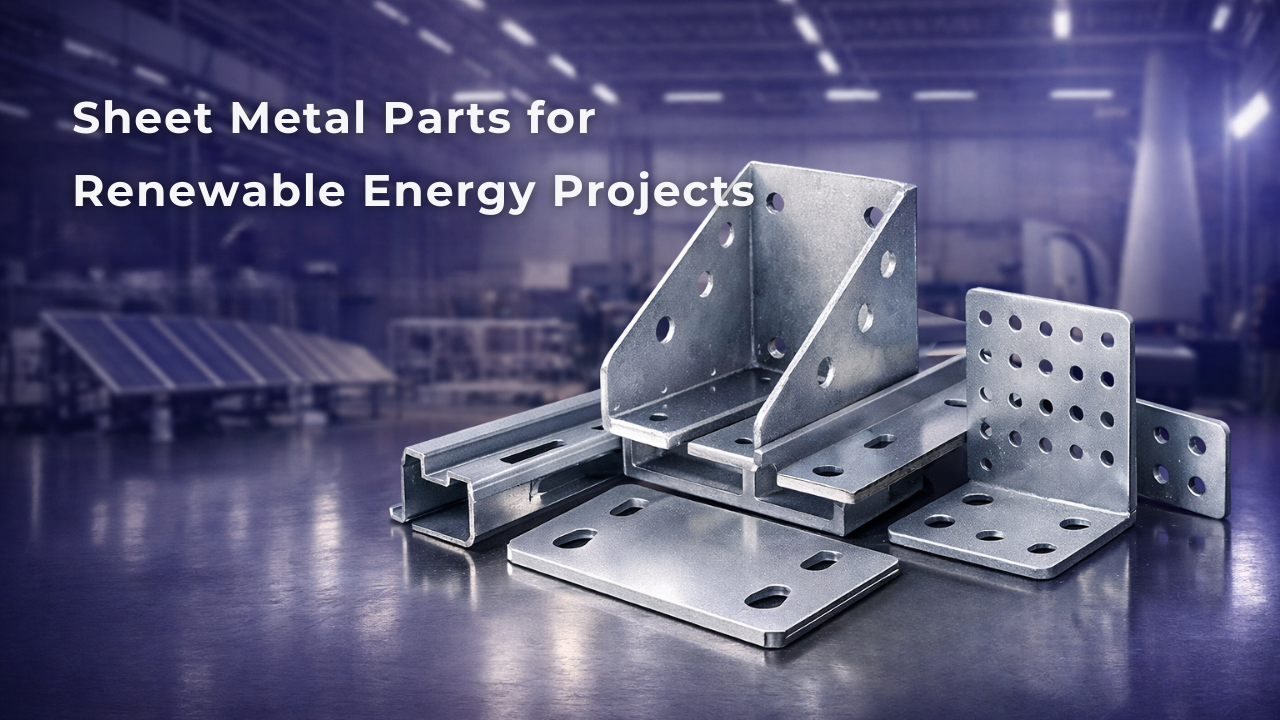
Renewable energy infrastructure is expanding at record speed. Global renewable capacity additions crossed 440 GW in a recent year, and that number continues to grow. Solar parks stretch across deserts. Wind turbines operate offshore in aggressive salt environments. Battery storage systems function under high thermal loads. Every one of these installations depends on fabricated structural components that must perform reliably for 20–30 years.
Sheet Metal Parts for Renewable Energy Projects form the structural backbone of these systems. Mounting structures, enclosures, brackets, and protective housings must withstand wind loads, vibration, temperature fluctuations, and corrosion exposure. Edge condition and deburring quality play a direct role in structural durability, safety compliance, and coating performance.
Deburring is often underestimated. However, edge preparation determines how well a component resists corrosion, handles stress, and protects electrical systems. Strong edge safety standards reduce lifecycle risk and protect long-term infrastructure investments.
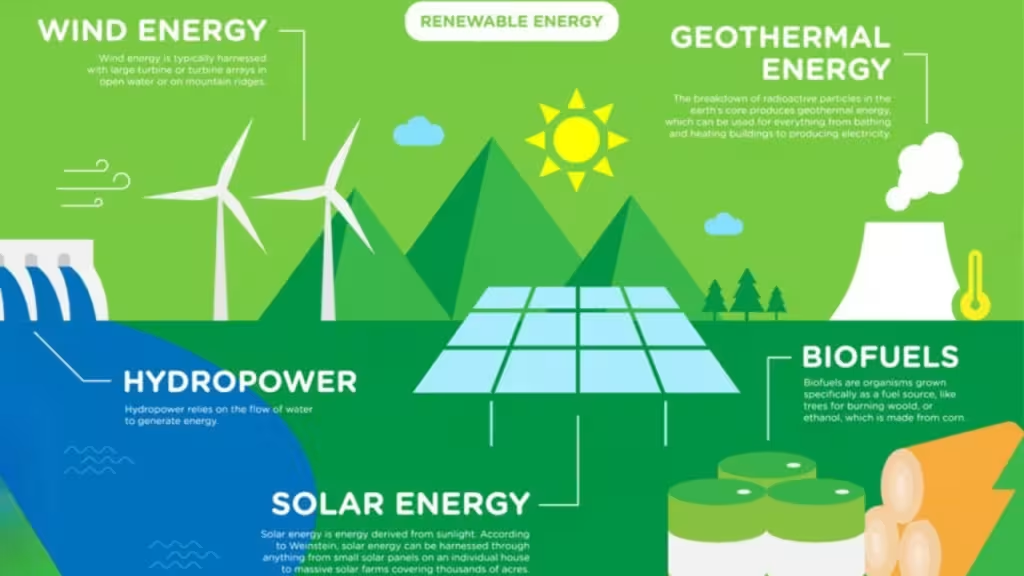
Why Even Small Sharp Edges Can Create Big Risks in Renewable Installations
Fabricated components used in renewable systems include –
- Solar mounting brackets and rails
- Wind turbine access panels
- Battery energy storage cabinets
- Inverter and transformer enclosures
- Grounding plates and cable trays
Each of these are essential Sheet Metal Parts for Renewable Energy Projects. Cutting processes such as laser cutting, plasma cutting, turret punching, and shearing naturally leave behind burrs and sharp corners.
Sharp edges introduce multiple technical and operational risks –
- Increased risk of cuts and injuries during installation
- Abrasion and insulation damage to electrical cables
- Poor earthing continuity due to uneven contact surfaces
- Coating thinning at corners during curing
- Early-stage corrosion initiation
Powder coating behaves differently at edges. Surface tension causes coating material to flow away from sharp corners. Coating thickness can reduce by up to 30% at untreated edges. A nominal 80-micron coating may drop to nearly 50 microns at corners, compromising corrosion resistance.
Stress concentration is another concern. Sharp corners amplify mechanical stress. Wind turbine structures experience cyclic loads, and sharp edges can act as crack initiation points. Controlled edge radiusing reduces stress concentration factors and extends fatigue life.
Reliable edge preparation strengthens the performance of Sheet Metal Parts for Renewable Energy Projects across safety, durability, and compliance dimensions.
Understanding the Most Common Edge Defects Found in Structural Sheet Metal
Edge defects vary depending on material grade, cutting technology, and tooling condition. Without strict process control, inconsistency becomes unavoidable.
Typical edge defects include –
- Burr projections exceeding tolerance limits
- Re-solidified slag from thermal cutting
- Razor-sharp cut edges
- Micro-cracks in heat-affected zones
- Rolled or deformed edges from punching
- Uneven thinning at corner transitions
Burr height is influenced by cutting speed, tool wear, and material hardness. Burrs exceeding 0.1–0.2 mm can interfere with coating adhesion and assembly precision.
Heat-affected zones from laser cutting may alter microstructure near edges. Micro-cracks formed during cutting can propagate under cyclic loading conditions. Structural panels in wind turbines and solar tracker systems face constant vibration. Untreated edges reduce fatigue resistance over time.
Coating adhesion also depends on surface uniformity. Rough or jagged edges create localized coating defects. Moisture accumulates at these imperfections, accelerating corrosion.
Consistency becomes challenging when producing large volumes of Sheet Metal Parts for Renewable Energy Projects. Even minor variation in deburring quality across batches can result in rejection during inspection or premature field failure.
What Global Safety and Compliance Standards Expect from Edge Preparation
Renewable infrastructure projects operate under strict international standards. Edge quality must align with both mechanical and electrical safety regulations.
Key standards and guidelines include –
- ISO 13715 for defining edge conditions
- IEC standards for electrical enclosure safety
- OSHA workplace safety requirements
- CE compliance directives for European markets
ISO 13715 allows specification of permissible edge breaks and burr limits. However, renewable projects often demand tighter internal quality standards than the minimum regulatory requirement.
Technical requirements for Sheet Metal Parts for Renewable Energy Projects commonly include –
- Defined maximum burr height values
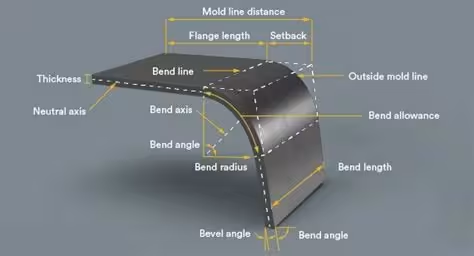
- Specified minimum edge radius (typically 0.5–2 mm)
- Smooth transitions to prevent coating thinning
- Documented inspection and traceability records
Edge geometry directly influences coating system performance. Engineering practice recommends an edge radius at least two to three times the coating thickness to ensure full coverage.
Documentation plays a major role in large-scale renewable projects. Developers and EPC contractors expect measurable quality records. Absence of defined deburring criteria often leads to supplier disputes and shipment delays.
Clear compliance alignment protects timelines and ensures consistent quality across high-volume production.
Choosing the Right Deburring Method for Structural Renewable Components
Deburring is not a one-size-fits-all process. Method selection depends on material thickness, part geometry, production volume, and coating requirements.
Common deburring techniques include –
- Manual grinding and hand filing
- Mechanical brush deburring systems
- Abrasive belt edge rounding machines
- Vibratory or barrel tumbling
- Thermal deburring for internal cavities
- Robotic finishing systems
Manual deburring provides flexibility for small batches but introduces variability. Operator fatigue and skill differences create inconsistent edge radii.
Mechanical edge rounding machines offer greater process control. Abrasive belts and rotating brushes create uniform edge geometry across large volumes. These systems are widely preferred for Sheet Metal Parts for Renewable Energy Projects due to repeatability.
Thermal deburring effectively removes internal burrs from complex geometries. Controlled combustion eliminates fine burrs in enclosed features. Higher investment cost must be evaluated against production scale.
Robotic finishing enhances repeatability in high-volume environments. Automated systems integrate measurement and documentation capabilities, strengthening quality traceability.
Selection of an improper deburring method can increase –
- Rework rates
- Coating failures
- Dimensional inconsistencies
- Lifecycle maintenance costs
A structured approach to deburring supports both technical reliability and long-term cost efficiency.
How Edge Quality Directly Affects Coating Life and Corrosion Resistance
Corrosion remains one of the primary causes of structural degradation in renewable installations. Outdoor deployment exposes components to humidity, salt spray, dust, and thermal cycling.
Edge geometry strongly influences coating integrity in Sheet Metal Parts for Renewable Energy Projects.
Technical consequences of untreated sharp edges include –
- Reduced coating thickness at corners
- Localized coating delamination
- Early moisture penetration
- Accelerated red rust formation
- Reduced salt spray test performance
Laboratory testing indicates that properly radiused edges can improve corrosion resistance by up to 40% compared to sharp-edged components.
Offshore wind projects often require salt spray resistance exceeding 1000 hours. Untreated edges fail earlier due to coating thinning.
Desert installations experience temperature variations exceeding 40°C between day and night. Thermal expansion and contraction stress coatings. Sharp edges accelerate crack propagation under thermal cycling.
Uniform edge rounding distributes coating evenly. Better adhesion increases maintenance intervals and reduces lifecycle repair costs.
Durability of Sheet Metal Parts for Renewable Energy Projects depends heavily on disciplined edge preparation before coating application.
Why Supplier Consistency Becomes a Major Challenge in Utility-Scale Projects
Utility-scale renewable projects involve thousands to millions of fabricated components. Maintaining consistency across production batches is technically demanding.
Common supplier challenges include –
- Undefined edge criteria in technical drawings
- Visual inspection without measurable tools
- Inconsistent deburring across production shifts
- Limited batch-level traceability
- Variation in coating performance due to edge inconsistency
Visual inspection alone cannot quantify burr height or radius accurately. Profilometers and calibrated radius gauges provide measurable assurance.
Shipment rejection due to edge defects delays installation schedules. Idle crews and equipment increase project cost per day significantly.
Structured qualification of suppliers for Sheet Metal Parts for Renewable Energy Projects should evaluate –
- Controlled deburring processes
- Measurable edge standards
- Documented inspection protocols
- Repeatability across high production volumes
Predictable quality strengthens long-term partnerships and protects investor confidence.
How Frigate Ensures Controlled and Measurable Edge Safety Standards
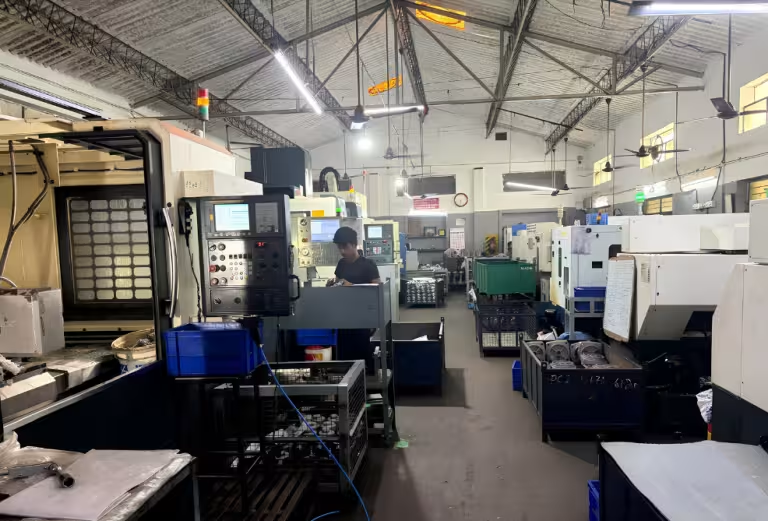
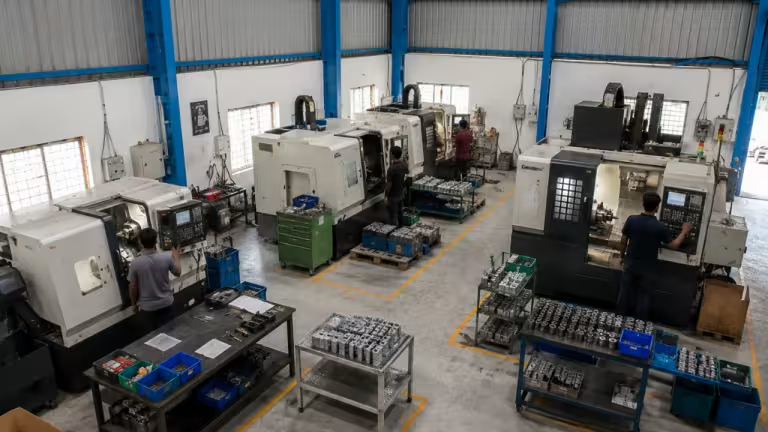
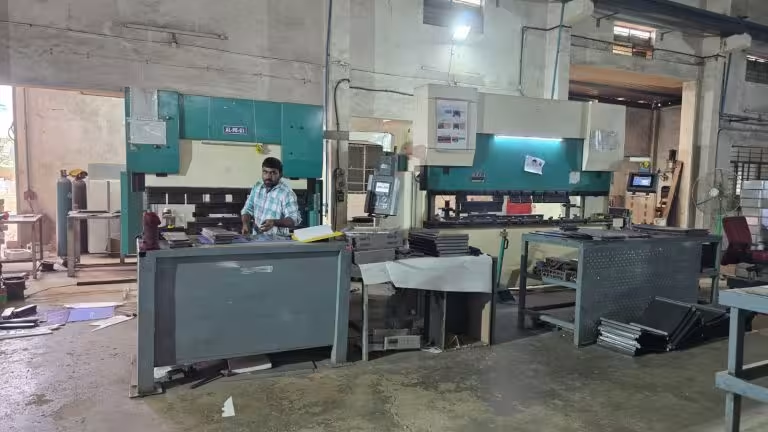
Frigate integrates deburring directly into the main fabrication workflow instead of treating it as a secondary finishing activity. Edge conditioning is planned, measured, and verified at defined production stages to ensure that Sheet Metal Parts for Renewable Energy Projects meet structural, coating, and compliance requirements consistently.
Defined and Engineered Edge Radius Specifications
Edge radius requirements are clearly defined during process planning based on –
- Material thickness and grade
- Structural load application
- Coating type and thickness
- Environmental exposure conditions
Specifications typically align with coating engineering principles, where the edge radius supports full coating coverage. Burr height limits and minimum radii are documented in measurable terms. Clear specifications eliminate ambiguity and reduce rejection risk during inspections.
Automated Mechanical Deburring for Repeatability
Automation replaces manual variability. Mechanical deburring systems with controlled pressure and feed rates ensure uniform edge rounding across large production volumes.
Key advantages include –
- Consistent geometry across batches
- Minimal dimensional distortion
- Reduced operator dependency
- Stable quality across production shifts
Repeatability is critical when producing high volumes of Sheet Metal Parts for Renewable Energy Projects for utility-scale installations.
Controlled Burr Height and Edge Geometry Tolerances
Burr height and edge breaks are controlled within defined tolerances using calibrated inspection tools. Measurement methods include radius gauges and sample-based verification.
Process controls ensure –
- Burr projections remain within allowable micron limits
- Fastener holes maintain fatigue strength
- Assembly alignment is not compromised
- Coating adhesion is not affected
Controlled tolerances improve structural reliability and coating performance.
Surface Preparation Optimized for Coating Performance
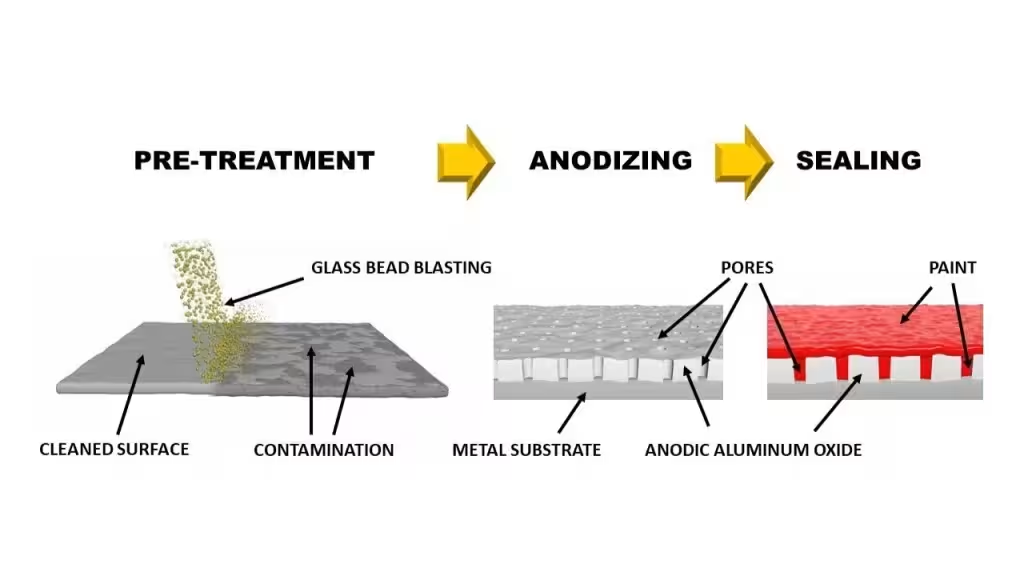
Edge finishing is aligned with downstream coating processes. Sharp peaks and micro-slag are removed before pre-treatment and powder coating.
Surface preparation ensures –
- Uniform powder thickness at corners
- Improved galvanization bonding
- Reduced risk of coating pull-back
- Enhanced corrosion resistance
Proper edge geometry directly supports long-term durability of Sheet Metal Parts for Renewable Energy Projects.
Measured Inspection and Batch Traceability
Inspection is documented and traceable. Batch-level records link production lots to measured edge parameters.
Quality documentation supports –
- ISO and project compliance
- Third-party audit requirements
- EPC contractor validation
- Reduced supplier disputes
Structured traceability strengthens reliability and accountability.
Pre-Coating Edge Verification for Lifecycle Reliability
Edge condition is verified before coating application to prevent post-coating rework.
Benefits include –
- Consistent coating thickness
- Lower corrosion initiation risk
- Reduced maintenance exposure
- Improved lifecycle performance
This controlled approach ensures durable and compliant Sheet Metal Parts for Renewable Energy Projects.
Process Discipline That Reduces Field Failures
Automation, measurable standards, and documented controls reduce variability across shifts and batches.
Results include –
- Lower rejection rates
- Reduced installation injuries
- Improved fatigue resistance
- Enhanced long-term corrosion durability
Frigate delivers consistent and compliant Sheet Metal Parts for Renewable Energy Projects by maintaining controlled and measurable edge safety standards that support structural integrity and long-term performance.
Conclusion
Renewable energy systems demand durability, safety, and predictable performance over decades. Edge geometry significantly influences structural integrity, coating durability, and electrical safety.
Reliable Sheet Metal Parts for Renewable Energy Projects require disciplined processes, measurable standards, and consistent execution across large volumes.
Frigate delivers precision-focused deburring solutions engineered for renewable applications. Connect with Frigate to strengthen edge safety, improve corrosion resistance, and ensure dependable long-term performance in renewable energy infrastructure.