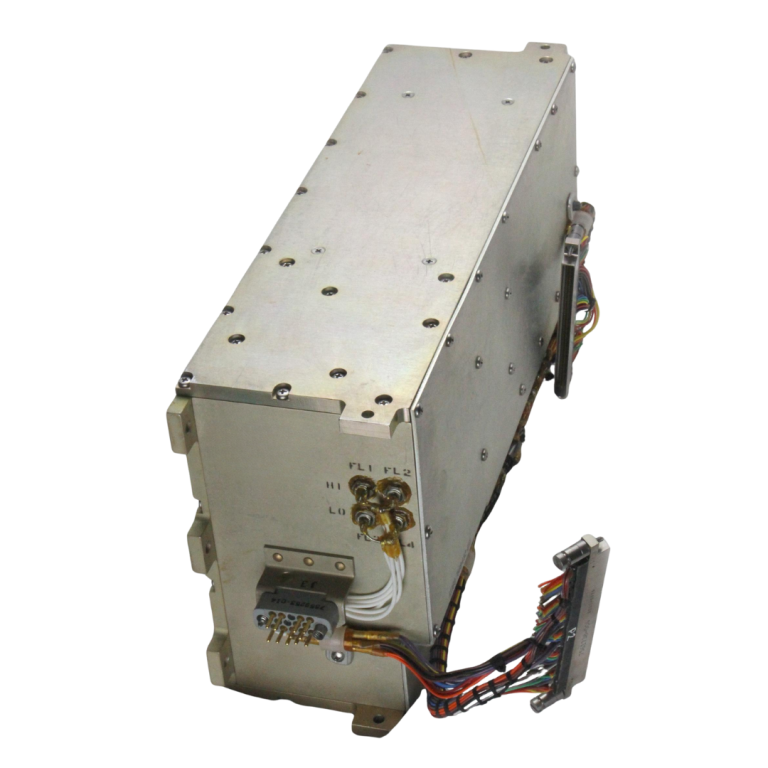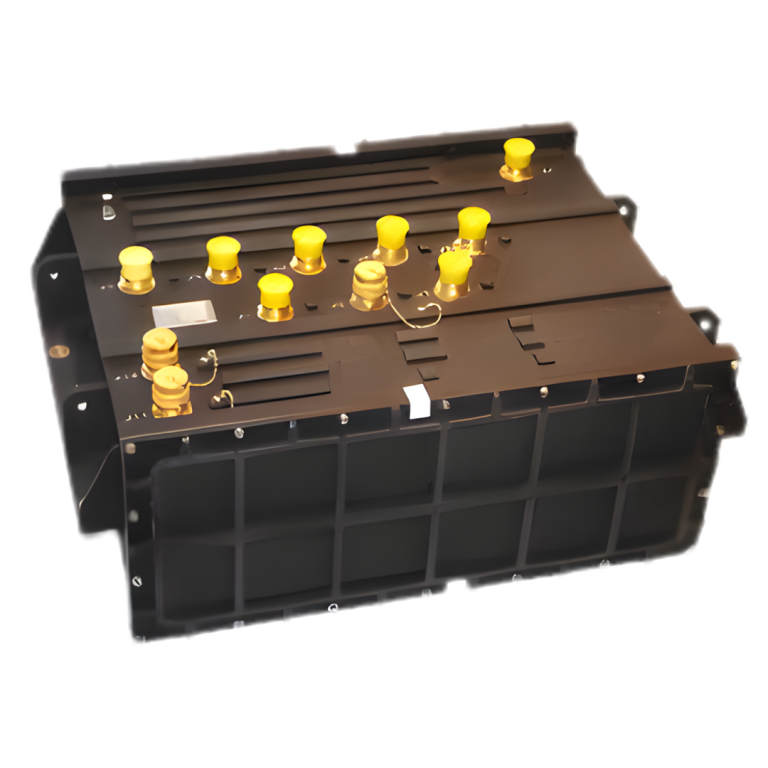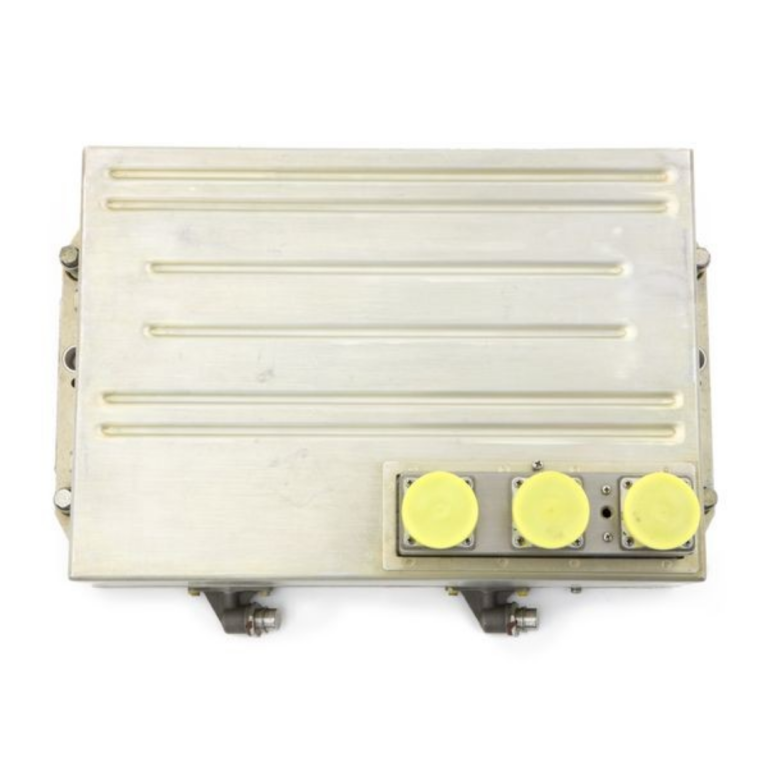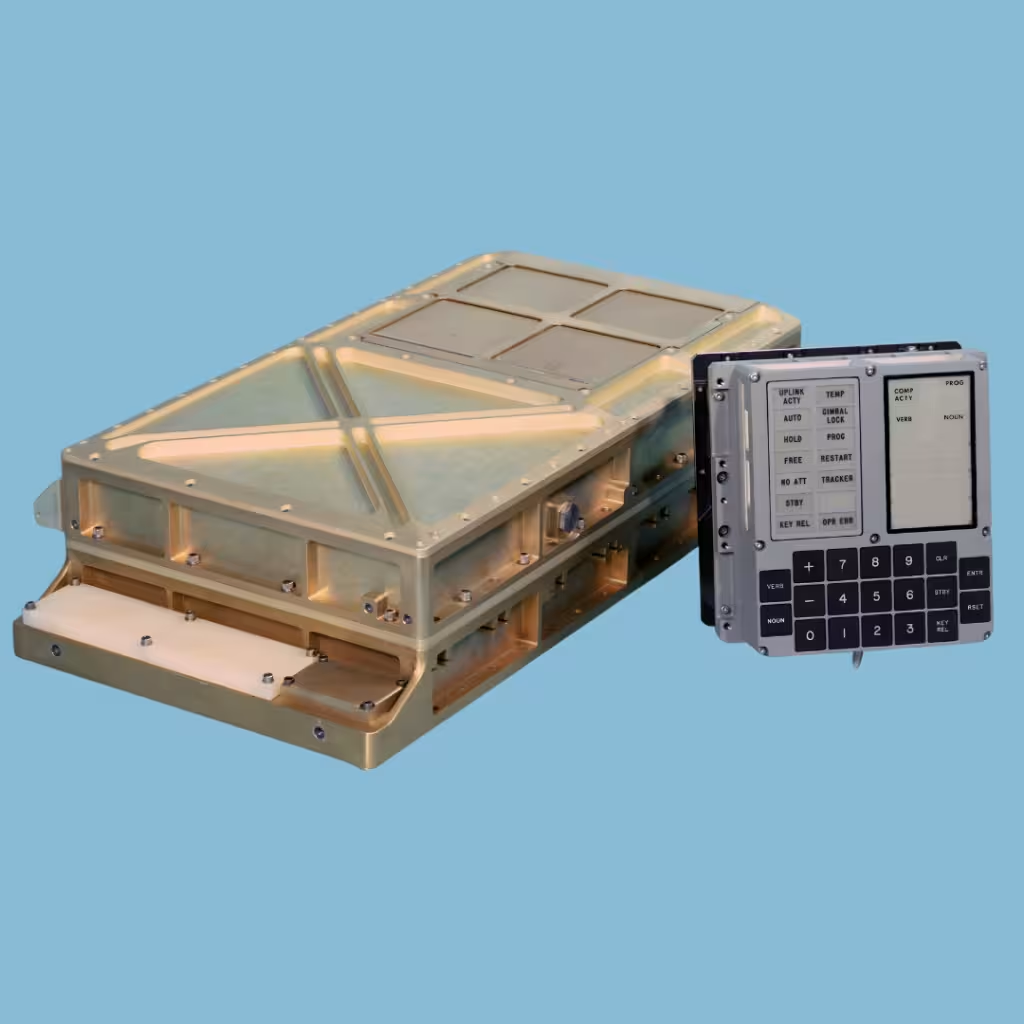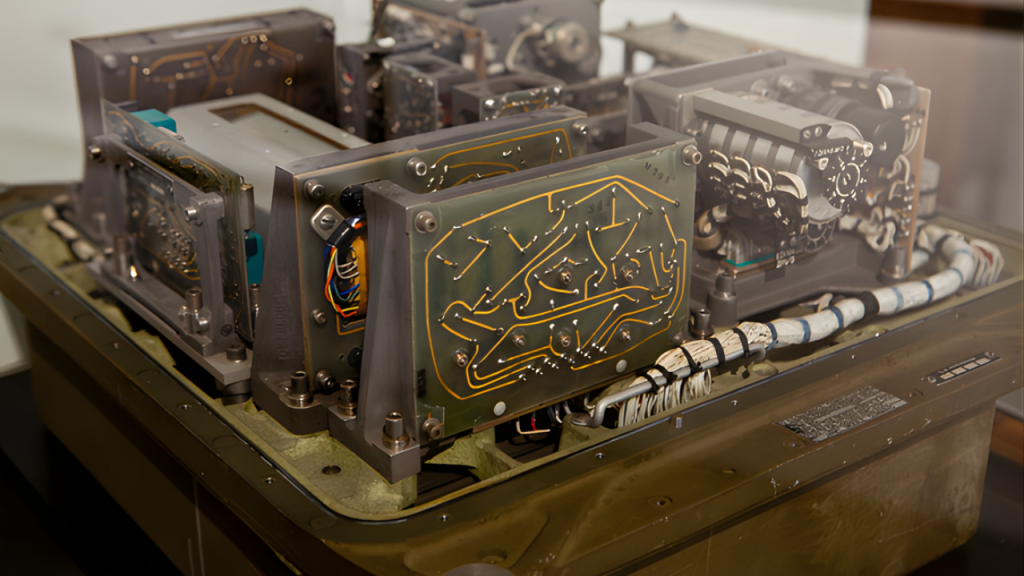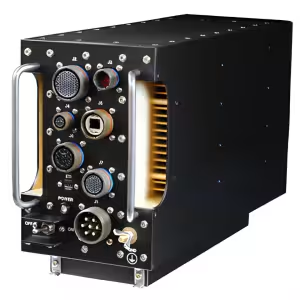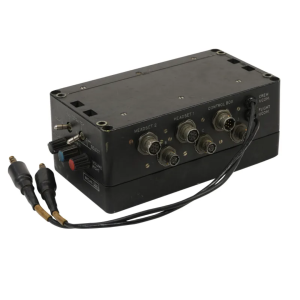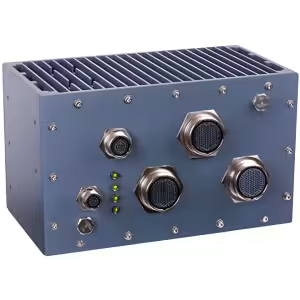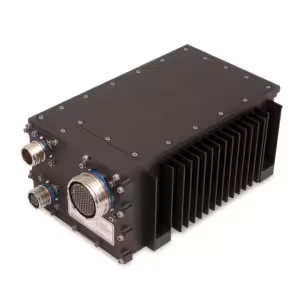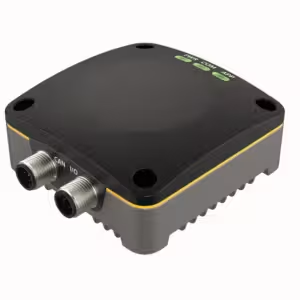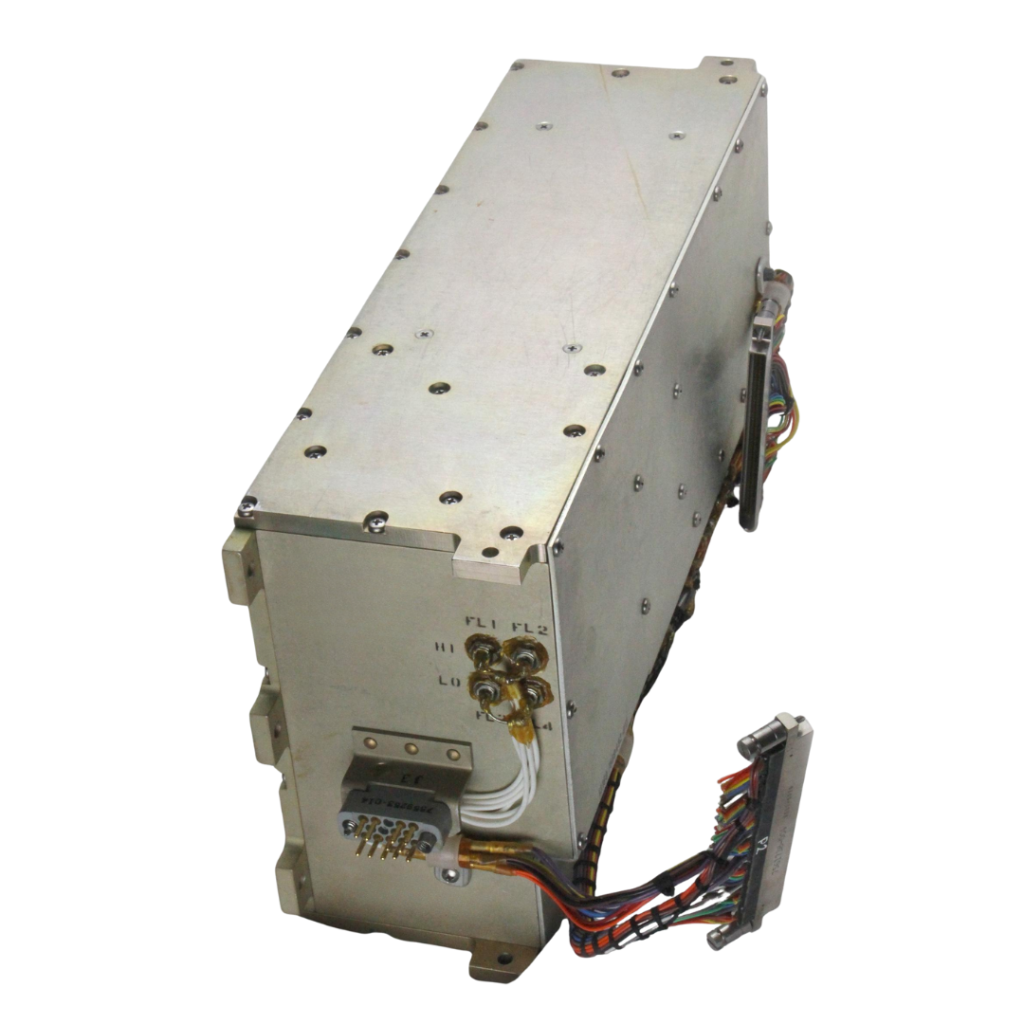
Missile Guidance Computer Enclosure

When precision-guided munitions navigate toward targets, onboard computers process inertial measurements, GPS signals, and target acquisition data requiring protection from extreme flight environments. Missile Guidance Computer Enclosures house flight processors, sensor fusion electronics, and navigation systems surviving launch acceleration and atmospheric re-entry. 
HY D R O L Y SIS RESIS T ANCE
Material & Grade
  • Aluminum Alloy – 7075-T6, 6061-T6
  • Titanium Alloy – Ti-6Al-4V (weight-critical)
  • Stainless Steel – SS316
  • Magnesium Alloy – AZ31B (ultra-lightweight)
  • Sheet thickness – Up to 4.0mm capable
  • Maximum capable – 800mm (H) x 600mm (W) x 500mm (D)
  • Customizable based on guidance system architecture
  • Hard Anodizing (MIL-A-8625 Type III)
  • Chromate Conversion Coating (MIL-DTL-5541)
  • Thermal control coating (emissivity optimized)
  • Corrosion-resistant finish
  • Ablative coating (re-entry applications)
  • CNC Precision Machining (±0.025mm tolerance)
  • Electron Beam Welding
  • Aerospace-grade Forming
  • Hermetic sealing integration
  • Conformal coating application
  • Precision alignment features
  • Titanium/A286 Stainless Fasteners
  • Captive screws (anti-vibration)
  • Precision torque requirements
  • Locking mechanisms
  • Thermal expansion compensation
  • Grounding provisions

Product Description

Airframe-integrated configurations accommodate guidance hardware with external dimensions reaching 800mm while withstanding acceleration loads exceeding 50G. Our aerospace-grade aluminum or titanium construction provides electromagnetic shielding and structural integrity essential for sustained hypersonic flight conditions. Through hermetic sealing and thermal management, these enclosures enable reliable guidance system operation from sub-zero storage temperatures through missile flight completion. 

Mounting Type
  • Airframe integration mounts
  • Shock-isolated mounting systems
  • Gimbal mounting provisions
  • Inertial reference alignment
  • Launch rail interface 
  • Separation mechanism compatibility
  • Hermetic sealing (helium leak tested)
  • Nitrogen purge capability
  • Pressure vessel rated (altitude)
  • Conformal coating protection
  • Moisture barrier design  
  • Vacuum-rated (space applications) 
  • MIL-STD-810 Method 501 (Thermal extremes)
  • Operating Temperature – -54°C to +85°C
  • Altitude – Up to 30,000 meters
  • Thermal cycling (rapid temperature change)
  • Acceleration loads – Up to 50G
  • Re-entry heating (hypersonic applications)
  • MIL-STD-810 Method 514 (High-intensity vibration)
  • MIL-STD-810 Method 516 (Pyrotechnic shock)
  • Launch acceleration – 20-100G capable
  • Flight vibration spectrum  
  • Motor ignition shock
  • Impact deceleration (terminal phase)
  • MIL-STD-461 Compliance (stringent levels)
  • Shielding Effectiveness – 80-120 dB
  • RF seam welding
  • Conductive gaskets (MIL-DTL-83528)
  • Waveguide-below-cutoff vents 
  • HIRF protection (High-Intensity Radiated Fields)
  • MIL-STD-810 (Environmental Engineering)
  • MIL-STD-461 (EMI/EMC – Stringent)
  • MIL-STD-1540 (Spacecraft Systems)  
  • MIL-STD-1576 (Electroexplosive Devices)
  • DO-160 (Airborne Equipment – Section 20)
  • ITAR/EAR Controlled
  • AS9100D Manufacturing

Technical Advantages

Launch acceleration subjects guidance electronics to shock loads exceeding 100G during rocket motor ignition requiring robust structural design. Addressing these extreme conditions, precision-machined aluminum frames distribute acceleration forces uniformly across circuit board mounting points preventing component lead fatigue. Conformal coating application protects electronic assemblies from moisture infiltration and altitude-induced pressure differentials during flight envelope transitions. 

Electromagnetic compatibility demands comprehensive shielding preventing missile seeker emissions from interfering with guidance processors or external jamming from disrupting navigation calculations. Frigate engineers electron beam welded seams creating continuous conductive paths with RF attenuation exceeding 100dB across critical frequency ranges. 

Let's Get Started

Need reliable Enclosures for your next project? Get in touch with us today, and we’ll help you find exactly what you need!

Industry Applications

Air-to-Surface Missiles

Contains inertial navigation units and terminal guidance processors directing precision strikes against ground targets from standoff ranges.

Surface-to-Air Defense Systems

Houses radar seeker electronics and flight control computers intercepting aircraft and cruise missiles at high altitudes. 

Anti-Ship Cruise Missiles

Protects terrain-following navigation systems and target recognition processors during sea-skimming flight profiles. 

Ballistic Missile Reentry Vehicles

Secures guidance computers and decoy discrimination systems surviving hypersonic speeds and plasma sheath conditions during atmospheric reentry. 

Air-to-Air Interceptors

 Manages guidance electronics tracking maneuvering targets during high-G intercept maneuvers at supersonic speeds. 

Loitering Munitions

Consolidates autopilot systems and target acquisition processors enabling extended surveillance before terminal attack sequences. 

Missile Guidance Computer Enclosure

Engineered for Flight Reliability

Guidance system architectures vary from simple GPS receivers to complex sensor fusion platforms integrating radar, infrared, and laser designation inputs. Missile Guidance Computer Enclosures arrive in compact forms optimized for weight-critical applications or larger configurations supporting multi-sensor correlation systems. 

Hermetic sealing undergoes helium leak testing ensuring moisture barrier integrity preventing guidance failures from condensation during thermal cycling. Thermal control coatings with optimized emissivity manage heat dissipation in exoatmospheric flight where convective cooling becomes unavailable during boost and midcourse phases. 

Missile Guidance Computer Enclosure

Having Doubts? Our FAQ

Check all our Frequently Asked Questions

How does Frigate distribute launch acceleration forces in Missile Guidance Computer Enclosures preventing component lead fatigue during 100G shock loads?

Frigate manages extreme acceleration by using load-spreading internal frames, multi-point mounting, and tuned isolation interfaces that transfer shock into the enclosure structure instead of component leads. Mount stiffness and attachment geometry are set from launch profiles and component mass data.

What electron beam welding techniques does Frigate employ in Missile Guidance Computer Enclosures achieving continuous RF seam integrity?

Continuous RF seams are achieved through – 

  • Full-penetration electron beam welds on enclosure joints 
  • Controlled heat input to avoid distortion 
  • Post-weld inspection for seam continuity 

Weld parameters are adjusted to material thickness and shielding targets defined in the drawing set. 

Are hermetic seals helium leak tested in these enclosures ensuring moisture barrier integrity during thermal cycling?

Yes. Hermetic interfaces are helium leak tested to defined acceptance thresholds to confirm seal integrity through temperature extremes. Frigate aligns leak-rate limits with mission duration, altitude exposure, and thermal cycling requirements specified for the program.

What waveguide-below-cutoff ventilation specifications does Frigate integrate in Missile Guidance Computer Enclosures maintaining thermal management without electromagnetic penetration?

Frigate uses waveguide-below-cutoff venting by integrating – 

  • Vent geometries sized to cutoff frequency limits 
  • Conductive bonding to surrounding panels 
  • Placement away from critical antenna coupling paths 

Vent dimensions are customized to heat load, airflow needs, and EMI constraints in your requirements.

Do conformal coating applications protect electronic assemblies from altitude-induced pressure differentials during flight envelope transitions?

Yes. Conformal coatings help protect assemblies from moisture ingress and pressure-driven outgassing effects. Frigate matches coating chemistry and thickness to altitude profiles, dwell time, and thermal gradients defined in the flight envelope. 

What thermal control coating emissivity does Frigate specify in Missile Guidance Computer Enclosures for exoatmospheric heat dissipation?

Frigate selects thermal control coatings based on – 

  • Target emissivity and absorptivity values 
  • External heat flux and solar exposure 
  • Compatibility with base structural materials 

Coating properties are tuned to the mission thermal model and allowable mass budget. 

How does Frigate address titanium alloy fabrication in Missile Guidance Computer Enclosures for weight-critical hypersonic applications?

Titanium fabrication uses controlled machining, joining, and stress-relief practices to preserve strength while minimizing mass. Frigate adapts wall thickness, ribbing, and joint design to balance weight targets against mechanical and thermal loads specified for the application. 

Are precision alignment features integrated in these enclosures maintaining inertial measurement unit calibration during flight acceleration?

Frigate maintains IMU alignment using – 

  • Machined datum surfaces and dowel features 
  • Controlled flatness and parallelism 
  • Stable mounting interfaces under acceleration 

Datum scheme and tolerances can be customized to calibration retention requirements in your drawing. 

What ablative coating specifications does Frigate apply to Missile Guidance Computer Enclosures for atmospheric re-entry thermal protection?

Re-entry protection can include – 

  • Ablative coatings rated for peak heat flux 
  • Thickness matched to exposure duration 
  • Bonding systems compatible with base materials 

Frigate selects coating stack-up to the re-entry profile, heating rate, and allowable mass defined in your requirement. 

Get Clarity with Our Manufacturing Insights

We'd love to Manufacture for you!

Submit the form below and our representative will be in touch shortly.

LOCATIONS

Registered Office

10-A, First Floor, V.V Complex, Prakash Nagar, Thiruverumbur, Trichy-620013, Tamil Nadu, India.

Operations Office

9/1, Poonthottam Nagar, Ramanandha Nagar, Saravanampatti, Coimbatore-641035, Tamil Nadu, India. ㅤ

Other Locations

GENERAL ENQUIRIES

Get Quote
Support All File Formats Including - STEP | STP | SLDPRT | STL | DXF | IPT | X_T | X_B | 3DXML | CATPART | PRT | SAT | 3MF | JT files

LOCATIONS

Registered Office

10-A, First Floor, V.V Complex, Prakash Nagar, Thiruverumbur, Trichy-620013, Tamil Nadu, India.

Other Locations

GENERAL ENQUIRIES

Get Your Quote Now

New Get Quote form

Missile Guidance Computer Enclosure

Need reliable wires and cables for your next project? Get in touch with us today, and we’ll help you find exactly what you need!

Get Latest Price

Get Price Form

Missile Guidance Computer Enclosure

Need reliable Machining for your next project? Get in touch with us today, and we’ll help you find exactly what you need!

Get Latest Price

Get Price Form