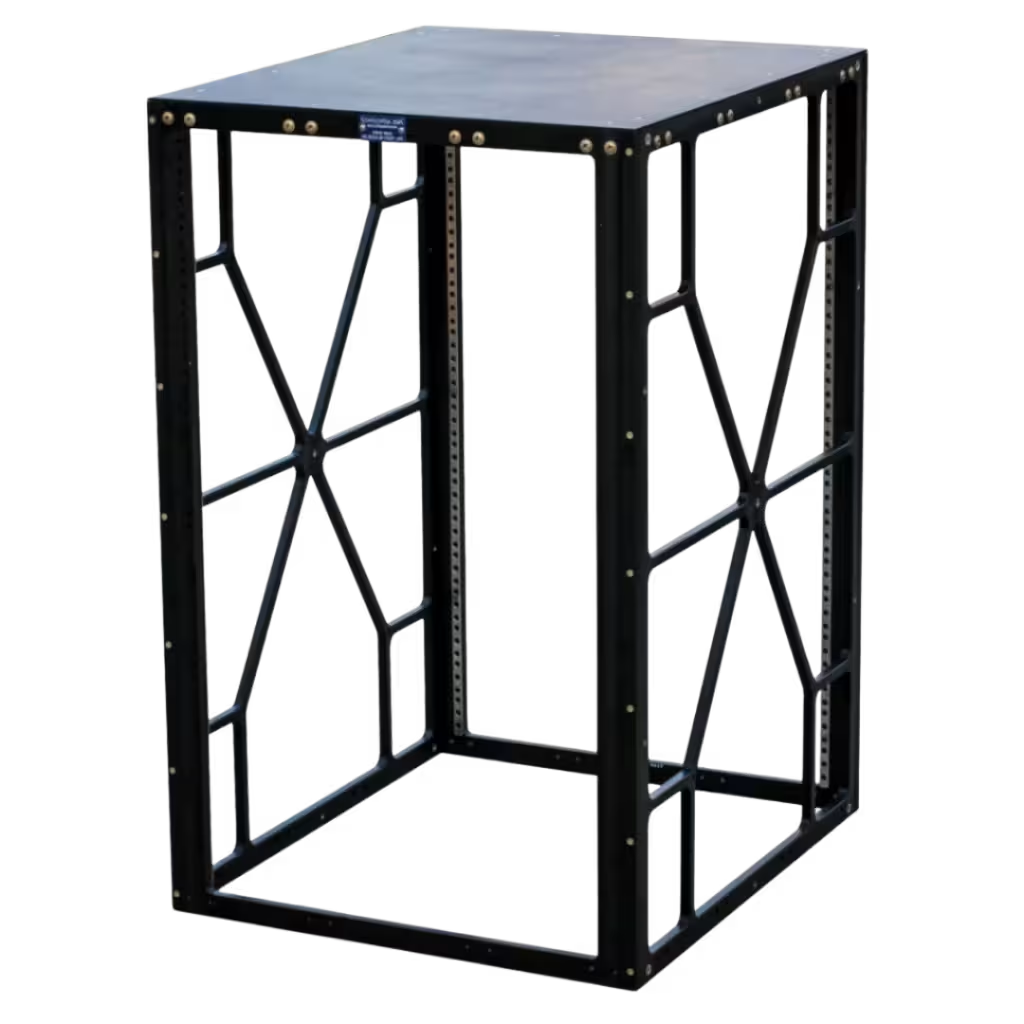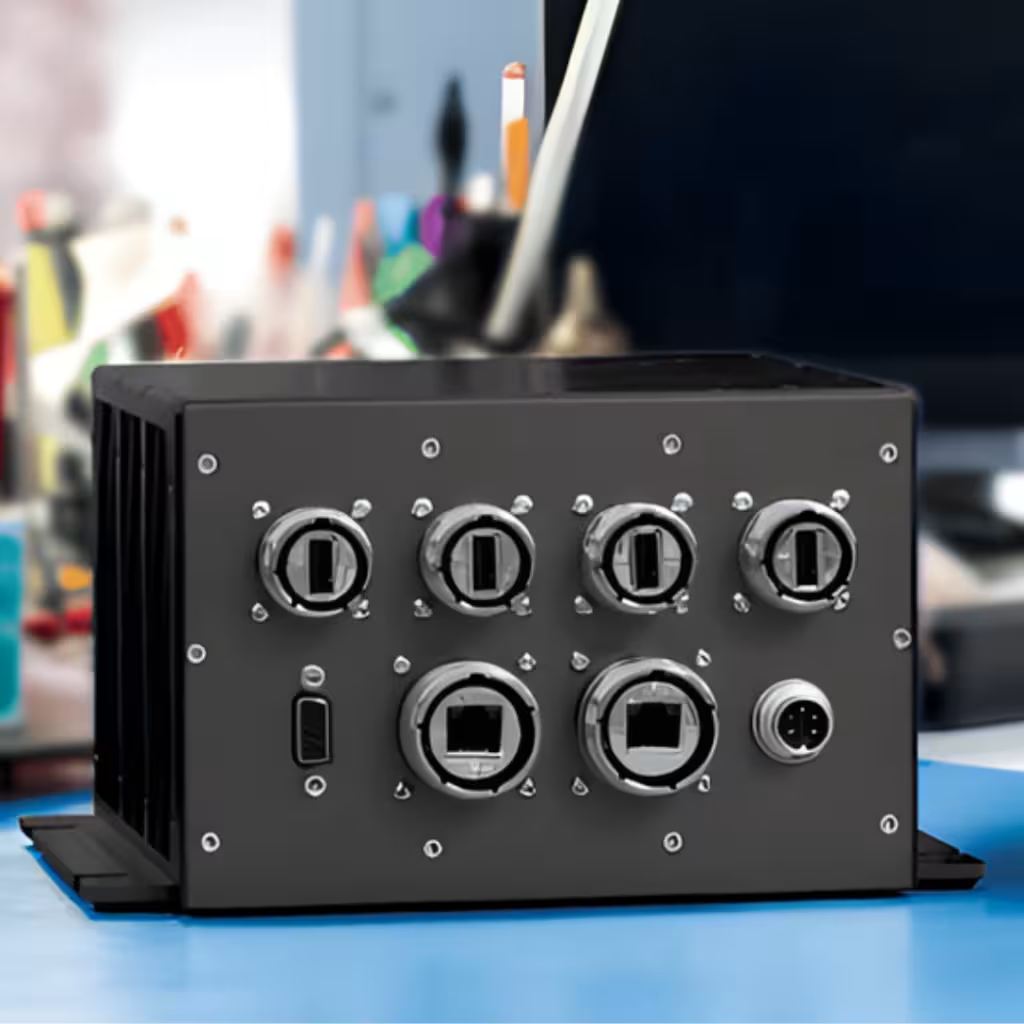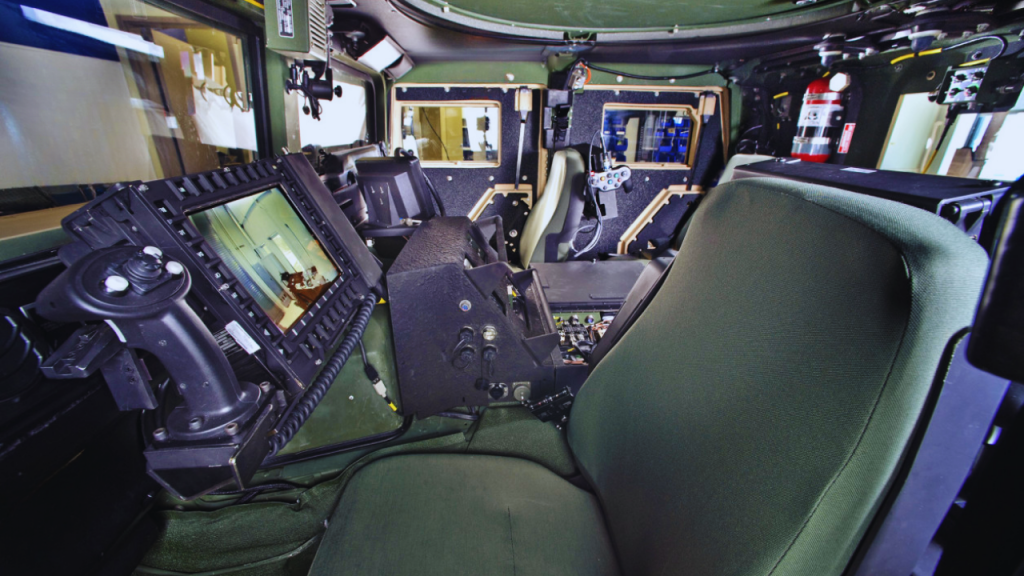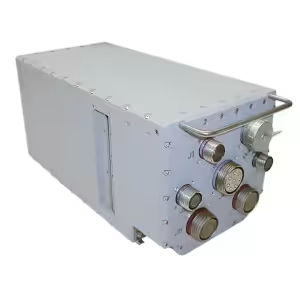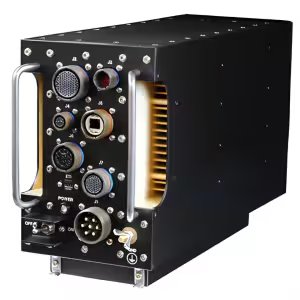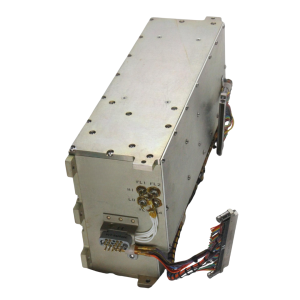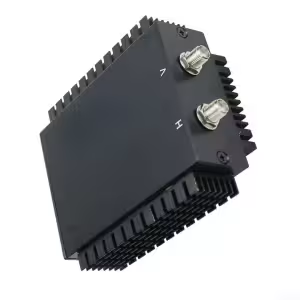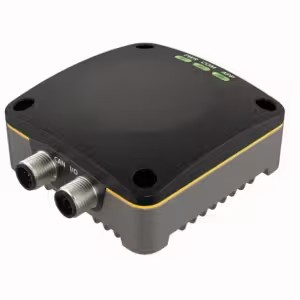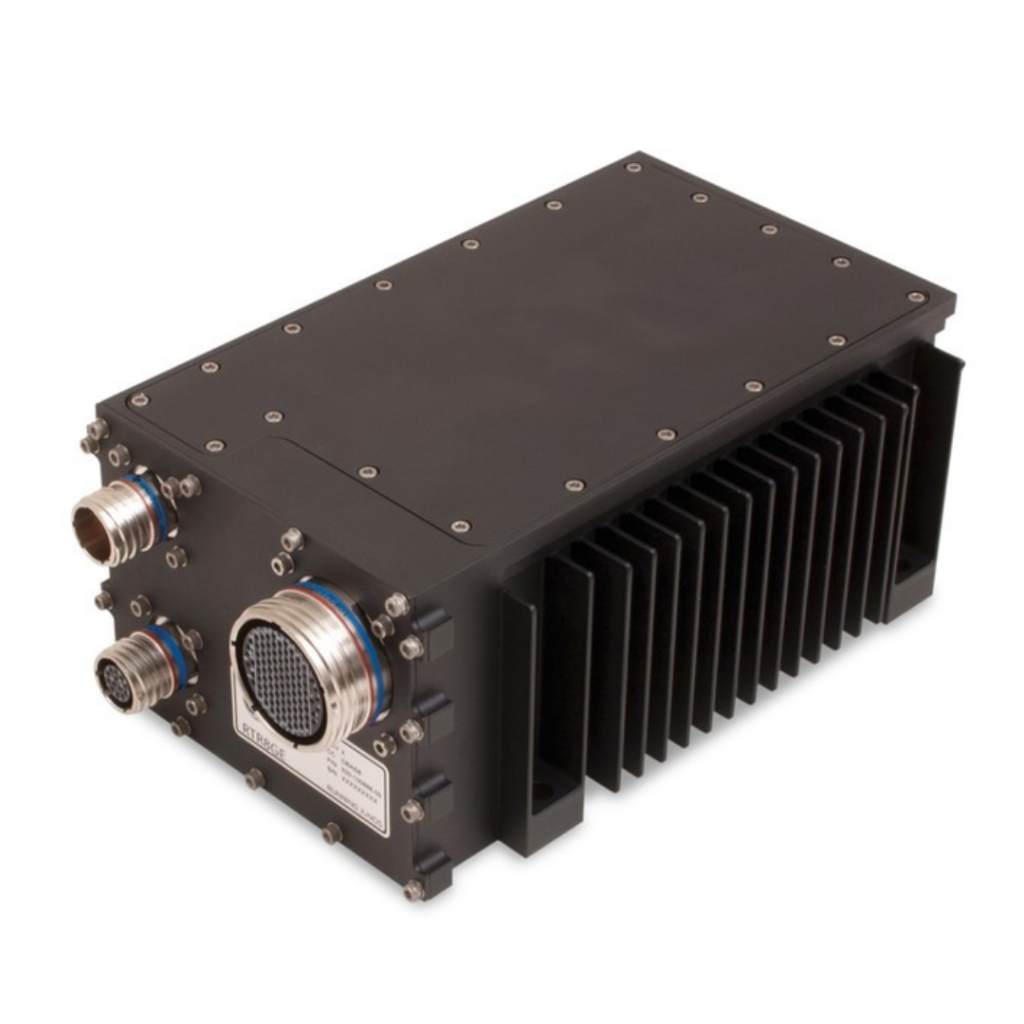
Vetronics Enclosures

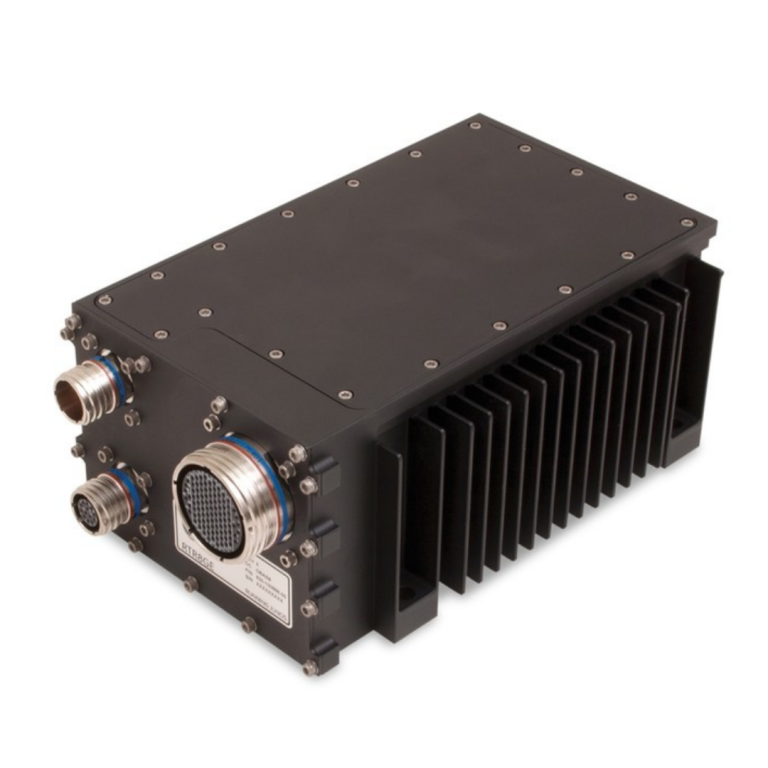
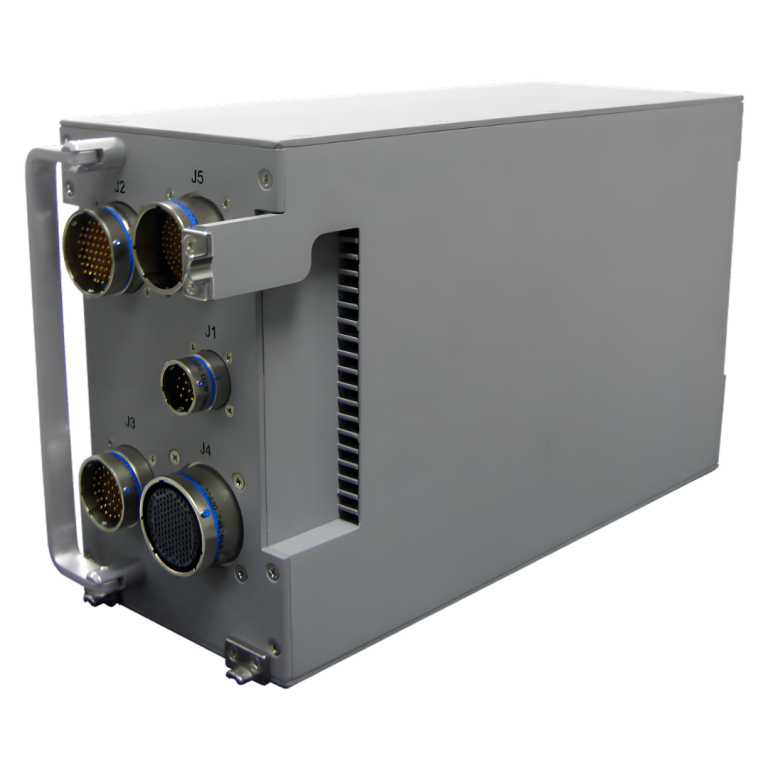
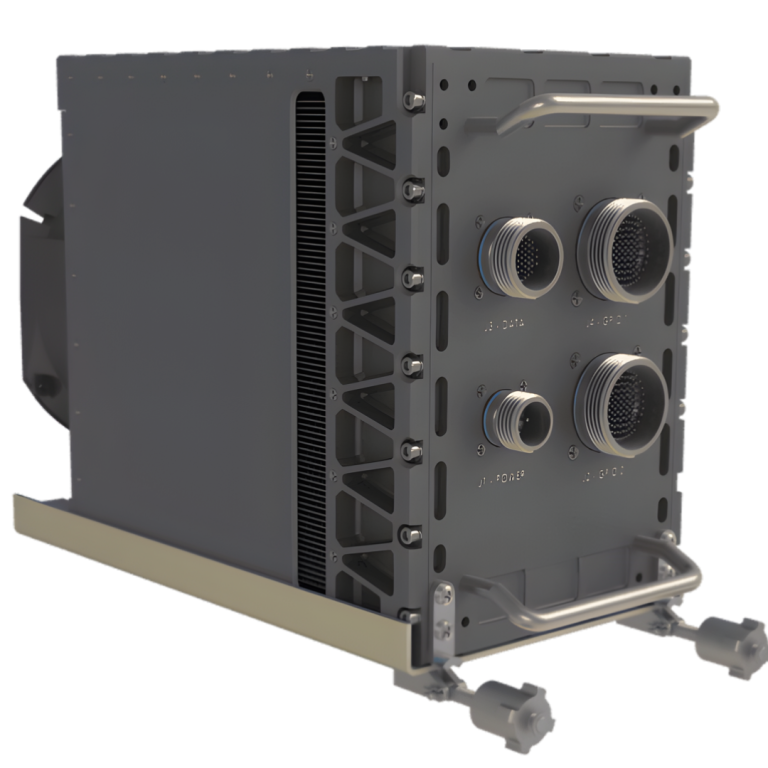
Operating armored vehicles in combat zones requires integrated electronic systems coordinating weapons targeting, communications, and battlefield awareness within hostile environments. Vetronics Enclosures house vehicle electronics including fire control computers, network radios, and sensor processing systems surviving ballistic threats and explosive blasts. 
HY D R O L Y SIS RESIS T ANCE
Material & Grade
  • Aluminum Alloy – 5083, 6061-T6
  • Stainless Steel – SS304, SS316
  • Ballistic-grade steel (armor integration)
  • Cold Rolled Steel – SPCC (reinforced)
  • Sheet thickness – Up to 4.0mm capable
  • Maximum capable – 1500mm (H) x 1200mm (W) x 700mm (D)
  • Customizable based on vehicle electronics configuration
  • Chemical Agent Resistant Coating (CARC)
  • Zinc-Nickel Plating (MIL-DTL-16232)
  • Hard Anodizing (MIL-A-8625)
  • Blast-resistant coating
  • IR-suppressive coating 
  • CNC Precision Machining
  • TIG/MIG Welding (MIL-spec)
  • Ballistic panel integration 
  • Shock-mount provisions
  • Cable routing integration
  • Modular assembly design
  • Stainless Steel 316/A4 Hardware
  • Captive fasteners (anti-vibration)
  • Quick-release mechanisms
  • Shock-mounted provisions
  • Grounding studs & busbars
  • Blast-resistant latches

Product Description

Hull-mounted configurations accommodate electronic warfare systems with internal dimensions reaching 1500mm while withstanding mine detonations and IED attacks. Aluminum or ballistic-grade steel construction provides electromagnetic shielding and structural protection essential for crew survivability. Through NBC overpressure systems and shock isolation, these enclosures enable reliable vehicle electronics operation across desert, urban, and arctic battlefields. 

Mounting Type
  • Vehicle hull/chassis mounting
  • Shock-isolated mounting systems 
  • Turret ring integration
  • Floor/Wall mount configurations
  • Modular rack systems
  • Quick-disconnect provisions
  • IP65/IP67 Environmental Sealing
  • MIL-STD-810 sealed construction
  • NBC overpressure capability 
  • Filtered air intake systems
  • Positive pressure provisions
  • Dust/sand ingress protection
  • MIL-STD-810 Method 501 (High Temperature)
  • MIL-STD-810 Method 502 (Low Temperature)
  • Operating Temperature – -46°C to +71°C
  • Sand & Dust (MIL-STD-810 Method 510)
  • Salt Fog (desert/maritime operations)
  • Explosive atmosphere rated
  • MIL-STD-810 Method 514 (Vibration – severe)
  • MIL-STD-810 Method 516 (Shock – ballistic)
  • Mine blast protection (Level I/II)
  • IED shock resistance
  • Off-road terrain vibration
  • Ballistic impact shock 
  • MIL-STD-461 Compliance
  • Shielding Effectiveness – 60-100 dB
  • HEMP protection (High-Altitude EMP)
  • Conductive gaskets (MIL-DTL-83528)
  • RF-filtered connectors 
  • Multi-compartment isolation
  • MIL-STD-810 (Environmental Engineering)
  • MIL-STD-461 (EMI/EMC Requirements)
  • MIL-STD-464 (EME for Systems)
  • STANAG 4569 (Ballistic Protection – optional)
  • MIL-STD-1275 (Vehicle Power)
  • ITAR Compliant Manufacturing
  • ISO 9001:2015 + AS9100D 

Technical Advantages

Armored vehicle electronics face simultaneous threats from ballistic impacts, mine blasts, and electromagnetic pulse weapons requiring comprehensive protection strategies. Addressing these challenges, reinforced mounting frames distribute blast loads across enclosure structures preventing catastrophic failures during underbelly mine detonations. Our shock isolation systems decouple electronics from hull vibration during cross-country movement over rough terrain at tactical speeds. 

NBC overpressure systems maintain positive internal pressure preventing chemical agent infiltration through cable penetrations and connector interfaces. Frigate engineers filtered air intake provisions supplying clean air to electronics while crew-worn protective masks prevent contamination exposure. Multi-compartment shielding isolates high-power radio transmitters from sensitive GPS receivers and targeting computers preventing electromagnetic interference degrading fire control accuracy. 

Let's Get Started

Need reliable Enclosures for your next project? Get in touch with us today, and we’ll help you find exactly what you need!

Industry Applications

Main Battle Tanks

Contains fire control computers, laser rangefinders, and thermal imaging processors coordinating main gun targeting and ammunition selection. 

Infantry Fighting Vehicles

Houses crew communication systems, commander displays, and remote weapon station controllers managing dismounted troop coordination. 

Armored Personnel Carriers

Protects network radios, GPS navigation, and vehicle intercom systems enabling squad communications during troop transport operations.

Self-Propelled Artillery

Secures ballistic computers, digital fire control systems, and automated gun laying equipment calculating firing solutions. 

Combat Engineering Vehicles

 Manages mine detection electronics, route clearance systems, and obstacle removal coordination equipment during mobility operations. 

Command and Control Vehicles

Consolidates battlefield management systems, encrypted communications, and intelligence fusion displays in mobile headquarters platforms. 

Vetronics Enclosures

Built for Combat Survivability

Vehicle electronics configurations vary from basic communication suites to integrated sensor fusion platforms coordinating multiple weapon systems. Vetronics Enclosures arrive in modular rack formats mounting within armored hull cavities or standalone housings protecting crew-accessible equipment. 

Quick-disconnect provisions enable rapid electronics replacement during field maintenance without specialized tools when combat damage requires component substitution. HEMP protection meets high-altitude electromagnetic pulse survivability requirements ensuring vehicle electronics remain operational following nuclear detonation scenarios.

Vetronics Enclosures

Having Doubts? Our FAQ

Check all our Frequently Asked Questions

What reinforced mounting frame specifications does Frigate engineer in Vetronics Enclosures distributing blast loads during underbelly mine detonations?

Frigate designs reinforced internal frames that spread blast-induced loads into the vehicle structure rather than into mounted electronics. Frame geometry, material thickness, and attachment points are defined from blast load cases and vehicle integration drawings to limit peak acceleration at sensitive modules. 

How does Frigate isolate high-power radio transmitters from GPS receivers in Vetronics Enclosures preventing electromagnetic interference?

Frigate isolates transmitters from receivers using – 

  • Physical compartmentalization between transmit and receive sections 
  • Dedicated grounding planes and shielding partitions 
  • Controlled routing of RF and power cabling 

Separation distance and shielding level can be customized to transmitter power and receiver sensitivity requirements. 

Do NBC overpressure systems in these enclosures maintain positive pressure preventing chemical agent infiltration through cable penetrations?

Yes. Positive internal pressure is maintained using sealed interfaces and controlled airflow paths that prevent inward leakage. Overpressure targets and penetration density are set from the platform concept of operations, and Frigate aligns the sealing strategy to those requirements. 

What filtered air intake provisions does Frigate integrate in Vetronics Enclosures supplying clean air during CBRN-contaminated operations?

Frigate supports filtered intake by integrating – 

  • CBRN-rated filter interfaces 
  • Ducted air paths isolated from electronics 
  • Replaceable filter cartridges for field service 

Filter size and placement are tailored to airflow demand and contamination scenarios defined in the requirement. 

How does Frigate validate shock isolation systems in Vetronics Enclosures decoupling electronics from hull vibration during cross-country movement?

Shock isolation is validated through vibration modeling, component-level testing, and vehicle-representative load profiles. Frigate correlates isolator performance to terrain-induced vibration spectra so electronics remain within allowable acceleration limits during sustained off-road operation. 

Are quick-disconnect provisions compatible with field maintenance procedures enabling component replacement without specialized tools?

Field serviceability is supported by – 

  • Tool-less or captive fastener interfaces 
  • Guided connectors to prevent misalignment 
  • Clear access paths for module removal 

Quick-disconnect layout can be configured to match the field maintenance workflow you specify.

What ballistic-grade steel thickness does Frigate specify in Vetronics Enclosures achieving STANAG 4569 protection levels?

Frigate selects ballistic steel thickness and backing structures to match the required STANAG 4569 threat level and the platform’s mass limits. Wall thickness, overlap joints, and reinforcement strategy are adapted to the protection level and mounting constraints in your drawing. 

How does Frigate address HEMP protection in Vetronics Enclosures ensuring electronics survival following high-altitude electromagnetic pulse events?

Frigate supports HEMP resilience through – 

  • Continuous conductive enclosures with bonded seams 
  • Filtered and transient-protected cable entries 
  • Controlled grounding topology 

Protection measures are scaled to the susceptibility limits and interface layout defined in your requirements. 

Do modular rack formats in these enclosures accommodate turret ring mounting configurations in rotating weapon platforms?

Yes. Modular rack formats can be adapted for turret-mounted installations, accounting for rotation limits, cable management through slip rings, and dynamic loading. Rack depth, mounting points, and service clearances can be set to turret geometry and motion envelopes. 

What conductive gasket compression does Frigate maintain in Vetronics Enclosures achieving 60–100 dB shielding effectiveness across MIL-STD-461 frequency ranges?

Shielding effectiveness is maintained through – 

  • Defined gasket compression targets at all access points 
  • Conductive elastomer or mesh gasket selection 
  • Uniform clamping across doors and panels 

Compression levels and gasket materials are validated against the required shielding range and access-cycle expectations. 

Get Clarity with Our Manufacturing Insights

We'd love to Manufacture for you!

Submit the form below and our representative will be in touch shortly.

LOCATIONS

Registered Office

10-A, First Floor, V.V Complex, Prakash Nagar, Thiruverumbur, Trichy-620013, Tamil Nadu, India.

Operations Office

9/1, Poonthottam Nagar, Ramanandha Nagar, Saravanampatti, Coimbatore-641035, Tamil Nadu, India. ㅤ

Other Locations

GENERAL ENQUIRIES

Get Quote
Support All File Formats Including - STEP | STP | SLDPRT | STL | DXF | IPT | X_T | X_B | 3DXML | CATPART | PRT | SAT | 3MF | JT files

LOCATIONS

Registered Office

10-A, First Floor, V.V Complex, Prakash Nagar, Thiruverumbur, Trichy-620013, Tamil Nadu, India.

Other Locations

GENERAL ENQUIRIES

Get Your Quote Now

New Get Quote form

Vetronics Enclosures

Need reliable wires and cables for your next project? Get in touch with us today, and we’ll help you find exactly what you need!

Get Latest Price

Get Price Form

Vetronics Enclosures

Need reliable Machining for your next project? Get in touch with us today, and we’ll help you find exactly what you need!

Get Latest Price

Get Price Form