
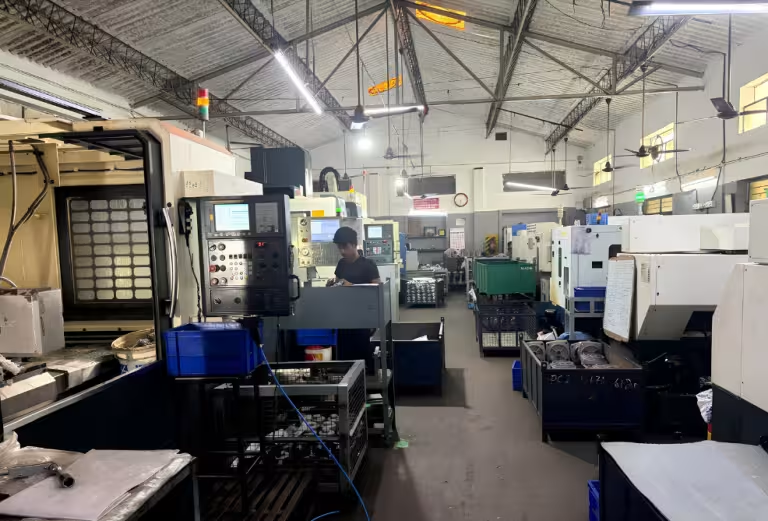

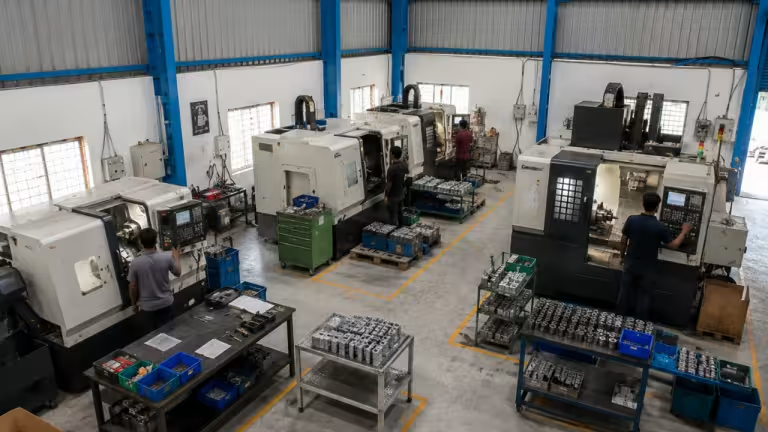
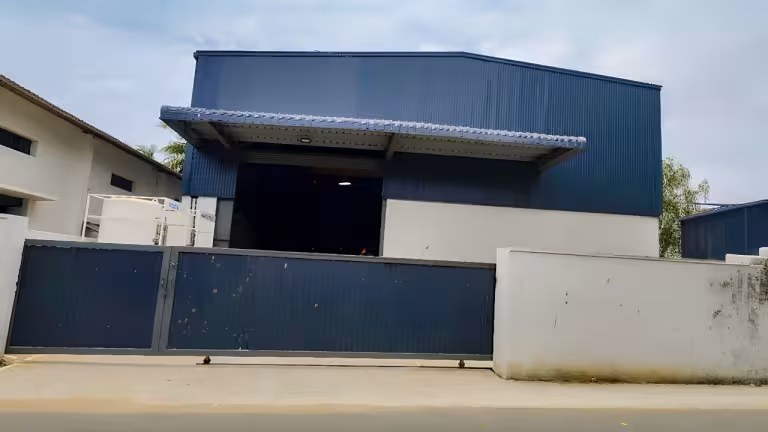
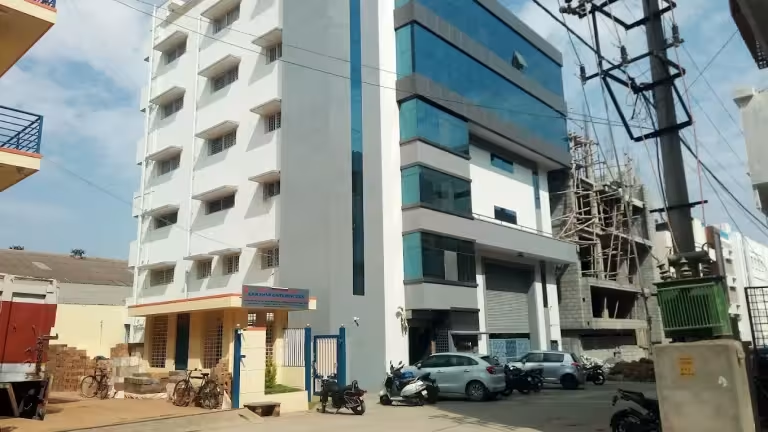
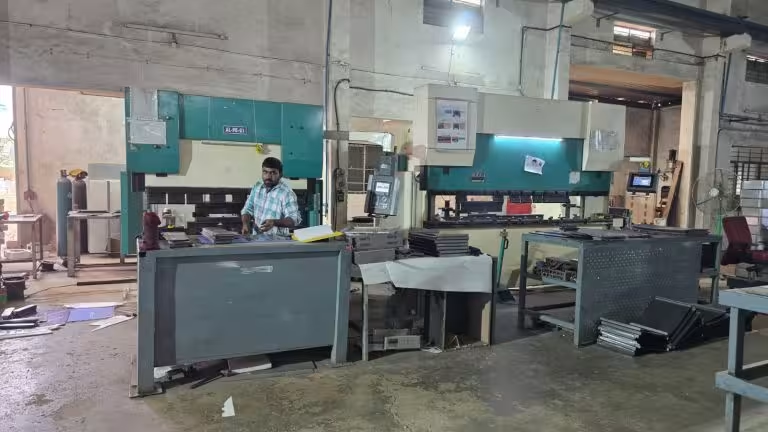
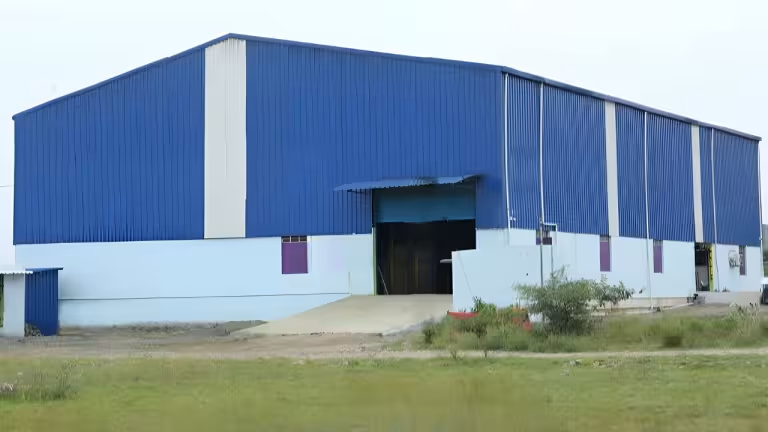

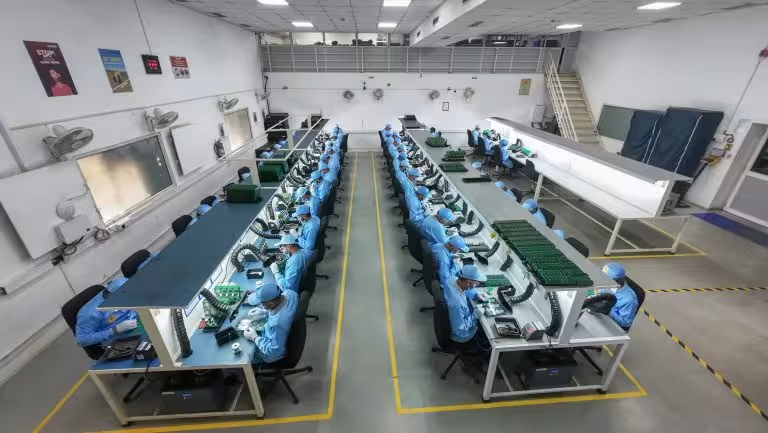
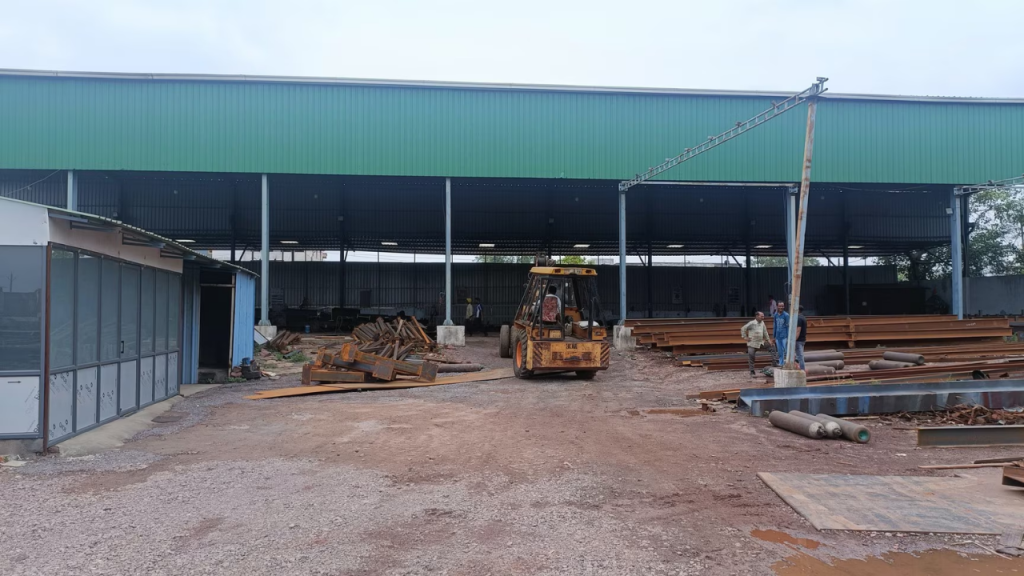
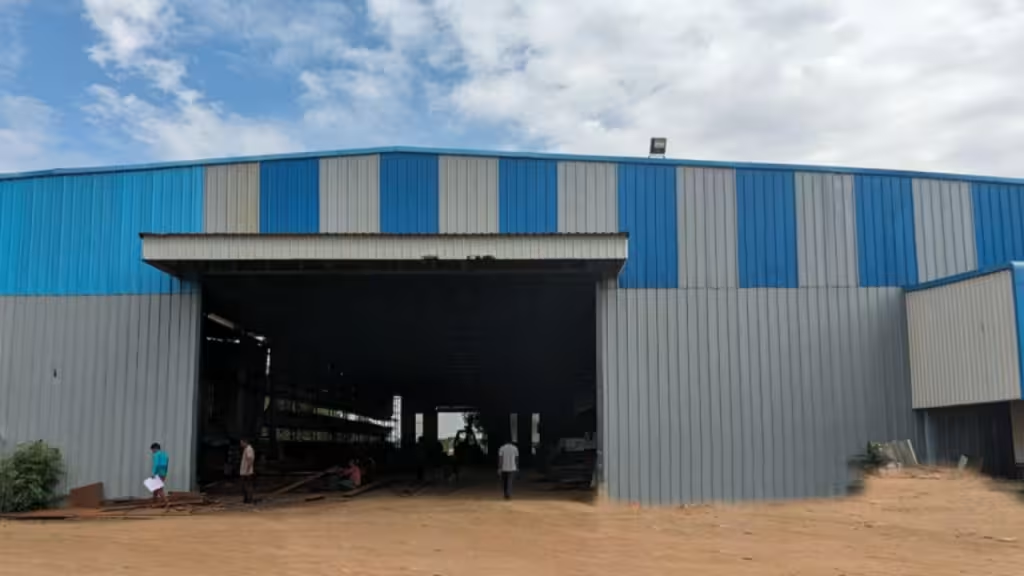
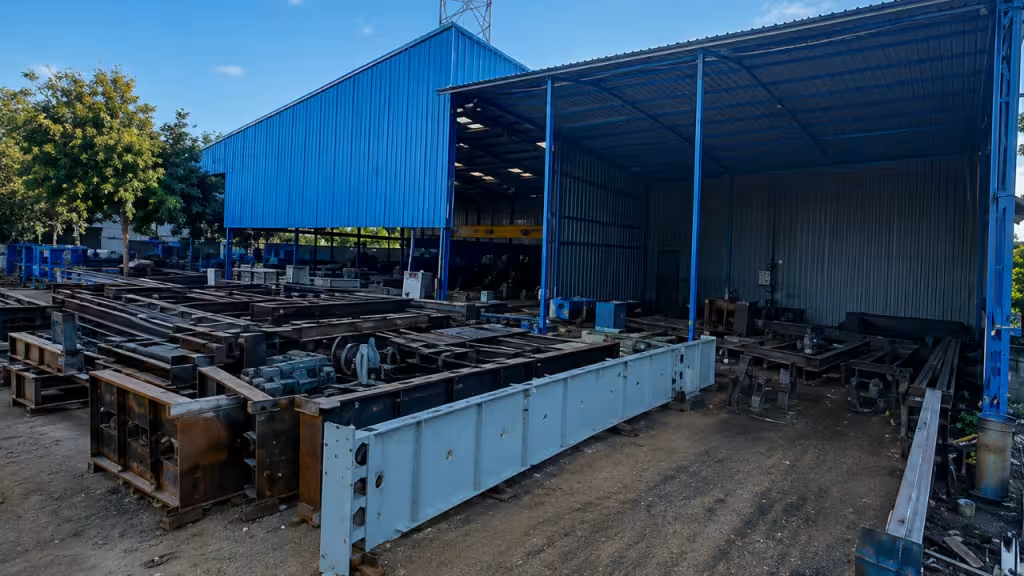





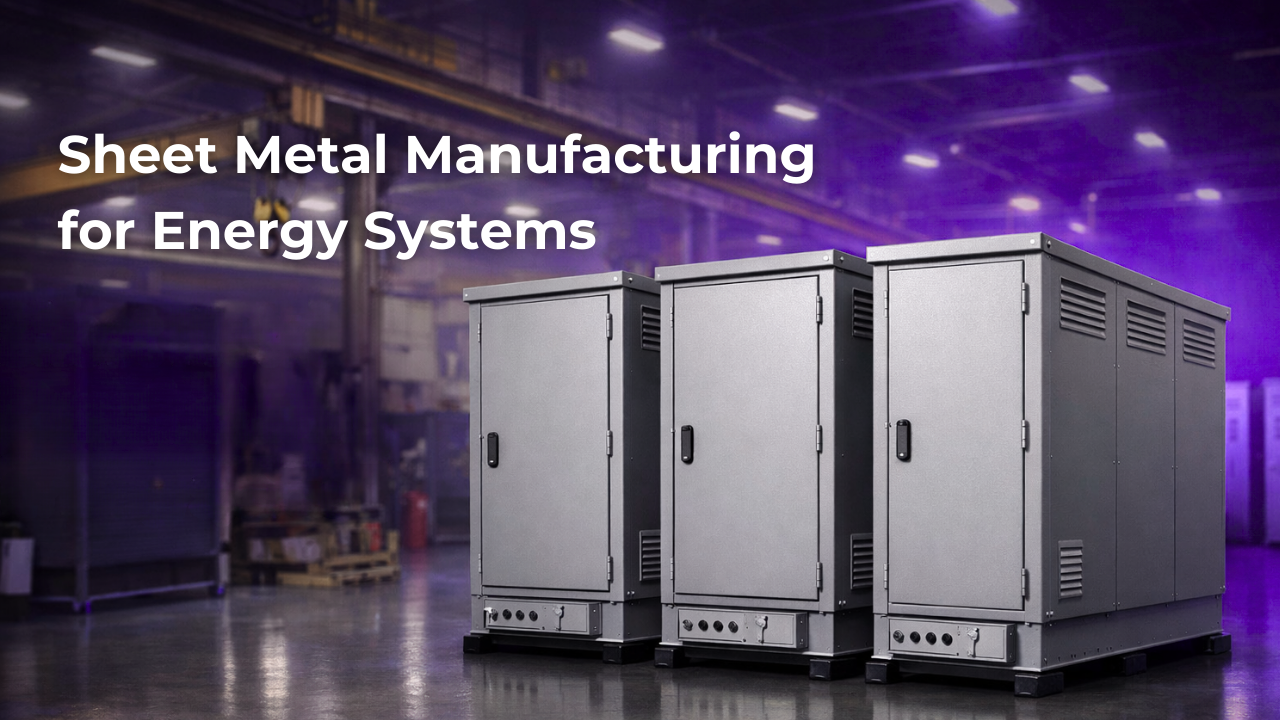
Energy infrastructure is scaling rapidly across solar, wind, hydrogen, thermal, and grid modernization projects. Every one of these systems relies on engineered structural frames, enclosures, heavy brackets, ducting assemblies, and corrosion-resistant housings. Fabricated metal components form the structural backbone of these installations.
Sheet Metal Manufacturing for Energy Systems directly influences capital expenditure, operational stability, and lifecycle reliability. Fabrication activities contribute between 20–35% of mechanical system cost across large energy programs. Raw material price volatility alone can swing project margins by 3–5% within a quarter. Poor fabrication planning often leads to design rework, scrap losses, supply delays, and penalty exposure.
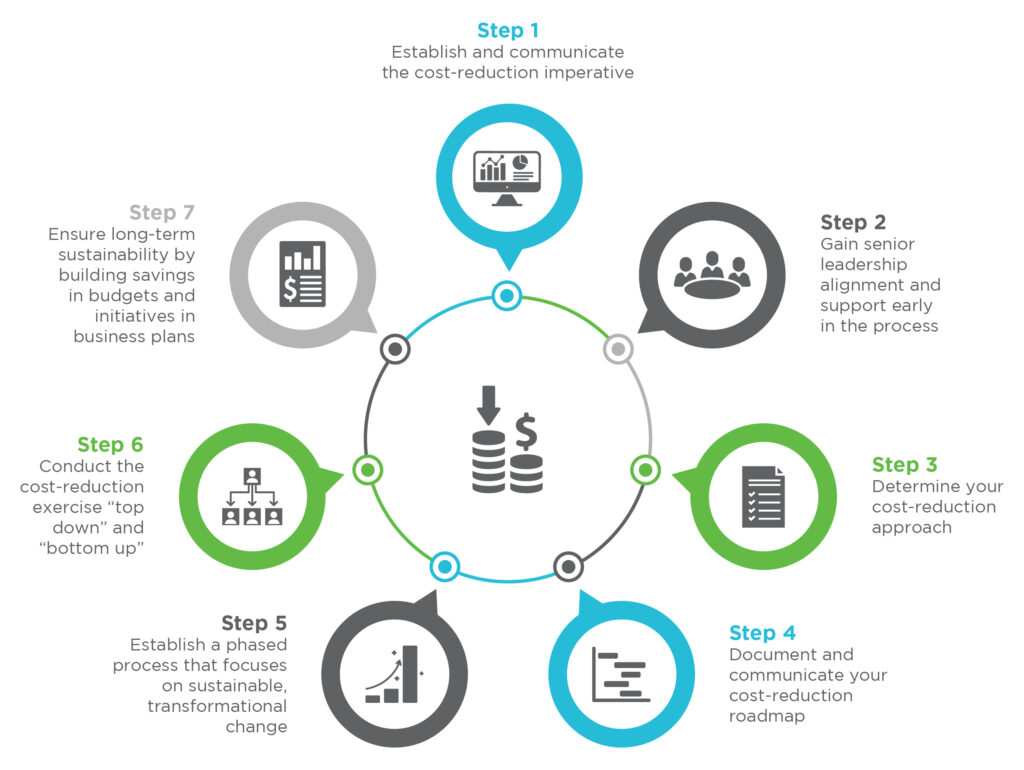
Strategic cost planning transforms fabrication from a transactional purchase into an integrated technical and financial discipline. Engineering choices, material strategy, production capability, logistics planning, and compliance requirements must operate within one cost framework.
Without structured planning –
- Margins compress under material volatility.
- Delays disrupt project commissioning timelines.
- Engineering changes escalate fabrication expense.
- Working capital remains locked in unstable supply chains.
Strong cost planning creates predictability, transparency, and resilience across the value chain of Sheet Metal Manufacturing for Energy Systems.
Understanding What Truly Drives Cost in Sheet Metal Manufacturing for Energy Systems
Cost in heavy fabrication is multi-dimensional. Material price is only one visible element. Technical parameters, compliance requirements, and production efficiency significantly influence final pricing.
Primary cost contributors include –
- Selection of material grade such as carbon steel, stainless steel 304/316, duplex alloys, or aluminum 5052/6061
- Thickness tolerance requirements and flatness specifications
- Cutting technology selection (fiber laser vs plasma vs waterjet)
- Forming complexity and press brake tonnage requirements
- Welding method and deposition volume
- Surface finishing requirements including galvanizing or powder coating
- Energy sector certifications and traceability documentation
Steel prices often fluctuate 15–25% annually due to global demand cycles and raw material inputs such as iron ore and nickel. Stainless steel pricing shows even higher volatility due to alloy content variability.
Fabrication energy intensity further impacts cost. Fiber laser cutting machines operate at high electrical loads. High-tonnage press brakes require significant hydraulic force. Welding thick-gauge assemblies increases consumable usage and heat distortion management requirements.
Logistics introduces another cost layer. Heavy fabricated assemblies require –
- Specialized heavy-haul transport
- Oversized load permits
- Protective packaging against corrosion and transit damage
Transportation may account for 8–12% of total fabrication expenditure in large structural assemblies.
Comprehensive cost modeling within Sheet Metal Manufacturing for Energy Systems must evaluate each of these drivers in measurable units such as cost per kilogram, cost per machine hour, and cost per weld meter.
How Engineering Decisions Quietly Increase or Reduce Fabrication Costs
Design influences up to 70% of total product cost during early development. Engineering complexity frequently introduces avoidable cost escalations.
Common design-related cost challenges include –
- Over-specifying material thickness without structural necessity
- Applying tight tolerances beyond functional requirements
- Designing excessive weld seams
- Introducing complex bends that exceed equipment capability
- Using multiple parts where modular simplification is possible
Increasing sheet thickness from 4 mm to 6 mm raises material usage by 50%. Cutting time increases. Press brake tonnage requirements rise. Welding deposition volume expands. Structural weight increases, raising logistics cost.
Tolerance stacking compounds dimensional deviation. Multiple tight tolerances across mating components can lead to misalignment during assembly. Rework becomes necessary. Heavy fabrication rework may increase production cost by 10–18% depending on weld correction and structural modification requirements.
Scrap rates in poorly optimized nesting programs range from 5–12%. Large-format sheets demand precise nesting algorithms to minimize waste. Every percentage point improvement in material utilization translates into measurable cost savings.
Design for Manufacturability (DFM) integration within Sheet Metal Manufacturing for Energy Systems enables –
- Optimized bend radii aligned with press brake capabilities
- Reduced weld seam length
- Simplified modular assemblies
- Lower rework frequency
Early engineering collaboration converts fabrication cost control into a proactive strategy rather than a reactive correction process.
Managing Supply Chain Volatility and Material Risk Exposure
Energy-grade materials often require global sourcing. Supply chain instability introduces significant cost and schedule uncertainty.
Risk factors include –
- Limited domestic availability of corrosion-resistant alloys
- Long lead times for coated or pre-treated sheets
- Import duties and freight cost variability
- Currency exchange fluctuations
- Geopolitical trade disruptions
Lead times for certain stainless grades extend between 6–16 weeks. Coated materials may require additional processing lead time. Project schedules must absorb these realities.
Inventory management becomes a balancing act. High inventory levels secure production continuity but increase working capital requirements. Lean inventory reduces capital lock-up but exposes operations to material shortages.
Energy projects operate on strict commissioning deadlines. Delays in structural enclosures or mounting systems postpone equipment installation. Lost generation revenue from delayed renewable projects can significantly impact financial performance.
Mitigation strategies within Sheet Metal Manufacturing for Energy Systems include –
- Multi-source supplier qualification
- Long-term indexed pricing agreements
- Predictive material demand forecasting
- Strategic safety stock planning
Structured supply chain modeling reduces uncertainty and enhances budget stability.
Improving Operational Efficiency and Achieving True Cost Transparency
Fabrication efficiency directly determines competitiveness. Process optimization must be data-driven.
Core fabrication processes include –
- CNC fiber laser cutting
- CNC punching
- Heavy press brake forming
- Robotic and manual welding
- Surface treatment and finishing
- Mechanical assembly and dimensional inspection
Robotic welding improves consistency and reduces defect rates by up to 30% in repetitive structural fabrication. Automated nesting software improves material yield by 5–10%, lowering raw material expenditure.
Operational transparency relies on measurable metrics –
- Overall Equipment Effectiveness (OEE)
- Machine hour utilization rates
- Labor productivity per assembly
- Scrap percentage
- Rework frequency
Fabrication facilities typically operate at 60–75% OEE. Even a 5% improvement in OEE reduces cost per unit significantly by spreading fixed overhead across higher output.
Cost transparency frameworks within Sheet Metal Manufacturing for Energy Systems break down expense into –
- Material cost per kilogram
- Machine cost per hour
- Welding consumable cost per meter
- Surface treatment cost per square meter
Data-backed cost models strengthen pricing predictability and protect long-term contract margins.
Structuring Commercial Agreements That Protect Margins and Build Stability
Contracting models influence how cost risk is distributed. Volatile markets demand adaptable commercial structures.
Common frameworks include –
- Fixed price contracts
- Indexed raw material pricing agreements
- Cost-plus arrangements
- Multi-year strategic partnerships
Fixed pricing offers simplicity but exposes manufacturers to raw material swings. Indexed contracts link pricing to steel benchmark indices, reducing conflict during market spikes. Cost-plus models provide transparency where volatility is high.
Lifecycle cost evaluation plays a vital role. Energy infrastructure operates for 20–30 years. Corrosion resistance, fatigue performance, and coating durability influence long-term maintenance cost.
Lifecycle evaluation considers –
- Protective coating lifespan
- Structural stress tolerance
- Environmental corrosion resistance
- Maintenance cycle intervals
Commercial alignment based on lifecycle thinking strengthens mutual value creation within Sheet Metal Manufacturing for Energy Systems.
Leveraging Digital Tools for Predictive and Proactive Cost Planning
Digital integration enhances cost accuracy and operational visibility. Traditional estimation methods lack precision for complex energy assemblies.
Digital cost planning includes –
- ERP-integrated production scheduling
- Simulation-based cost estimation
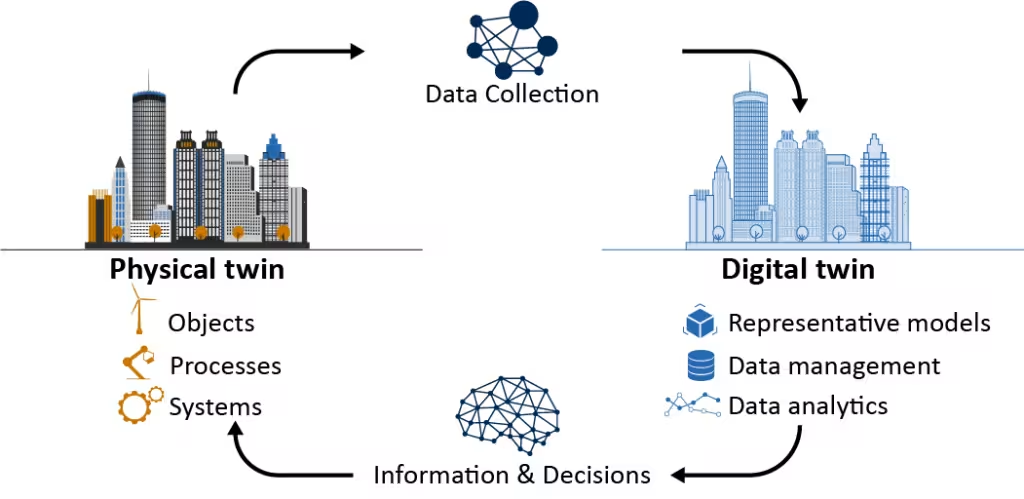
- Digital twin modeling
- Predictive analytics for material pricing trends
Simulation tools evaluate bending force requirements, weld distortion behavior, and structural stress response before production begins. Reduced trial runs lower development cost.
Digital twins replicate assemblies under simulated load and thermal conditions. Structural validation improves reliability and reduces redesign risk.
Predictive analytics forecasts steel and alloy pricing based on historical data patterns. Procurement timing becomes strategic rather than reactive.
Capacity planning tools balance machine loading and reduce bottlenecks. Controlled capacity utilization prevents maintenance overload while maximizing throughput.
Digital transformation strengthens the technical foundation of Sheet Metal Manufacturing for Energy Systems.
How Frigate Enables Structured and Predictable Cost Planning
Large energy programs require tight coordination between engineering, procurement, and fabrication. Disconnected supplier networks often create cost gaps, inconsistent quality, and delivery uncertainty. Predictability becomes difficult when visibility across production stages is limited.
Frigate strengthens Sheet Metal Manufacturing for Energy Systems by integrating technical planning, supplier capability, and digital oversight into one structured framework.
Integrated and Qualified Supplier Ecosystem
Frigate works with technically vetted manufacturing partners evaluated on fabrication capability, welding certifications, quality systems, and energy-sector readiness.
Standardized qualification ensures –
- Consistent process capability
- Reduced quality variation
- Controlled lead times
- Better scalability across regions
Multi-location sourcing also supports load balancing and continuity during demand fluctuations.
Advanced Cost Modeling Systems
Cost estimation is built on measurable technical inputs rather than assumptions. Models analyze –
- Material grade and thickness optimization
- Machine hour allocation
- Welding length and consumable usage
- Surface treatment cost
- Packaging and logistics impact
Scenario comparisons help evaluate alternate materials, fabrication methods, and production strategies. This structured modeling improves transparency and protects margins.
Engineering Collaboration for DFM Optimization
Early engineering review prevents avoidable cost escalation. Design for Manufacturability (DFM) focuses on –
- Rational material thickness
- Simplified bend geometry
- Reduced weld seams
- Modular assembly design
Alignment between design and fabrication capability reduces rework, improves yield, and shortens production cycles across Sheet Metal Manufacturing for Energy Systems.
Real-Time Production Monitoring
Digital monitoring systems track –
- Machine utilization
- Production progress
- Weld quality metrics
- Rework levels
- Schedule adherence
Live visibility helps identify bottlenecks early and stabilize delivery timelines. Improved operational transparency strengthens cost predictability.
Compliance Documentation and Traceability
Energy-grade fabrication requires strict documentation. Frigate maintains structured traceability covering –
- Material mill certificates
- Welding qualification records
- Dimensional inspection reports
- Coating and testing verification
Centralized compliance management reduces audit risk and ensures consistent quality performance.
Scalable Multi-Location Manufacturing Capacity
Energy programs often scale in phases. Frigate enables –
- Load distribution across facilities
- Rapid production ramp-up
- Geographic risk diversification
- Parallel assembly execution
Scalability ensures that volume growth does not disrupt cost control or schedule reliability.
Lower Total Cost of Ownership
Integrated execution improves material efficiency, reduces scrap, limits rework, and enhances delivery reliability. Structured coordination across engineering and production lowers lifecycle cost and strengthens performance stability.
Frigate supports predictable and controlled Sheet Metal Manufacturing for Energy Systems, enabling cost transparency and operational resilience across complex energy infrastructure projects.
Conclusion
Energy infrastructure growth demands disciplined engineering and strong cost control. Material volatility, complex designs, and supply chain risks continue to pressure margins.
Strategic planning in Sheet Metal Manufacturing for Energy Systems aligns design, sourcing, and production into a transparent, data-driven system. Clear visibility reduces waste, protects margins, and improves reliability.
Connect with Frigate to build a more resilient, cost-controlled, and scalable approach to Sheet Metal Manufacturing for Energy Systems.