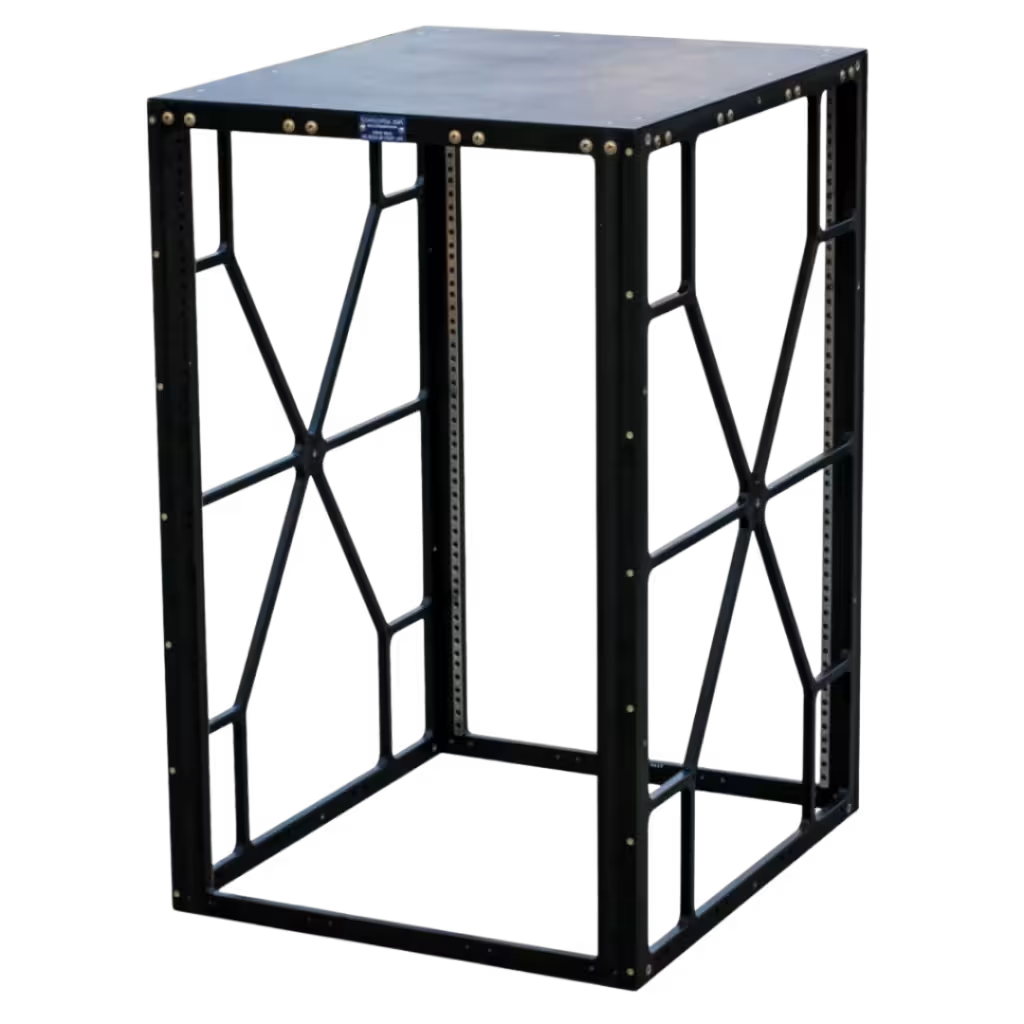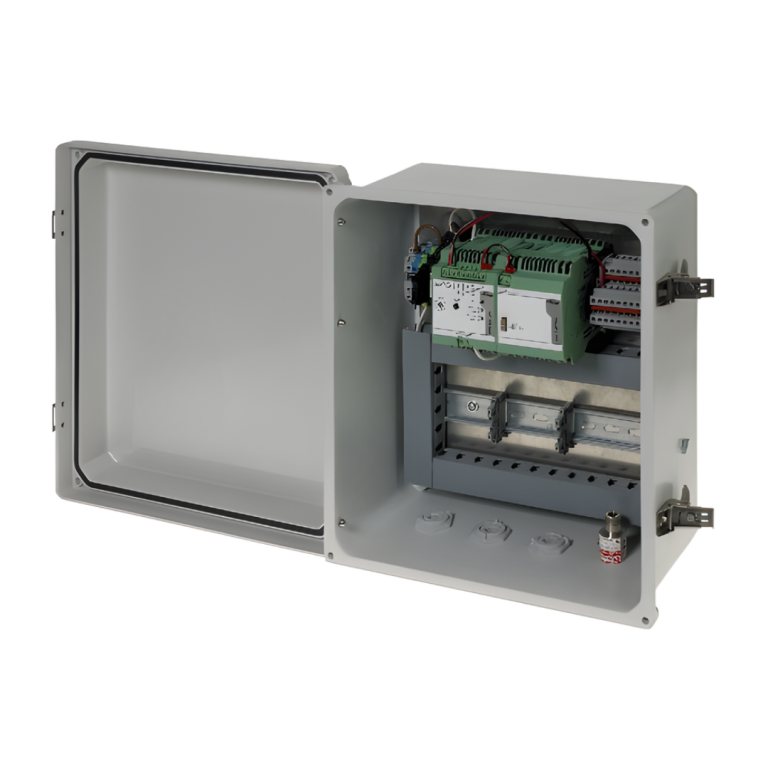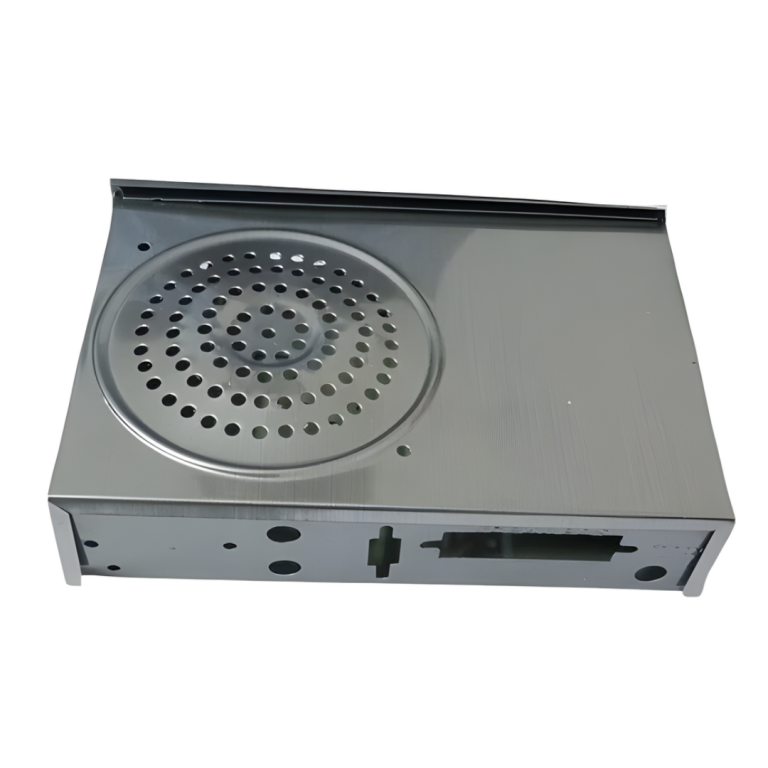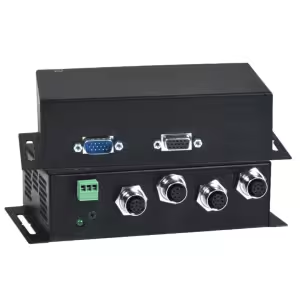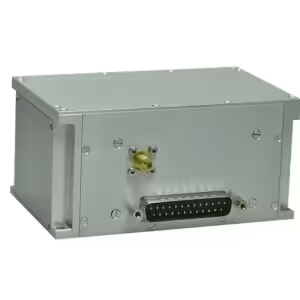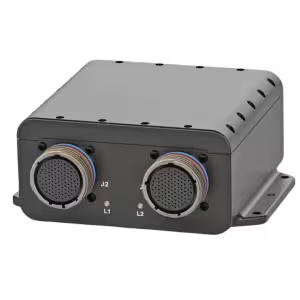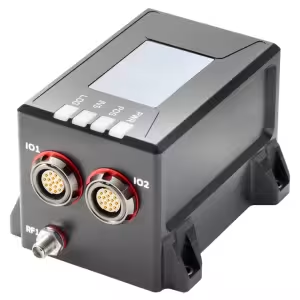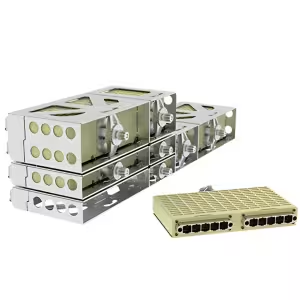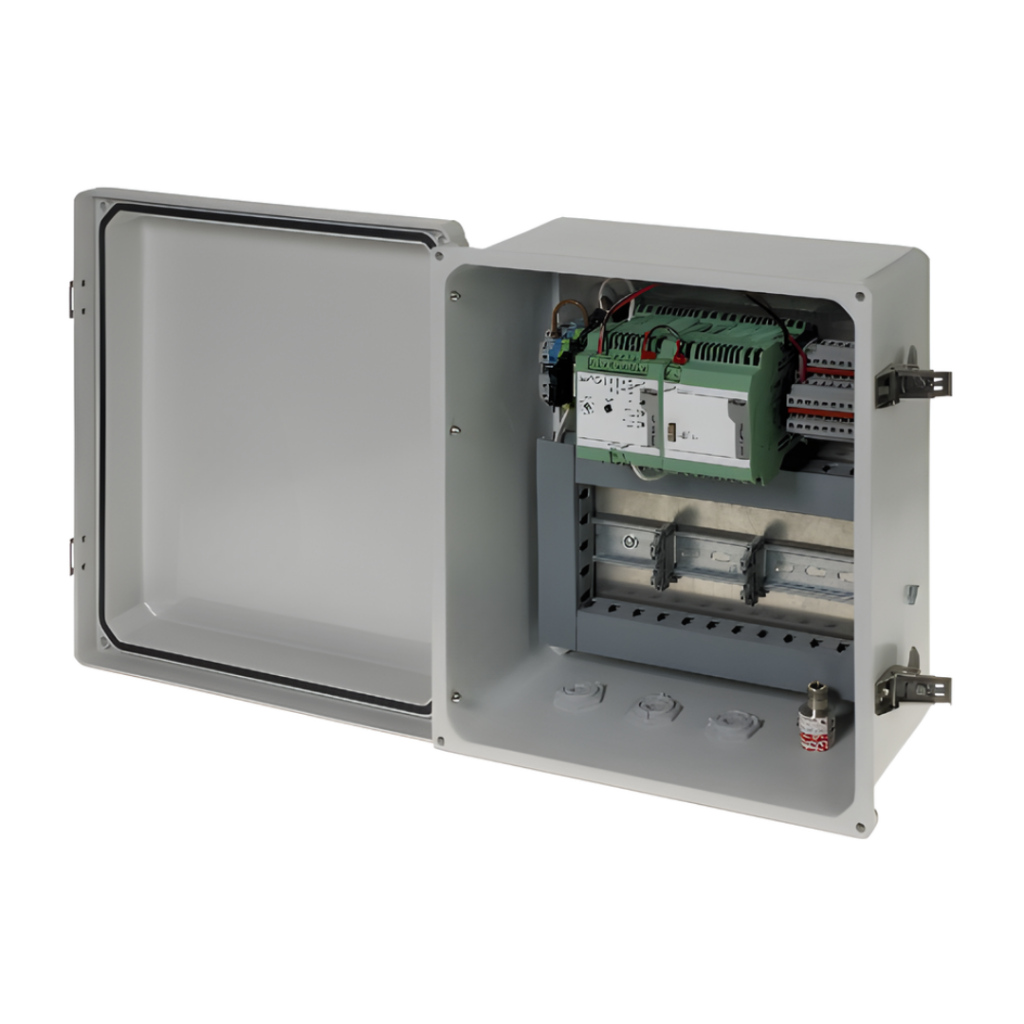
Radio Electronic Enclosure

Transmitter spurious emissions exceeding regulatory limits create interference disrupting other aircraft communication and navigation systems. Radio Electronic Enclosure provides EMI-shielded housings for VHF/UHF transceivers, HF radios, and SATCOM equipment. 
HY D R O L Y SIS RESIS T ANCE
Material & Grade
  • Aluminum Alloy – 6061-T6, 7075-T6
  • Magnesium Alloy – AZ91D
  • Aerospace-grade aluminum
  • Copper-plated aluminum (EMI shielding)
  • Sheet thickness: Up to 3.0mm capable
  • Maximum capable: 600mm (H) x 500mm (W) x 400mm (D)
  • Customizable based on radio transceiver configuration
  • Anodizing – MIL-A-8625 Type II, Type III
  • Powder Coating – Aerospace-grade
  • Conductive coating (EMI shielding)
  • Black anodized finish
  • Corrosion-resistant finish 
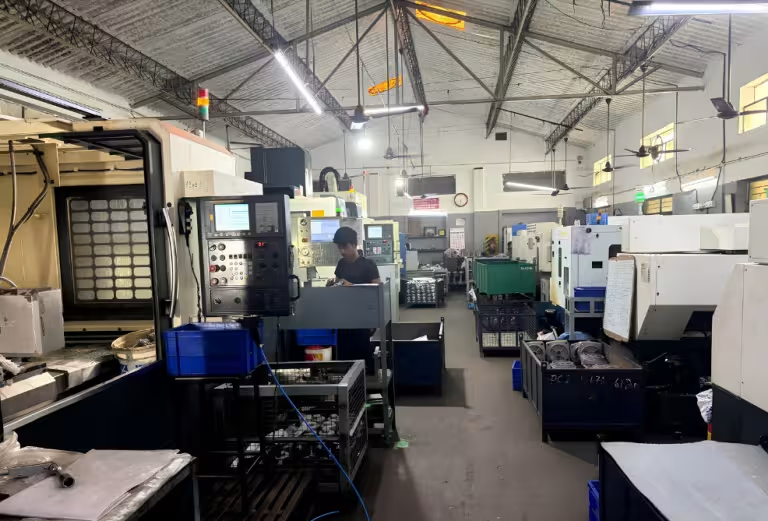
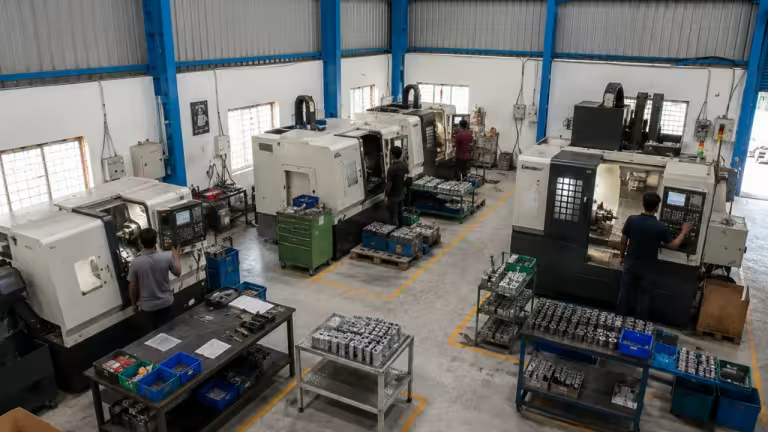
  • CNC Precision Machining (±0.025mm) 
  • CNC Laser Cutting
  • TIG Welding (aerospace-grade)
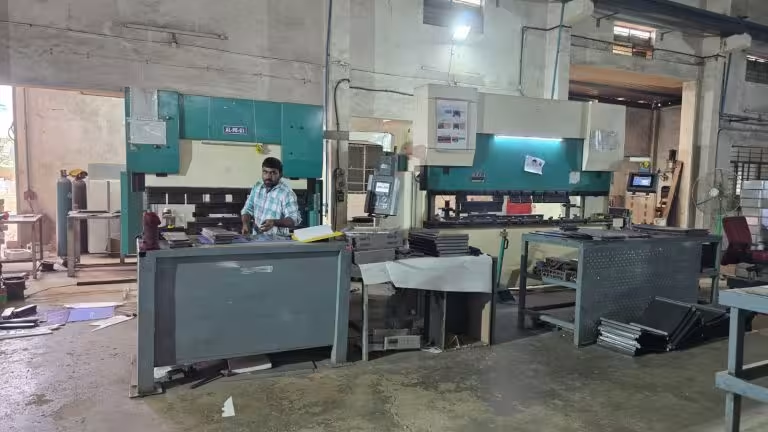
  • CNC Press Brake Forming
  • RF seam welding
  • EMI gasket groove machining
  • Aerospace-grade fasteners (AN/MS standards)
  • Titanium hardware (weight reduction)
  • EMI/RFI gasket hardware
  • Self-locking nuts (vibration-resistant)
  • Grounding provisions 
  • RF connector bulkhead provisions 

Product Description

Rack-mounted or console-integrated configurations accommodate radio hardware with external dimensions reaching 600mm while containing electromagnetic emissions. We engineer continuous RF sealing preventing transmitter leakage from exceeding conducted and radiated emission limits. Through thermal management and vibration isolation, these enclosures enable compliant radio operation supporting aerospace communication requirements. 

Mounting Type
  • Aircraft rack mounting (ATR standard)
  • Avionics bay integration
  • Console mounting provisions
  • Vibration-isolated mounting
  • Quick-release mechanisms
  • Panel mounting configurations
  • EMI conductive gasket sealing
  • Environmental sealing (IP54-IP65)
  • Altitude compensation vents
  • Filtered ventilation provisions
  • Multi-stage gasket systems
  • RF-tight door sealing 
  • Operating Temperature: -55°C to +85°C
  • Storage Temperature: -62°C to +95°C
  • Altitude: Up to 50,000 feet
  • Humidity: Up to 95% RH
  • Explosive decompression resistance
  • Thermal shock qualification
  • Random vibration tolerance (MIL-STD-810)
  • Sine vibration testing
  • Crash impact resistance
  • Transportation shock qualification
  • Operational vibration isolation
  • Structural resonance dampening
  • Shielding Effectiveness – 80-120 dB
  • Frequency range – 10 kHz to 18 GHz
  • Continuous RF seam welding
  • Honeycomb ventilation panels
  • Filtered power entry modules
  • Inter-stage isolation provisions
  • ISO 9001:2015 Manufacturing
  • AS9100 (Aerospace Quality Management)
  • RTCA DO-160 (Environmental Testing)
  • MIL-STD-810 (Environmental Engineering)
  • MIL-STD-461 (EMI/EMC)
  • FAA TSO certification (application-specific)
  • RoHS Compliant

Technical Advantages

Transmitter power amplifiers generate heat during operation requiring thermal management preventing component failure from junction temperature excursions. Addressing this requirement, aluminum chassis construction provides heat spreading transferring thermal energy to external mounting interfaces. Forced air cooling with honeycomb EMI ventilation panels maintains airflow while preventing electromagnetic leakage. 

RF connector bulkheads must maintain shield continuity preventing transmitter power from radiating through cable entries. Precision-machined connector mounting provisions ensure 360-degree contact with coaxial outer conductors maintaining shield effectiveness. Moreover, filtered power entry modules suppress conducted emissions preventing transmitter noise from coupling into aircraft power distribution. 

Let's Get Started

Need reliable Enclosures for your next project? Get in touch with us today, and we’ll help you find exactly what you need!

Industry Applications

Commercial Aviation

Houses VHF communication radios providing air-to-ground voice communication in passenger aircraft cockpits. 

Military Aircraft Communication

Contains HF and UHF tactical radios enabling secure voice and data links in combat aircraft. 

Business Aviation

Protects SATCOM transceivers providing global voice and data connectivity in corporate jets. 

Air Traffic Control Systems

Secures VHF ground station radios managing controller-pilot communication in terminal and enroute facilities.

Search and Rescue Aircraft

Manages emergency locator transmitters and distress beacon receivers in SAR helicopter operations.

Unmanned Aerial Systems

Consolidates command and control datalink radios maintaining communication with remotely piloted aircraft.

Radio Electronic Enclosure

Designed for Communication Systems

Radio configurations vary from simple single-channel transceivers to complex software-defined platforms with wideband tuning capabilities. Frigate manufactures Radio Electronic Enclosures meeting RTCA DO-160 qualification with intermodulation and harmonic suppression specifications. 

ATR standard rack mounting enables rapid radio replacement during line maintenance supporting minimum equipment list compliance. Vibration-isolated mounting provisions protect crystal oscillators and phase-locked loops from mechanical noise degrading frequency stability. 

Radio Electronic Enclosure

Having Doubts? Our FAQ

Check all our Frequently Asked Questions

Can aluminum chassis construction in Radio Electronic Enclosures provide heat spreading transferring thermal energy to external mounting interfaces?

Aluminum chassis construction is commonly specified to assist passive heat spreading in radio electronics. Frigate manufactures Radio Electronic Enclosures using aluminum grades and wall thicknesses defined in customer requirements, allowing thermal energy to conduct from internal heat sources toward mounting rails or aircraft structure. Chassis geometry and interface flatness are typically customized based on thermal load and installation constraints. 

How does Frigate integrate honeycomb EMI ventilation panels in Radio Electronic Enclosures maintaining airflow while preventing electromagnetic leakage?

Maintaining airflow without compromising shielding is addressed during fabrication when Frigate integrates – 

  • RF honeycomb panels selected for specified cutoff frequency 
  • Mechanical bonding surfaces that preserve electrical continuity 
  • Vent placement aligned with internal airflow paths 

Panel depth, cell size, and mounting method are adapted based on airflow demand and shielding targets. 

Are precision-machined connector mounting provisions effective ensuring 360-degree contact with coaxial outer conductors maintaining shield effectiveness?

Connector interfaces play a critical role in enclosure shielding performance, and Frigate incorporates – 

  • Precision-machined apertures for tight connector fit 
  • Continuous metal-to-metal contact zones around bulkheads 
  • Mechanical reinforcement to preserve alignment over time 

Connector mounting features are commonly customized based on connector type and cable routing requirements. 

How does Frigate engineer filtered power entry in Radio Electronic Enclosures suppressing conducted emissions preventing transmitter noise coupling?

Conducted emission control is supported during manufacturing when Frigate implements – 

  • Filtered power entry modules specified for current and frequency range 
  • Controlled bonding between filter bodies and enclosure walls 
  • Internal segregation between power and RF sections 

Filter selection and mounting details are adapted to match power levels and regulatory requirements. 

Does ATR standard rack mounting enable rapid radio replacement during line maintenance supporting minimum equipment list compliance?

ATR-standard mounting is widely used to reduce maintenance time in avionics systems. Frigate manufactures Radio Electronic Enclosures in ATR form factors aligned to customer interface drawings, supporting quick removal and replacement during line maintenance. Mounting rail geometry and fastener access are typically adjusted to match aircraft-specific maintenance practices. 

How does Frigate address vibration-isolated mounting in Radio Electronic Enclosures protecting crystal oscillators from mechanical noise?

Mechanical vibration can influence frequency stability, and Frigate supports isolation strategies such as – 

  • Elastomeric or spring-based isolators specified by vibration profile 
  • Reinforced mounting points to control load paths 
  • Mass distribution aligned with installation orientation 

Isolation hardware and attachment methods are customized based on platform vibration spectra. 

Can continuous RF sealing prevent transmitter leakage from exceeding conducted and radiated emission limits in regulatory testing?

Continuous RF sealing is essential for emission control during compliance testing. Frigate manufactures Radio Electronic Enclosures using welded seams, conductive gaskets, and controlled panel interfaces specified by shielding requirements. Sealing methods and access panel construction are typically adapted based on frequency range and test margin expectations. 

How does Frigate validate RTCA DO-160 qualification in Radio Electronic Enclosures with intermodulation and harmonic suppression specifications?

Environmental and EMI qualification relies on controlled build execution and verification. Frigate supports RTCA DO-160 qualification by manufacturing enclosures using approved materials, finishes, and assembly processes aligned to defined test categories. Documentation and traceability are maintained to support vibration, temperature, EMI, and intermodulation testing programs. 

Are multi-stage gasket systems compatible with altitude compensation requirements preventing pressure differential in unpressurized compartments?

Altitude-related pressure changes are managed when Frigate incorporates gasket systems that – 

  • Maintain sealing force across pressure cycling 
  • Work alongside breather or membrane vents 
  • Preserve RF continuity across removable panels 

Gasket materials and compression profiles are selected based on altitude range and access frequency. 

How does Frigate optimize EMI shielding in Radio Electronic Enclosures achieving effectiveness exceeding 100dB across VHF through UHF frequency ranges?

High shielding effectiveness is achieved during fabrication when Frigate applies – 

  • Continuous seam welding on enclosure joints 
  • Conductive surface finishes at mating interfaces 
  • Controlled gasket compression around access points 

Shielding construction details are customized based on frequency band sensitivity and compliance margins. 

Get Clarity with Our Manufacturing Insights

We'd love to Manufacture for you!

Submit the form below and our representative will be in touch shortly.

LOCATIONS

Registered Office

10-A, First Floor, V.V Complex, Prakash Nagar, Thiruverumbur, Trichy-620013, Tamil Nadu, India.

Operations Office

9/1, Poonthottam Nagar, Ramanandha Nagar, Saravanampatti, Coimbatore-641035, Tamil Nadu, India. ㅤ

Other Locations

GENERAL ENQUIRIES

Get Quote
Support All File Formats Including - STEP | STP | SLDPRT | STL | DXF | IPT | X_T | X_B | 3DXML | CATPART | PRT | SAT | 3MF | JT files

LOCATIONS

Registered Office

10-A, First Floor, V.V Complex, Prakash Nagar, Thiruverumbur, Trichy-620013, Tamil Nadu, India.

Other Locations

GENERAL ENQUIRIES

Get Your Quote Now

New Get Quote form

Radio Electronic Enclosure

Need reliable wires and cables for your next project? Get in touch with us today, and we’ll help you find exactly what you need!

Get Latest Price

Get Price Form

Radio Electronic Enclosure

Need reliable Machining for your next project? Get in touch with us today, and we’ll help you find exactly what you need!

Get Latest Price

Get Price Form