


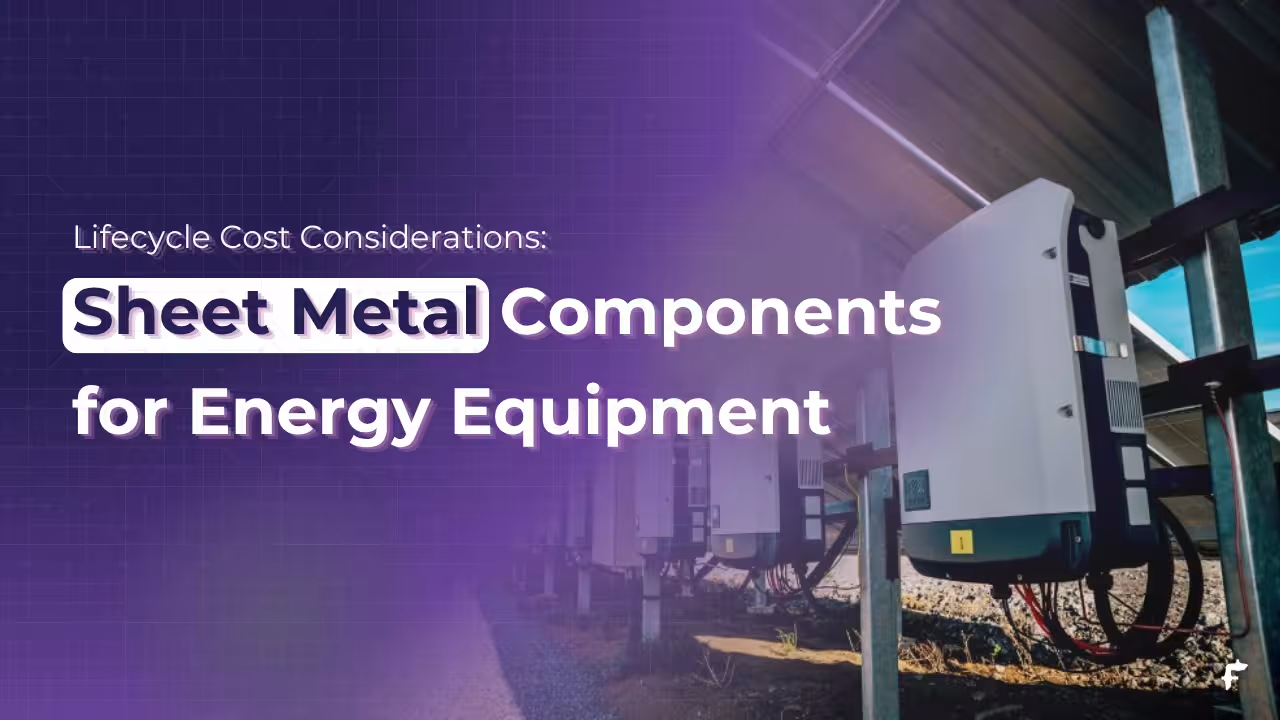
Energy OEMs, EPC contractors, and infrastructure developers are shifting procurement strategies toward measurable long-term value. Cost pressures are no longer limited to procurement budgets but extend across installation efficiency, operational uptime, maintenance cycles, and replacement planning.
That shift positions sheet metal components manufacturing for energy equipment as a strategic function rather than a transactional activity. Every manufacturing decision — from material selection to process control — directly impacts lifecycle cost and operational continuity.
Frigate operates as a manufacturing partner focused on execution excellence, engineering alignment, and production consistency. Manufacturing is structured to reduce lifecycle cost through controlled processes, precision fabrication, and scalable production systems.
Lifecycle cost is not an abstract metric. It is reflected in fewer breakdowns, lower maintenance frequency, consistent system performance, and predictable operational expenditure across the lifecycle of Sheet Metal Components for Energy applications.
Commercial Cost Drivers in Sheet Metal Components for Energy
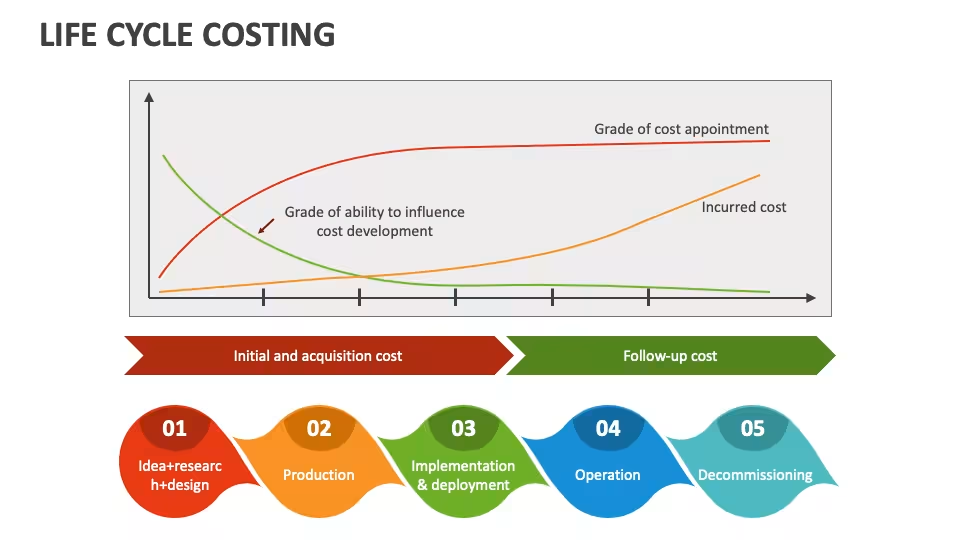
Lifecycle cost is shaped by multiple interconnected manufacturing and performance variables. Procurement teams evaluating sheet metal components manufacturing for energy equipment prioritize factors that influence long-term cost stability rather than short-term savings.
Energy systems operate under continuous load, environmental exposure, and mechanical stress. Components that fail prematurely create cascading financial impact, including downtime, service costs, and production losses.
Key Commercial Cost Drivers
- Performance consistency under continuous operational load
- Failure rate across varying environmental conditions
- Maintenance frequency and service intervention cost
- Replacement cycle predictability for budgeting accuracy
- Fabrication quality affecting system integration
- Manufacturing repeatability across production batches
- Dimensional stability over extended usage
Each of these drivers is directly influenced by manufacturing capability. Frigate aligns production planning and quality systems to control these variables, ensuring Sheet Metal Components for Energy deliver predictable lifecycle performance.
Material Selection Strategy for Long-Term Cost Control
Material selection defines the foundation of lifecycle cost. In sheet metal components manufacturing for energy equipment, material decisions must be based on actual operating conditions rather than generic specifications.
Energy environments expose components to corrosion, temperature variation, vibration, and load stress. Incorrect material selection leads to early degradation, increasing replacement cost and maintenance frequency.
Commercial Material Strategy
- Corrosion-resistant materials for outdoor and coastal installations
- Heat-resistant alloys for power generation environments
- Structural strength for load-bearing applications
- Compatibility with coatings and finishing processes
- Resistance to fatigue under continuous operation
- Stability under vibration and mechanical stress
- Optimized thickness balancing cost and durability
Frigate evaluates application-specific requirements before material selection, ensuring custom sheet metal parts for energy industry applications achieve long-term durability and cost efficiency.
Precision Manufacturing as a Cost Reduction Lever
Precision is a direct contributor to lifecycle cost control. Poor dimensional accuracy increases assembly time, causes misalignment, and accelerates wear during operation.
Frigate applies advanced methods in precision sheet metal fabrication for energy systems, ensuring tight tolerances and repeatable accuracy across production volumes.
Commercial Benefits of Precision Manufacturing
- Reduced assembly time due to accurate fitment
- Lower rejection rates during installation
- Improved alignment within complex assemblies
- Reduced vibration-related wear and failures
- Consistent quality across batch production
- Lower rework and correction costs
- Enhanced operational reliability
Precision manufacturing becomes critical when sourcing sheet metal fabrication services for power equipment, where even minor deviations can affect system performance.
Design Optimization for Manufacturing Cost Efficiency
Design complexity often drives hidden costs in manufacturing. Over-engineered or non-optimized designs increase fabrication steps, material waste, and failure risk.
Frigate works closely with OEMs to refine designs within sheet metal components manufacturing for energy equipment, ensuring manufacturability and durability without unnecessary cost additions.
Commercial Design Optimization Outcomes
- Simplified fabrication processes reducing production time
- Lower welding and joining complexity
- Improved load distribution and structural performance
- Reduced material wastage during production
- Faster turnaround time for manufacturing
- Improved repeatability in high-volume production
- Reduced long-term failure probability
This approach ensures cost-efficient delivery of OEM sheet metal components for power generation while maintaining high performance standards.
Standardized Production for Cost Predictability
Manufacturing variability leads to inconsistent performance and unpredictable costs. Standardization ensures uniform quality across production cycles.
Frigate implements controlled workflows within sheet metal components manufacturing for energy equipment, ensuring consistency across every batch produced.
Commercial Value of Standardization
- Uniform product quality across production runs
- Predictable performance in field conditions
- Reduced variability in maintenance cost
- Stable lead times for project planning
- Improved traceability for quality assurance
- Consistent dimensional accuracy
- Lower risk of operational disruptions
Standardized production is essential for large-scale deployment of Sheet Metal Components for Energy, where consistency defines commercial success.
Surface Finishing as a Lifecycle Cost Control Factor
Surface finishing plays a critical role in protecting components against environmental damage. Improper finishing results in corrosion, degradation, and reduced service life.
Frigate integrates advanced finishing processes within its sheet metal enclosure fabrication for energy equipment capabilities, ensuring long-term durability in demanding environments.
Commercial Impact of Surface Finishing
- Enhanced resistance to corrosion and moisture
- Improved performance in high-temperature environments
- Reduced need for frequent maintenance
- Extended operational lifespan of components
- Lower replacement frequency
- Protection against environmental wear
- Consistent quality and appearance
Such finishing processes are essential in heavy-duty sheet metal parts manufacturing, where exposure conditions are severe.
Supply Chain Assurance Through Manufacturing Capability
Lifecycle cost includes supply chain reliability. Production delays or inconsistent quality increase project costs and operational risks.
Frigate operates as a manufacturing partner offering dependable contract manufacturing for sheet metal energy components, ensuring stable and scalable production.
Commercial Supply Chain Advantages
- Dedicated manufacturing capacity for energy projects
- Predictable production timelines
- Scalability to meet increasing demand
- Reduced dependency on multiple vendors
- Consistent quality across repeated orders
- Faster response to urgent requirements
- Alignment with OEM production schedules
Reliable manufacturing capability ensures uninterrupted supply of custom sheet metal parts for energy industry applications.
Quality Assurance as a Cost Protection Mechanism
Quality failures significantly increase lifecycle cost. Field breakdowns lead to downtime, service expenses, and operational inefficiencies.
Frigate integrates comprehensive inspection systems within sheet metal components manufacturing for energy equipment, ensuring every component meets defined specifications.
Commercial Quality Outcomes
- Reduced field failure rates
- Lower warranty and service costs
- Improved system reliability
- Consistent adherence to design specifications
- Early detection of production deviations
- Increased confidence in performance
- Long-term operational stability
Strict quality control is essential when working with sheet metal fabrication services for power equipment, where performance reliability is critical.
Maintenance Cost Reduction Through Manufacturing Excellence
Maintenance cost is a recurring expense that directly impacts lifecycle cost. High-quality manufacturing reduces the frequency of service interventions.
Frigate ensures that Sheet Metal Components for Energy are built for durability and long-term reliability.
Commercial Maintenance Advantages
- Reduced maintenance frequency
- Lower downtime in energy operations
- Improved system uptime
- Predictable maintenance scheduling
- Reduced operational expenditure
- Enhanced reliability under load
- Extended component lifespan
Durable manufacturing output ensures lower long-term operational costs.
Scalable Manufacturing for Long-Term Commercial Partnerships
Energy projects evolve, requiring increasing production capacity over time. Manufacturing partners must support scaling without compromising quality.
Frigate provides scalable sheet metal components manufacturing for energy equipment, ensuring consistent performance across volumes.
Commercial Partnership Benefits
- Ability to scale production efficiently
- Consistent quality across large orders
- Engineering support for new requirements
- Continuous cost optimization
- Dedicated project management
- Improved coordination with OEM timelines
- Long-term supply stability
Such scalability is critical for OEM sheet metal components for power generation programs.
Why Frigate is a Strategic Manufacturing Partner for Lifecycle Cost Optimization
Energy OEMs and EPC contractors require more than just fabrication capability. They need a manufacturing partner who can align production with lifecycle cost objectives, ensuring long-term performance, consistency, and cost control.
Frigate operates as a dedicated manufacturer with a strong focus on execution discipline, engineering alignment, and process-driven production. Every stage of sheet metal components manufacturing for energy equipment is structured to reduce lifecycle cost while maintaining performance reliability across demanding applications.
Manufacturing Infrastructure Built for Precision and Consistency
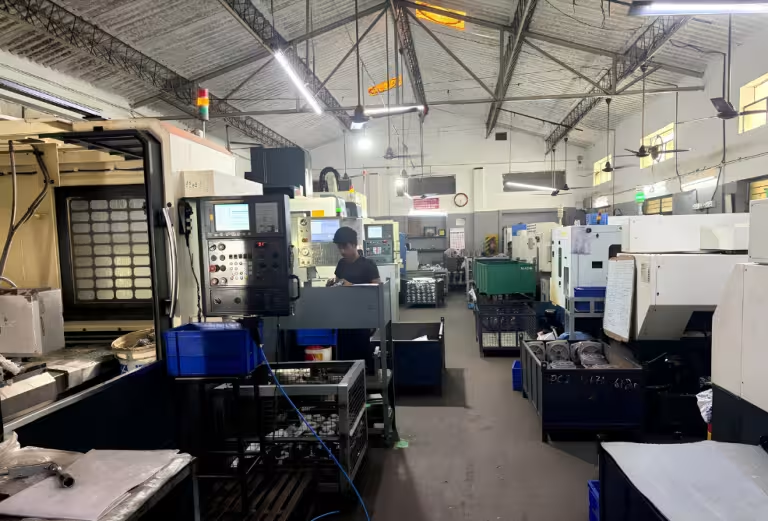
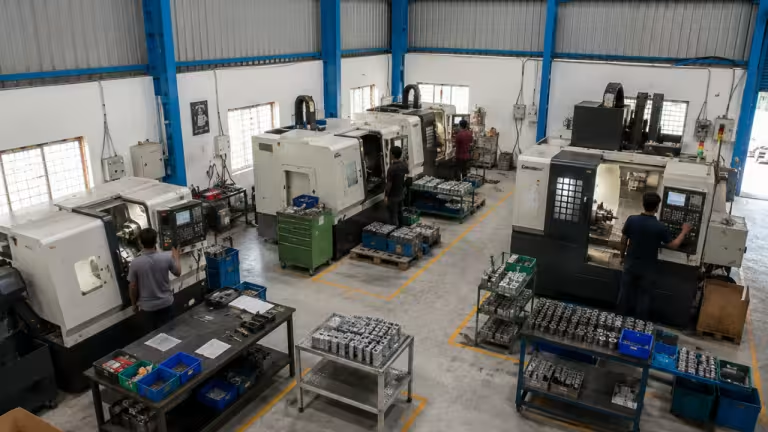
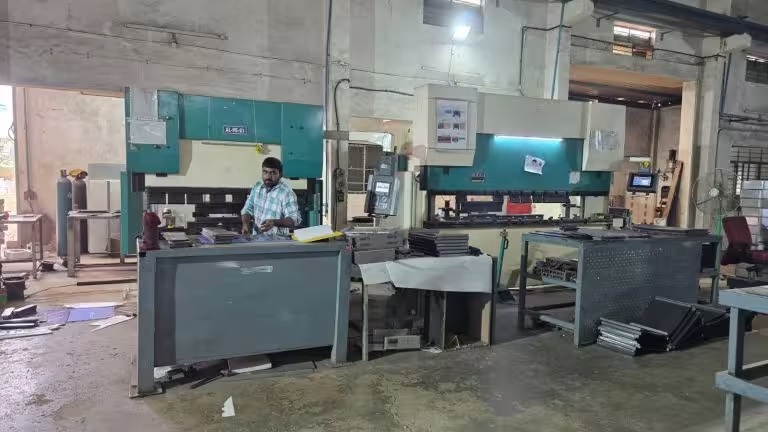
Frigate’s production environment is designed to deliver repeatable accuracy across high-volume manufacturing. Advanced fabrication systems ensure tight tolerances and consistent output, which directly impacts lifecycle cost by reducing rework and field failures.
Precision-driven manufacturing enables –
- Accurate component fitment during assembly
- Reduced variation across batches
- Improved structural and dimensional stability
- Lower rejection rates at OEM facilities
Such infrastructure ensures that Sheet Metal Components for Energy meet performance expectations consistently across production cycles.
Application-Specific Material Selection and Validation
Material decisions are aligned with real operating environments rather than generic specifications. Frigate evaluates load conditions, exposure factors, and lifecycle requirements before finalizing material selection.
This approach ensures –
- Resistance to corrosion and environmental stress
- Stability under high temperature and vibration
- Reduced material fatigue over time
- Improved durability in field conditions
For sheet metal components manufacturing for energy equipment, this level of material validation directly reduces replacement frequency and maintenance cost.
Integrated Finishing Processes for Long-Term Durability
Surface finishing is integrated within the manufacturing workflow rather than treated as a secondary process. This ensures complete control over coating quality and durability.
Frigate’s finishing capabilities deliver –
- Protection against corrosion and environmental exposure
- Enhanced lifespan of fabricated components
- Reduced maintenance requirements
- Consistent coating quality across batches
This is critical for maintaining lifecycle performance in energy applications where environmental conditions are demanding.
Standardized Production Systems for Predictable Output
Manufacturing consistency is achieved through standardized production workflows. Each stage of fabrication is controlled to ensure repeatability and uniform quality.
Frigate’s standardized systems ensure –
- Consistent performance across all production batches
- Stable manufacturing timelines
- Reduced variability in component quality
- Improved traceability for quality assurance
Such consistency is essential for large-scale deployment of Sheet Metal Components for Energy, where performance predictability directly impacts lifecycle cost.
Scalable Manufacturing for Energy Projects
Energy projects often require increasing production volumes over time. Frigate’s manufacturing setup supports scalability without compromising quality or lead time.
Scalable manufacturing capability provides –
- Flexibility to handle large and repeat orders
- Consistent quality across volume expansion
- Faster response to changing project requirements
- Alignment with OEM production schedules
This ensures uninterrupted sheet metal components manufacturing for energy equipment even as project demand grows.
Strong Quality Control Systems with Full Traceability
Quality assurance is embedded into every stage of production. Frigate follows strict inspection protocols to ensure components meet defined specifications before dispatch.
Quality control systems include –
- Dimensional inspection at multiple stages
- Process monitoring during fabrication
- Batch traceability for accountability
- Final validation before delivery
These systems minimize defects and ensure long-term reliability in energy applications.
Engineering Collaboration for Design and Cost Optimization
Frigate works closely with OEMs and engineering teams to refine component designs for manufacturability and performance. This collaboration ensures that production processes align with lifecycle cost goals.
Engineering support enables –
- Design simplification for efficient fabrication
- Reduction in material waste
- Improved structural integrity
- Faster production cycles
This alignment ensures that sheet metal components manufacturing for energy equipment delivers both performance and cost efficiency.
Manufacturing Clarity Through Structured Documentation
Clear and structured documentation ensures smooth transition from design to production. Frigate emphasizes manufacturing-ready specifications, enabling accurate execution without ambiguity.
Structured documentation ensures –
- Clear understanding of component requirements
- Reduced errors during production
- Faster production setup and execution
- Consistent output across batches
As highlighted in manufacturing documentation practices , clarity in specifications directly improves production efficiency and cost control.
Lifecycle-Focused Manufacturing Execution
Frigate’s manufacturing approach is built around lifecycle performance rather than short-term output. Every process, from material selection to final inspection, is aligned with reducing total cost of ownership.
This results in –
- Lower maintenance frequency
- Reduced failure rates in field conditions
- Predictable replacement cycles
- Improved operational efficiency
Frigate delivers sheet metal components manufacturing for energy equipment with a clear focus on durability, precision, and long-term cost optimization, making it a strategic manufacturing partner for energy sector projects.
Conclusion
Lifecycle cost defines long-term profitability and operational stability in energy equipment projects. Manufacturing decisions within sheet metal components manufacturing for energy equipment directly influence these outcomes.
Frigate aligns manufacturing processes, engineering expertise, and quality systems to deliver consistent performance and cost control.
Organizations investing in Sheet Metal Components for Energy gain measurable commercial advantages through reliable manufacturing, reduced maintenance cost, and predictable lifecycle performance.
Connect with Frigate’s manufacturing team to discuss your requirements and move forward with a production partner built for long-term value.