



















Consumer electronics manufacturing demands precision, repeatability, and speed. Product lifecycles are short. Launch windows are tight. Mechanical tolerances are extremely narrow. A deviation as small as 0.1 mm can cause assembly gaps, stress on display panels, battery misalignment, or EMI leakage. Small mechanical errors often lead to large business consequences.
Sheet Metal Parts for Consumer Electronics serve as structural backbones and protective enclosures in devices such as smartphones, laptops, routers, wearables, and industrial handheld systems. These parts must meet strict dimensional, cosmetic, and regulatory standards while being produced in high volumes.
Production Part Approval Process (PPAP) provides a structured method to validate that manufacturing processes can consistently produce conforming parts. Automotive suppliers have followed PPAP for decades. Electronics OEMs now apply the same discipline due to rising complexity and global supply risks.
Industry data shows that nearly 30% of early production quality failures are linked to insufficient process validation or incomplete documentation. Strong PPAP implementation reduces that risk significantly. This article explains how PPAP applies specifically to Sheet Metal Parts for Consumer Electronics, highlighting technical requirements, documentation expectations, process validation challenges, and structured compliance systems.
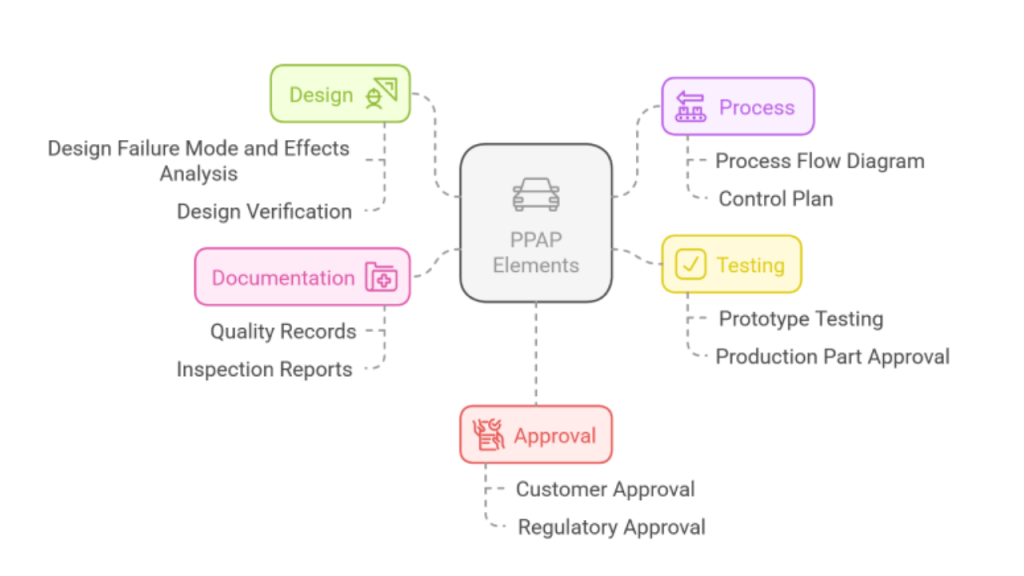
Why Strong PPAP Discipline Is Essential for High-Precision Sheet Metal Parts for Consumer Electronics
Consumer electronics products continue to become thinner, lighter, and more compact. Mechanical components must align perfectly with PCB assemblies, connectors, battery packs, and display modules. Even minor dimensional variation can create cascading failures.
PPAP ensures that every production process used for Sheet Metal Parts for Consumer Electronics is validated before mass production approval. Validation confirms that manufacturing conditions are stable and predictable.
Critical validation objectives include –
- Confirmation that CAD models and GD&T specifications are fully understood
- Verification that laser cutting, bending, stamping, and welding processes are repeatable
- Statistical evidence that key dimensions meet capability targets
- Risk mitigation through structured PFMEA analysis
Capability studies form a central requirement. Most OEMs require Cpk values of at least 1.33 for critical dimensions. Safety or performance-related features may require Cpk ≥ 1.67.
Without PPAP discipline, quality problems often surface during ramp-up rather than during validation. Late discovery increases corrective costs by multiple times. Strong PPAP reduces launch risk and strengthens long-term supplier performance.
What Complete PPAP Documentation Really Means for OEM Sheet Metal Programs
Documentation is not paperwork for compliance alone. Documentation is proof of control. Electronics OEMs typically require Level 3 PPAP submissions for Sheet Metal Parts for Consumer Electronics, which include comprehensive validation records.
A complete submission typically includes –
- Approved design records and revision-controlled drawings
- Engineering change documents
- Process Flow Diagram detailing each manufacturing step
- Process Failure Mode and Effects Analysis (PFMEA)
- Control Plan outlining inspection frequency and reaction plans
- Dimensional inspection results with ballooned drawings
- Material certifications and test reports
- Initial Sample Inspection Report (ISIR)
- Part Submission Warrant (PSW)
Process Flow Diagrams document each stage, such as blanking, piercing, forming, welding, surface finishing, and packaging. PFMEA evaluates potential failure modes including cracking at bend radii, hole misalignment, coating delamination, or fixture instability.
Traceability is increasingly critical. Each production lot must link to raw material heat numbers, coating batch data, tooling revision levels, and inspection records. Compliance documentation for RoHS and REACH must also be included.
Audit statistics indicate that more than 40% of PPAP rejections occur due to incomplete or inconsistent documentation rather than dimensional nonconformance. Structured documentation significantly reduces approval delays for Sheet Metal Parts for Consumer Electronics.
Understanding the Critical Quality and Performance Parameters That Drive Approval
Consumer electronics components must satisfy both structural and aesthetic expectations. External enclosures and brackets must look flawless while performing demanding mechanical functions.
Key quality parameters for Sheet Metal Parts for Consumer Electronics typically include –
- Dimensional tolerance control within ±0.05 mm to ±0.1 mm
- Flatness control for thin aluminum panels
- Surface roughness below Ra 1.6 µm for visible parts
- Burr height below 0.05 mm
- Controlled coating thickness, often 60–80 microns for powder coating
- Verified anodizing or plating adhesion
GD&T specifications govern true position, perpendicularity, parallelism, and profile tolerances. These parameters directly influence assembly alignment and mechanical stability.
Functional requirements extend beyond dimensions –
- EMI shielding effectiveness
- Electrical grounding continuity
- Structural strength under drop and vibration tests
- Thermal conductivity for heat management components
Thin-gauge materials are vulnerable to warpage after forming or coating. Springback variation during bending must be controlled statistically. Cosmetic inspection criteria must be clearly defined to avoid subjective acceptance decisions.
Reliable Sheet Metal Parts for Consumer Electronics require simultaneous control of dimensional accuracy, surface finish, and functional performance.
Process Validation Challenges That Appear During Scale-Up from Prototype to Mass Production
Prototype success does not guarantee production stability. High-volume manufacturing introduces additional variability.
Common scale-up challenges affecting Sheet Metal Parts for Consumer Electronics include –
- Progressive die wear shifting hole location
- Springback variation under high-speed bending
- Press tonnage inconsistency
- Welding distortion affecting flatness
- Coating thickness fluctuation
- Handling damage during packaging
Measurement System Analysis (MSA) ensures inspection systems are accurate and repeatable. Gauge R&R studies confirm that measurement variation remains within acceptable limits.

Pilot production runs validate –
- Throughput capability
- Scrap and rework percentage
- Packaging durability
- Process stability under full production load
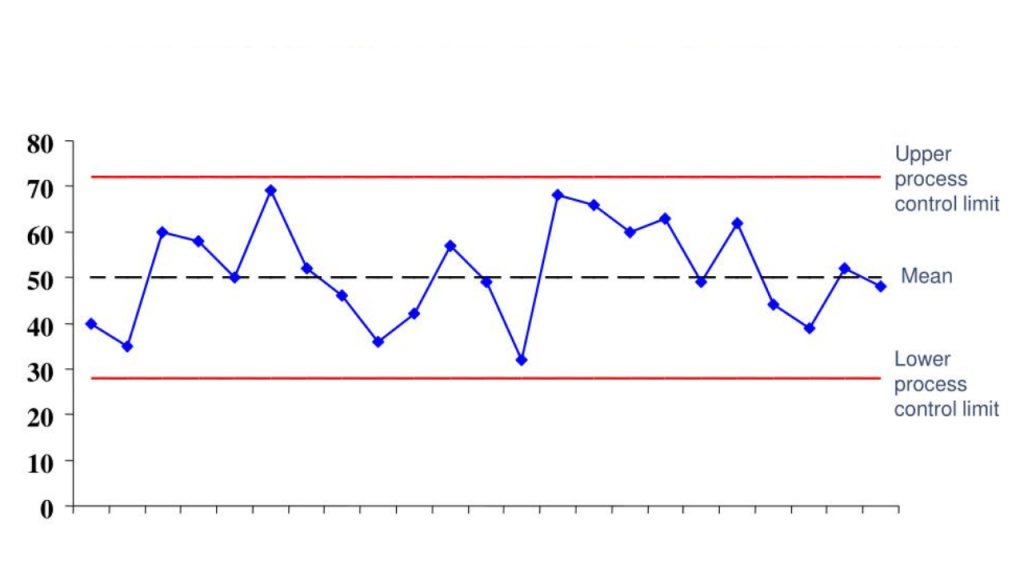
Statistical Process Control (SPC) tools monitor dimensional trends and detect drift early. Control charts identify variation before large quantities of non-conforming parts are produced.
Industry research shows that nearly 25% of early production failures result from inadequate process capability verification. Structured PPAP for Sheet Metal Parts for Consumer Electronics addresses these risks before launch.
How Weak PPAP Execution Directly Impacts Cost, Timelines, and Regulatory Compliance
Quality failures affect more than technical performance. Financial and operational consequences can be severe.
Poor PPAP execution for Sheet Metal Parts for Consumer Electronics may result in –
- Production line stoppage
- Emergency air shipments
- Tool redesign and modification costs
- Excess scrap inventory
- Warranty claims
- Regulatory compliance violations
A single week of launch delay in a global electronics program can lead to substantial revenue loss. Corrective revalidation cycles consume engineering time and extend timelines.
Revalidation often requires –
- Tool modification
- Repeat dimensional inspection
- Updated PFMEA and Control Plans
- Resubmission of complete documentation
Material compliance regulations such as RoHS and REACH demand accurate traceability. Missing certifications can halt shipments.
Structured PPAP reduces uncertainty and strengthens cost predictability. Consistent validation improves confidence across the supply chain.
How Frigate Builds Structured PPAP Systems for Reliable Sheet Metal Parts for Consumer Electronics
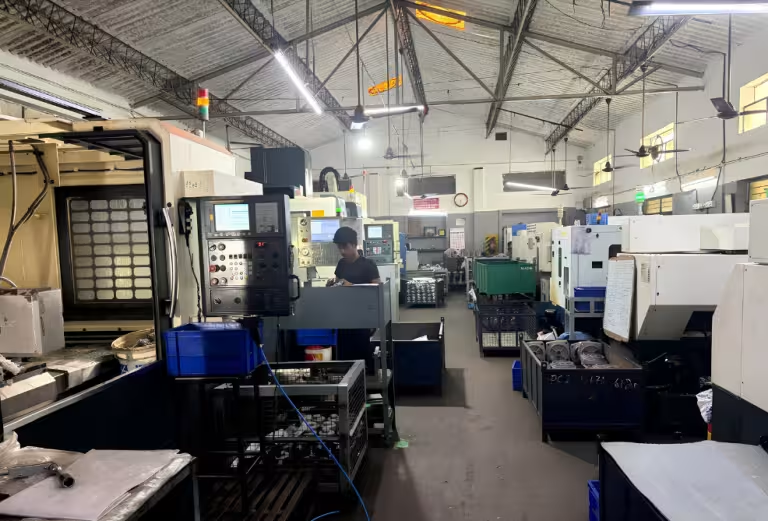
Frigate develops PPAP systems around engineering validation, statistical control, and disciplined manufacturing practices. Approval is treated as proof of process stability, not just document submission. Reliable Sheet Metal Parts for Consumer Electronics require structured validation that connects design intent, tooling capability, and production consistency.
Engineering-Driven PPAP Planning
Every PPAP program begins with a detailed technical review. Teams evaluate –
- CAD models and GD&T interpretation
- Critical-to-quality (CTQ) features
- Tolerance stack-up risks
- Cosmetic surface requirements
- Material grade suitability
Design for Manufacturability (DFM) analysis is completed before tooling release. Bend feasibility, springback behavior, flatness control, and distortion risks are assessed early. This reduces tooling revisions and shortens approval timelines for Sheet Metal Parts for Consumer Electronics.
Structured PPAP Documentation Management
Frigate maintains a centralized documentation system with strict revision control. Each PPAP package includes –
- Approved design records
- Process Flow Diagrams
- PFMEA with risk ranking
- Control Plans with inspection strategy
- Ballooned dimensional reports
- Material and surface treatment certifications
- Part Submission Warrant (PSW)
Documents are developed alongside process planning, not after production trials. This prevents inconsistencies and strengthens audit readiness for Sheet Metal Parts for Consumer Electronics.
Digital Traceability Across Materials, Tooling, and Inspection
Digital traceability links raw material batches, tooling revisions, and inspection data. Each production lot can be traced to –
- Material heat number
- Tool maintenance history
- Coating batch details
- Dimensional inspection records
Such linkage enables faster root cause analysis and ensures regulatory compliance. Strong traceability reduces risk exposure in high-volume Sheet Metal Parts for Consumer Electronics programs.
Advanced Dimensional and Functional Verification
Precision validation is performed using calibrated metrology systems. Methods include –
- CMM verification for GD&T features
- Optical inspection for profile accuracy
- Surface roughness testing
- Coating thickness measurement
- Flatness and alignment checks
Capability studies confirm statistical stability of critical dimensions such as hole position and bend angle. This ensures consistent performance of Sheet Metal Parts for Consumer Electronics across production volumes.
Process Qualification Before Mass Production Release
Tooling and fixtures undergo structured qualification before release. Validation includes –
- Dimensional capability trials
- Pilot production under full-load conditions
- Tool wear monitoring
- Measurement System Analysis (MSA)
Pilot batches simulate real manufacturing conditions. Scrap rate, throughput, and stability are analyzed. This structured approach ensures scalable production of Sheet Metal Parts for Consumer Electronics.
Statistical Process Control and Continuous Monitoring
Statistical Process Control (SPC) is implemented to maintain long-term stability. Control charts monitor –
- Bend consistency
- Hole alignment
- Coating thickness
- Critical dimensional trends
Trend analysis detects early variation, allowing preventive correction. Continuous improvement updates PFMEA and Control Plans based on real production data. This closed-loop system protects the reliability of Sheet Metal Parts for Consumer Electronics.
Cross-Functional Review for Risk Mitigation
Engineering, quality, and manufacturing teams conduct structured reviews. Focus areas include –
- Geometry-related manufacturing risks
- Cosmetic acceptance standards
- Packaging validation
- Logistics considerations
Collaborative review strengthens alignment between design requirements and manufacturing capability.
Delivering Predictable and Repeatable Performance
Structured systems replace reactive correction. Frigate’s PPAP framework emphasizes measurable capability, documented traceability, and controlled manufacturing conditions.
Reliable Sheet Metal Parts for Consumer Electronics depend on repeatable processes and statistical validation. Frigate builds these systems to ensure consistent OEM approval, reduced launch risk, and sustained production stability.
Conclusion
Precision mechanical performance is fundamental to modern electronics. Structural components must meet strict dimensional, cosmetic, and functional requirements while supporting rapid production scaling.
Sheet Metal Parts for Consumer Electronics demand disciplined validation supported by comprehensive documentation, statistical capability analysis, and controlled manufacturing systems. Weak PPAP execution increases operational risk, cost exposure, and launch delays.
Frigate provides structured engineering validation, digital traceability, and statistically controlled manufacturing processes that support dependable PPAP approval. Connect with Frigate to enhance compliance, reduce approval cycles, and ensure consistent performance in Sheet Metal Parts for Consumer Electronics.