







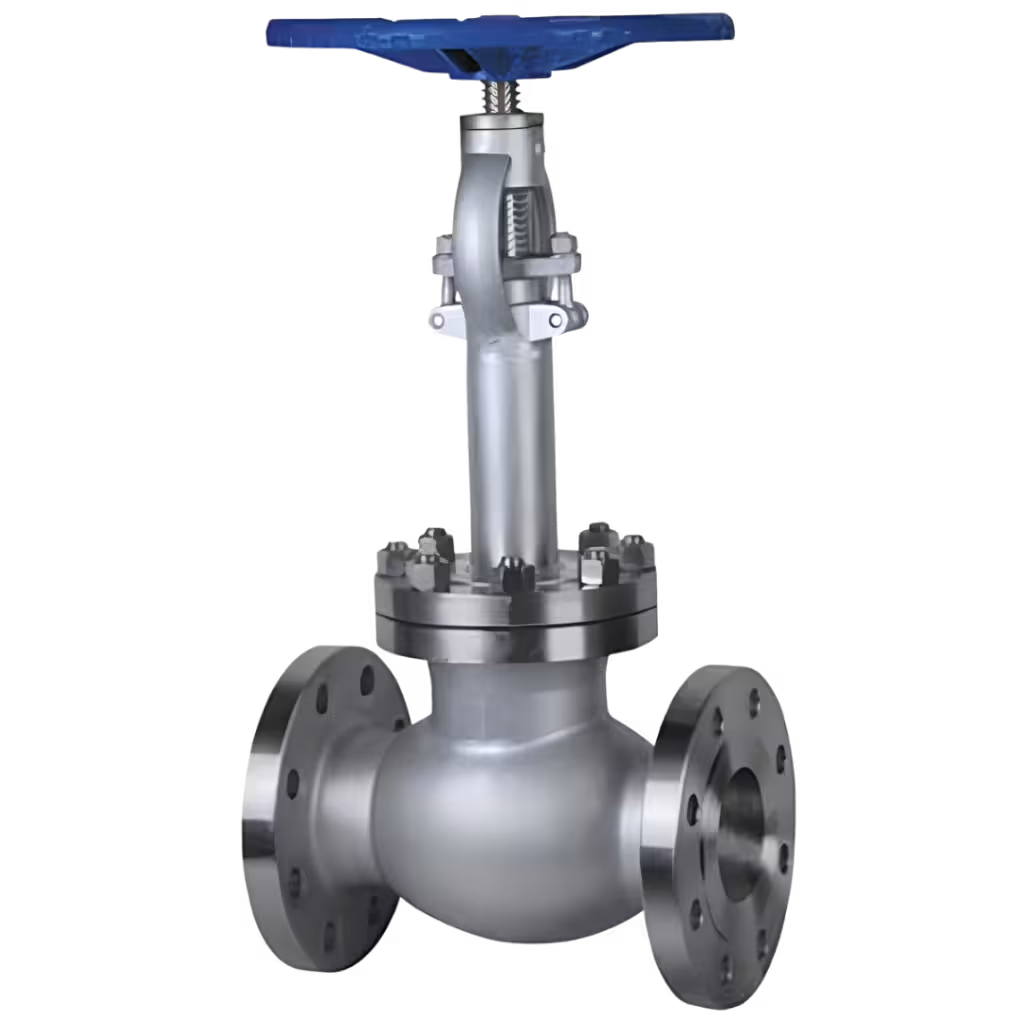



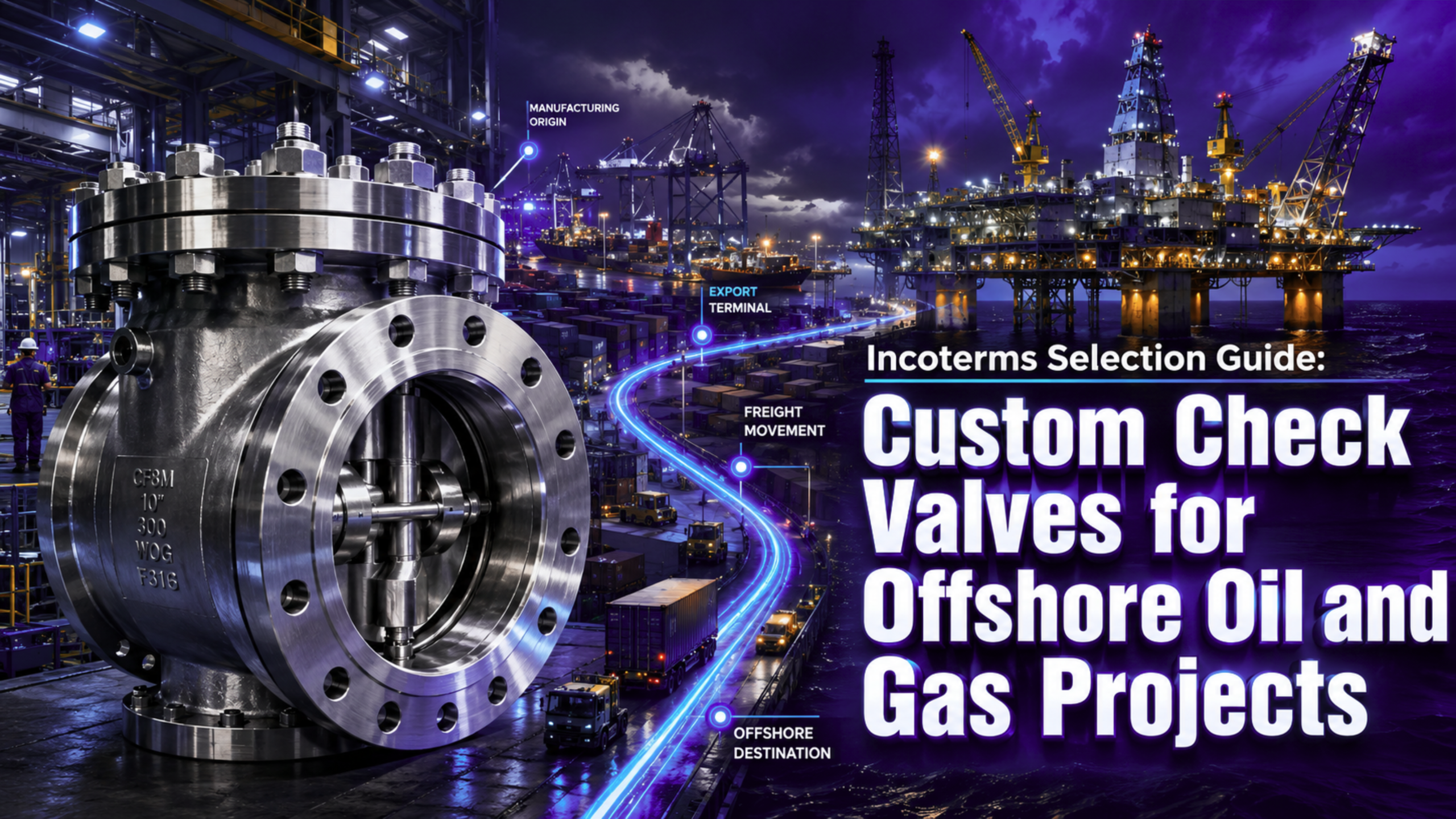
Procurement teams do not treat Incoterms as a formality when they import custom check valves for offshore oil and gas projects. The selected term decides who controls freight, who carries risk at each stage, who manages export paperwork, and how quickly material can move after inspection release. For offshore procurement, that decision directly affects schedule discipline, cost exposure, and delivery accountability.
Frigate works with buyers that import custom check valves for offshore oil and gas projects under strict project timelines, inspection requirements, and documentation controls. Commercial success depends on choosing the right supply structure before dispatch pressure starts. A wrong trade term can create avoidable conflict between factory readiness, freight booking, customs responsibility, and delivery commitment.
Project buyers already know the technical side of valve selection. Commercially, the bigger issue is execution ownership. That is where a dependable custom check valve supplier for offshore oil and gas becomes important. The supplier must support technical compliance, document readiness, inspection coordination, export packing, and shipment handover in one controlled process.
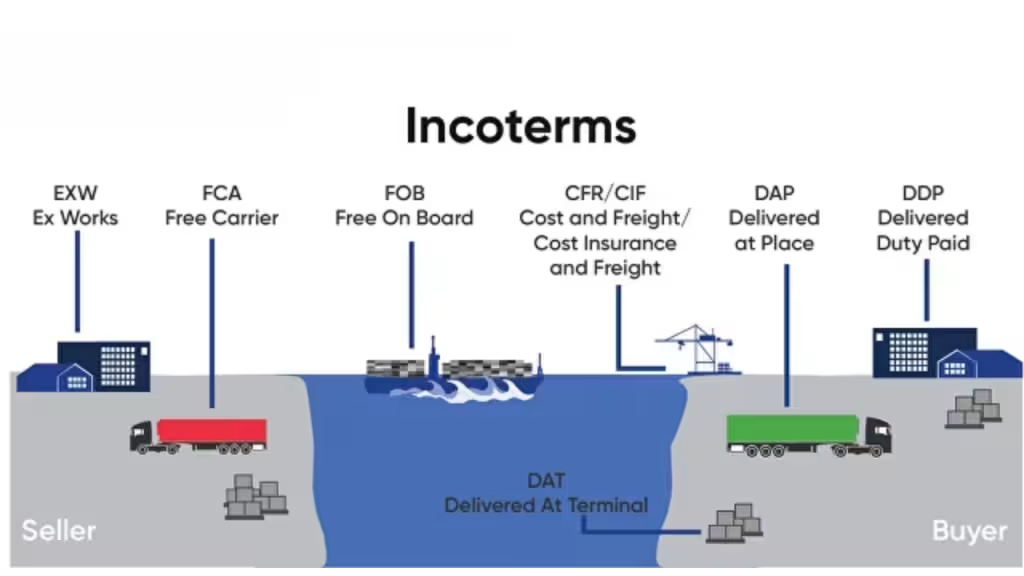
Commercial Risk Allocation Matters More Than Generic Trade-Term Preference
Most offshore valve orders are not routine stock purchases. Material grade, pressure rating, end connection, testing, painting, marking, traceability, and third-party inspection all move together. When buyers import custom check valves for offshore oil and gas projects, the trade term must match that project reality.
A buyer may want freight control, but not want operational confusion at origin. Another buyer may prefer supplier-managed dispatch up to a defined point, especially when multiple packages are moving under one project schedule. Commercial clarity matters more than using a familiar Incoterm by default.
Frigate supports customers that need a project-led supply model, not a generic export transaction. A serious custom check valve supplier for offshore oil and gas should be able to align production completion, inspection release, and shipping handover without creating blind spots between teams.
Trade-Term Selection Should Follow Procurement Control Strategy
The right term depends on who is best placed to control each stage of the movement. Buyers that import custom check valves for offshore oil and gas projects should decide the term only after reviewing freight capability, customs structure, shipment urgency, and destination complexity.
EXW Works Only When Buyer Control at Origin Is Strong
EXW gives the buyer maximum control on paper, but also shifts more operational load to the buyer from the factory side itself. Pickup coordination, export handling dependency, and loading control can become problem areas if the buyer’s forwarding network is not already strong at origin.
This option may suit experienced buyers that buy custom check valves for offshore projects through established logistics partners. Teams without strong origin follow-up usually face avoidable friction under EXW.
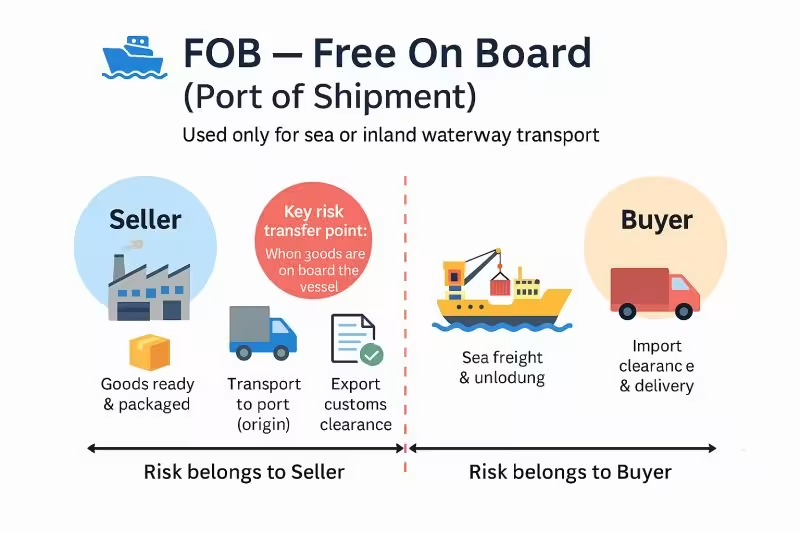
FOB Supports Better Balance Between Origin Execution and Freight Control
FOB is often a practical commercial structure for offshore valve procurement. The supplier handles origin-stage export responsibility up to vessel loading, while the buyer controls main carriage and downstream logistics.
This model is often preferred under incoterms for importing industrial check valves because it reduces confusion at origin without taking freight strategy away from the buyer. Procurement teams gain visibility and control where it matters most, while manufacturing and export release stay linked on the supplier side.
CFR and CIF Reduce Coordination Load, But Supplier Capability Must Be Strong
CFR or CIF can simplify execution for buyers managing multiple equipment lines or complex sourcing schedules. That advantage only works when the supplier is commercially disciplined and shipment-ready at the right time.
A capable offshore oil and gas check valve manufacturer should be able to connect factory completion, inspection closure, export packing, and vessel planning with minimal delays. Buyers that choose CIF only for convenience, without checking supplier execution strength, often lose visibility where they most need it.
DAP Works When Delivery Scope Is Clearly Defined Up to Destination
DAP can support selected offshore project deliveries where the buyer wants the supplier to manage movement closer to the final receiving point. This is useful only when inland delivery assumptions, import responsibility, and destination access conditions are clearly defined before order release.
The best incoterms for importing industrial valves are not the broadest ones. The best terms are the ones that fit actual project control requirements and reduce commercial ambiguity.
Buyer–Supplier Responsibility Matrix for Offshore Check Valve Imports
The table below gives a commercially useful view of how trade terms usually affect control when buyers import custom check valves for offshore oil and gas projects.
| Incoterm | Origin Export Handling | Main Freight Control | Risk Transfer Point | Best Fit for Buyer Profile | Watchpoint |
| EXW | Buyer-led or buyer-arranged | Buyer | At supplier premises | Buyer with strong origin logistics setup | Higher coordination load at origin |
| FOB | Supplier up to vessel loading | Buyer | On board vessel at port of shipment | Buyer wanting freight control with cleaner origin execution | Port coordination must stay tight |
| CFR | Supplier | Supplier | On board vessel at port of shipment | Buyer preferring simpler freight arrangement | Less direct control over routing |
| CIF | Supplier + insurance | Supplier | On board vessel at port of shipment | Buyer needing simplified shipment structure | Insurance scope and shipment visibility must be checked |
| DAP | Supplier | Supplier | At named destination place | Buyer wanting delivery closer to project location | Import and unloading boundaries must be crystal clear |
This comparison helps buyers buy custom check valves for offshore projects with a commercial structure that matches internal capability, not just market habit.
Cost Exposure Starts Before Freight Invoice Is Issued
Cost risk does not come only from freight price. Delays, document mismatch, missed inspection release, demurrage, storage, and last-minute forwarding changes all affect total landed value. Buyers that import custom check valves for offshore oil and gas projects need to look at the total commercial chain.
A properly selected term should support –
- smoother dispatch after final inspection release
- clear documentation ownership
- predictable freight booking responsibility
- lower handover confusion between supplier and buyer
- stronger cost control on exceptions and delays
This is where industrial check valves import terms and shipping incoterms become commercially important. The term should reduce exposure, not simply divide transport scope.
Inspection Release and Shipping Commitment Must Stay Commercially Linked
Valve packages for offshore service often move only after inspection clearance, document confirmation, and buyer approval. Shipment planning that is not connected to release status will create cost and schedule pressure.
When companies import custom check valves for offshore oil and gas projects, the selected Incoterm should work with the inspection model already defined in the purchase order. Commercial alignment is essential across –
- third-party inspection scheduling
- hold-point clearance
- export packing completion
- marking and traceability verification
- dispatch document readiness
A reliable custom check valve supplier for offshore oil and gas should not treat these as separate activities. Frigate supports customers by aligning manufacturing closure and shipment handover through one controlled supply process.
Supplier Commercial Readiness Should Influence Incoterm Choice
Many buyers compare prices across suppliers but do not compare execution maturity with the same seriousness. That creates problems later. A quotation may look competitive, but weak export support can turn the selected Incoterm into a cost burden.
A serious offshore oil and gas check valve manufacturer should demonstrate commercial readiness across –
- documentation accuracy
- export packing standards
- inspection coordination discipline
- dispatch planning visibility
- responsiveness during shipment release
- ability to work under buyer-led or supplier-led freight models
This is especially relevant when procurement teams review procurement of custom check valves for offshore platforms under tight delivery windows. Supply execution matters as much as product conformance.
FOB, CFR, CIF, or DAP – Which One Usually Supports Offshore Procurement Better?
There is no single answer for every project. Commercial suitability changes based on shipment strategy.
FOB Usually Supports Stronger Buyer-Controlled Freight Planning
FOB is often preferred where the buyer wants routing control, better freight negotiation leverage, and stronger downstream visibility. Buyers that import custom check valves for offshore oil and gas projects under project cargo discipline often use FOB because it keeps origin execution with the manufacturer while protecting freight strategy on the buyer side.
CFR or CIF Support Simpler Shipment Coordination
CFR and CIF can work well where the buyer wants fewer moving parts internally. That model is effective only when the supplier can manage dispatch professionally. This makes supplier selection critical under incoterms for importing industrial check valves.
DAP Works for Delivery-Focused Procurement Structures
DAP becomes commercially viable when the project needs a clear delivery commitment near the final receiving point. This can support shutdown planning, package integration, or urgent deployment. Boundary definition is essential, especially around import clearance and unloading responsibility.
The best incoterms for importing industrial valves depend on how the project team wants to control cost, risk, and movement at each stage.
Procurement Teams Should Lock Incoterms Early, Not at Dispatch Stage
Late trade-term changes create avoidable risk. Purchase orders should carry a commercial structure that already reflects inspection model, freight responsibility, and destination expectation. Buyers involved in procurement of custom check valves for offshore platforms cannot afford handover confusion once manufacturing is nearing completion.
Trade-term discussions should be closed during quotation and order finalisation, supported by clear review of –
- shipment origin responsibilities
- freight control preference
- insurance scope
- customs and import obligations
- destination handling assumptions
- required level of supplier coordination
These decisions become even more important when working with a global supplier for custom offshore check valves across multiple shipment routes and consignee setups.
Why Project Buyers Choose Frigate for Order-to-Dispatch Execution?
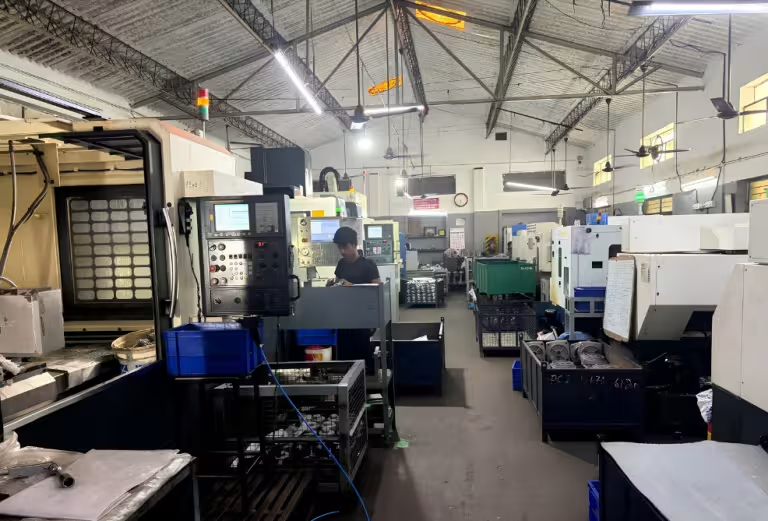
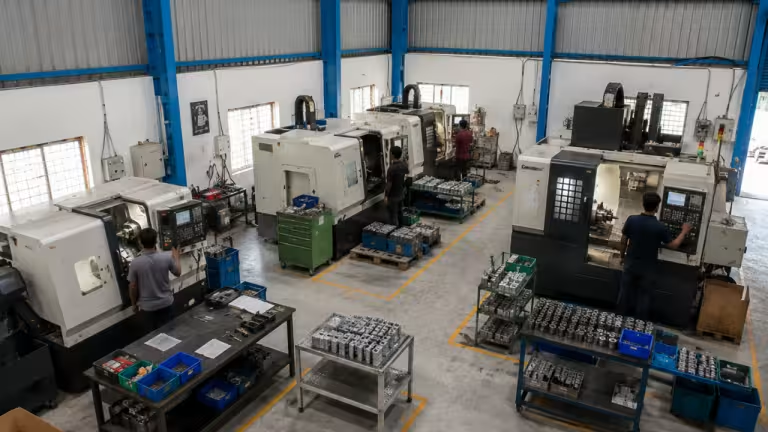
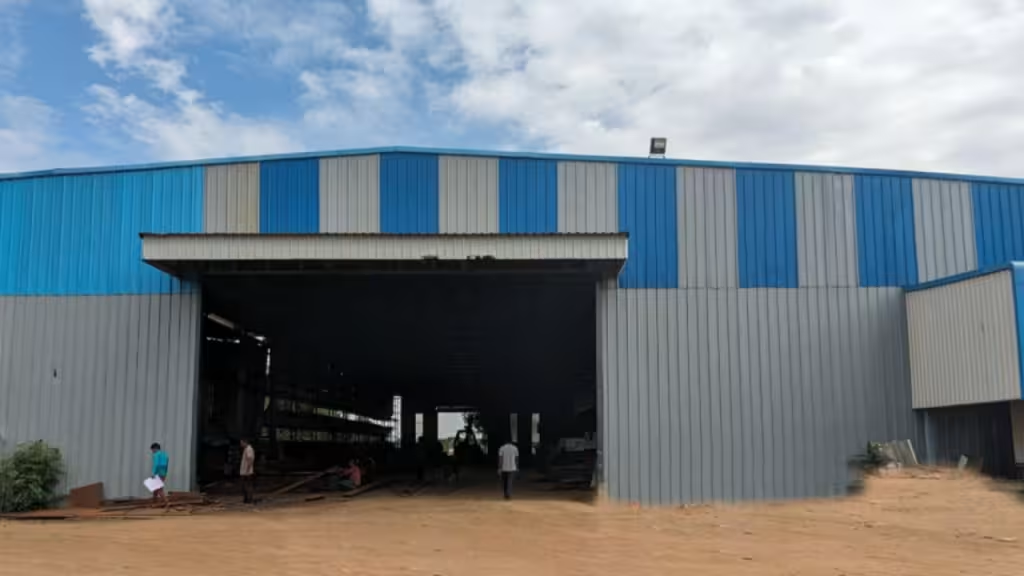
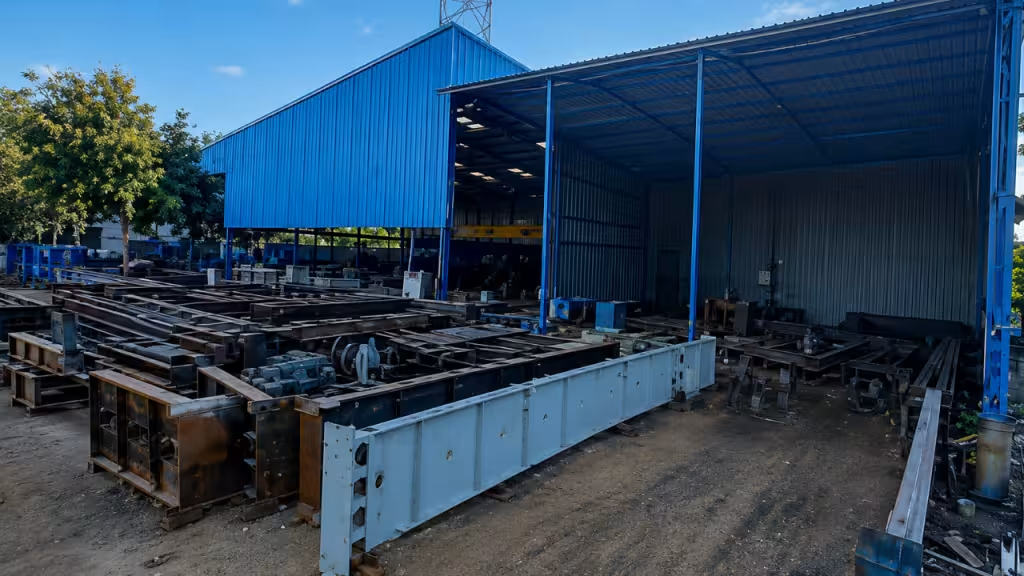
Frigate works with offshore buyers as a manufacturer that understands how project orders move from approved specification to production, inspection, documentation, and dispatch. Shipment terms are not treated separately from manufacturing. They are handled as part of the order execution process because delivery commitments depend on production readiness, release status, and dispatch planning.
Buyers that import custom check valves for offshore oil and gas projects need a manufacturer that can do more than produce to drawing. They need a source that can manage order execution in a way that reduces delays between manufacturing completion and shipment movement.
Manufacturing Progress Connected to Dispatch Planning
Frigate aligns dispatch planning with actual production status. This is important for offshore valve orders where shipment timing depends on manufacturing completion, quality clearance, inspection stages, and final release.
This includes –
- visibility on production progress against delivery schedule
- dispatch planning based on realistic manufacturing completion dates
- alignment between final production stage and export preparation
- early identification of order-stage issues that may affect shipment timing
This helps project buyers avoid situations where freight planning moves ahead of actual release readiness or dispatch dates are assumed before manufacturing is truly complete.
Export Readiness Built Into Manufacturing Execution
Frigate handles export readiness as part of the manufacturing cycle, not as a separate step after production. For offshore orders, packing, marking, release documentation, and shipment preparation must match project requirements exactly.
This typically includes –
- export packing aligned with customer and project specifications
- marking and dispatch preparation matched to order requirements
- shipment readiness review before handover for movement
- alignment between packing completion and approved release milestones
This matters for buyers that import custom check valves for offshore oil and gas projects under strict project schedules and controlled documentation requirements.
Documentation Flow Aligned With Production and Release
Documentation delays can hold up shipment even after manufacturing is complete. Frigate manages documentation in line with order execution so that production, inspection, and dispatch documentation move together.
This includes –
- documentation linked to inspection and release milestones
- dispatch paperwork prepared in line with shipment handover
- review of shipping documents before movement
- alignment between document issue status and delivery planning
This gives buyers more confidence when selecting a custom check valve supplier for offshore oil and gas that can handle manufacturing and dispatch readiness together.
Manufacturing Execution Across FOB, CFR, CIF, and DAP Orders
Different buyers place orders under different delivery structures. Some want stronger freight control after origin handover. Others prefer a wider shipment scope from the manufacturer. Frigate works across these order models as a manufacturer that can execute according to the agreed shipment term.
For Buyer-Controlled Freight Models
Buyers that want stronger control over ocean freight and downstream logistics often prefer terms such as FOB. Frigate executes these orders by keeping manufacturing, export preparation, and origin handover aligned with the buyer’s forwarding arrangement.
This usually involves –
- production completion aligned with agreed handover stage
- export-side preparation up to the agreed shipment point
- dispatch coordination in line with buyer-nominated forwarding plans
- release-stage communication linked to port movement readiness
This suits many teams that buy custom check valves for offshore projects and want freight flexibility while relying on the manufacturer for disciplined origin execution.
For Manufacturer-Managed Shipment Scope
Some buyers prefer a wider shipment role from the manufacturer under terms such as CFR, CIF, or selected destination-linked arrangements. Frigate executes such orders by aligning production completion with shipment movement according to the agreed delivery scope.
This may include –
- shipment planning linked to manufacturing release
- movement coordination after dispatch completion
- documentation readiness aligned with the agreed delivery structure
- execution visibility through the shipment handover process
This helps buyers simplify order movement while keeping manufacturing accountability with the source.
Coordination With Inspection and Buyer Teams During Execution
Offshore valve orders often involve multiple approval and communication points before dispatch. Buyer procurement teams, quality representatives, third-party inspectors, and logistics contacts may all be part of the release flow. Frigate handles this as part of order execution from the manufacturing side.
This includes –
- coordination with buyer teams during release stage
- alignment with third-party inspection status
- communication on manufacturing readiness and dispatch progression
- response on shipment-related order queries tied to release and movement
This is important where the order is tied to shutdown schedules, package completion targets, or strict receiving timelines.
Conclusion
Teams that import custom check valves for offshore oil and gas projects should select Incoterms based on execution control, delivery responsibility, and shipment risk allocation. The right term protects cost, timing, and accountability across the order cycle.
Frigate works with buyers that import custom check valves for offshore oil and gas projects by aligning manufacturing, inspection, documentation, and dispatch with the agreed delivery structure. That is critical for buyers looking for a dependable custom check valve supplier for offshore oil and gas.
For project-driven sourcing, the goal is simple, choose the Incoterm that keeps execution clear and delivery on schedule. For your next requirement, connect with Frigate to discuss the right supply and shipment model for your offshore valve order.