Rubidium Standard Enclosure

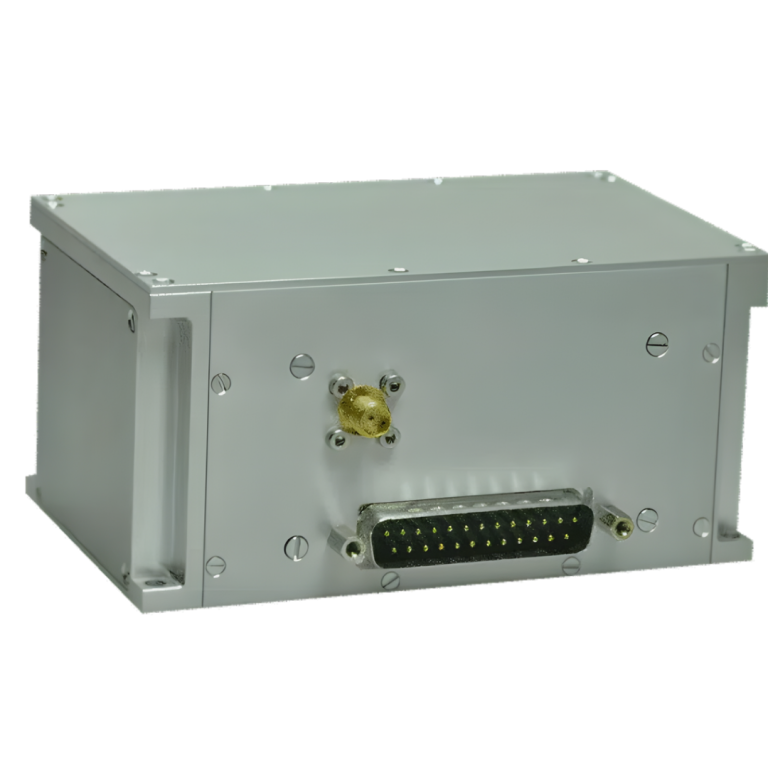
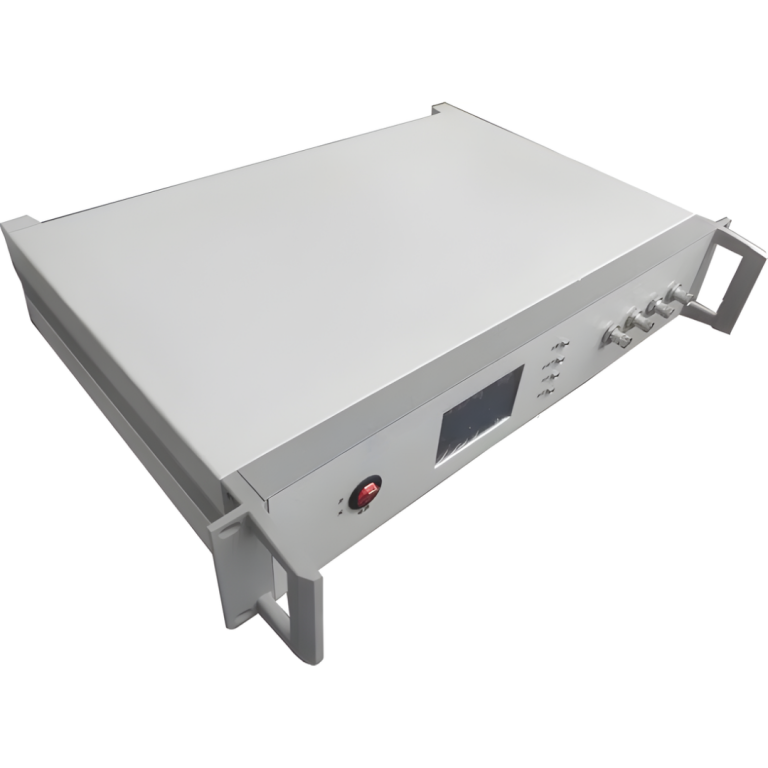
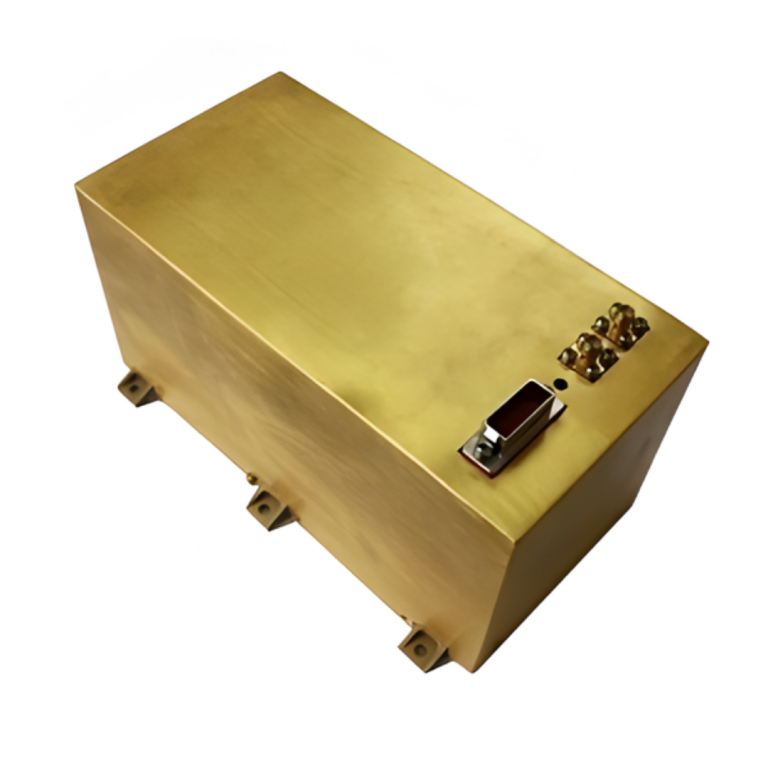
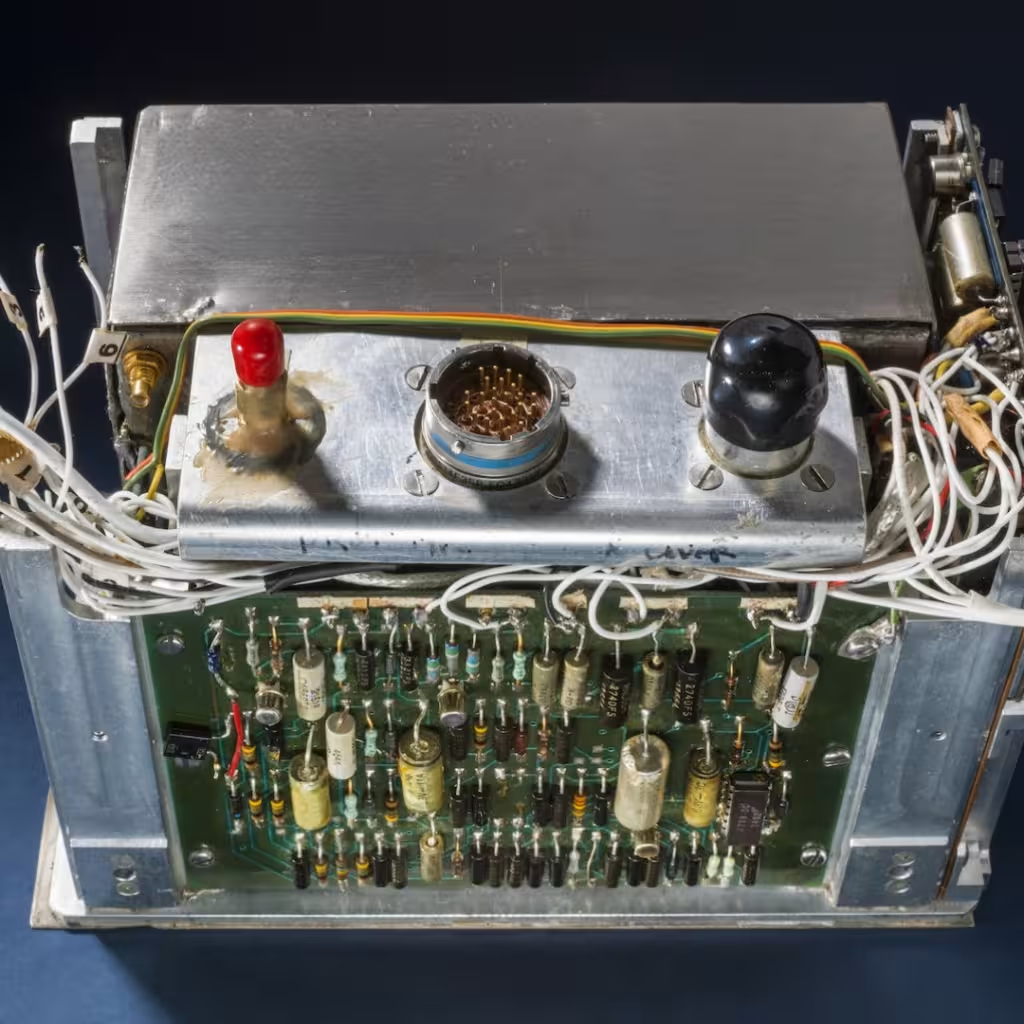
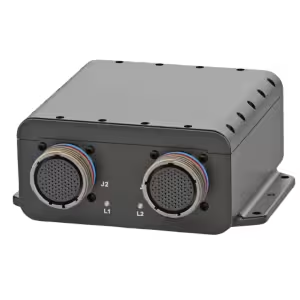
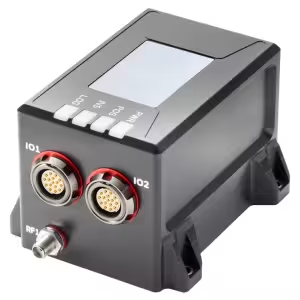
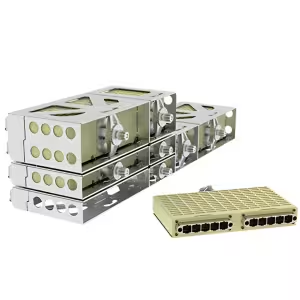
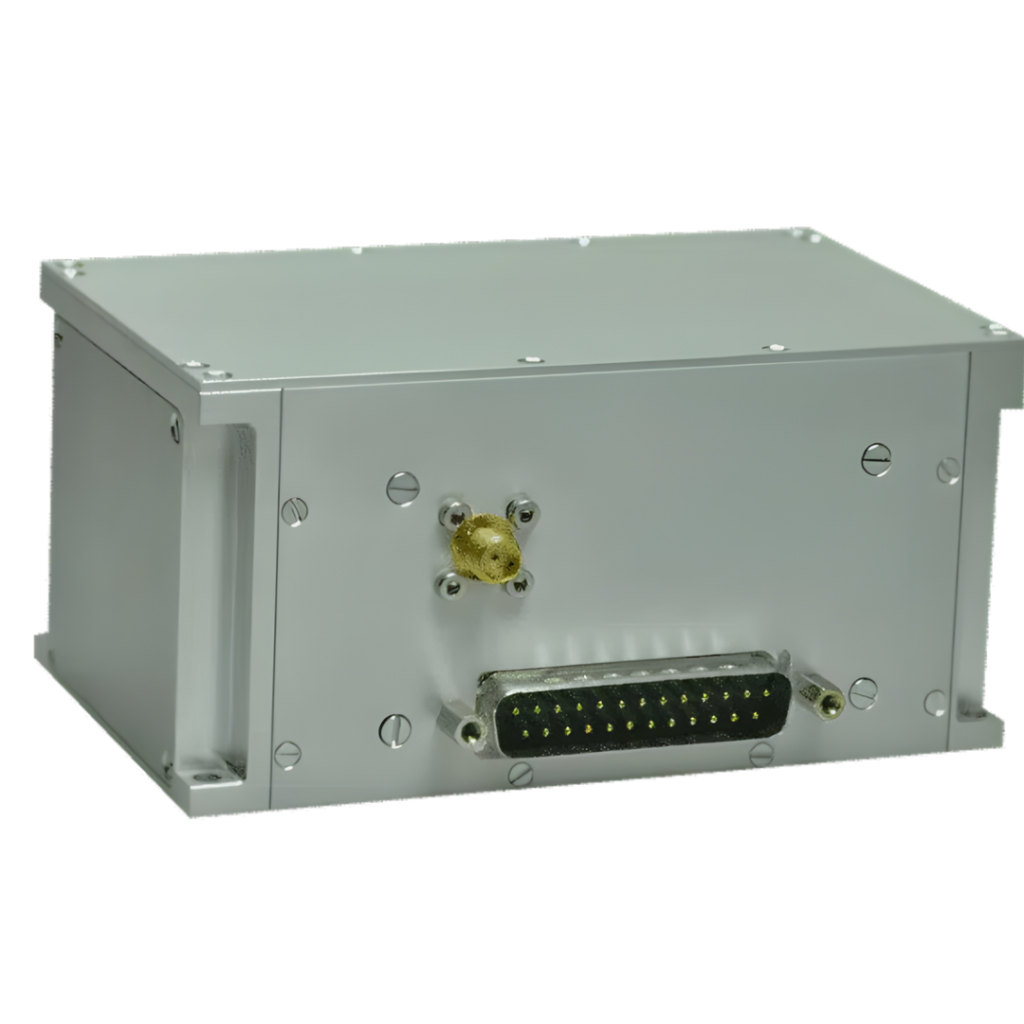
Frequency drift in aircraft timing references corrupts GPS navigation accuracy and communication synchronization degrading system performance. Rubidium Standard Enclosure provides precision housings for atomic frequency standards, oven-controlled oscillators, and phase-locked loop circuits. 
HY D R O L Y SIS RESIS T ANCE
Material & Grade
  • Aluminum Alloy – 6061-T6, 7075-T6
  • Stainless Steel – SS304
  • Aerospace-grade aluminum 
  • Low-expansion materials
  • Sheet thickness: Up to 3.0mm capable
  • Maximum capable: 300mm (H) x 250mm (W) x 200mm (D)
  • Customizable based on rubidium oscillator configuration
  • Anodizing – MIL-A-8625 Type II, Type III
  • Powder Coating – Aerospace-grade
  • Black anodized finish
  • Conductive coating (EMI shielding)
  • Thermal dissipation coating
  • CNC Precision Machining (±0.01mm)
  • CNC Laser Cutting
  • TIG Welding (aerospace-grade) 
  • CNC Press Brake Forming
  • EMI gasket groove machining
  • Thermal interface machining
  • Aerospace-grade fasteners (AN/MS standards)
  • Titanium hardware (weight reduction)
  • EMI/RFI gasket hardware
  • Thermal conductive mounting hardware
  • Grounding provisions
  • Vibration-resistant fasteners

Product Description

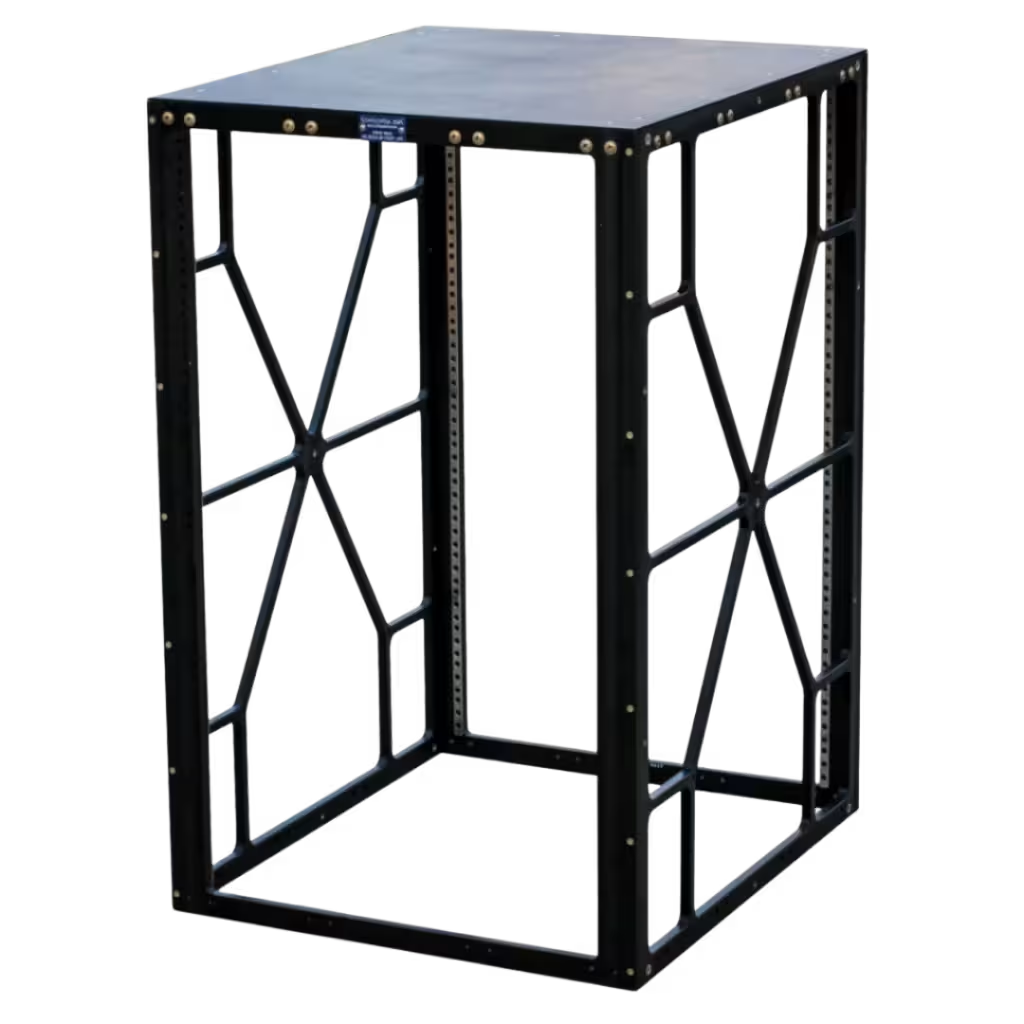
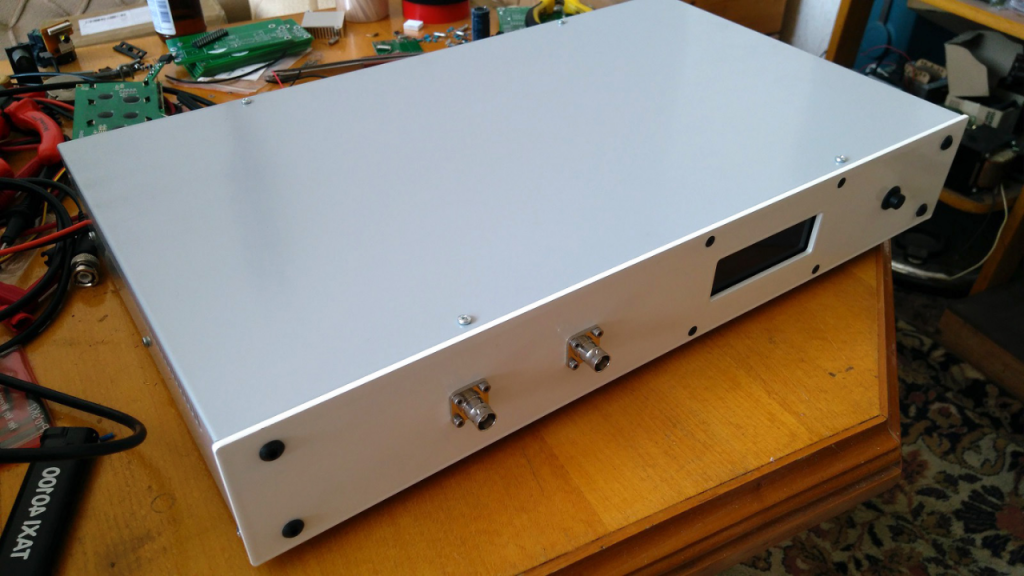
Rack-mounted or avionics bay configurations accommodate timing hardware with external dimensions reaching 300mm while maintaining thermal stability. We engineer low-expansion construction minimizing dimensional changes during temperature variations that could affect oscillator performance. Through electromagnetic shielding and vibration isolation, these enclosures enable stable frequency generation supporting aerospace timing applications. 

Mounting Type
  • Aircraft rack mounting
  • Avionics bay integration
  • Satellite platform mounting
  • Vibration-isolated mounting
  • Panel mounting provisions
  • Navigation system integration
  • EMI conductive gasket sealing
  • Hermetic sealing provisions
  • Altitude compensation vents
  • Pressure equalization systems
  • Multi-stage gasket sealing
  • Temperature-compensating seals
  • Operating Temperature: -40°C to +75°C
  • Storage Temperature: -55°C to +85°C
  • Altitude: Up to 70,000 feet
  • Humidity: Up to 95% RH (non-condensing)
  • Thermal cycling resistance
  • Vacuum compatibility
  • Random vibration tolerance
  • Sine vibration testing 
  • Shock pulse resistance (MIL-STD-810)
  • Launch vibration qualification
  • Transportation shock resistance 
  • Precision mounting stability
  • Shielding Effectiveness: 80-120 dB
  • Frequency range: 10 Hz to 40 GHz
  • Continuous RF seam welding
  • Multi-layer shielding construction
  • Filtered power entry provisions
  • Phase noise isolation
  • ISO 9001:2015 Manufacturing
  • AS9100 (Aerospace Quality Management)
  • RTCA DO-160 (Environmental Testing)
  • MIL-STD-810 (Environmental Engineering)
  • MIL-STD-461 (EMI/EMC)
  • NASA standards (space applications)
  • RoHS Compliant

Technical Advantages

Rubidium oscillator stability depends on maintaining constant internal temperatures preventing frequency drift from thermal gradients. Addressing this requirement, precision thermal interfaces transfer heat from oven-controlled crystal oscillators to external heat sinks. Low-expansion aluminum alloys minimize enclosure dimensional changes during temperature cycling maintaining mechanical stability. 

Phase noise performance requires electromagnetic isolation preventing external signals from modulating oscillator output frequencies. Multi-layer shielding construction with nested enclosures achieves attenuation exceeding 100dB at microwave frequencies. Moreover, filtered power entry modules suppress conducted emissions preventing switching noise from corrupting reference signals. 

Let's Get Started

Need reliable Enclosures for your next project? Get in touch with us today, and we’ll help you find exactly what you need!

Industry Applications

Satellite Communication Payloads

Protects rubidium oscillators maintaining carrier frequency stability in commercial and military communication satellites. 

Deep Space Missions

Secures atomic frequency standards providing timing references for spacecraft tracking and radio science experiments. 

Test and Measurement Equipment

Manages portable rubidium standards calibrating frequency counters and signal generators in aerospace testing. 

Distributed Antenna Systems

Consolidates timing references synchronizing cellular base stations and emergency communication networks. 

Rubidium Standard Enclosure

Optimized for Frequency Stability

Rubidium standard configurations vary from compact portable units to rack-mounted systems with multiple redundant oscillators. Frigate manufactures Rubidium Standard Enclosures meeting RTCA DO-160 qualification with aging rate specifications supporting long-duration missions. 

Vibration-isolated mounting provisions decouple oscillator assemblies from airframe vibration preventing acceleration-induced frequency modulation. Hermetic sealing options enable operation in unpressurized aircraft compartments and space vacuum environments. 

Rubidium Standard Enclosure

Having Doubts? Our FAQ

Check all our Frequently Asked Questions

Can precision thermal interfaces in Rubidium Standard Enclosures transfer heat from oven-controlled oscillators to external heat sinks?

Stable oscillator performance depends on controlled heat transfer away from the oven assembly. Frigate defines precision-machined thermal interface surfaces that promote consistent contact between internal heat sources and external sinks, helping regulate temperature gradients. Interface geometry and mounting pressure are typically adjusted based on thermal budgets and integration drawings provided for each program. 

How does Frigate engineer low-expansion aluminum alloys in Rubidium Standard Enclosures minimizing dimensional changes during temperature cycling?

Dimensional stability across temperature extremes is addressed through deliberate material selection, where Frigate considers – 

  • Low–coefficient-of-expansion aluminum alloy families 
  • Heat treatment states matched to operating ranges 
  • Wall thickness tuned to structural and thermal needs 

Alloy selection is commonly refined according to mission temperature profiles and customer-defined tolerances. 

Are multi-layer shielding constructions effective achieving attenuation exceeding 100dB at microwave frequencies preventing phase noise?

High attenuation levels require layered shielding strategies rather than single-wall designs, and Frigate incorporates – 

  • Nested conductive barriers with controlled spacing 
  • Absorptive and reflective layer combinations 
  • Seam treatments that avoid leakage paths 

Shield stack-ups are typically customized based on frequency range and allowable enclosure mass. 

How does Frigate integrate filtered power entry in Rubidium Standard Enclosures suppressing switching noise from corrupting reference signals?

Power integrity is preserved by integrating filtering directly at entry points, where Frigate applies – 

  • EMI-filtered connectors or feedthrough filters 
  • Short internal routing paths to sensitive circuits 
  • Ground reference continuity across filter stages 

Filter ratings and layouts are usually selected based on supplied power quality specifications.

Does vibration-isolated mounting decouple oscillator assemblies from airframe vibration preventing acceleration-induced frequency modulation?

Mechanical vibration can translate directly into frequency instability if not properly managed. Frigate structures internal mounting systems that isolate oscillator modules from enclosure walls using tuned damping elements. Isolation approaches are generally adapted to the vibration spectrum defined by the aircraft or platform environment. 

How does Frigate address hermetic sealing in Rubidium Standard Enclosures enabling operation in unpressurized aircraft compartments?

Operation in low-pressure environments requires robust sealing concepts, and Frigate evaluates – 

  • Welded or brazed enclosure seams 
  • Metal or elastomer seals matched to pressure cycling 
  • Leak testing aligned to mission altitude requirements 

Sealing methods are often selected based on pressure range and maintenance accessibility expectations. 

Can nested enclosure construction provide electromagnetic isolation preventing external signals from modulating oscillator output frequencies?

Electromagnetic isolation improves significantly when multiple barriers are employed, and Frigate designs – 

  • Inner RF-tight compartments around the oscillator 
  • Outer structural shells for environmental protection 
  • Controlled grounding paths between layers 

Nested layouts are typically tailored to sensitivity levels specified for the reference output. 

How does Frigate validate RTCA DO-160 qualification in Rubidium Standard Enclosures with aging rate specifications for long-duration missions?

Qualification for avionics use requires both environmental testing and long-term stability verification. Frigate aligns enclosure materials, finishes, and assembly processes to DO-160 categories, supporting vibration, temperature, and EMI testing. Aging rate considerations are addressed through test data correlation and documentation aligned to mission duration requirements. 

Are altitude compensation provisions compatible with satellite payload requirements operating in space vacuum environments?

Vacuum operation introduces different stresses than atmospheric flight, and Frigate evaluates – 

  • Pressure relief or venting strategies for launch phases 
  • Material outgassing characteristics 
  • Structural behavior under vacuum conditions 

Design adaptations are typically driven by launch vehicle and orbital environment specifications. 

How does Frigate optimize thermal stability in Rubidium Standard Enclosures maintaining constant internal temperatures preventing frequency drift?

Long-term frequency stability depends on minimizing internal thermal variation, and Frigate optimizes this through – 

  • Controlled heat paths away from sensitive zones 
  • Internal layouts that reduce thermal gradients 

Thermal stabilization strategies are generally customized based on allowable drift limits and available cooling interfaces. 

Get Clarity with Our Manufacturing Insights

We'd love to Manufacture for you!

Submit the form below and our representative will be in touch shortly.

LOCATIONS

Registered Office

10-A, First Floor, V.V Complex, Prakash Nagar, Thiruverumbur, Trichy-620013, Tamil Nadu, India.

Operations Office

9/1, Poonthottam Nagar, Ramanandha Nagar, Saravanampatti, Coimbatore-641035, Tamil Nadu, India. ㅤ

Other Locations

GENERAL ENQUIRIES

Get Quote
Support All File Formats Including - STEP | STP | SLDPRT | STL | DXF | IPT | X_T | X_B | 3DXML | CATPART | PRT | SAT | 3MF | JT files

LOCATIONS

Registered Office

10-A, First Floor, V.V Complex, Prakash Nagar, Thiruverumbur, Trichy-620013, Tamil Nadu, India.

Other Locations

GENERAL ENQUIRIES

Get Your Quote Now

New Get Quote form

Rubidium Standard Enclosure

Need reliable wires and cables for your next project? Get in touch with us today, and we’ll help you find exactly what you need!

Get Latest Price

Get Price Form

Rubidium Standard Enclosure

Need reliable Machining for your next project? Get in touch with us today, and we’ll help you find exactly what you need!

Get Latest Price

Get Price Form