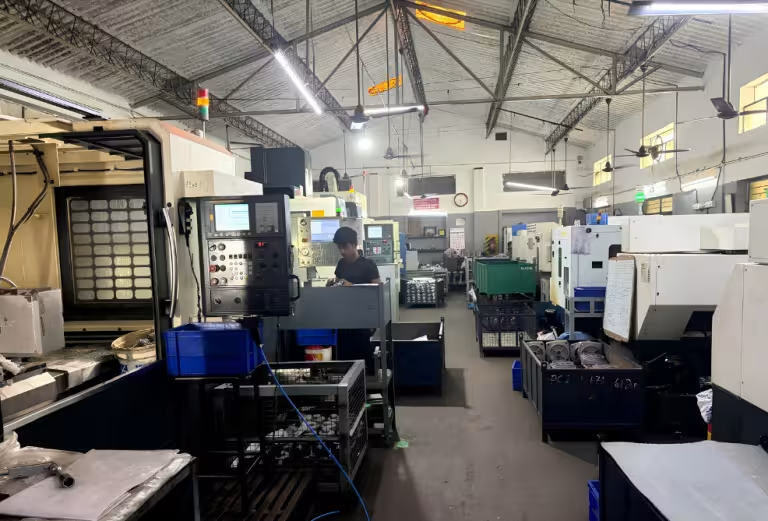
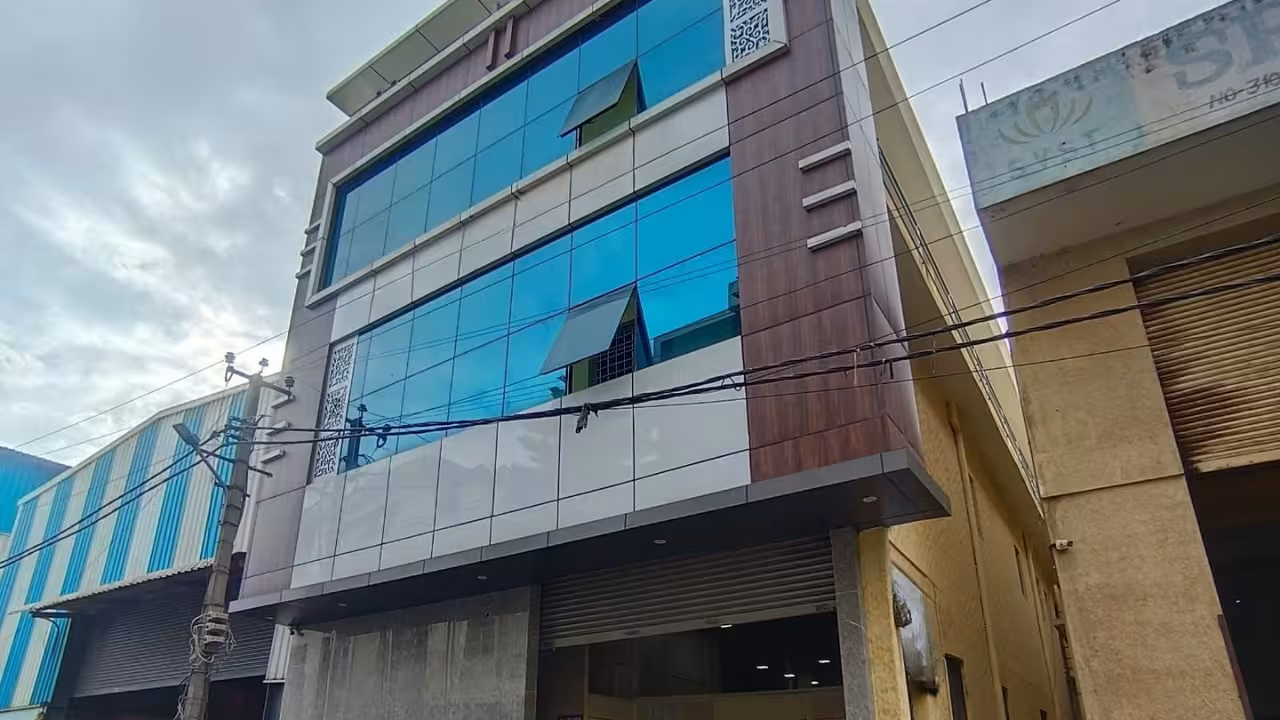
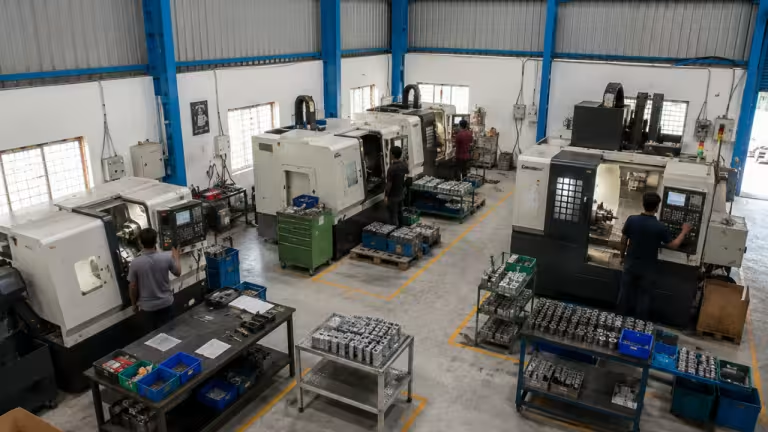
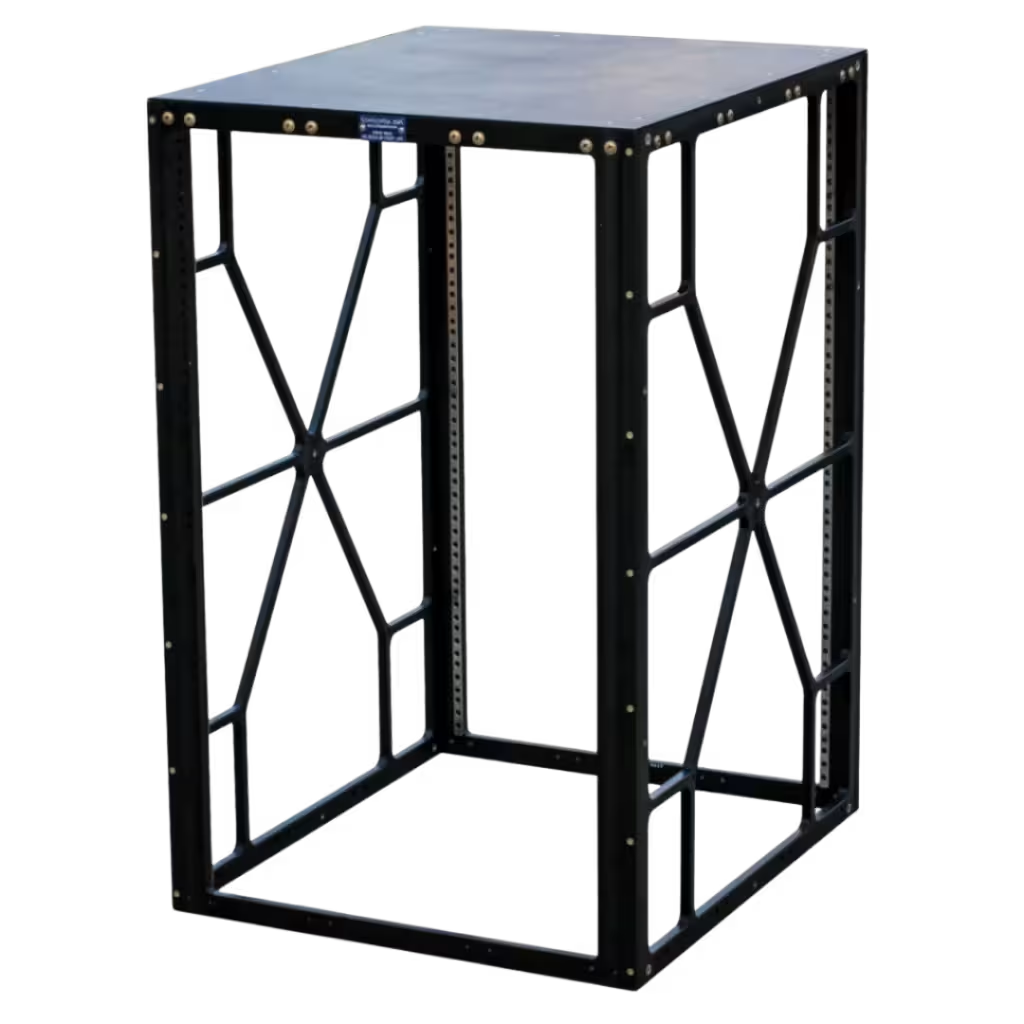



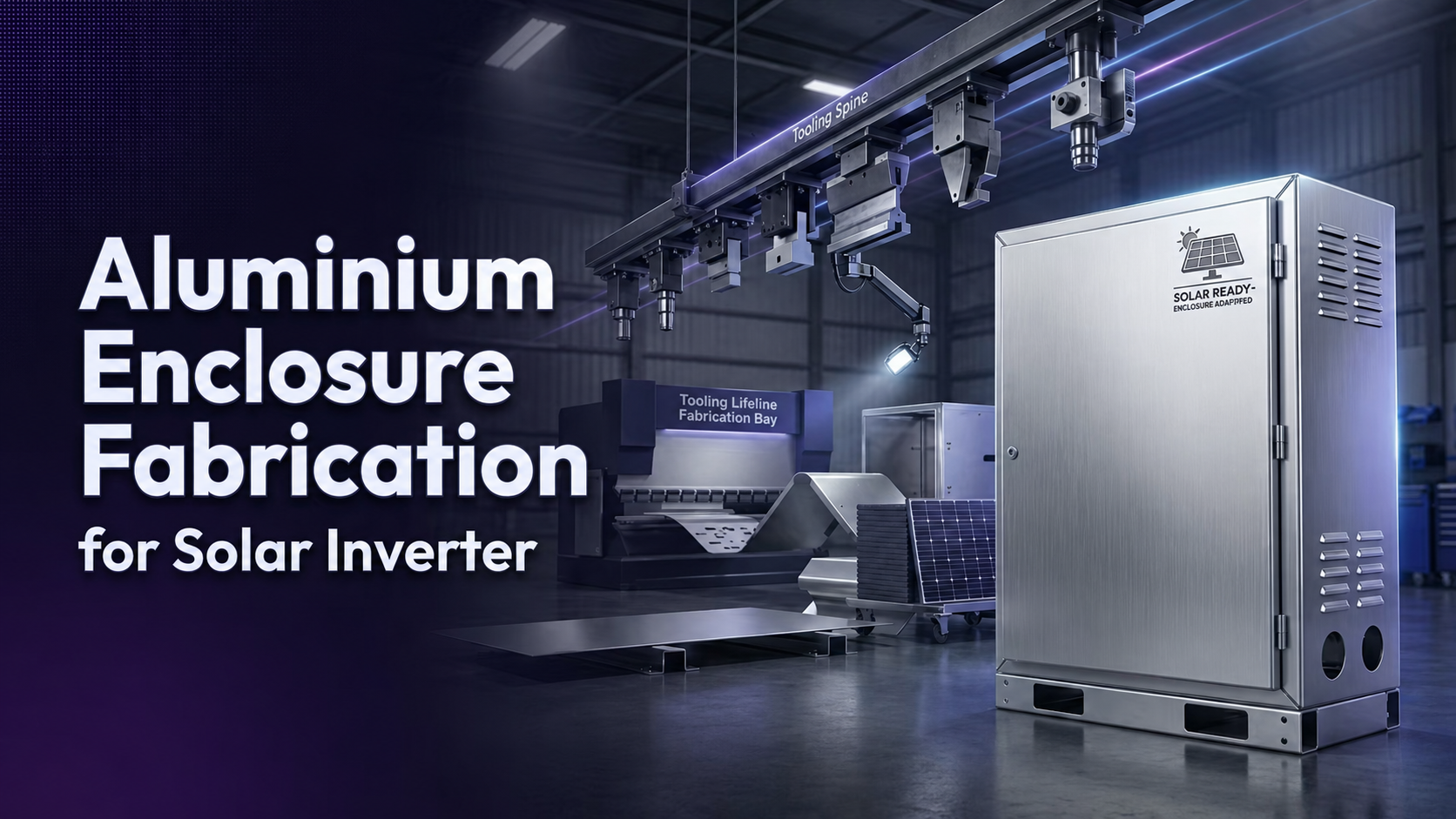
Aluminium enclosures form the structural and protective housing for generators, switchgear cabinets, control panels, and electronic systems. These enclosures must balance strength, weight, corrosion resistance, and dimensional precision. Material thickness typically ranges from 1.5 mm to 6 mm depending on application requirements.
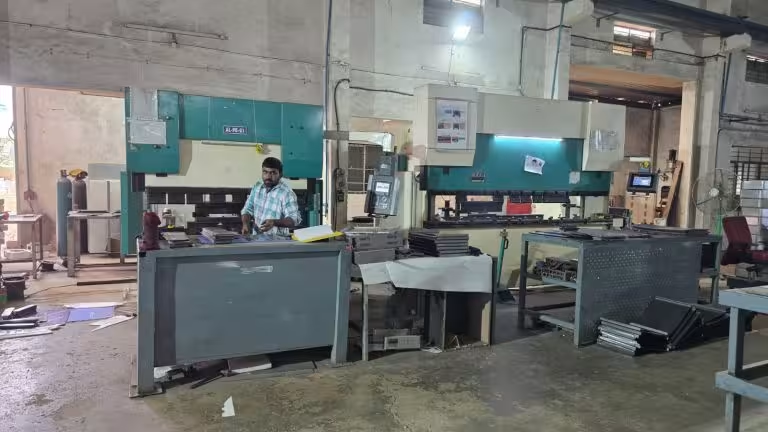
Forming and piercing aluminium sheets require controlled forming forces, precision tooling, and strong surface protection strategies. Unlike heavy steel fabrication, aluminium processing is highly sensitive to surface damage, springback variation, and dimensional drift.
Tooling represents a significant capital investment and plays a critical role in maintaining part quality. Tool failure or surface degradation can immediately affect production output, visual quality, and assembly performance.
Structured tooling life cycle management ensures tools perform consistently from design validation to final retirement. It reduces scrap, improves dimensional stability, and protects production uptime.
Stable aluminium enclosure fabrication for power equipment depends on disciplined tooling systems supported by engineering validation, monitoring, maintenance, and refurbishment planning.
Why Solar Aluminium Enclosures Require Specialized Tooling Control
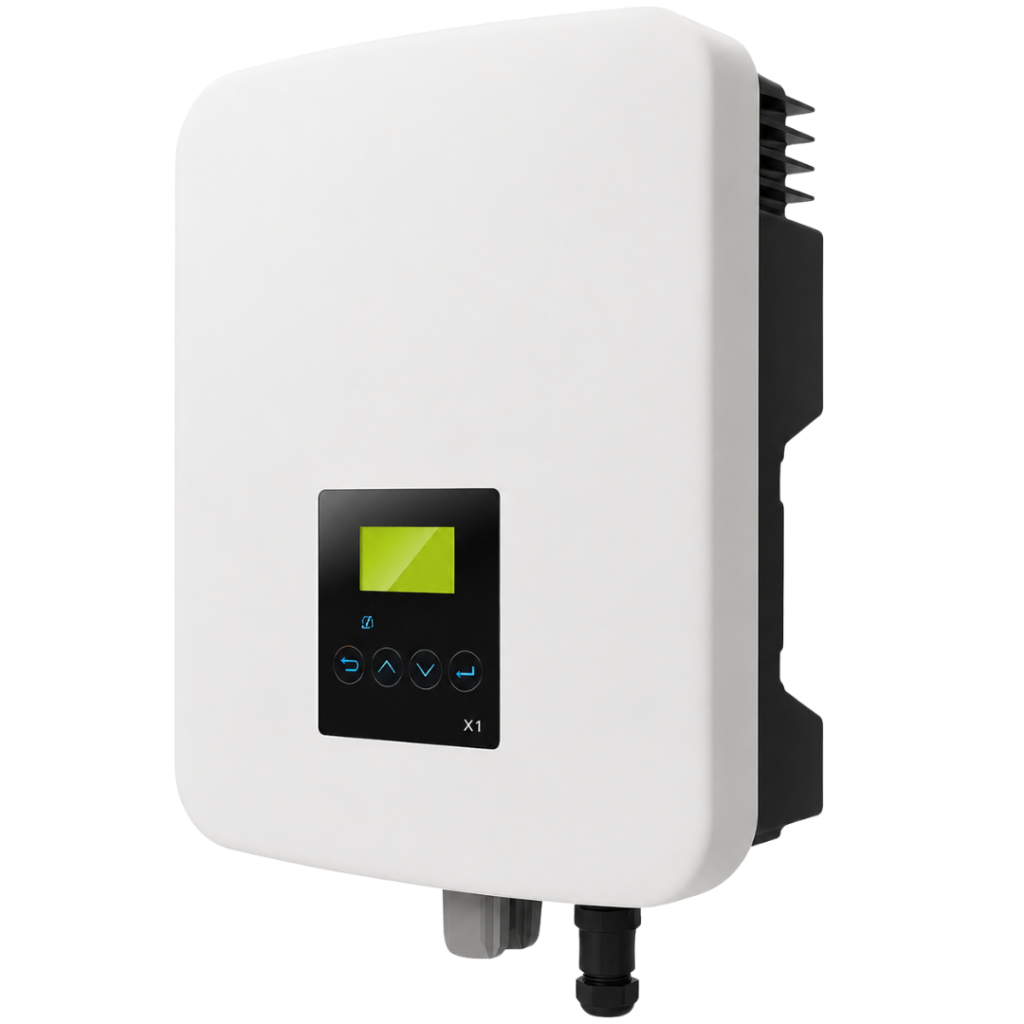
Solar aluminium enclosures are designed to protect inverters, control systems, and electrical components used in solar power installations. These enclosures operate in outdoor environments exposed to heat, humidity, dust, and UV radiation.
Compared to standard enclosures, solar Inverters demand:
- Higher corrosion resistance and coating compatibility
- Tight sealing and dimensional accuracy for IP-rated protection
- Consistent surface quality for long-term environmental exposure
- Lightweight construction for easier installation
Tooling must be optimized not only for forming accuracy but also for maintaining surface integrity and coating readiness. Even minor surface defects or dimensional variation can affect sealing performance and long-term durability.
Why Poor Tooling Control Quietly Disrupts Aluminium Enclosure Fabrication
Aluminium forming operates under lower mechanical loads compared to steel, but introduces different challenges. The material is softer, more ductile, and highly prone to surface damage and springback variation.
Common disruptions caused by weak tooling control include:
- Surface scratches and visual defects on enclosure panels
- Galling and material pickup on tooling surfaces
- Hole diameter variation in thin sheets
- Bend angle inconsistency due to springback
- Panel warping or distortion
Each issue affects both functionality and appearance. Aluminium enclosures are often customer-facing components, so cosmetic rejection rates can be high even when structural integrity is acceptable.
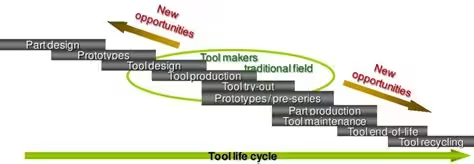
Tooling life cycle management includes:
- Design validation and simulation
- Initial tool qualification
- Controlled production usage
- Preventive and predictive maintenance
- Surface restoration and insert replacement
- Planned retirement
Unplanned downtime and quality issues can significantly impact production schedules. Strong lifecycle discipline stabilizes aluminium enclosure fabrication and reduces unexpected interruptions.
How Tool Design and Surface Engineering Decide Long-Term Performance
Tool performance begins at the design stage. Aluminium forming requires careful attention to surface interaction rather than just load resistance.
Key considerations include:
- Tool material and coatings
Tool steels such as D2 and H13 are still used, but surface coatings like TiN or DLC are critical to prevent galling and material adhesion.
- Surface finish quality
Polished die surfaces reduce friction and minimize scratching on aluminium panels.
- Die clearance optimization
Aluminium typically requires slightly higher clearance than steel to reduce edge deformation and burr formation.
- Springback compensation
Aluminium exhibits higher elastic recovery, making bend angle prediction essential.
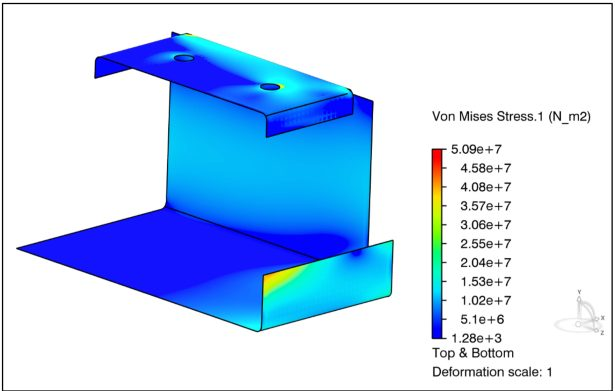
Finite Element Analysis (FEA) simulations help predict springback behavior, stress distribution, and deformation patterns before production begins. Well-engineered tooling improves surface quality, dimensional accuracy, and lifecycle cost in aluminium enclosure fabrication.
What Tool Wear Looks Like in Aluminium Processing and How to Catch It Early
Tool wear in aluminium applications differs from steel. It is less about rapid abrasive wear and more about surface degradation and material interaction.
Major wear mechanisms include:
- Galling and aluminium sticking to tool surfaces
- Built-up edge formation on punches
- Surface scoring and micro-abrasion
- Gradual edge rounding
Early indicators of wear include:
- Visible scratches on enclosure surfaces
- Increase in burr height
- Variation in hole size or shape
- Rise in forming force
- Inconsistent bend angles
Data-driven monitoring tracks forming force trends, dimensional variation, and surface quality indicators. Statistical analysis helps detect deviations before they affect production. Predictive maintenance reduces maintenance cost and prevents sudden quality failures.
Why Maintenance and Refurbishment Strategy Defines Tool Life
Maintenance in aluminium tooling must focus not only on geometry but also on surface condition.
Two primary approaches are used:
- Preventive maintenance based on stroke count
- Predictive maintenance using wear and surface condition data
Key practices include:
- Regular cleaning and polishing of tool surfaces
- Reapplication of coatings to prevent galling
- Controlled regrinding with clearance recalibration
- Insert-based tooling for quick restoration
Requalification after maintenance is essential. Dimensional capability studies and visual inspection standards ensure both accuracy and surface quality. Structured maintenance improves consistency and extends tool life in aluminium enclosure fabrication.
The Hidden Cost of Ignoring Tooling Health in Aluminium Fabrication
Tooling mismanagement creates both visible and hidden costs.
Risk exposure includes:
- Scrap due to cosmetic defects
- Rework from surface damage
- Assembly issues due to dimensional variation
- Production delays from unexpected tool failure
- Increased inspection and quality control effort
Even minor surface imperfections can lead to rejection in aluminium enclosures. This makes tooling condition directly linked to profitability. Lifecycle tracking enables better forecasting, cost control, and production stability.
Tooling Challenges Specific to Solar Aluminium Enclosure Production
Solar enclosure manufacturing introduces additional tooling challenges due to environmental and functional requirements.
Key challenges include:
- Maintaining flatness and alignment for gasket sealing surfaces
- Preventing micro-scratches that can affect powder coating or anodizing
- Controlling springback in large panel bends
- Ensuring repeatability for high-volume solar projects
- Managing thermal expansion considerations in design and forming
These requirements increase the importance of precision tooling, controlled maintenance, and surface-focused lifecycle management.
How Frigate Builds Structured Tooling Life Cycle Management into Aluminium Enclosure Fabrication
Frigate integrates engineering validation, digital tracking, and predictive maintenance into a structured tooling system designed for aluminium Inverters.
Engineering-Led Tool Development and Validation
Tooling development begins with detailed analysis of:
- Aluminium grade and mechanical properties
- Sheet thickness and forming behavior
- Springback characteristics
- Press tonnage and forming sequence
Validation includes:
- Forming force calculation
- Springback simulation
- Die clearance optimization
- Surface interaction analysis
FEA helps identify deformation risks and optimize tool design before production.
Digital Tool Identification and Lifecycle Traceability
Each tool is assigned a digital ID with full lifecycle tracking, including:
- Stroke count and production volume
- Maintenance and coating history
- Regrinding and insert replacement records
- Surface performance trends
This enables accurate root cause analysis and lifecycle planning.
Structured Preventive and Predictive Maintenance Programs
Maintenance combines:
- Scheduled inspections
- Surface condition monitoring
- Press load tracking
- Dimensional and visual quality checks
Defined wear thresholds ensure early intervention before defects appear in production.
Post-Maintenance Capability Verification
After maintenance, tools undergo:
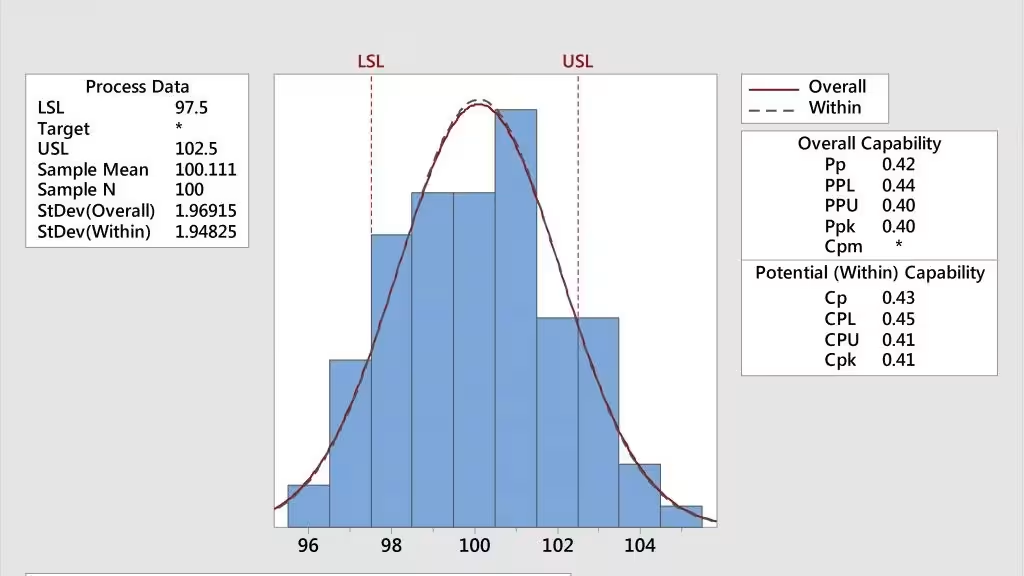
- Cpk studies on critical dimensions
- Burr height validation
- Surface finish inspection
- Bend angle verification
Production resumes only after capability standards are confirmed.
Controlled Refurbishment and Data-Driven Retirement Planning
Refurbishment follows defined limits to maintain geometry and surface integrity. Insert-based tooling reduces downtime and cost.
Retirement decisions are based on:
- Stroke history
- Surface degradation trends
- Capability drift
This ensures predictable performance and avoids sudden failures.
Strengthening Reliability and Reducing Downtime Risk
Structured tooling lifecycle management delivers:
- Reduced scrap and rework
- Improved surface quality
- Consistent dimensional accuracy
- Lower downtime risk
- Predictable tooling cost
Engineering control and continuous monitoring strengthen reliability in aluminium enclosure fabrication.
Conclusion
Aluminium enclosure fabrication requires precise control over both dimensional accuracy and surface quality. Without structured tooling lifecycle management, defects, variation, and downtime increase.
Reliable production depends on engineered tool design, surface optimization, predictive monitoring, and disciplined maintenance.
Frigate delivers data-driven tooling lifecycle management tailored for aluminium Inverters, ensuring consistent quality, reduced downtime, and long-term operational stability.