







Consumer product launches demand speed, precision, and supplier coordination. Procurement teams managing multiple vendors rely heavily on structured RFQ documentation to drive accurate pricing and faster supplier response cycles. Organizations engaging sheet metal fabrication RFQ services must treat RFQs as strategic sourcing tools rather than simple request documents.
Strong RFQ documentation directly influences supplier alignment, production feasibility, and overall sourcing efficiency. When brands collaborate with outsourced sheet metal fabrication services, documentation quality determines how quickly suppliers can evaluate projects and submit reliable quotations.
Many procurement teams struggle with inconsistent supplier quotes. Variations often occur because RFQ documentation lacks clarity around manufacturing methods, production volumes, or finishing requirements. Reliable sheet metal manufacturing quote services depend on detailed documentation to avoid pricing assumptions that create downstream project risk.
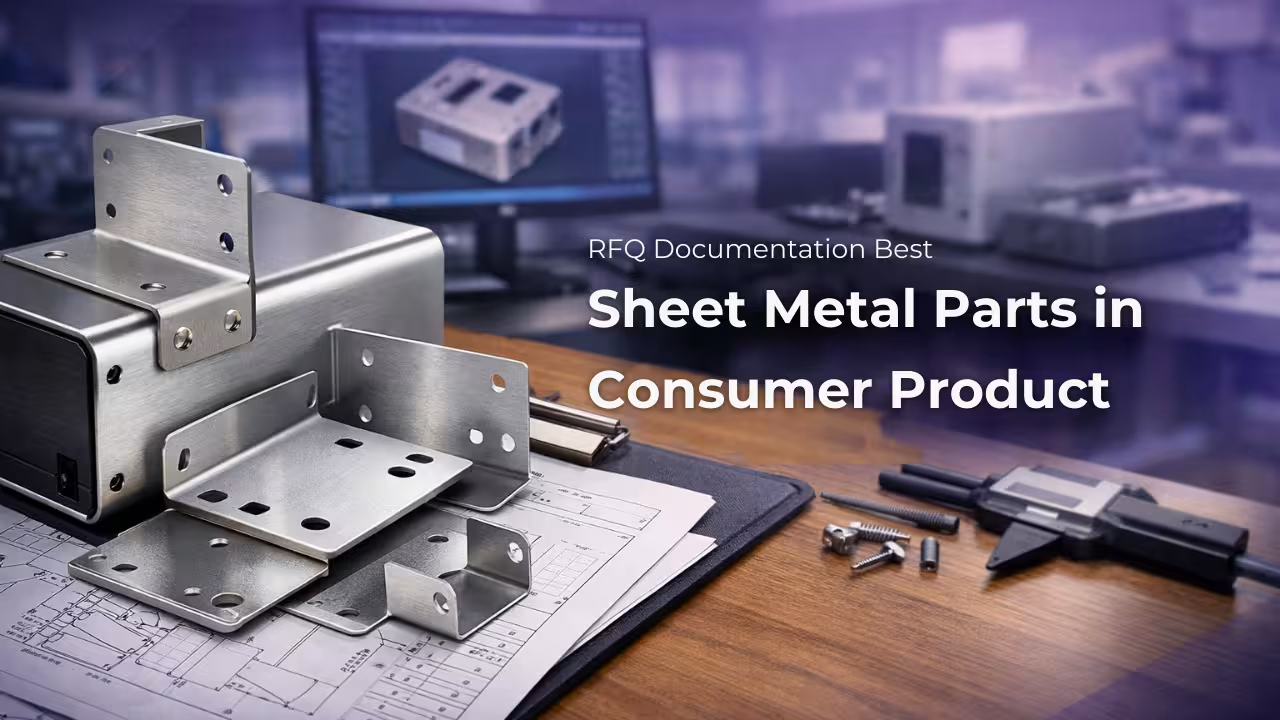
Consumer product programs frequently require complex enclosures, brackets, frames, and internal support components. These components typically rely on custom sheet metal parts manufacturing services that must align with production schedules and assembly timelines. Strategic RFQ preparation allows sourcing teams to engage suppliers confidently while maintaining full visibility into cost drivers and manufacturing feasibility.
Strategic use of sheet metal fabrication RFQ services strengthens supplier collaboration and enables organizations to secure dependable manufacturing partners early in the product launch cycle.
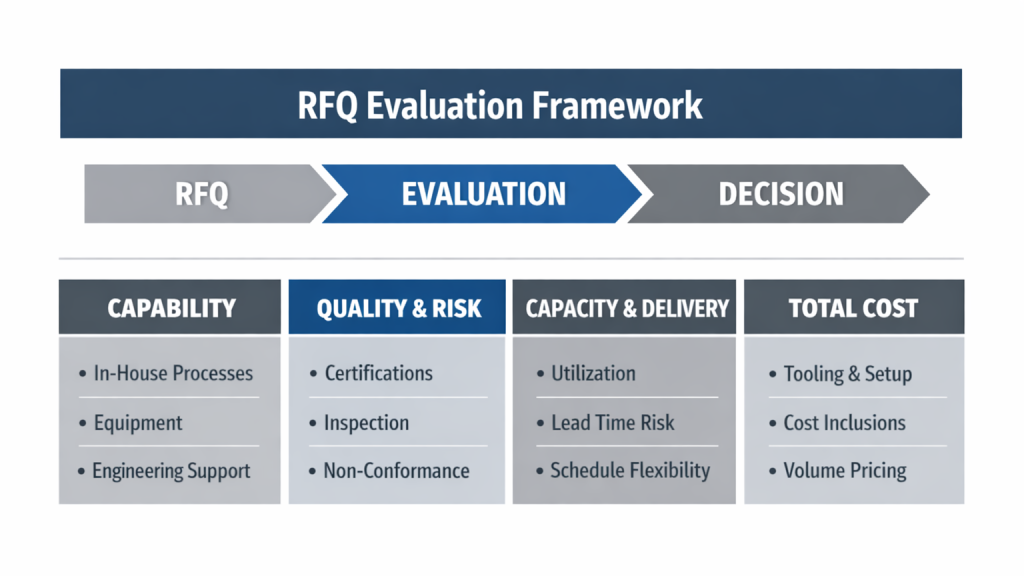
Strategic RFQ Structuring for Competitive Supplier Quotation
Supplier competition remains a core objective when managing outsourced manufacturing programs. Structured RFQs ensure every supplier evaluates the project using identical technical data.
Procurement teams leveraging outsourced sheet metal fabrication services benefit significantly when RFQ documentation eliminates ambiguity. Suppliers can focus on manufacturing strategy rather than requesting clarification.
Strategic RFQ structuring typically focuses on three priorities –
- Supplier alignment
- Cost transparency
- Manufacturing feasibility
Suppliers providing sheet metal manufacturing quote services rely on detailed documentation to perform engineering reviews before submitting quotations. Clear documentation reduces quotation variability and supports more competitive pricing.
Supplier networks supporting consumer product manufacturing often include experienced partners capable of delivering complex assemblies through custom sheet metal parts manufacturing services. Strong RFQ strategy allows procurement teams to evaluate supplier capabilities and pricing simultaneously.
A well-prepared RFQ dramatically improves supplier response quality when requesting sheet metal fabrication RFQ services.
Supplier Engagement Strategy for Outsourced Manufacturing Programs
Successful sourcing strategies depend on engaging the right supplier ecosystem. RFQ documentation plays a central role in supplier engagement.
Manufacturing partners evaluating projects through sheet metal fabrication RFQ services expect RFQs that clearly define scope and production expectations. Suppliers often prioritize RFQs that demonstrate strong project readiness.
Organizations working with outsourced sheet metal fabrication services usually distribute RFQs to multiple suppliers to ensure competitive pricing and reliable delivery timelines.
Supplier engagement strategies generally focus on –
- Selecting technically capable vendors
- Encouraging competitive pricing
- Ensuring long-term production scalability
An experienced OEM sheet metal parts supplier typically performs a technical review before submitting quotations. Detailed RFQ documentation allows suppliers to provide realistic lead times and manufacturing approaches.
Strategic sourcing teams often rely on precision sheet metal fabrication company partners capable of supporting both prototype and production manufacturing requirements.
Engaging suppliers through well-structured sheet metal fabrication RFQ services improves supplier confidence and accelerates quotation timelines.
RFQ Documentation That Drives Manufacturing Clarity
RFQ documentation must allow suppliers to evaluate fabrication complexity, material requirements, and finishing expectations without additional clarification cycles.
Procurement teams requesting sheet metal manufacturing quote services typically provide a structured RFQ package containing several technical documents.
Core RFQ documentation usually includes –
- Engineering drawings
- CAD models
- Material specifications
- Surface finish standards
- Production volumes
Manufacturing partners providing contract sheet metal manufacturing services review these documents carefully to determine tooling requirements and manufacturing feasibility.
Clear documentation allows suppliers to calculate accurate pricing while minimizing project risks. Suppliers operating as an industrial sheet metal fabrication supplier often evaluate RFQ documentation to confirm that production processes align with their fabrication capabilities.
Organizations that consistently prepare strong RFQ documentation gain faster responses when requesting sheet metal fabrication RFQ services.
Production Volume Strategy for Accurate Supplier Pricing
Volume forecasting remains one of the most influential elements in RFQ documentation. Suppliers require production visibility to estimate manufacturing costs accurately.
Procurement teams engaging outsourced sheet metal fabrication services should provide detailed production forecasts covering multiple manufacturing stages.
Volume planning typically includes –
- Prototype quantities
- Pilot production runs
- Annual demand projections
- Long-term production expectations
Manufacturers offering contract sheet metal manufacturing services evaluate these forecasts to determine tooling investment strategies and production scheduling.
Accurate volume visibility also helps an OEM sheet metal parts supplier plan material sourcing and production line allocation.
Reliable volume planning significantly improves pricing consistency when using sheet metal fabrication RFQ services.
Tooling Investment Strategy for Sheet Metal Manufacturing
Sheet metal manufacturing frequently involves specialized tooling. Tooling investment strategies must be clearly communicated within RFQ documentation.
Suppliers evaluating projects through sheet metal manufacturing quote services typically assess tooling requirements during the engineering review phase.
Tooling considerations often include –
- Punch tooling
- Progressive dies
- Custom bending fixtures
- Welding jigs
- Assembly fixtures
Manufacturers offering custom sheet metal parts manufacturing services calculate tooling costs separately from production unit costs.
A professional precision sheet metal fabrication company evaluates tooling feasibility to determine whether production efficiency improvements are possible.
Strong tooling documentation enables suppliers responding through sheet metal fabrication RFQ services to provide transparent cost structures.
Manufacturing Capability Alignment with Supplier Network
Supplier capability alignment ensures that manufacturing partners can execute projects reliably.
Organizations using outsourced sheet metal fabrication services must confirm that suppliers possess the necessary equipment and expertise.
RFQ documentation should allow suppliers to verify capability alignment for –
- CNC punching
- Precision bending
- Welding processes
- Surface finishing operations
Suppliers providing sheet metal prototyping services for consumer products often support early-stage product validation before transitioning projects into full production.
Large-scale manufacturers operating as an industrial sheet metal fabrication supplier typically specialize in high-volume production environments.
Working with a qualified precision sheet metal fabrication company improves the reliability of supplier responses generated through sheet metal fabrication RFQ services.
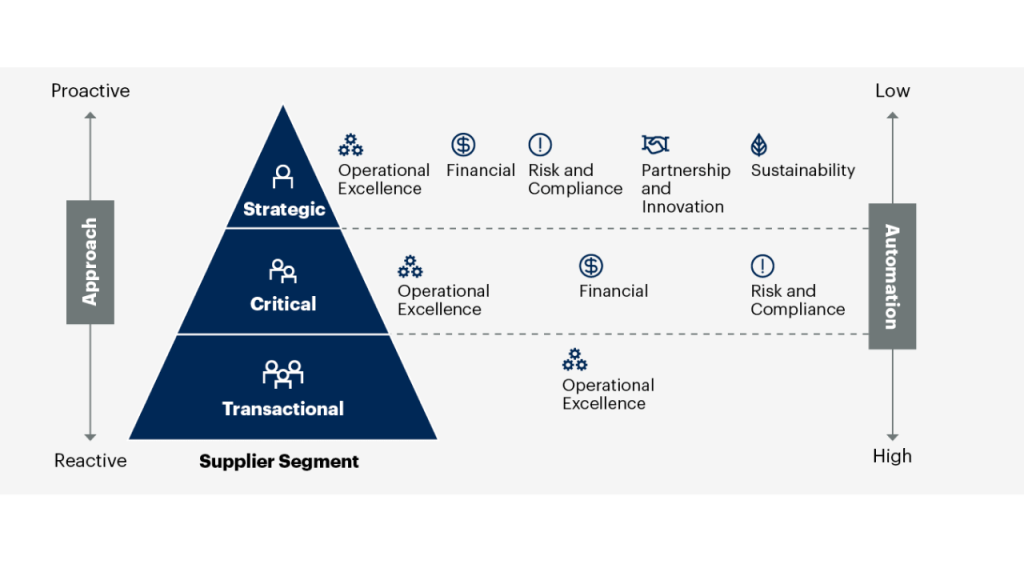
Strategic RFQ Communication with Contract Manufacturing Partners
Clear communication between procurement teams and suppliers strengthens outsourcing strategies. RFQs must define expectations around collaboration, technical review, and supplier feedback.
Manufacturers offering contract sheet metal manufacturing services often provide engineering recommendations during the quotation stage. These insights can improve manufacturability and cost efficiency.
Procurement teams requesting sheet metal manufacturing quote services should encourage suppliers to provide feedback regarding fabrication strategy and tooling requirements.
Many long-term partnerships originate from strong RFQ collaboration with an experienced OEM sheet metal parts supplier capable of supporting both product development and production scaling.
Consistent RFQ communication improves supplier engagement when sourcing through sheet metal fabrication RFQ services.
Cost Visibility Strategy for Competitive Supplier Selection
Transparent RFQ documentation enables procurement teams to evaluate supplier quotes more effectively.
Companies engaging custom sheet metal parts manufacturing services typically request detailed pricing breakdowns during quotation review.
Cost visibility strategies often focus on –
- Tooling cost structure
- Production unit pricing
- Secondary process costs
- Logistics considerations
Suppliers providing sheet metal manufacturing quote services can only provide transparent pricing when RFQ documentation clearly defines manufacturing scope.
A reliable industrial sheet metal fabrication supplier usually provides cost insights related to material sourcing, fabrication efficiency, and finishing processes.
Accurate RFQ documentation strengthens competitive supplier evaluation during sheet metal fabrication RFQ services.
Supplier Relationship Strategy for Long-Term Manufacturing Programs
Consumer product brands rarely rely on one-time suppliers. Strategic sourcing focuses on building long-term partnerships with capable manufacturers.
RFQ programs frequently identify reliable partners capable of delivering ongoing outsourced sheet metal fabrication services.
Manufacturing partners selected through strong RFQ programs often provide –
- Engineering collaboration
- Manufacturing scalability
- Consistent quality standards
- Reliable delivery performance
Long-term partnerships often develop with a trusted OEM sheet metal parts supplier capable of supporting multiple product generations.
Suppliers offering contract sheet metal manufacturing services typically support ongoing product development cycles through flexible production capacity.
Strong RFQ strategies ensure companies identify reliable partners while engaging sheet metal fabrication RFQ services.
How Frigate Strengthens RFQ Execution in Sheet Metal Manufacturing
RFQ management becomes increasingly complex as product launches scale and technical requirements evolve. As a manufacturing partner, Frigate streamlines this process by integrating engineering validation, production planning, and quotation accuracy into a unified manufacturing-driven RFQ approach.
Instead of acting as an intermediary, Frigate directly evaluates, prepares, and responds to RFQs with a production-first mindset—ensuring every quotation reflects real manufacturing conditions, capabilities, and costs.
Manufacturing-Ready RFQ Inputs for Accurate Production Evaluation
Accurate quotations begin with well-defined technical inputs. Incomplete or unclear RFQ documentation often leads to misaligned pricing and production delays.
Frigate works closely with customers to interpret and refine RFQ inputs so they are aligned with actual manufacturing requirements.
Key inputs typically include –
- Engineering drawings and CAD models
- Material grades and thickness specifications
- Surface finishing requirements
- Production volume projections
- Assembly and packaging instructions
By aligning RFQ documentation with real production workflows, Frigate ensures that every sheet metal manufacturing quote is based on practical feasibility, tooling requirements, and fabrication complexity.
Integrated Manufacturing Capabilities for Reliable RFQ Response
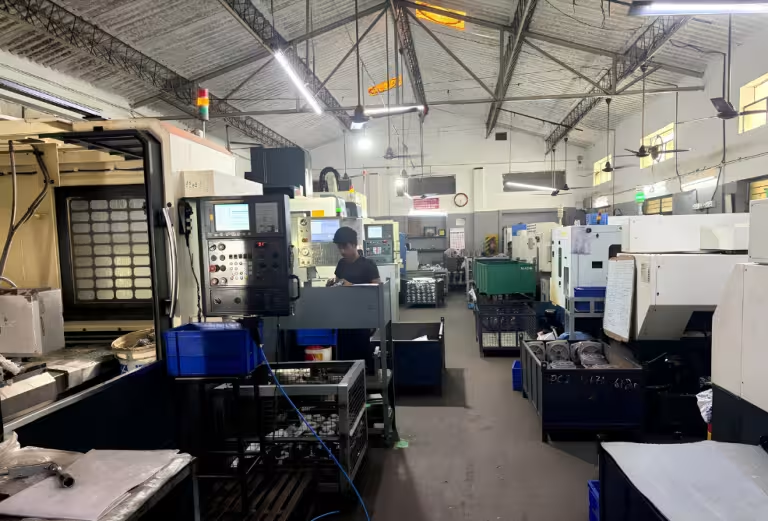
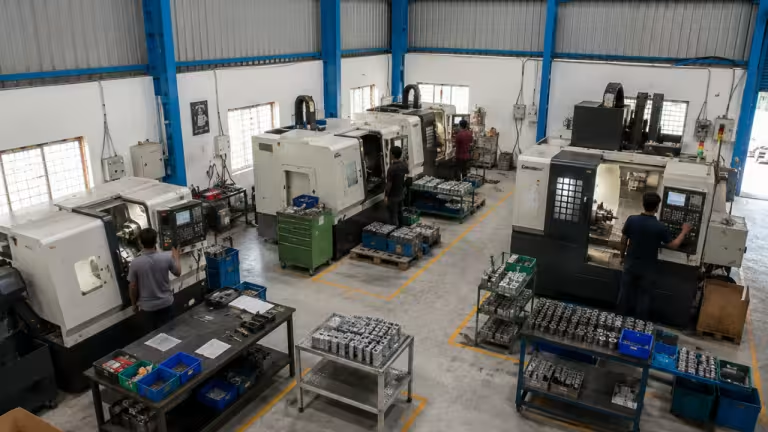
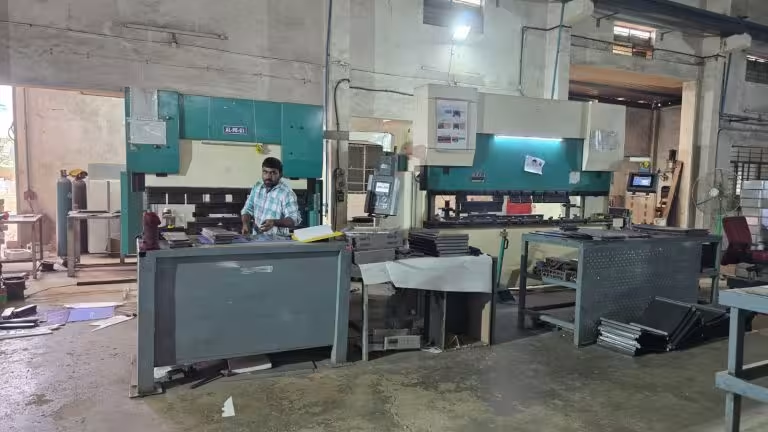
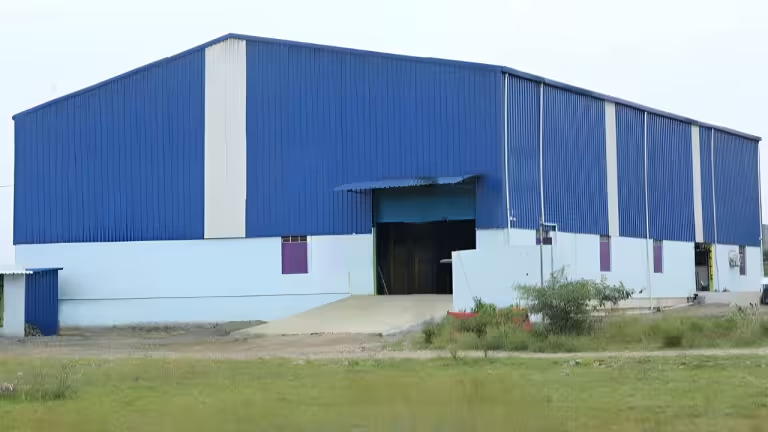
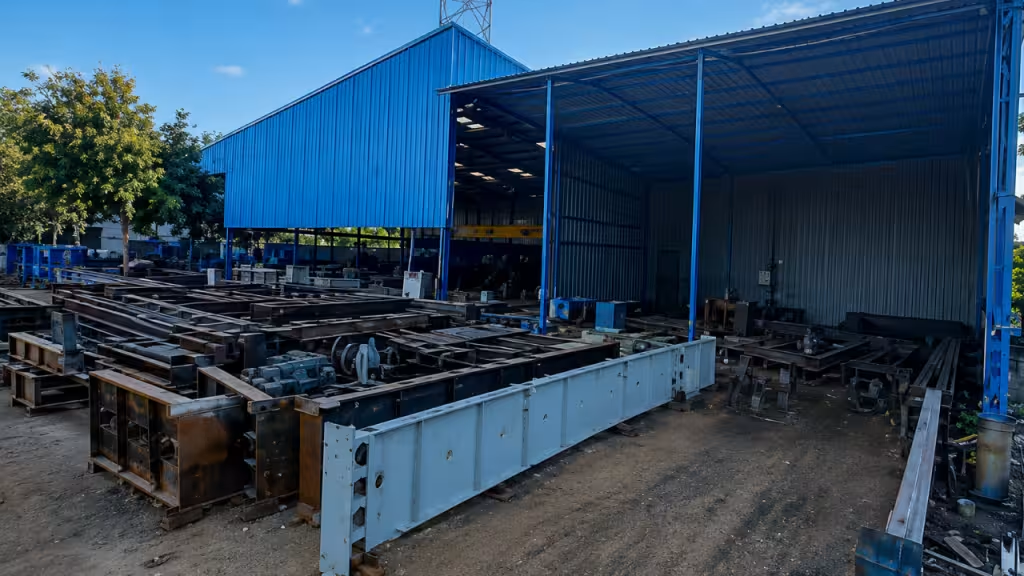
As a manufacturer, Frigate offers end-to-end sheet metal fabrication capabilities within a coordinated production environment.
Core capabilities include –
- Precision fabrication and CNC processing
- High-volume production infrastructure
- Welding and assembly integration
- Advanced surface finishing operations
This integrated capability allows Frigate to evaluate RFQs holistically and provide accurate, production-backed quotations without dependency on external interpretation.
Standardized Quotation Structure Based on Production Realities
Quotation inconsistencies often arise when pricing is not aligned with actual manufacturing processes. Frigate eliminates this challenge by structuring quotations based on standardized production parameters.
Each quotation is evaluated based on –
- Unit manufacturing cost derived from process planning
- Tooling investment aligned with production scale
- Realistic production lead times
- Available manufacturing capacity
- Defined quality assurance processes
This approach ensures that RFQ responses are not only competitive but also executable within defined production constraints.
Engineering-Led Review for Design and Process Optimization
Before issuing a quotation, Frigate conducts a detailed engineering review to validate manufacturability and optimize production efficiency.
Key evaluation areas include –
- Bending and forming feasibility
- Material-process compatibility
- Welding and joining requirements
- Surface finishing suitability
- Assembly integration
This early-stage engineering validation minimizes production risks and ensures that RFQs are aligned with efficient manufacturing practices.
Direct Manufacturing Ownership Across the RFQ Lifecycle
Frigate manages the RFQ lifecycle from a production ownership perspective, ensuring alignment between design intent and manufacturing execution.
This includes –
- Technical review of RFQ inputs
- Process planning and cost modeling
- Direct communication with customer engineering teams
- Validation of production feasibility
- Final quotation aligned with manufacturing capability
By eliminating gaps between planning and production, Frigate delivers RFQ responses that are practical, transparent, and execution-ready.
Seamless Transition from Prototype to Volume Production
Product development often requires multiple manufacturing phases. Frigate supports this transition within the same production environment to maintain consistency and quality.
Manufacturing support includes –
- Prototype fabrication
- Pilot batch production
- Volume manufacturing
- Assembly and finishing operations
This continuity ensures that customers avoid disruptions caused by supplier transitions and benefit from a stable, scalable manufacturing partner.
Conclusion
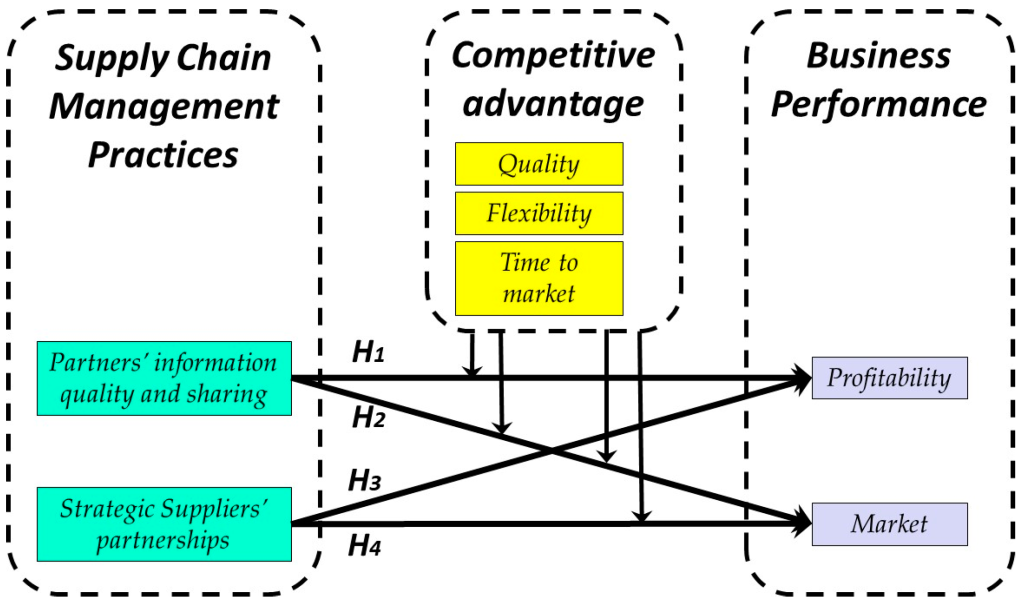
Effective RFQ execution in sheet metal manufacturing depends on aligning technical inputs with real production capabilities. Frigate delivers this alignment by combining engineering validation, integrated manufacturing, and structured quotation processes.
As emphasized in structured manufacturing documentation practices such as BOM clarity and component definition, clear RFQ inputs directly influence production success.
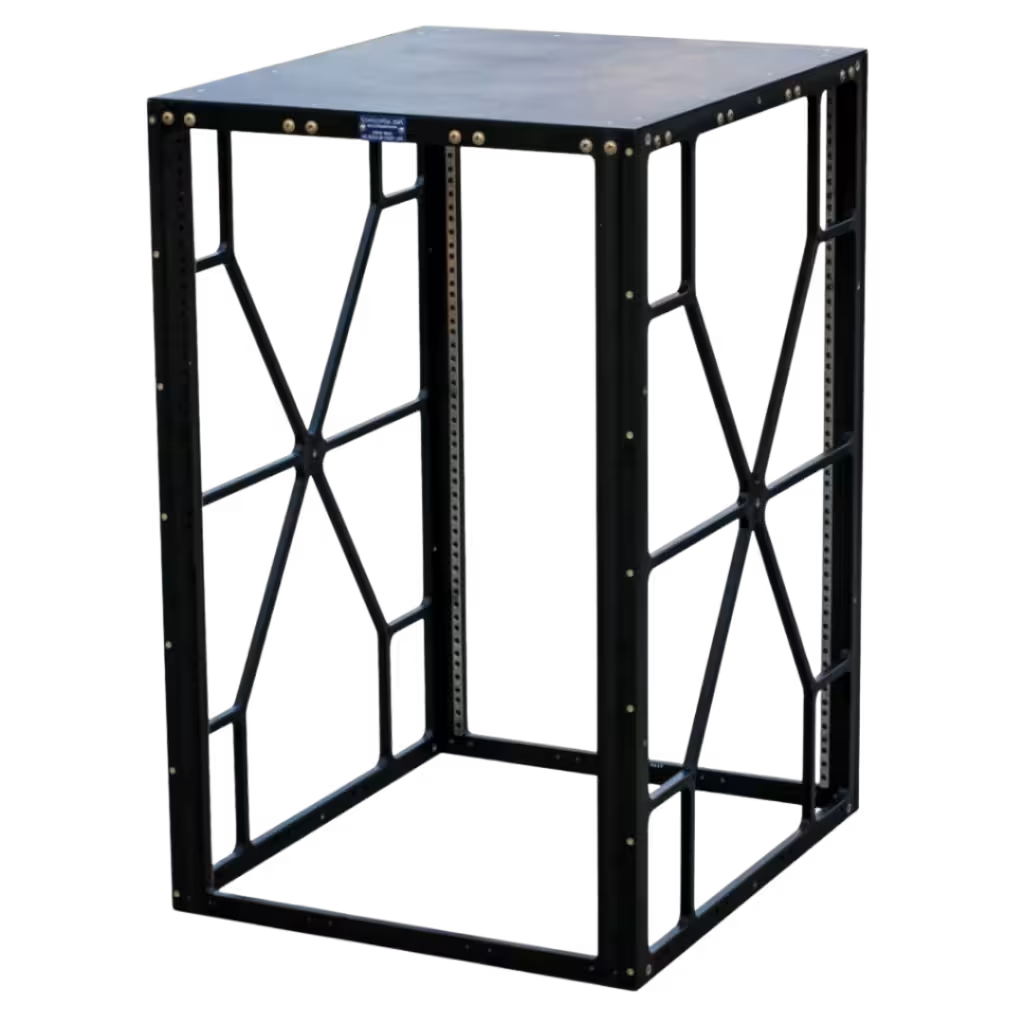
Frigate manufactures precision sheet metal components with a focus on accuracy, scalability, and production readiness—ensuring every RFQ translates into reliable manufacturing outcomes.
Contact Frigate today to discuss your requirements and get a manufacturing-ready quote.