



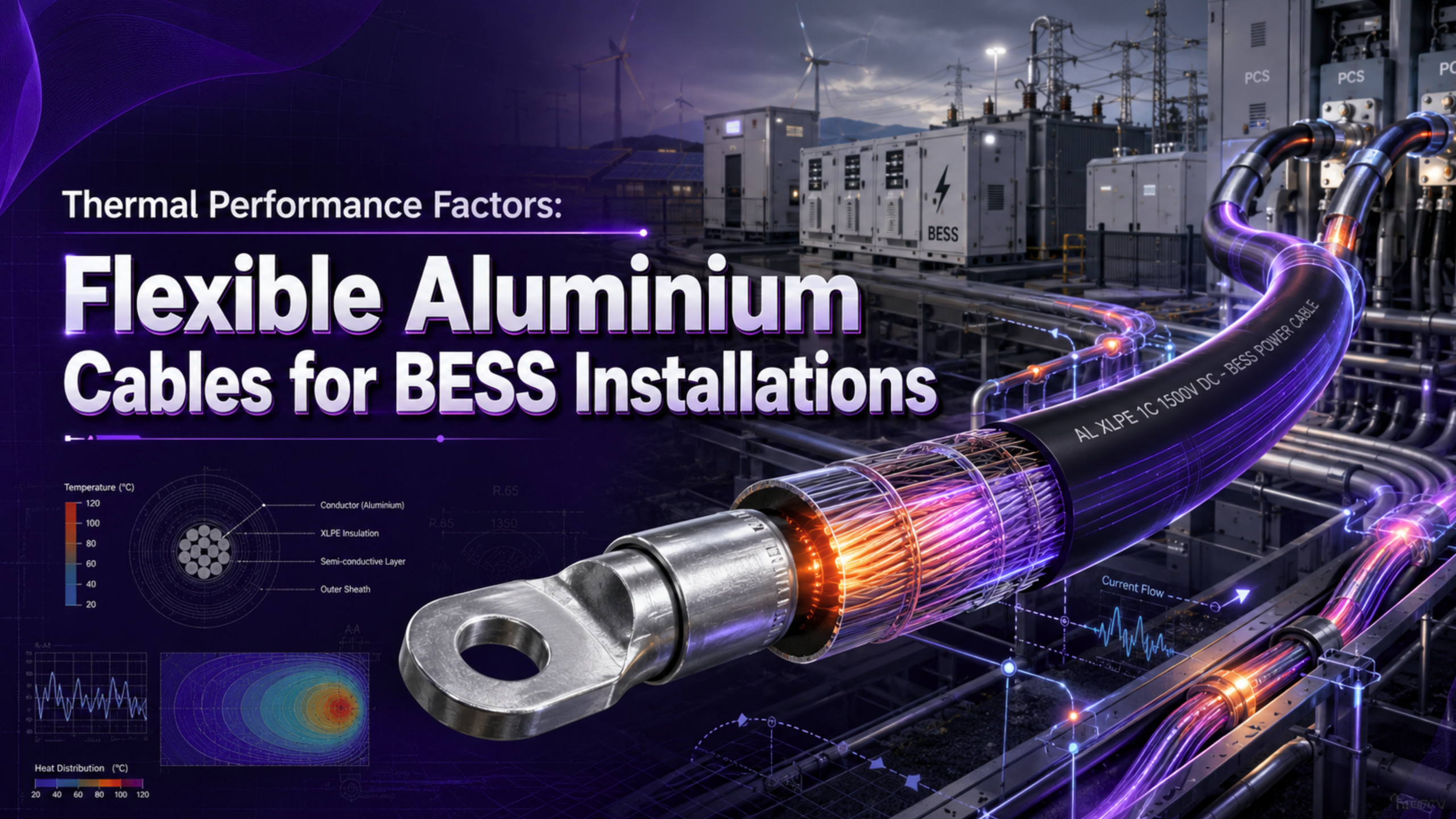
Battery Energy Storage Systems (BESS) are no longer pilot projects. Grid-scale deployments are expanding rapidly, with global installed capacity growing at over 20% annually. Many new installations exceed 100 MWh per site. Higher storage capacity means higher current flow across DC and AC circuits.
High current always produces heat.
Electrical losses inside conductors convert energy into thermal energy. When thermal management is not engineered properly, the following risks increase –
- Energy efficiency drops due to higher resistive losses
- Insulation degrades faster than expected
- Terminations loosen under thermal cycling
- Fire and safety risks escalate
- Project lifecycle cost rises
Aluminium Cables for BESS Installations have gained strong adoption because aluminium offers lower material cost, reduced weight, and better sustainability metrics compared to copper. Aluminium is nearly 30–40% lighter than copper, reducing structural loading and transportation cost. However, aluminium behaves differently under thermal stress.
Thermal performance is not just about avoiding overheating. It determines efficiency, warranty confidence, and long-term reliability.
Careful engineering of Aluminium Cables for BESS Installations ensures that heat generation, heat dissipation, and thermal endurance are properly balanced.
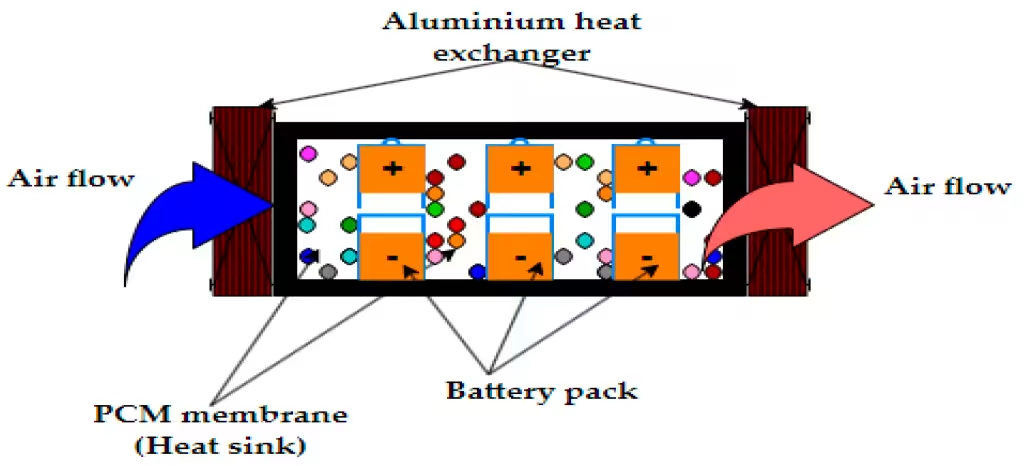
Understanding Where the Heat Comes From in Aluminium Cables for BESS Installations
Every conductor has electrical resistance. Aluminium has about 61% of copper’s electrical conductivity. To compensate, larger cross-sectional areas are used. Proper sizing keeps temperature rise within acceptable limits.
Heat generation follows the fundamental equation –
Power Loss = I² × R
A small increase in current produces a large increase in heat.
BESS systems introduce unique stress factors –
- Daily charge and discharge cycles
- High peak discharge currents
- Continuous operation during grid stabilization
- Harmonics from power conversion systems
- Long-duration load during backup mode
Each of these increases thermal stress.
Aluminium Cables for BESS Installations must be designed considering –
- Conductor resistivity
- Strand compaction ratio
- Surface oxidation resistance
- Contact resistance at lugs
- Ambient container temperature
Temperature inside battery containers can reach 50–55°C. When a cable rated at 90°C operates continuously at elevated ambient temperatures, the thermal margin reduces significantly.
Every 10°C increase above rated operating temperature can reduce insulation life by nearly 50%, based on thermal aging models. Heat control therefore directly affects cable lifespan.
Why Ampacity and Derating Matter More Than Catalog Ratings Suggest
Catalog ratings are based on ideal laboratory conditions. Real BESS installations rarely match those assumptions.
Ampacity defines the maximum current a cable can carry without exceeding its temperature rating. However, real conditions introduce several derating factors.
Common BESS derating conditions include –
- High ambient temperature inside containers
- Multiple cables grouped in confined trays
- Limited airflow
- Installation inside conduits
- Solar heat exposure for outdoor runs
For example, a cable rated for 500A at 30°C ambient may require derating by 15–25% at 50°C ambient. Grouping several cables together can add another 10–20% reduction.
Ignoring these corrections leads to continuous operation above thermal design limits.
Consequences of improper derating include –
- Accelerated insulation aging
- Increased I²R losses
- Higher conductor temperature
- Increased probability of failure
Aluminium Cables for BESS Installations must be sized using real load profiles and environmental conditions. Load factor, duty cycle, and emergency overload scenarios must all be evaluated.
Thermal modeling during project planning improves predictability and reduces long-term operational risk.
Are Insulation Systems the Real Guardian of Thermal Endurance?
The conductor generates heat. Insulation must tolerate and contain that heat safely.
XLPE insulation is widely used in Aluminium Cables for BESS Installations because it offers –
- Continuous operating temperature up to 90°C
- Emergency overload tolerance up to 130°C
- Short-circuit withstand up to 250°C for a few seconds
- High dielectric strength
- Low dielectric loss
PVC insulation provides lower thermal endurance and is less suitable for high-cycle energy storage duty.
BESS applications create repetitive heating and cooling cycles. This causes mechanical fatigue within insulation material. Over time, micro-cracks may form if thermal endurance is insufficient.
Critical insulation properties include –
- Thermal class rating
- Resistance to thermal aging
- Flame retardant performance
- Smoke density characteristics
- Resistance to partial discharge
Energy storage systems contain high energy density. Fire performance becomes critical. Insulation must restrict flame spread and reduce toxic emissions during fault conditions.
Properly engineered Aluminium Cables for BESS Installations combine strong electrical insulation with robust thermal endurance to ensure safe long-term operation.
How Do Flexibility and Thermal Cycling Manage Expansion, Contraction, and Mechanical Stress?
Thermal performance is not only electrical. Mechanical behavior also matters.
Aluminium expands more than copper when heated. Charge-discharge cycles create repetitive thermal expansion and contraction. Mechanical stress accumulates at terminations and bends.
Fine-stranded aluminium conductors provide better flexibility. High strand count reduces stress concentration and improves bend radius tolerance.
Thermal cycling challenges include –
- Loosening of bolted terminations
- Increased contact resistance
- Localized heating at lugs
- Oxidation at aluminium interfaces
- Hotspot formation
Hotspots increase localized temperature beyond overall cable rating. That accelerates aging and can trigger insulation damage.
Aluminium Cables for BESS Installations should incorporate –
- Optimized strand geometry
- Controlled compaction
- Surface treatment to minimize oxidation
- Termination compatibility
Improved flexibility also simplifies routing within compact battery enclosures. Reduced mechanical strain leads to more stable thermal behavior over the system lifecycle.
How Installation Environment Impacts Thermal Behavior
Environmental conditions significantly influence cable temperature.
Containerized BESS environments operate as semi-closed systems. Heat generated by batteries, inverters, and cables accumulates if ventilation is insufficient.
Outdoor installations face additional stress –
- High solar radiation
- Large ambient temperature fluctuations
- Humidity and moisture
- Dust and industrial pollution
Improper cable routing further increases thermal buildup.
Effective thermal management strategies include –
- Maintaining spacing between high-current cables
- Avoiding tight bundling
- Using ventilated trays
- Selecting UV-resistant outer sheaths
- Ensuring proper grounding
Aluminium Cables for BESS Installations must be evaluated for worst-case thermal conditions rather than average conditions. Design margin is essential for reliability.
Proper planning during installation reduces operational temperature and extends service life.
What Is the Financial Impact of Thermal Performance Over 20 Years?
Thermal performance directly affects financial outcomes.
Resistive losses reduce energy efficiency. Even a 1% additional loss in a 100 MWh BESS facility can translate into significant annual revenue reduction.
Elevated temperature also leads to –
- Shorter insulation lifespan
- Increased maintenance frequency
- Higher replacement cost
- Increased insurance scrutiny
Total Cost of Ownership should evaluate –
- Energy loss over lifecycle
- Downtime cost due to cable failure
- Maintenance intervention cost
- Warranty risk
Aluminium offers strong economic advantages when engineered properly. Lower weight reduces structural demand and simplifies installation. However, under-designed conductors may negate these savings.
Optimized Aluminium Cables for BESS Installations deliver –
- Controlled thermal rise
- Stable long-term performance
- Reduced lifecycle losses
- Improved reliability
Thermal optimization transforms aluminium from a material alternative into a strategic asset for long-term energy storage infrastructure.
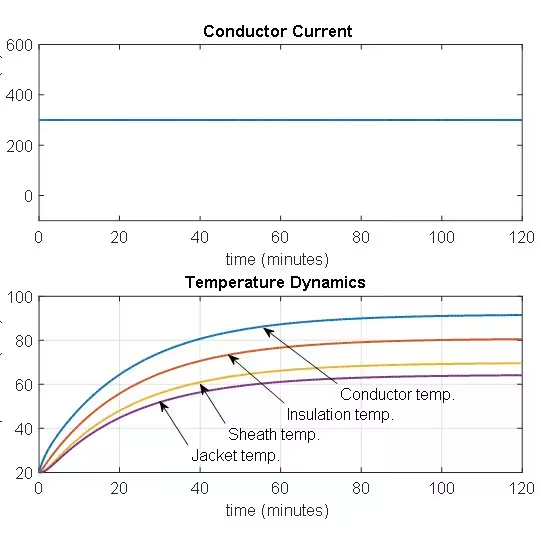
How Frigate Engineers Aluminium Cables for BESS Installations for Thermal Reliability
Thermal reliability requires precise material control, electrical optimization, and validation under real operating conditions. Frigate engineers Aluminium Cables for BESS Installations to ensure stable temperature performance across high-current, cyclic, and confined BESS environments.
Below is a concise breakdown of the engineering approach.
High-Purity Aluminium Conductors with Controlled Resistivity
Conductor purity directly affects resistance and heat generation. Higher impurities increase resistivity, which increases I²R losses.
Frigate uses high-conductivity aluminium with controlled composition to ensure –
- Stable and low resistivity
- Reduced internal heating
- Uniform current flow
- Lower long-term oxidation risk
Lower resistance directly reduces thermal buildup and improves energy efficiency.
Optimized Cross-Sectional Sizing to Minimize I²R Loss
Correct conductor sizing is critical because aluminium has lower conductivity than copper.
Frigate designs cross-sections based on –
- Continuous and peak current
- Ambient temperature
- Grouping and installation conditions
- Load cycling patterns
Thermal modeling helps maintain conductor temperature within rated limits while avoiding unnecessary oversizing. This ensures efficient heat control and optimized lifecycle cost.
Precision Stranding for Mechanical and Thermal Stability
Stranding impacts flexibility, resistance, and heat distribution.
Frigate applies precision stranding to achieve –
- High flexibility for compact routing
- Uniform strand contact
- Even current distribution
- Reduced hotspot formation
Better flexibility reduces stress during thermal expansion and contraction, improving termination stability and long-term thermal performance.
XLPE Insulation Designed for Cyclic Thermal Stress
Insulation must handle repetitive heating and cooling without degrading.
Frigate uses XLPE insulation engineered for –
- Continuous operation at 90°C
- High thermal endurance under cycling loads
- Strong dielectric performance
- Flame retardant characteristics
Optimized cross-linking improves resistance to thermal aging, helping maintain insulation integrity over extended service life.
Comprehensive Load and Thermal Validation Testing
Standard ratings do not always reflect real BESS conditions.
Frigate conducts testing under –
- Elevated ambient temperatures
- High current density
- Cyclic loading patterns
- Grouped cable installations
Thermal monitoring validates conductor temperature stability, insulation durability, and termination reliability under realistic stress scenarios.
Engineering for Real BESS Operating Conditions
Battery containers present confined layouts, limited airflow, and elevated temperatures.
Frigate designs Aluminium Cables for BESS Installations considering –
- Heat dissipation limits
- Compact routing requirements
- Oxidation resistance
- Termination compatibility
System-level engineering ensures cables perform reliably across 15–20 year operational lifespans.
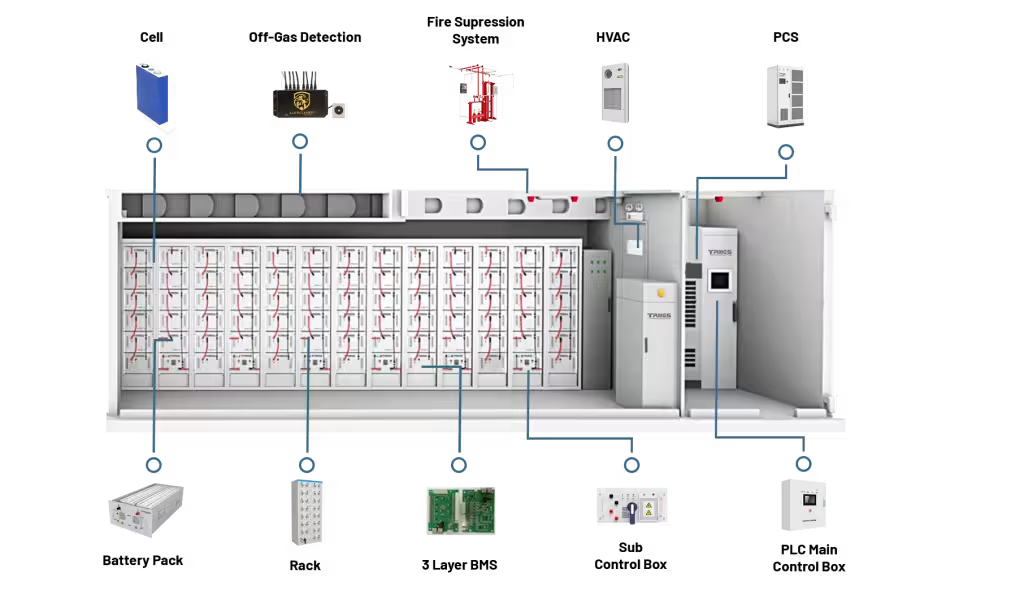
Focus on Durability, Compliance, and Predictable Performance
Frigate emphasizes controlled manufacturing, strict quality standards, and compliance with global electrical norms.
This approach ensures –
- Consistent thermal behavior
- Reduced operational risk
- Long-term reliability
- Stable performance across production batches
Each Aluminium Cable for BESS Installations is engineered to deliver controlled temperature rise, reduced losses, and dependable performance in demanding energy storage systems.
Conclusion
Thermal performance directly defines safety, efficiency, and long-term economics in battery energy storage systems. Poor thermal design increases energy losses, accelerates insulation aging, and raises operational and compliance risks. Properly engineered Aluminium Cables for BESS Installations control heat generation, manage ampacity under real conditions, and withstand cyclic thermal stress. Environmental exposure, confined layouts, and high current density must be addressed through precise material and design optimization.
Strategic selection of Aluminium Cables for BESS Installations strengthens reliability and protects long-term infrastructure investment. Controlled temperature rise improves efficiency, extends service life, and reduces maintenance frequency over decades of operation. A thermal-first engineering approach ensures predictable performance across demanding BESS environments. Connect with Frigate’s engineering team to evaluate technically optimized cable solutions tailored to modern energy storage requirements.