


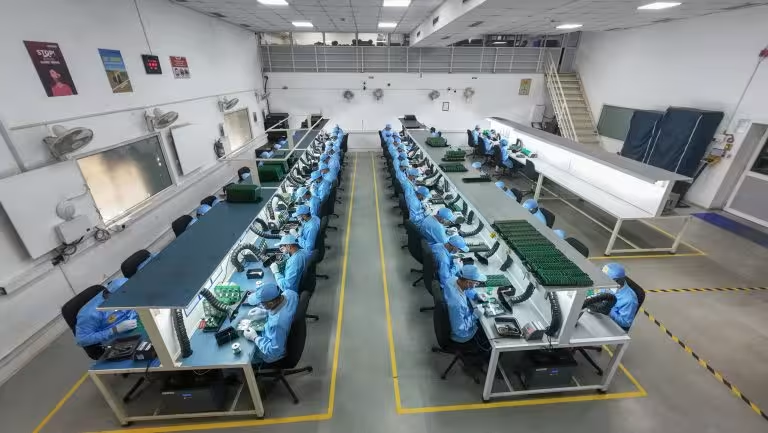
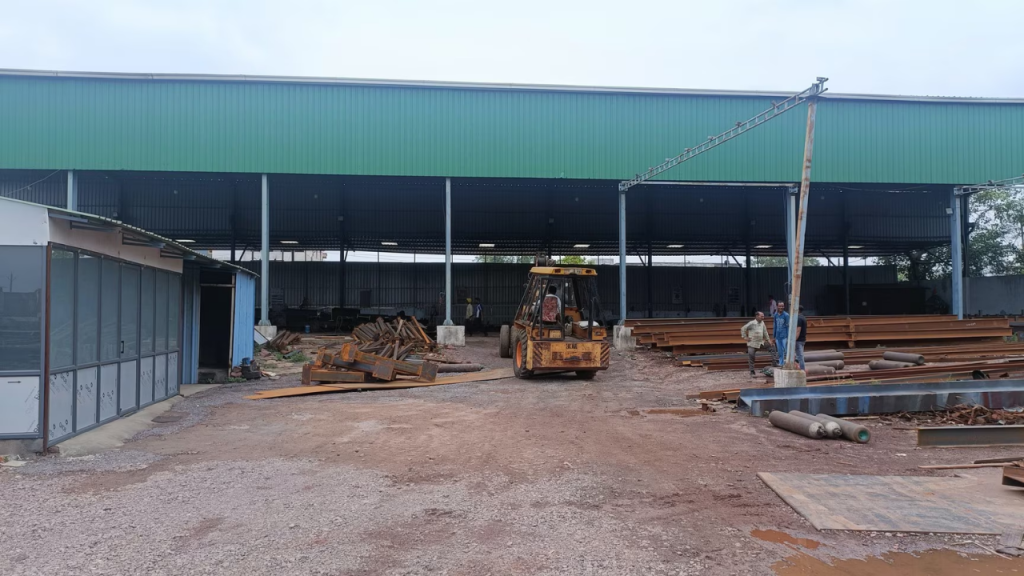
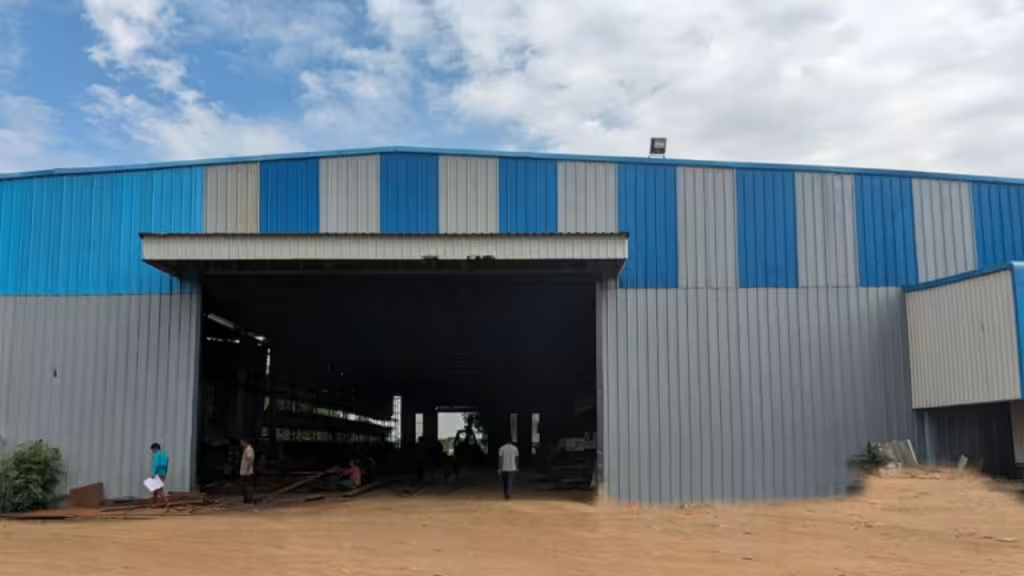
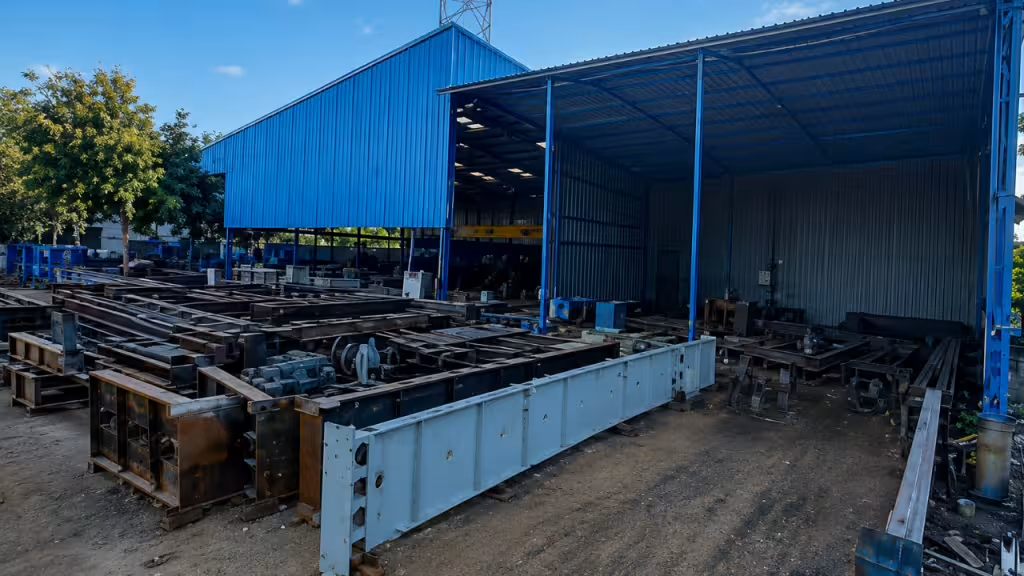



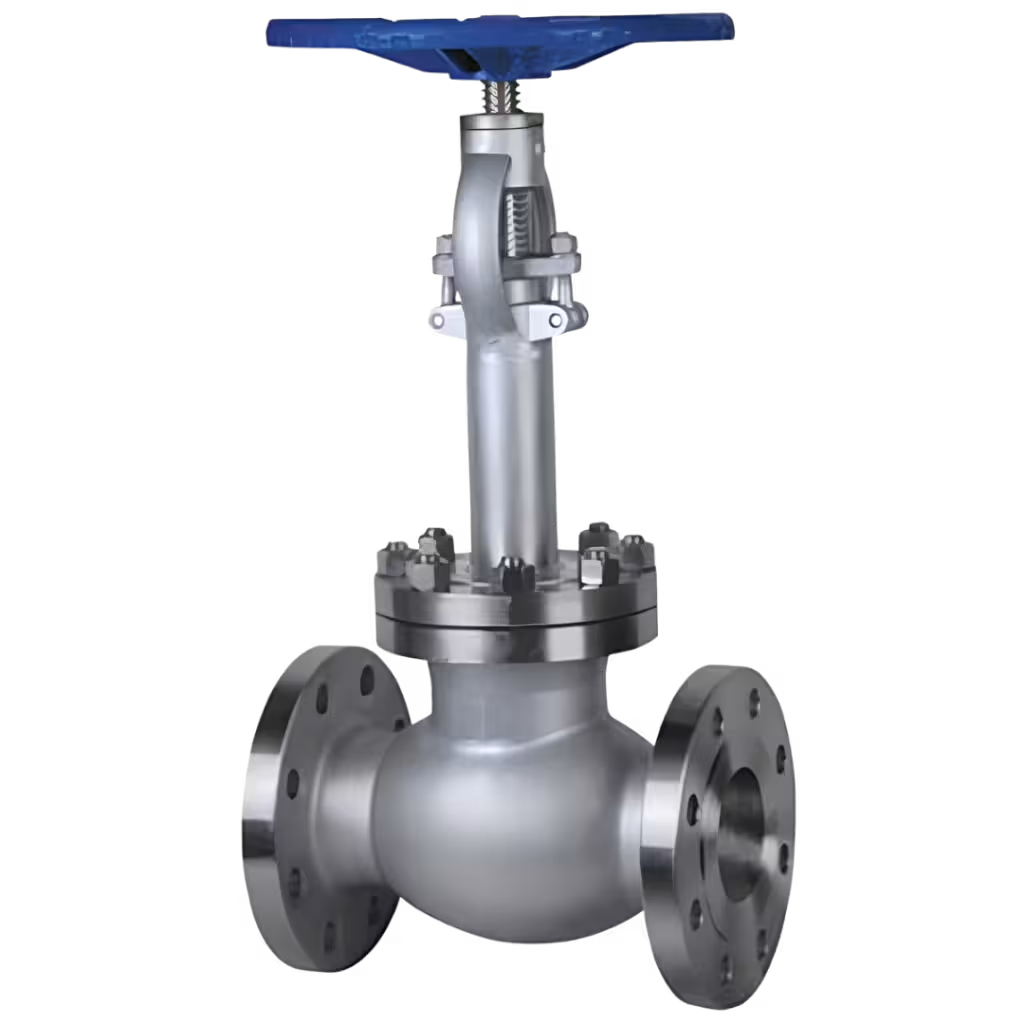


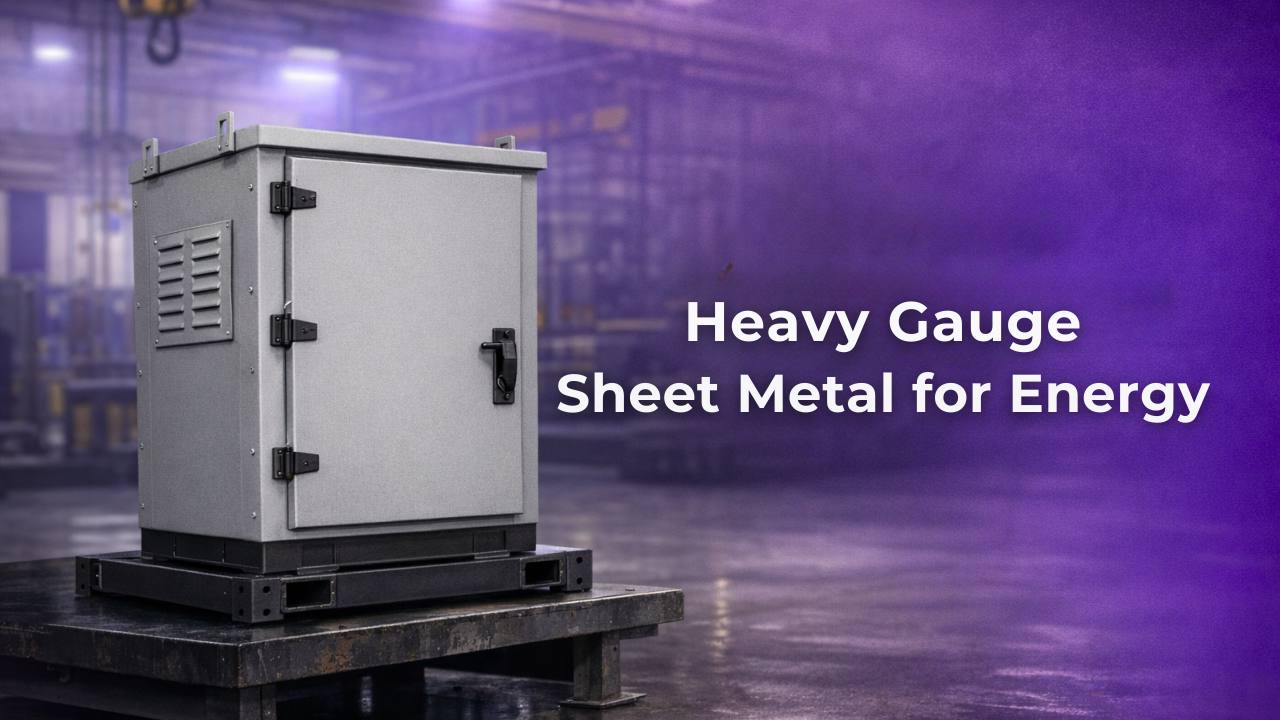
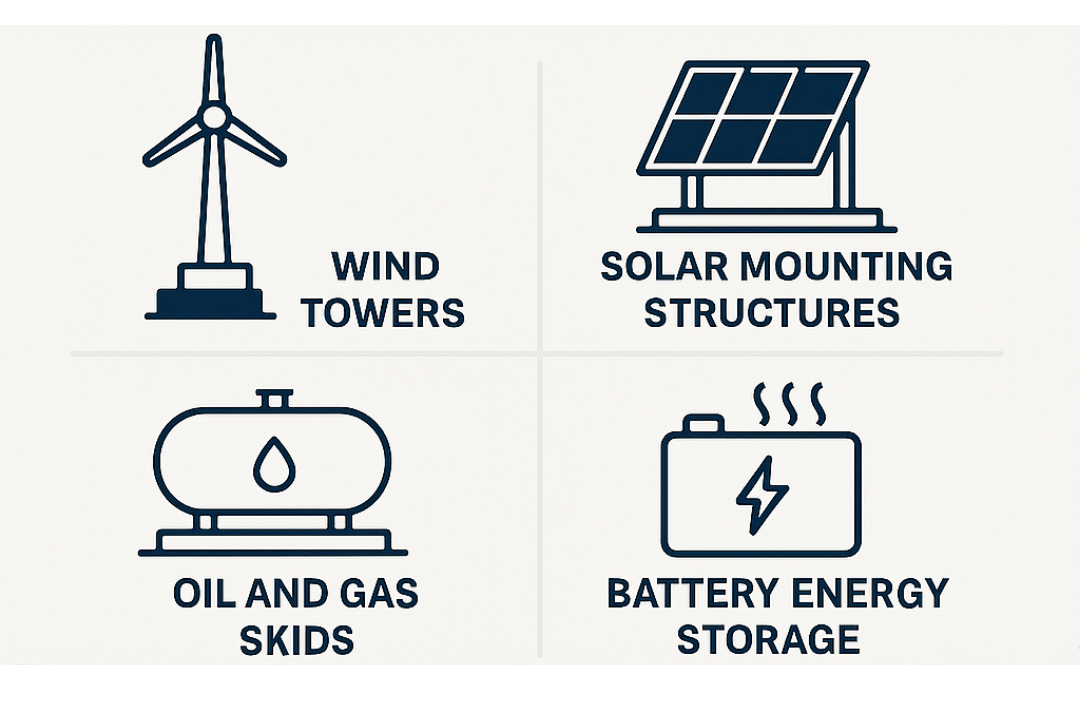
Energy infrastructure is expected to work without interruption for decades. Wind towers operate under continuous cyclic loading. Solar mounting structures expand and contract daily due to temperature variation. Oil and gas skids face pressure, vibration, and corrosive fluids. Battery energy storage systems manage thermal loads and fire risks.
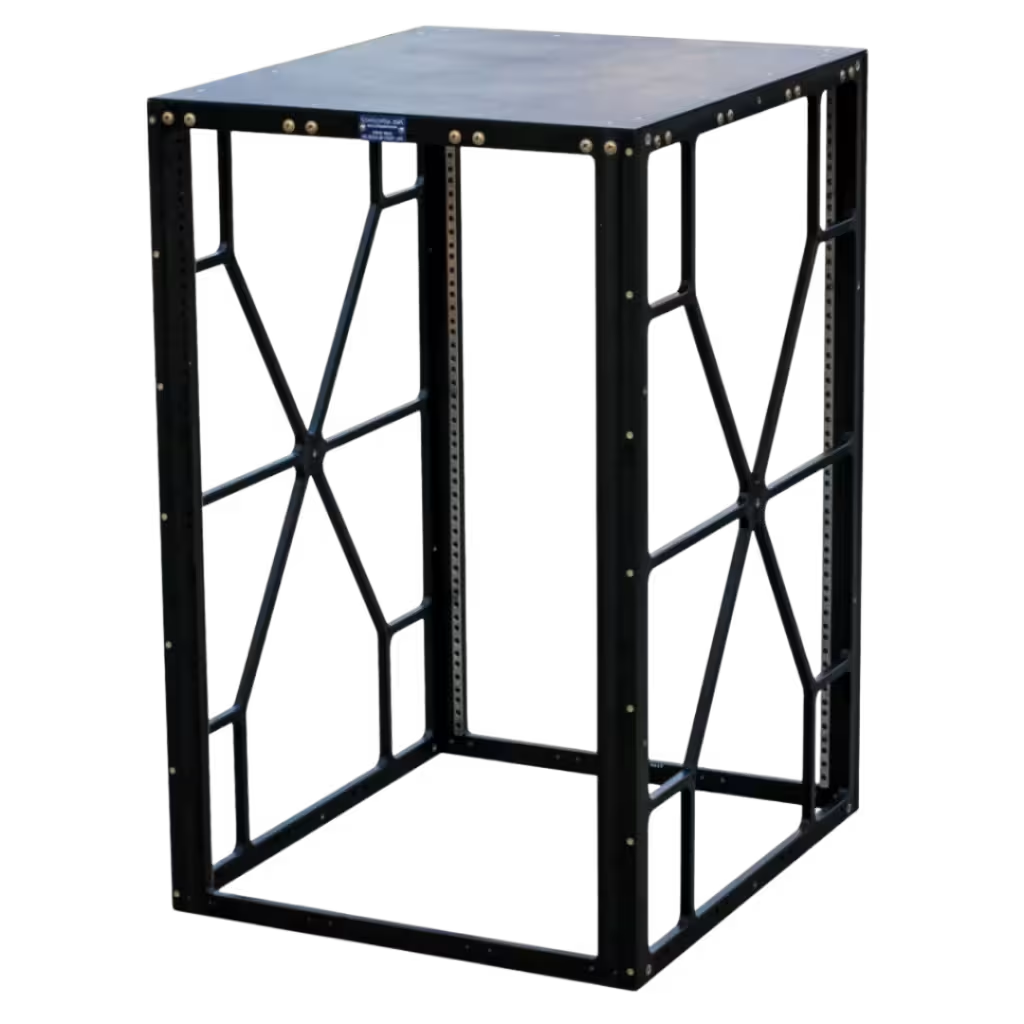
Structural metal components carry the responsibility for stability and safety. Thickness often exceeds 6 mm and may go beyond 25 mm in critical assemblies. These heavy sections form frames, enclosures, base plates, and support structures. Performance failure at this level affects the entire system.
Corrosion alone costs the global economy more than $2.5 trillion annually, and a significant portion impacts energy infrastructure. Proper material selection in Heavy Gauge Sheet Metal Fabrication for Energy reduces failure risk, improves lifecycle durability, and protects long-term profitability.
Engineering decisions made during material selection directly influence –
- Structural strength over 20–30 years
- Resistance to corrosion and environmental degradation
- Weld integrity and fabrication stability
- Compliance with ASME, ASTM, and ISO standards
- Total lifecycle cost and maintenance frequency
Strategic evaluation in Heavy Gauge Sheet Metal Fabrication for Energy transforms material selection from a purchasing decision into a long-term reliability strategy.
How the Right Material Prevents Structural Failure and Downtime
Heavy gauge components serve as load-bearing elements in energy systems. These parts absorb stress from wind, vibration, thermal cycles, and mechanical loads. Yield strength, tensile strength, and fatigue resistance determine long-term performance.
Wind turbine towers experience fluctuating loads every few seconds. Repeated stress creates fatigue cycles. Micro-cracks develop when fatigue resistance is inadequate. Crack propagation reduces structural integrity over time.
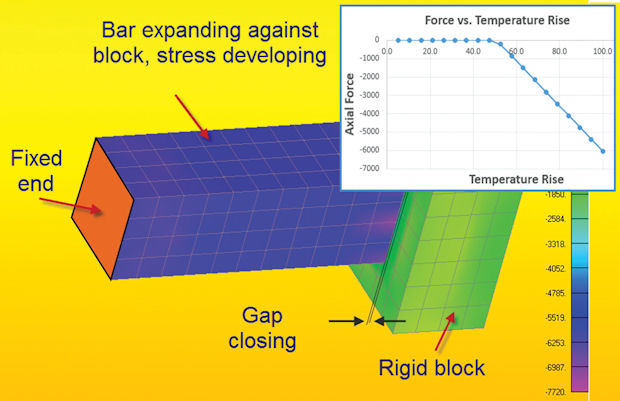
Thermal expansion adds complexity. High-temperature environments cause metal to expand. Cooling causes contraction. Repeated expansion cycles stress weld joints and bolted connections. Improper alloy selection increases distortion risk.
Critical mechanical considerations include –
- Yield strength for load-bearing capacity
- Fatigue strength for cyclic stress resistance
- Impact toughness for shock resistance
- Coefficient of thermal expansion for dimensional stability
Environmental exposure further challenges performance. Offshore installations face chloride-rich air. Desert solar plants encounter oxidation and abrasive sand. Chemical plants expose structures to acidic vapors.
Performance issues commonly arise as –
- Corrosion at weld seams
- Structural distortion due to thermal stress
- Reduced load capacity from material thinning
- Increased maintenance within the first decade
Strong material alignment within Heavy Gauge Sheet Metal Fabrication for Energy ensures structural reliability and reduces unexpected downtime.
Understanding Which Metals Work Best for Energy Applications
Different alloys provide different performance advantages. Selection depends on load requirements, environmental conditions, and fabrication constraints.
Carbon Steel
Carbon steel remains widely used for structural frames and heavy supports. ASTM A36 and A572 grades are common in large assemblies.
Benefits include –
- High strength-to-cost ratio
- Excellent weldability
- Wide availability
- Ease of machining
Protective coatings such as galvanization or industrial paint systems are required to prevent corrosion.
Stainless Steel (304, 316, Duplex)
Chromium content forms a passive oxide layer, protecting against corrosion.
- 304 stainless supports moderate corrosion resistance
- 316 stainless performs better in marine and chloride environments
- Duplex stainless combines higher strength with superior stress corrosion resistance
Offshore wind and coastal energy installations frequently rely on 316 or duplex grades to maintain service life beyond 25 years.
High-Strength Low-Alloy (HSLA) Steel
HSLA steel offers improved strength-to-weight ratio. Thinner sections can achieve equivalent load capacity, reducing structural mass and transport cost.
Aluminum Alloys
Aluminum supports lightweight renewable structures. Lower density reduces foundation stress. Stiffness is lower compared to steel, requiring careful structural analysis.
Specialty Alloys
Nickel-based and chromium-molybdenum alloys handle high-temperature and high-pressure environments found in thermal power and petrochemical facilities.
Material evaluation parameters in Heavy Gauge Sheet Metal Fabrication for Energy include –
- Mechanical strength
- Corrosion classification
- Weldability and heat sensitivity
- Thermal conductivity
- Lifecycle cost
Balanced selection avoids overspecification that erodes margins and underspecification that increases operational risk.
Meeting Harsh Environmental and Regulatory Demands Without Compromise
Energy projects operate under strict regulatory frameworks. Material compliance is mandatory, not optional.
Standards typically involved include –
- ASME codes for pressure-related components
- ASTM specifications for material composition
- ISO quality management standards
- Offshore corrosion and fire safety regulations
Material Test Reports confirm chemical composition and mechanical properties. Traceability ensures every heavy plate can be tracked to its certified source.
Salt spray exposure accelerates corrosion dramatically. Chloride ions break down protective coatings. Equipment designed for 25-year service life may fail in less than five years without proper alloy selection.
Compliance failures increase cost exposure by 15–20% due to redesign, penalties, and delayed commissioning. Reliable documentation practices strengthen Heavy Gauge Sheet Metal Fabrication for Energy programs and reduce audit risk.
Regulatory alignment must be embedded during material sourcing, not addressed after fabrication.
Fabrication Realities That Shape Smart Material Decisions
Material performance must align with fabrication capability. Thick sections behave differently from thin sheet metal.
Welding generates heat. Heat creates expansion. Cooling creates shrinkage. Distortion becomes a major concern in heavy assemblies.
Fabrication challenges include –
- Preheating requirements for high-carbon alloys
- Post-weld heat treatment to relieve internal stress
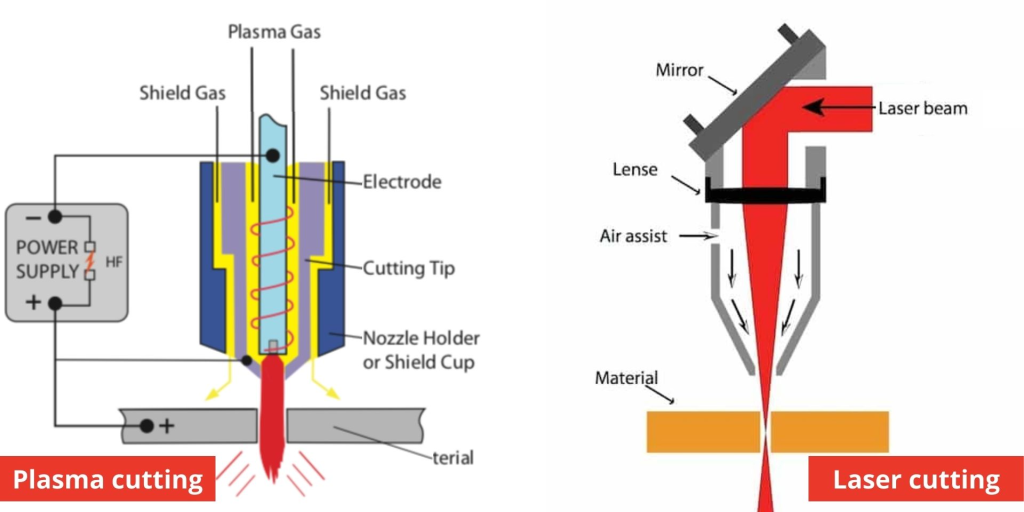
- Plasma or laser cutting limits for thick plates
- Surface treatment compatibility with galvanizing or coatings
Heat-affected zones can become weak points if welding parameters are not optimized. High-strength steels may reduce formability during bending operations. Improper bend radius leads to cracking.
Dimensional stability matters in large skids and enclosures. Misalignment affects assembly integration at installation sites.
Strong engineering coordination enhances Heavy Gauge Sheet Metal Fabrication for Energy outcomes by aligning alloy chemistry with production processes.
Balancing Cost, Performance, and Long-Term ROI
Material price represents only a fraction of total project cost. Lifecycle economics determine financial success.
Total cost of ownership includes –
- Raw material expenditure
- Fabrication and finishing cost
- Transportation and installation cost
- Maintenance frequency
- Downtime and repair impact
Stainless steel may cost two to three times more than carbon steel initially. Reduced corrosion-related maintenance often compensates for that difference over decades.
Global steel markets fluctuate significantly. Alloying elements such as nickel and chromium experience price volatility. Supply chain disruptions have driven price increases exceeding 40% in certain regions.
Strategic planning in Heavy Gauge Sheet Metal Fabrication for Energy evaluates –
- Long-term durability
- Supply chain stability
- Inventory management
- Structural optimization opportunities
Value engineering strategies include grade substitution, thickness optimization, and structural reinforcement redesign while maintaining compliance.
Balanced material decisions protect margins and reduce long-term operational risk.
Reducing Risk Through Early Engineering and Supplier Alignment
Late-stage material changes create cascading challenges. Documentation must be revised. Weld procedures must be requalified. Project schedules shift.
Early collaboration reduces these risks.
Risk mitigation strategies include –
- Finite element analysis for stress modeling
- Thermal simulations for expansion behavior
- Weld procedure qualification testing
- Prototype fatigue validation
- Digital traceability integration
Design for Manufacturability improves alignment between structural engineering and fabrication capability. Standardization across production sites reduces variability and quality inconsistencies.
Strategic supplier collaboration strengthens Heavy Gauge Sheet Metal Fabrication for Energy execution by integrating engineering, sourcing, and compliance from the beginning.
How Frigate Strengthens Heavy Gauge Sheet Metal Fabrication for Energy Programs
Energy infrastructure demands precision, durability, and long-term reliability. Heavy structural components must perform under high mechanical loads, thermal cycling, and corrosive environments for decades. Frigate strengthens Heavy Gauge Sheet Metal Fabrication for Energy programs by combining engineering depth, controlled manufacturing processes, and structured compliance systems.
Engineering-First Approach to Material Selection
Every energy application has unique stress conditions. Structural loads vary between wind towers, battery enclosures, turbine bases, and offshore skids. Frigate begins with technical evaluation rather than simple material sourcing.
Engineering teams assess –
- Static and dynamic load requirements
- Fatigue exposure due to vibration or cyclic forces
- Thermal expansion and contraction behavior
- Corrosion exposure level (marine, desert, chemical, or industrial)
- Service life expectations exceeding 20–30 years
Finite element analysis (FEA) and structural simulations are used where required to validate stress distribution. Material grades are selected based on mechanical performance, weld compatibility, and environmental resistance. This ensures alignment between design intent and manufacturing feasibility within Heavy Gauge Sheet Metal Fabrication for Energy projects.
Certified and Controlled Material Sourcing
Material integrity begins at the supply chain level. Heavy gauge plates and sections require certified traceability to ensure consistent chemical composition and mechanical properties.
Frigate supports –
- Procurement of ASTM, ASME, and ISO-compliant materials
- Access to certified carbon steel, stainless steel (304, 316, duplex), HSLA, and specialty alloys
- Verification through Material Test Reports (MTRs)
- Heat number traceability for audit readiness
Strict sourcing protocols reduce risks such as inconsistent alloy chemistry, reduced tensile strength, or unexpected weld cracking. Supply chain intelligence also helps manage volatility in alloying elements like nickel and chromium. This structured sourcing strengthens cost predictability in Heavy Gauge Sheet Metal Fabrication for Energy programs.
Advanced CNC Cutting and Precision Welding for Thick Sections
Heavy gauge fabrication introduces process complexity. Plate thickness above 10 mm requires specialized cutting and welding controls.
Frigate deploys –
- CNC plasma and laser cutting optimized for thick plate
- Precision edge preparation for improved weld penetration
- Robotic and controlled manual welding procedures
- Weld Procedure Qualification Records (WPQR) validation
Heat input control is critical in thick sections. Excess heat creates distortion and residual stress. Controlled welding parameters reduce heat-affected zone (HAZ) weaknesses. Dimensional tolerances are maintained through structured fixturing and real-time inspection.
Strong process control ensures structural assemblies maintain alignment and mechanical performance across large-scale energy installations.
Heat Management and Distortion Control
Thermal distortion is a primary concern in heavy gauge fabrication. Expansion during welding followed by contraction during cooling generates internal stress.
Frigate integrates –
- Preheating protocols for high-carbon or alloy steels
- Post-weld heat treatment when required
- Sequential welding techniques to balance stress
- Dimensional verification during and after fabrication
Such practices minimize warping and misalignment. Stable geometry improves assembly fit-up at installation sites, reducing rework and project delays. Structural stability remains a central focus in Heavy Gauge Sheet Metal Fabrication for Energy.
Documentation, Traceability, and Regulatory Compliance
Energy infrastructure projects operate under strict regulatory oversight. Documentation accuracy directly affects commissioning timelines.
Frigate ensures –
- Complete traceability from raw material to finished assembly
- Inspection reports covering dimensional checks and weld quality
- Non-destructive testing (NDT) documentation when required
- Compliance with ASME, ASTM, and ISO standards
Digital tracking systems provide audit-ready documentation. This structured compliance reduces approval delays and strengthens stakeholder confidence.
Managing Cost Volatility Through Global Sourcing Intelligence
Steel and alloy markets fluctuate significantly. Price volatility impacts budgeting and bidding accuracy.
Frigate applies global sourcing strategies to –
- Optimize procurement timing
- Diversify supplier networks
- Reduce dependency on single-region sourcing
- Balance cost efficiency with quality consistency
Lifecycle cost considerations guide material decisions. Slightly higher-grade material may reduce long-term maintenance expense. Strategic evaluation ensures economic efficiency without compromising structural integrity in Heavy Gauge Sheet Metal Fabrication for Energy.
Sector-Specific Execution for Energy Applications
Different energy sectors require tailored execution models.
- Renewable energy systems demand lightweight yet durable structural frames.
- Oil and gas equipment requires corrosion-resistant and high-pressure-capable alloys.
- Power generation facilities require materials capable of handling thermal stress and vibration.
Frigate aligns engineering, sourcing, and fabrication processes with these sector-specific requirements. Structured planning reduces variability across production batches and improves consistency across multi-site projects.
Delivering Reliability Through Structured Execution
Heavy structural components form the foundation of energy systems. Performance failures lead to downtime, financial loss, and reputational impact. Frigate strengthens Heavy Gauge Sheet Metal Fabrication for Energy through engineering validation, disciplined manufacturing control, and compliance-driven documentation.
Mechanical properties, weld integrity, corrosion resistance, and dimensional accuracy are aligned with operational requirements. Structured execution enhances reliability, reduces lifecycle risk, and supports predictable long-term performance.
Frigate’s integrated approach transforms heavy gauge fabrication from a transactional process into a strategic reliability advantage for energy infrastructure programs.
Conclusion
Material selection determines structural strength, corrosion resistance, fabrication efficiency, and lifecycle cost. Heavy structural components must perform reliably for decades under demanding conditions.
Engineering-led decision frameworks transform material choice into a competitive advantage. Frigate supports energy manufacturers with optimized Heavy Gauge Sheet Metal Fabrication for Energy solutions designed for durability, compliance, and long-term value.
Organizations seeking improved reliability and reduced lifecycle risk can explore collaboration opportunities with Frigate to strengthen future energy infrastructure programs.