


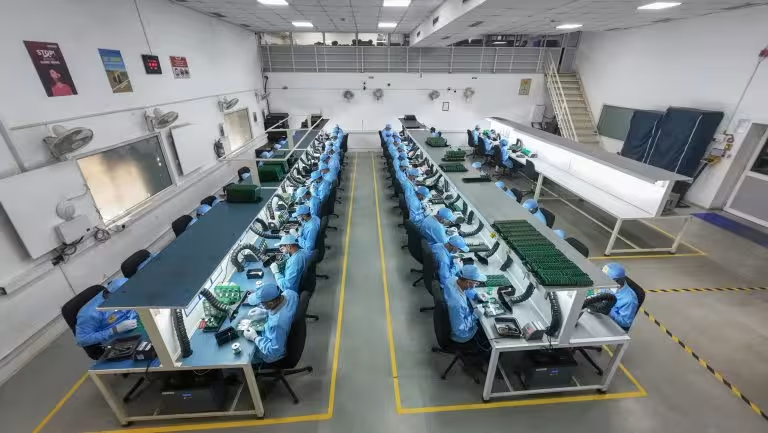
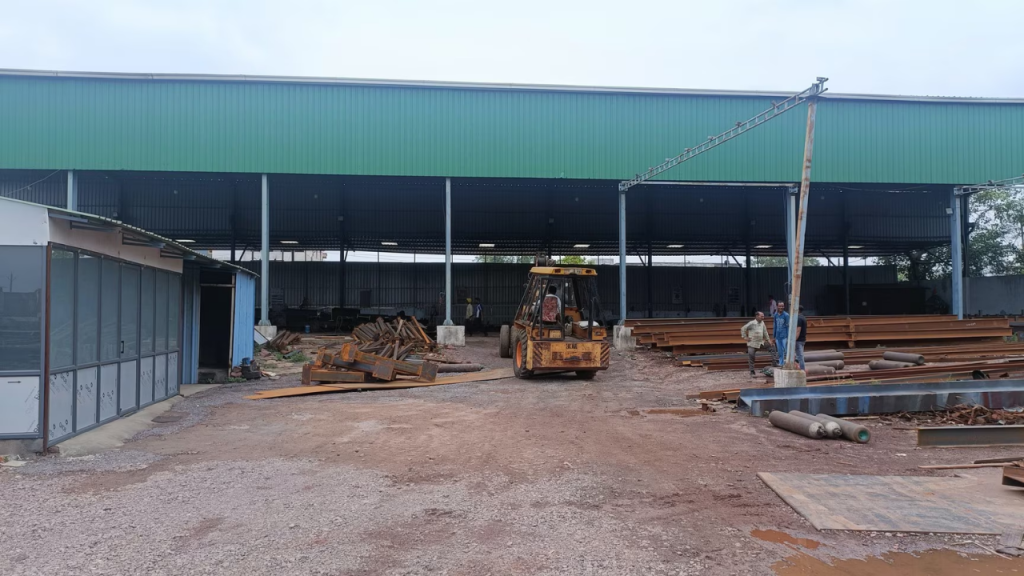
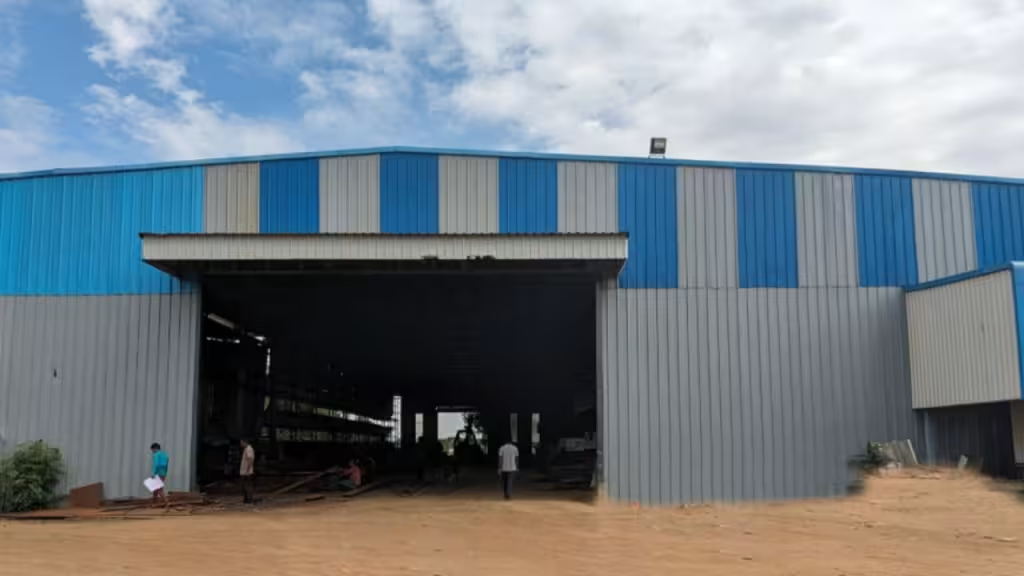
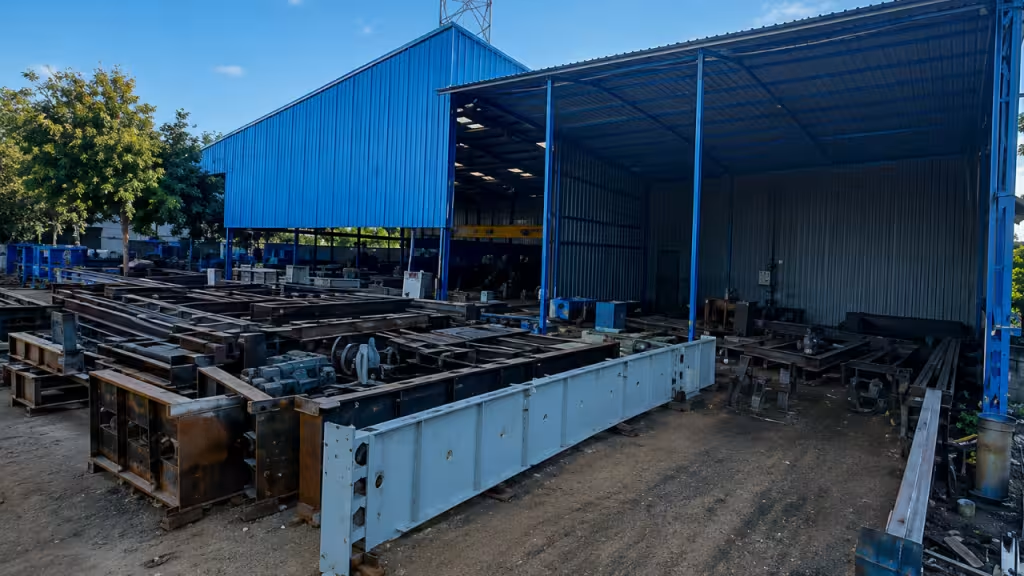




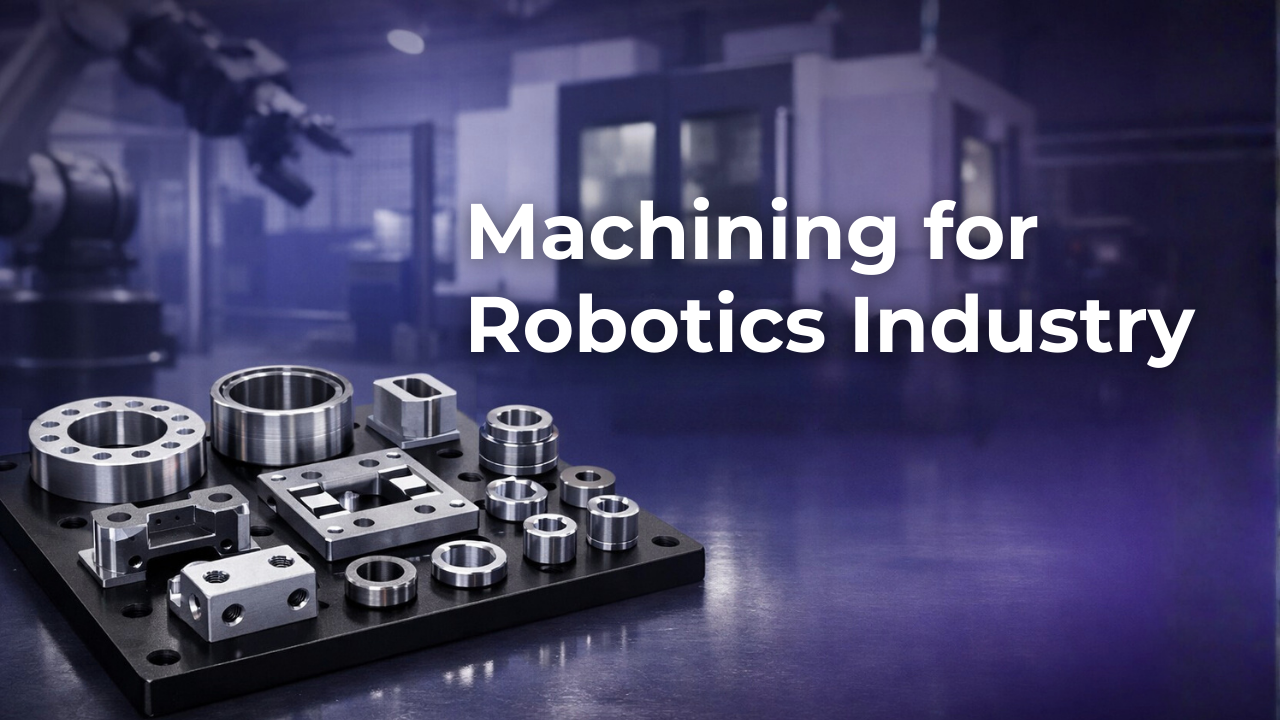
Robotics is growing at a speed few industries have experienced before. Industrial automation, medical robotics, warehouse automation, collaborative robots, and autonomous mobility systems are expanding globally. The International Federation of Robotics reports that more than 500,000 industrial robots are installed every year worldwide. Service robotics is growing at over 20% annually.
Behind every robot is a highly engineered mechanical structure. Gear housings, actuator bodies, transmission components, end-effectors, brackets, frames, and sensor mounts must be machined with extreme accuracy. A small dimensional error can affect motion smoothness, repeatability, and lifespan.
This is why Machining for Robotics Industry demands more than just standard CNC capability. Robotics programs require low volume high mix production, tight tolerances, fast iteration cycles, and strong quality control. Manufacturing strategies must align with innovation speed, not just output quantity.
This blog explores how low volume high mix capability supports sustainable and scalable Machining for Robotics Industry, while addressing cost, quality, agility, and scalability challenges.
Why Low Volume High Mix Is Becoming Essential in Machining for Robotics Industry
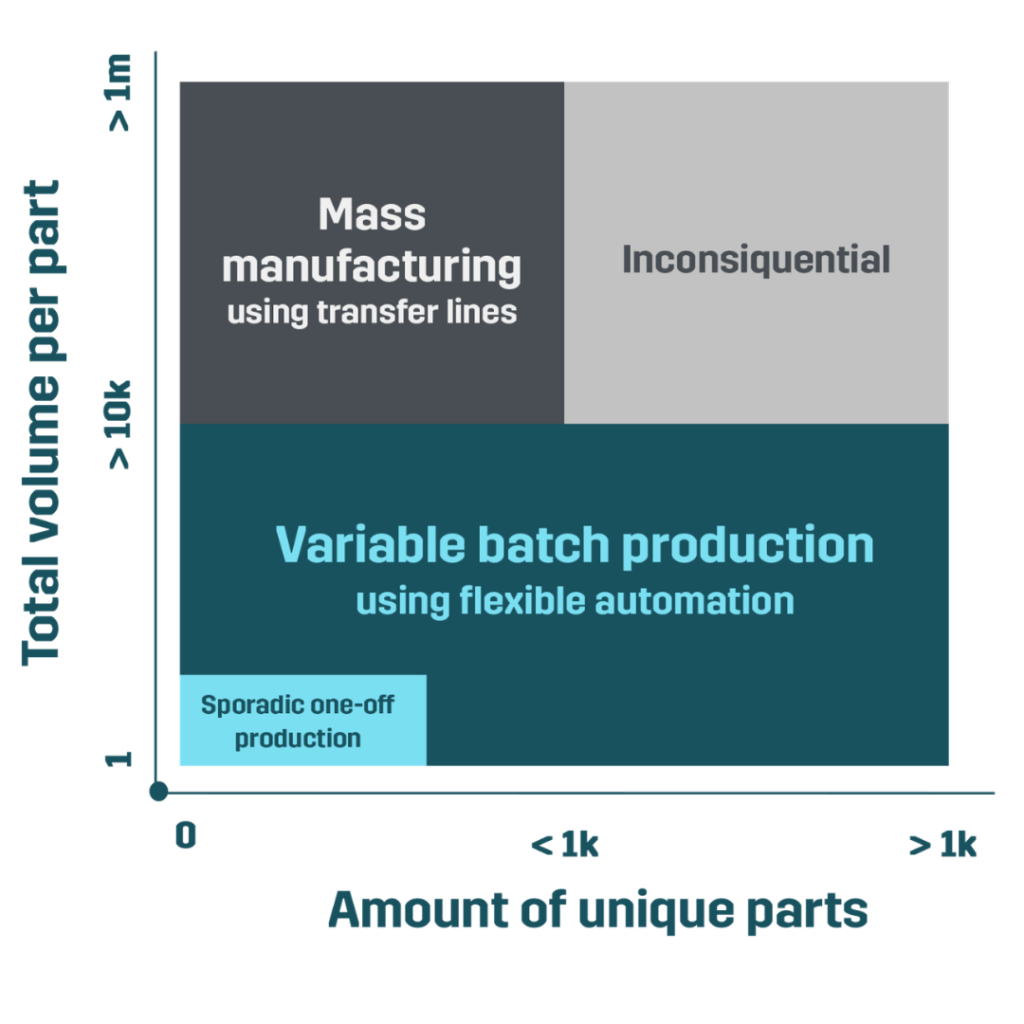
Robotics development never stays static. Mechanical designs evolve quickly. Weight reduction efforts lead to thinner walls. Structural stiffness improvements lead to geometry changes. Integration of sensors and actuators requires mounting adjustments.
Production demand rarely looks like mass automotive manufacturing. A typical robotics program may require –
- 40 revised actuator housings for beta testing
- 80 lightweight aluminum structural components
- 25 hardened steel transmission shafts
- 60 custom gearbox enclosures
Each batch is small. Each design may differ slightly. Revision cycles are frequent.
Low volume high mix manufacturing supports this reality. Traditional high-volume production systems struggle because frequent changeovers increase setup time and reduce machine utilization efficiency.
Effective Machining for Robotics Industry environments must handle –
- Multiple part numbers in parallel
- Rapid CNC program modifications
- Frequent fixture adjustments
- Diverse material combinations
Failure to manage these variables leads to delayed product launches and increased development costs. Robotics companies often face commercialization pressure. Delays in machined components directly impact testing schedules and customer commitments.
Low volume high mix capability reduces these risks by combining flexibility with process discipline.
Understanding the Technical Complexity Behind Precision Robotics Components
Robotic assemblies depend on mechanical precision. Motion accuracy, vibration control, torque transmission, and alignment stability rely on dimensional consistency.
Tolerance requirements frequently fall between ±5 and ±10 microns. Concentricity, perpendicularity, and flatness must be tightly controlled. Surface finish often needs to remain below Ra 1.6 µm to reduce friction and wear.
Technical challenges in Machining for Robotics Industry include –
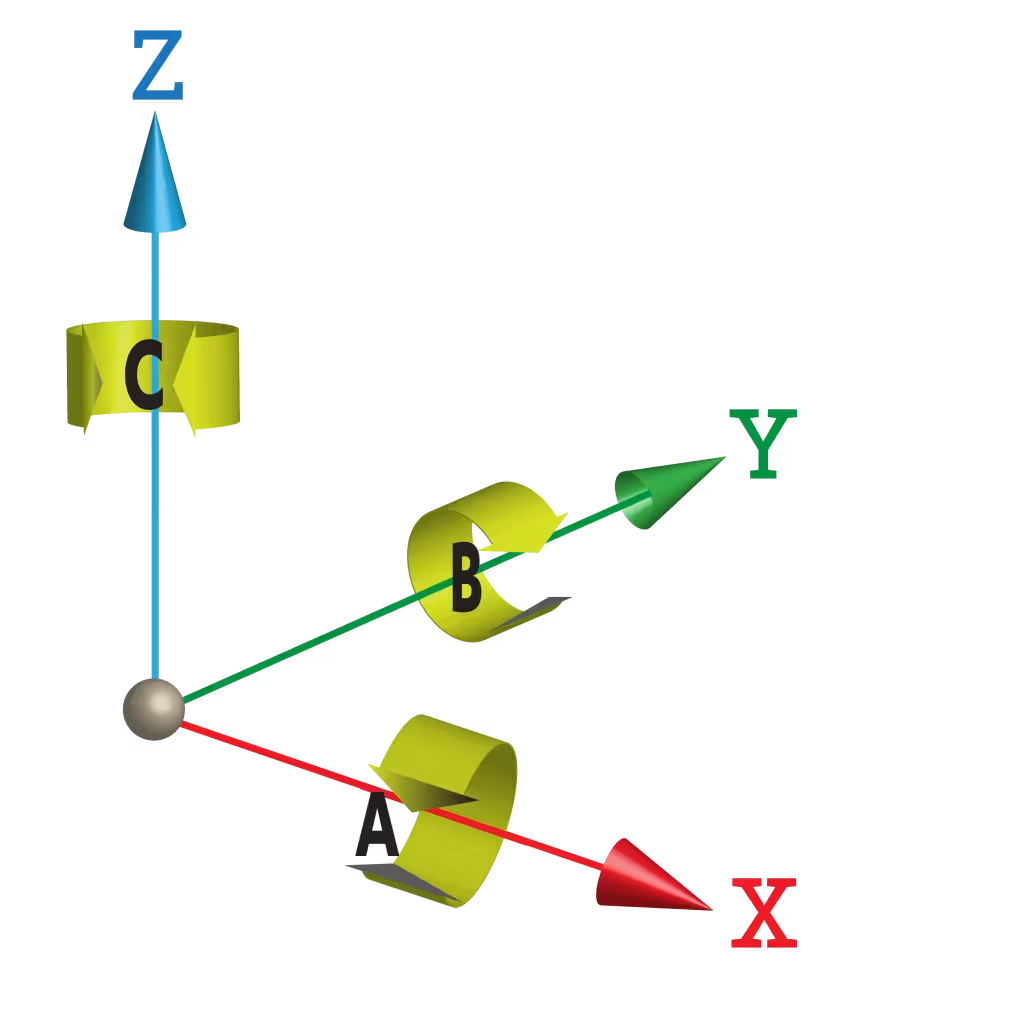
- Simultaneous 5-axis machining for complex curved geometries
- Maintaining dimensional stability in thin-wall structures
- Controlling heat buildup during titanium machining
- Minimizing vibration during long shaft turning operations
- Ensuring repeatability across short production runs
Material diversity adds complexity. Aluminum alloys offer lightweight strength but can deform under clamping pressure. Titanium alloys provide high strength-to-weight ratio but cause rapid tool wear due to poor thermal conductivity. Engineering plastics such as PEEK require precise feed control to prevent melting or surface tearing.
Tool path optimization becomes critical. CAM programming must consider –
- Step-over consistency
- Adaptive clearing strategies
- Controlled chip evacuation
- Reduced tool deflection
Precision robotics parts cannot rely on post-machining corrections. Accuracy must be achieved during machining itself.
How Can Cost Be Controlled Without Compromising Precision in Low Volume Production?
Cost management is a major challenge in low volume high mix environments. Setup time often represents 30–40% of total machining cost per batch. Tooling investment must be optimized across limited production quantities.
Smart cost control strategies in Machining for Robotics Industry focus on operational efficiency.
Key technical cost strategies include –
- Modular fixturing systems that allow quick reconfiguration
- Pre-qualified cutting tool libraries to reduce testing time
- Offline simulation to avoid trial-and-error machining
- Optimized cycle time through adaptive tool paths
- Batch grouping of geometrically similar parts
Cycle time reduction directly impacts profitability. Reducing machining time by even 10% can significantly improve cost structure when margins are tight.
Material utilization also influences cost. Titanium scrap can increase raw material expense by 15–20%. Advanced nesting strategies and efficient stock planning reduce waste.
Predictable costing is equally important. Robotics programs often operate under strict R&D budgets. Unexpected machining overruns affect financial planning and investor confidence.
Efficient low volume high mix processes balance precision, speed, and cost predictability.
How Can an Agile Supply Chain Keep Up With Rapid Robotics Innovation?
Robotics programs operate under rapid innovation cycles. Mechanical component delays directly affect prototype validation, integration testing, and field trials.
Common supply chain challenges include –
- Long lead times for specialty alloys
- Poor coordination between engineering and machining teams
- Limited real-time production tracking
- Fragmented vendor ecosystems
Agility in Machining for Robotics Industry requires integrated planning systems and strong technical collaboration.
Concurrent engineering helps reduce design errors before production begins. Early Design for Manufacturability (DFM) input can reduce machining-related revisions by up to 35%.
Lead time reduction depends on –
- Fast CNC programming workflows
- Quick-change fixturing systems
- Efficient machine scheduling
- Controlled raw material inventory
Digital production tracking improves transparency. Real-time updates allow better alignment between mechanical development and supply chain planning.
Agile supply chains shorten development cycles. Faster prototype iterations allow robotics companies to respond quickly to market demands.
How Can Quality, Repeatability, and Full Traceability Be Ensured for Critical Robotics Parts?
Robotics components often operate in demanding environments. Industrial robots function continuously. Medical robots support surgical procedures. Autonomous systems operate under unpredictable conditions.
Quality assurance in Machining for Robotics Industry must be systematic and data-driven.
Critical quality processes include –
- First Article Inspection (FAI) against 3D CAD models
- In-process dimensional checkpoints
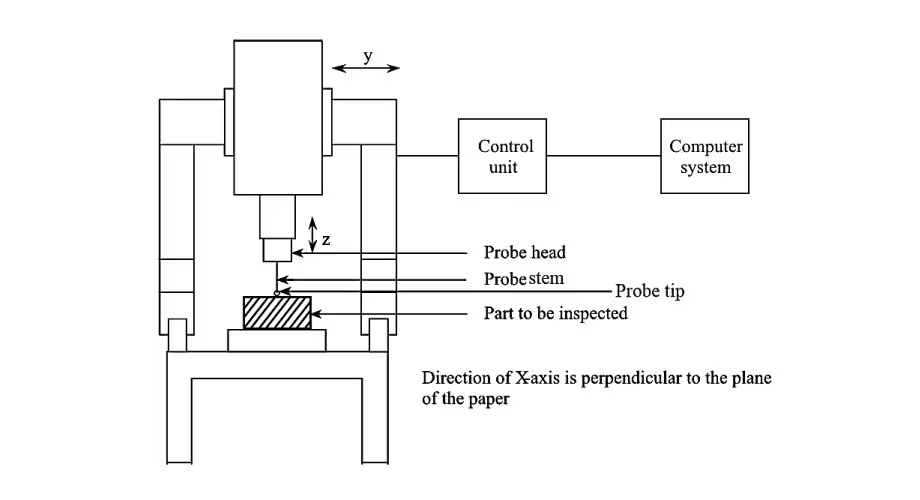
- Coordinate Measuring Machine (CMM) verification
- Surface roughness measurement
- Hardness and material certification validation
Dimensional reports must confirm geometric tolerances such as concentricity, runout, and flatness. Measurement data supports compliance and performance validation.
Traceability strengthens reliability. Each component must link to –
- Raw material heat number
- CNC program version
- Machine and operator log
- Inspection record
Statistical Process Control (SPC) helps monitor variation trends. Early detection of drift prevents batch-level non-conformities.
Rework costs due to poor quality can increase total manufacturing expenses by up to 30%. Robotics systems require consistency to maintain repeatable motion accuracy.
Moving Smoothly From Prototype to Production Without Losing Control
Prototype machining focuses on speed and validation. Production machining focuses on consistency and scalability. Transitioning between the two often creates operational challenges.
Scaling challenges in Machining for Robotics Industry include –
- Tool wear variability affecting tolerance
- Machine load variation across shifts
- Engineering Change Order (ECO) management
- Capacity constraints during ramp-up
Structured process documentation supports scalable operations. Standardized machining parameters ensure repeatability. Tool life monitoring systems predict replacement intervals and prevent dimensional drift.
ECO control becomes critical during scale-up. Design updates must be reflected immediately in machining programs and inspection plans. Strong document control systems prevent outdated revisions from entering production.
Statistical monitoring during ramp-up ensures dimensional stability across batches. Capacity planning must balance flexibility with throughput capability.
Scalable machining systems allow robotics companies to transition from pilot production to commercial deployment smoothly.
How Frigate Strengthens Low Volume High Mix Machining for Robotics Programs
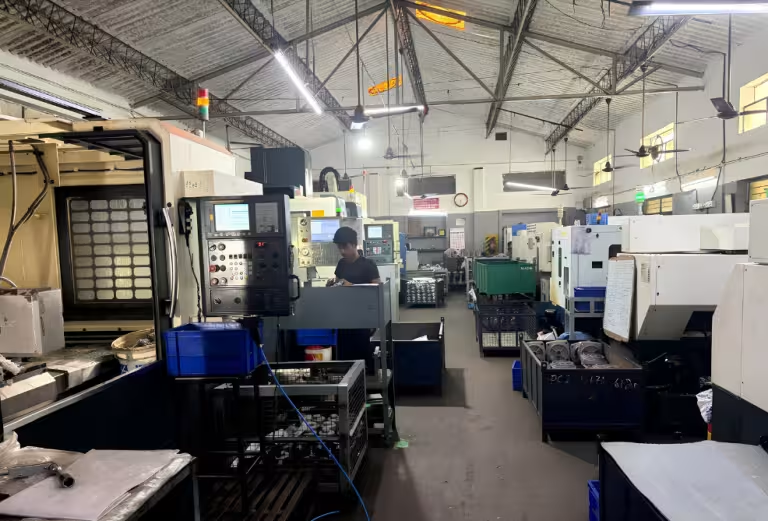
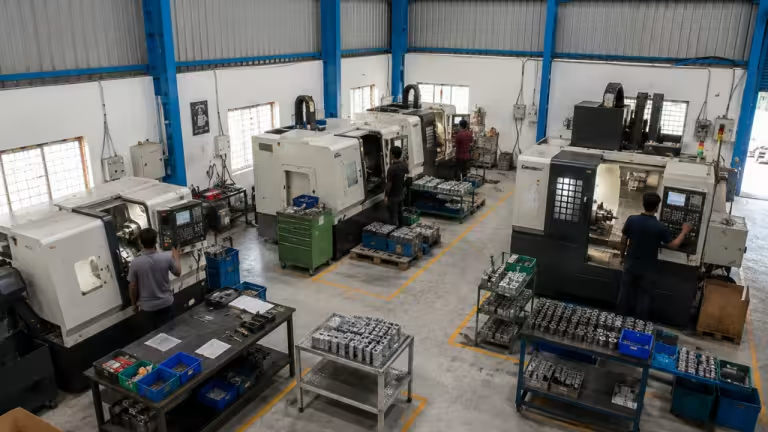
Robotics programs require precision, flexibility, and strict process control. Low volume high mix environments increase operational complexity due to frequent design changes and small batch sizes. Frigate supports these demands through an integrated and technically disciplined approach to Machining for Robotics Industry.
Multi-Axis CNC Capability for Complex Robotics Geometries
Robotics components often include internal cavities, curved surfaces, and multi-angle features. Accurate machining of these geometries requires advanced equipment.
Frigate offers –
- 3-axis machining for structural and flat components
- 4-axis machining for cylindrical and indexed features
- Simultaneous 5-axis machining for complex housings and joint assemblies
Fewer setups reduce cumulative error and improve positional accuracy. This is critical for robotic joints and transmission housings where alignment directly impacts motion performance.
Micron-Level Tolerance Control for Motion Accuracy
Robotic systems rely on tight fits and precise alignment. Bearing seats, shaft interfaces, and gear pockets must meet strict tolerances.
Frigate maintains tolerance control up to ±5 microns using –
- High-rigidity CNC platforms
- Thermal stability monitoring
- Precision fixturing
- Optimized cutting parameters
Stable tolerance control improves repeatability, reduces vibration, and increases component lifespan—key factors in Machining for Robotics Industry.
Material Expertise Across Robotics-Grade Alloys
Robotics designs prioritize lightweight strength and durability. Different materials demand different machining strategies.
Frigate machines –
- Aluminum alloys for lightweight structures
- Stainless steel for durability and corrosion resistance
- Titanium for high strength-to-weight performance
- Engineering plastics for insulation and wear components
Process parameter control ensures dimensional stability across materials, even in thin-wall or heat-sensitive components.
Advanced CMM-Based Inspection and Process Control
Precision must be verified, not assumed. Robotics components require geometric validation beyond basic measurements.
Frigate uses CMM systems to inspect –
- Bore diameters and positional tolerances
- Concentricity and runout
- Flatness and perpendicularity
- Complex 3D contours
Digital inspection records and SPC monitoring reduce variation and ensure consistent quality across batches.
Digital Production Planning for Agile Execution
Low volume high mix production requires efficient scheduling. Frequent changeovers can disrupt flow if not managed properly.
Frigate integrates digital planning tools to –
- Optimize machine utilization
- Manage priority changes
- Track orders in real time
- Reduce idle time
Agile batch handling supports quantities from prototypes to mid-volume production without sacrificing precision.
Structured DFM Collaboration for Early Risk Mitigation
Design for Manufacturability reduces machining risks before production begins.
Frigate’s DFM approach focuses on –
- Geometry simplification
- Tolerance optimization
- Material suitability evaluation
- Fixturing feasibility
Early technical feedback shortens iteration cycles and lowers cost during product development in Machining for Robotics Industry.
Full Traceability for Reliability and Compliance
Robotics systems often operate in critical environments. Documentation strengthens accountability and risk control.
Frigate maintains traceability for –
- Raw material batches
- CNC program versions
- Inspection data
- Machine and operator logs
Clear documentation supports compliance, simplifies root cause analysis, and improves supply chain confidence.
Conclusion
Low volume high mix capability is fundamental to modern Machining for Robotics Industry. Robotics innovation demands agility, precision, and process control. Mechanical accuracy directly influences robotic performance, durability, and repeatability. Robotics growth will continue to accelerate. Precision machining must evolve alongside it.
Frigate delivers technically robust and scalable solutions tailored to the demands of Machining for Robotics Industry. Connect with Frigate to enhance precision capability, reduce supply chain risk, and support reliable scaling of advanced robotics programs.