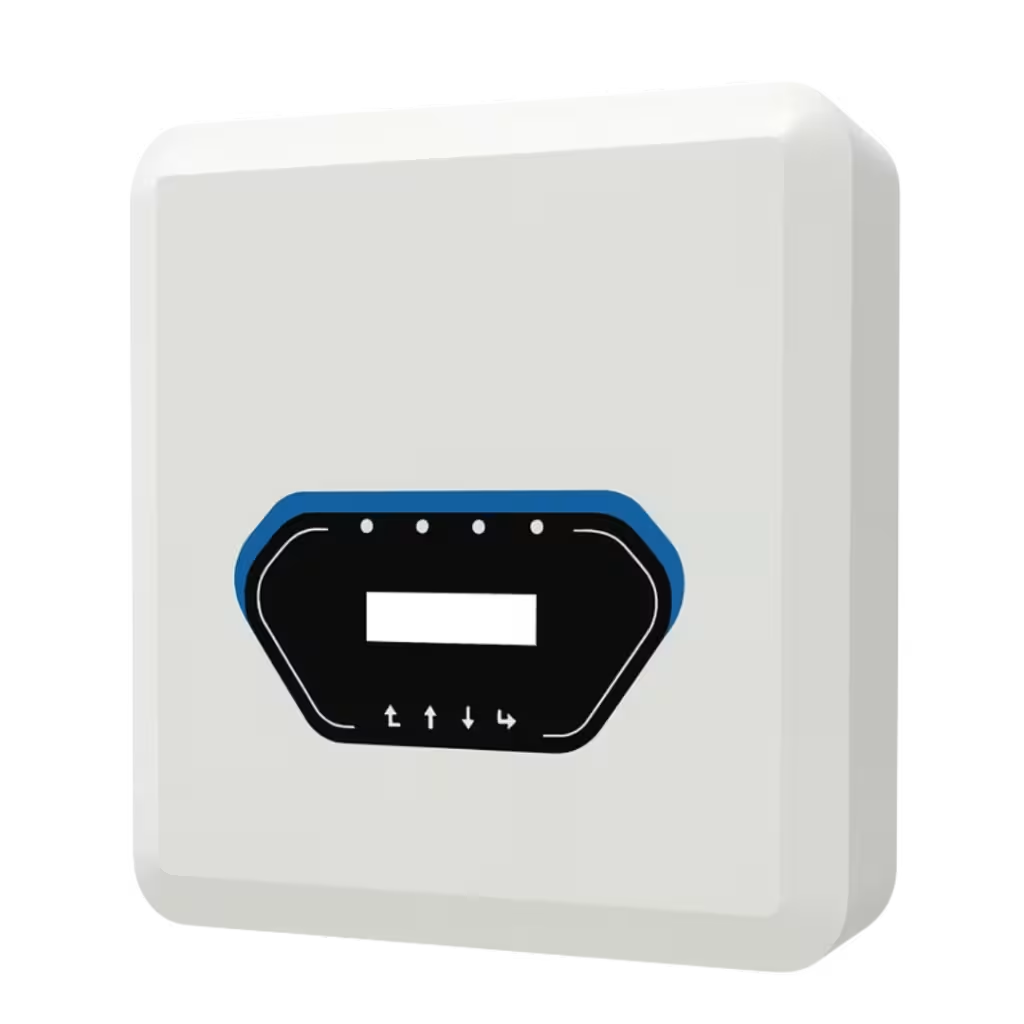
Solar Inverter Enclosures

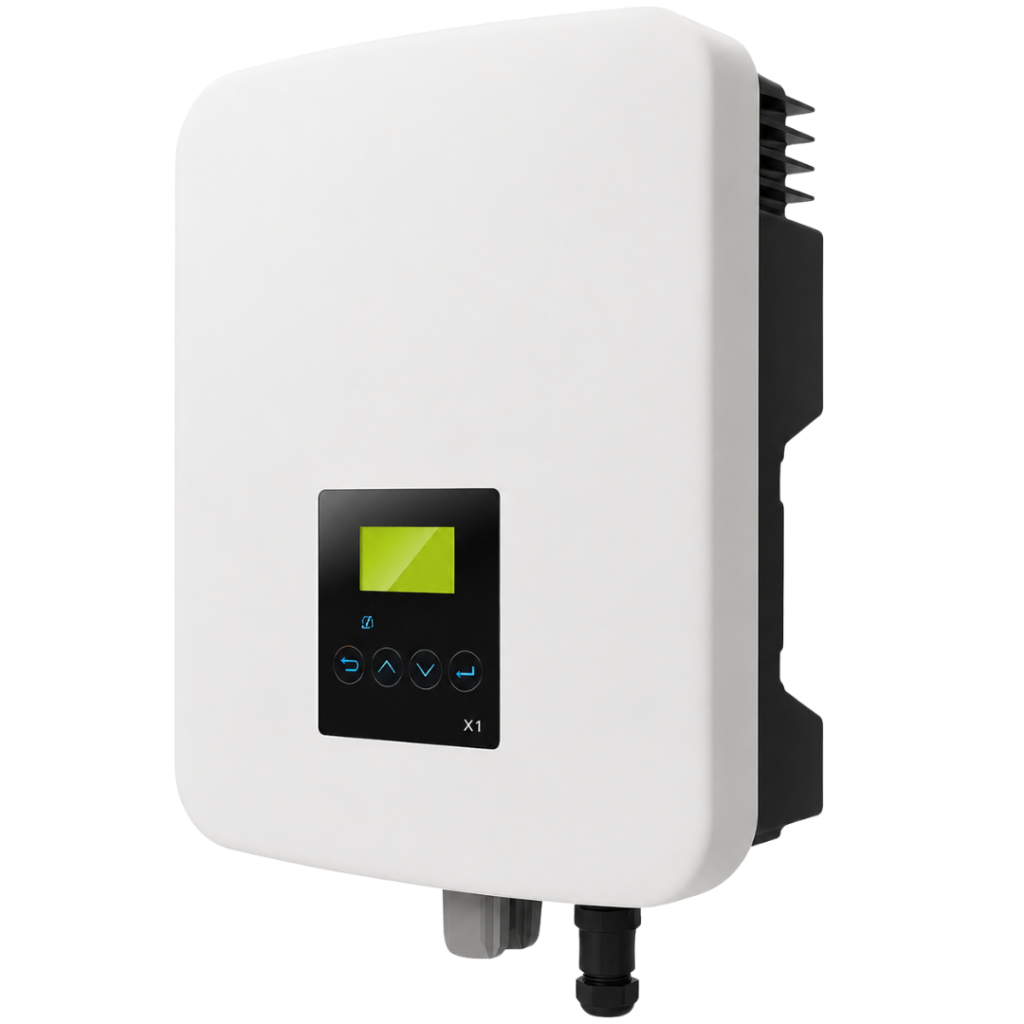
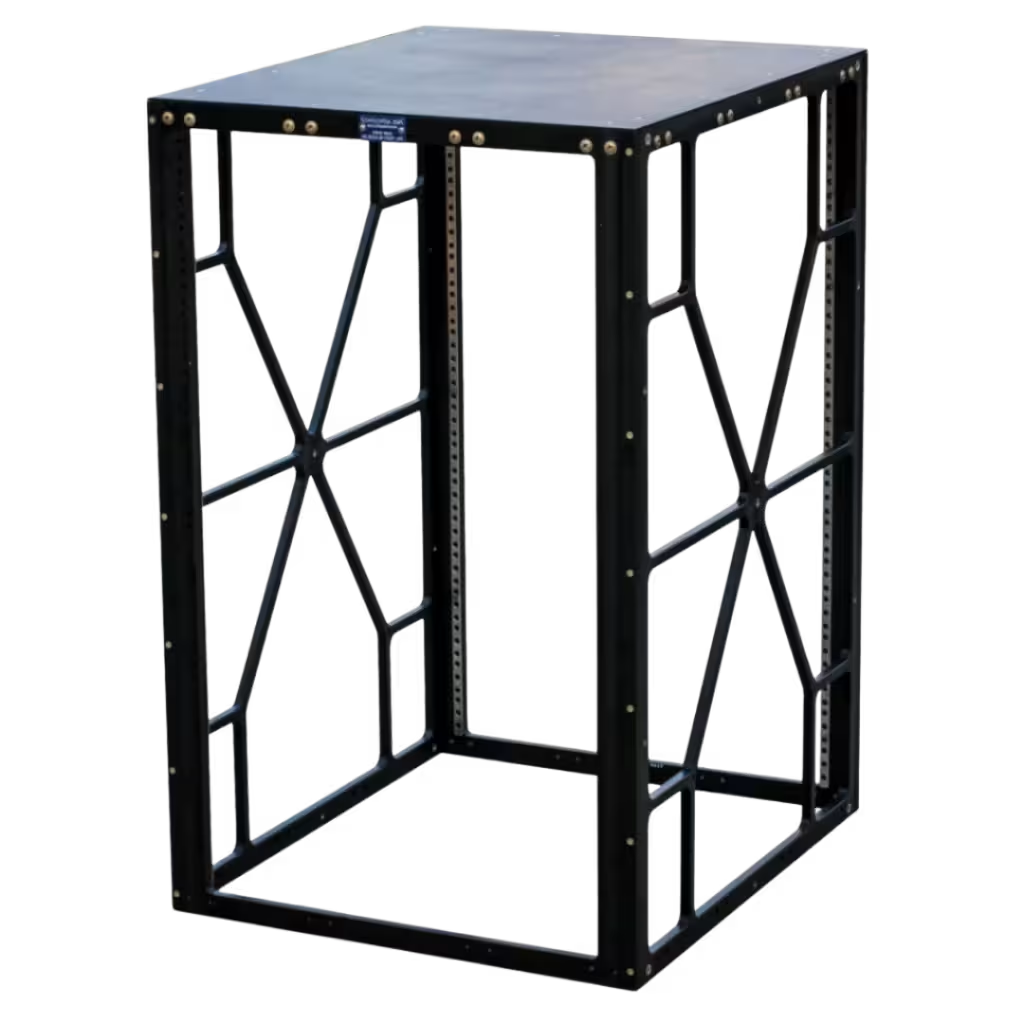
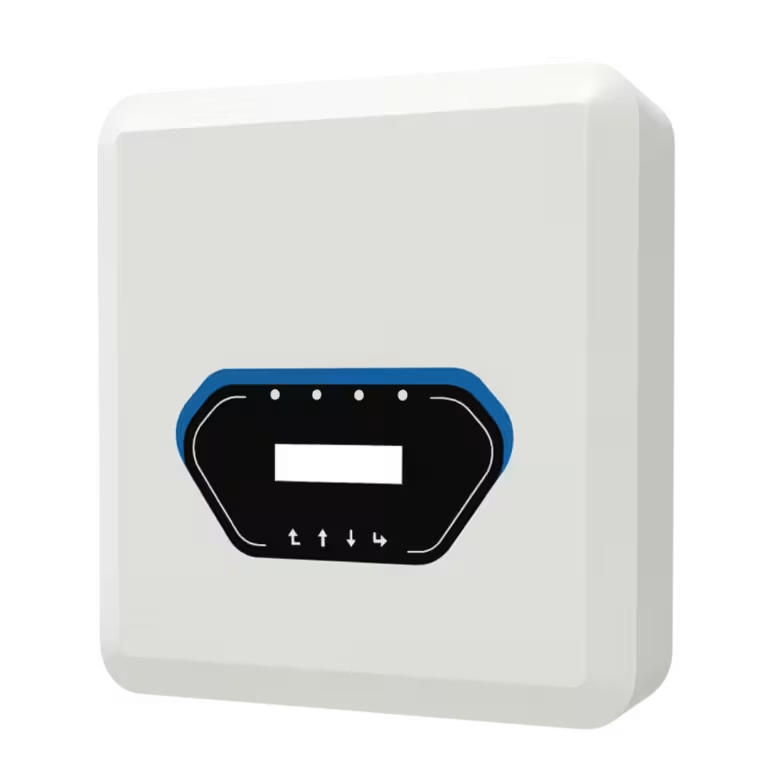
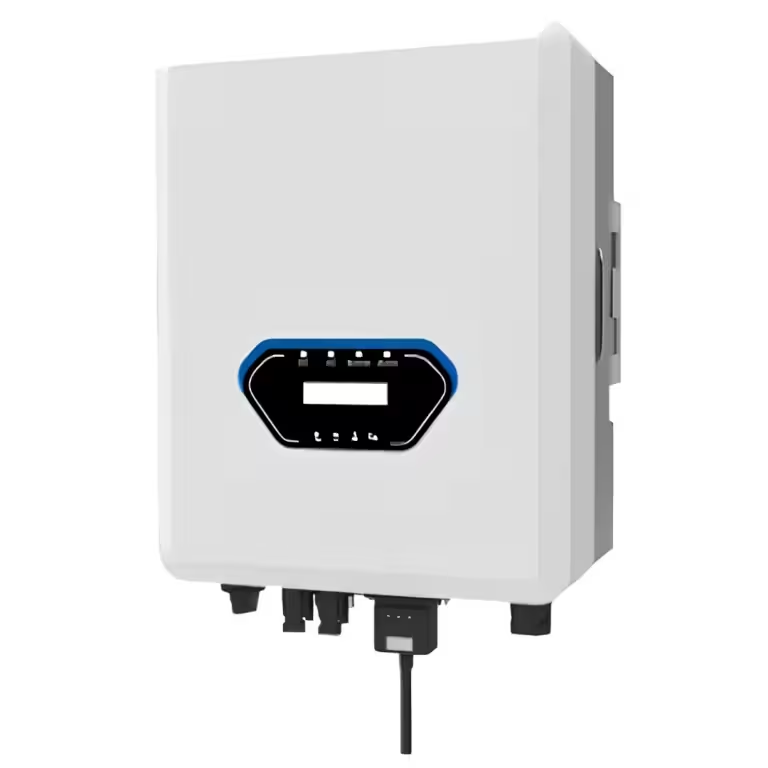
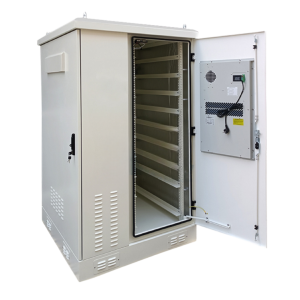
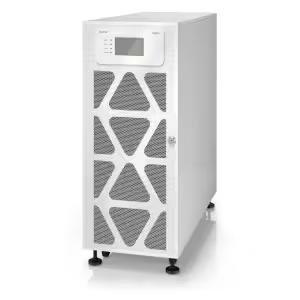
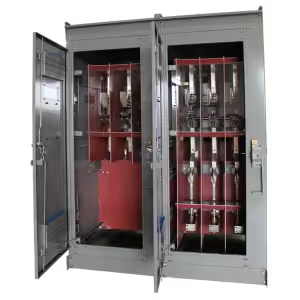
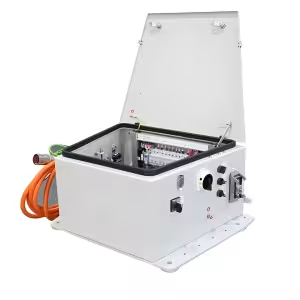
When photovoltaic arrays convert DC power to grid-compatible AC electricity, inverter electronics require protective housings that manage heat dissipation and environmental exposure. Solar Inverter Enclosures provide IP65-rated protection for string inverters, central inverters, and hybrid storage systems operating in outdoor installations. 
HY D R O L Y SIS RESIS T ANCE
Material & Grade
  • Cold Rolled Steel (CRS) – SPCC
  • Galvanized Steel – SGCC
  • Stainless Steel – SS304, SS316
  • Aluminum Sheet – 5052, 6061
  • Sheet thickness: Up to 3.0mm capable
  • Maximum capable: 1500mm (H) x 1200mm (W) x 600mm (D) 
  • Custom sizes per inverter specifications 
  • Powder Coating – RAL 9005, RAL 7035, Custom RAL colors
  • Thickness: 80-120 microns (outdoor grade)
  • Hot-Dip Galvanizing + Powder Coating
  • Marine-grade epoxy coating
  • UV-resistant finish
  • CNC Laser Cutting
  • CNC Punching & Bending
  • TIG/MIG Welding
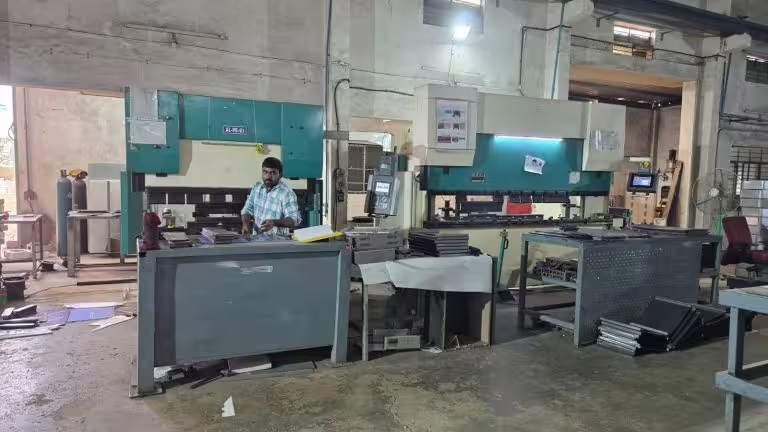
  • CNC Press Brake Forming
  • Seam welding for weatherproofing 
  • Gasket groove forming
  • Stainless Steel 304/316 Hardware
  • Weather-sealed hinges 
  • Multi-point locking systems
  • Grounding lugs & busbars  
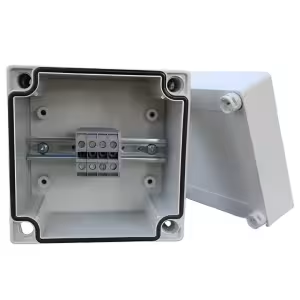
  • DIN rail mounting provisions
  • Vibration-resistant fasteners

Product Description

These structures accommodate inverter capacities from 10kW residential units to 3MW central inverters with internal volumes reaching 1500mm height. Frigate fabricates enclosures with forced ventilation systems, EMC cable gland provisions, and thermal management designs that maintain junction temperatures below manufacturer limits. 

Mounting Type
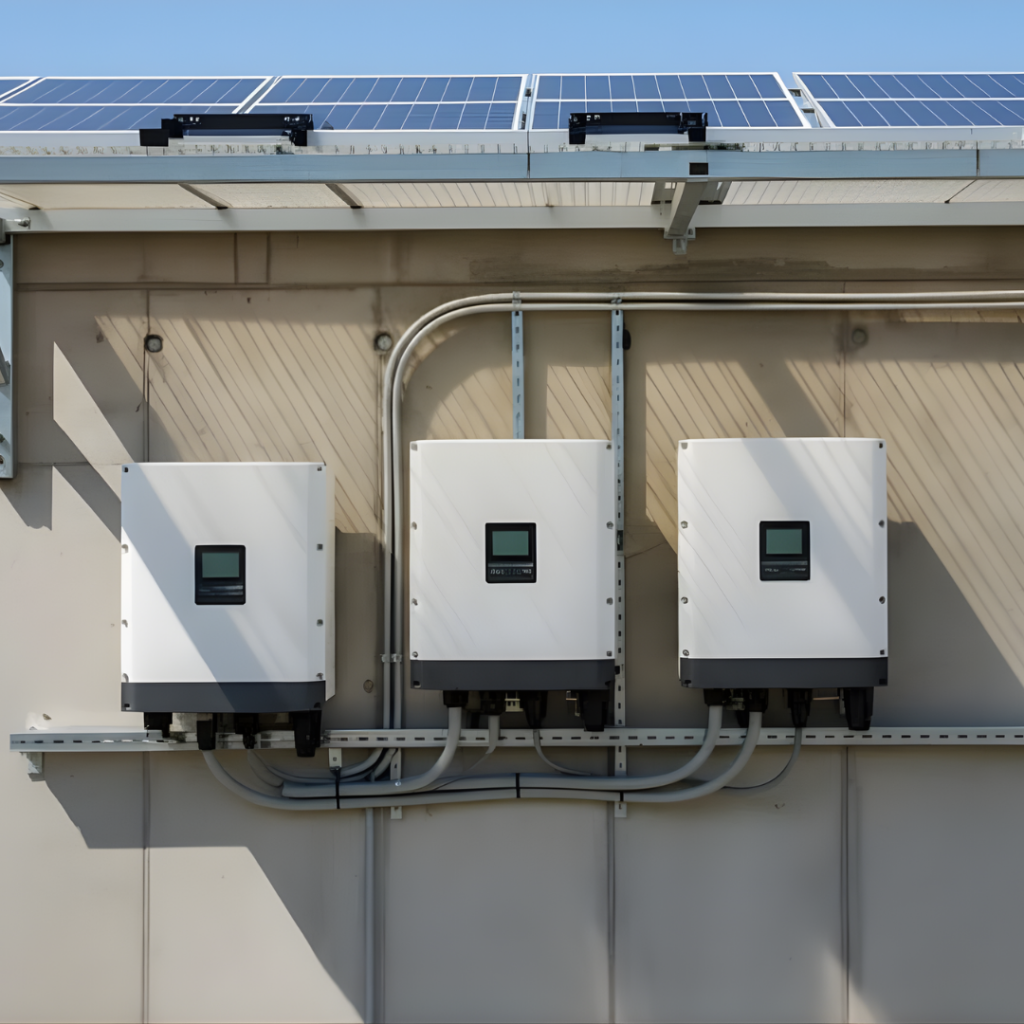
  • Wall Mount
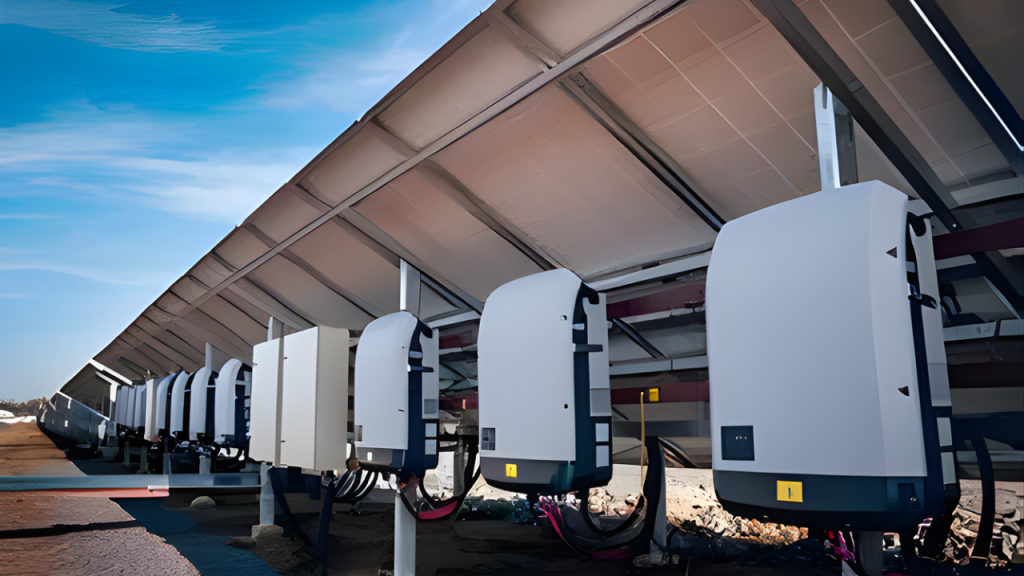
  • Ground/Pad Mount with base frame
  • Pole Mount with brackets
  • Concrete pad anchoring
  • Rooftop mounting options
  • Leveling feet adjustable 
  • Standard: IP54 (dust/splash protected)
  • Enhanced: IP55 (dust/water jet protected)
  • Premium: IP65 (dust-tight/water jet protected)
  • IP66 available for extreme environments
  • Cable glands: M20, M25, M32, M40, M50, M63
  • Bottom/Top/Side entry configurations
  • DC and AC cable separation provisions
  • Strain relief and cable management
  • Conduit knockout sizes: 25mm to 75mm
  • EMC cable glands available
  • Single or Double door configurations
  • 180° door opening capability
  • Removable inner panels for maintenance
  • Transparent viewing windows
  • Tool-required or padlockable access
  • Quick-release mechanisms
  • Natural convection with ventilation louvers
  • Forced air cooling with fan mounts
  • Heat exchanger compatibility
  • Air conditioning provisions (large enclosures)
  • Operating Temperature: -40°C to +60°C
  • Heat dissipation: Up to 5kW capable
  • IEC 61439 (Low-voltage Switchgear)
  • IEC 60529 (IP Rating)
  • UL 50/50E (Enclosures)
  • NEC 690 Compliant (PV Systems)
  • CE Marked
  • RoHS Compliant
  • ISO 9001:2015 Manufacturing

Technical Advantages

Galvanized steel construction undergoes hot-dip zinc coating before outdoor-grade powder finishing achieves 120-micron barrier thickness. Seam-welded joints with continuous silicone gaskets prevent dust infiltration per IEC 60529 standards. Moreover, UV-stabilized coatings withstand 3000-hour accelerated weathering without finish degradation or chalking. 

Internal mounting rails accept DIN-mounted auxiliary components including DC surge protection devices and AC contactors. Frigate machines precision cable entry locations that maintain IP ratings while accommodating high-current MC4 connectors and armored AC cables. Additionally, grounding provisions ensure fault current paths meet NEC 690 bonding requirements for personnel safety. 

Let's Get Started

Need reliable Enclosures for your next project? Get in touch with us today, and we’ll help you find exactly what you need!

Industry Applications

Utility-Scale Solar Power Plants

Houses central inverters processing multi-megawatt DC inputs from tracker arrays into medium-voltage AC grid connections.

Commercial Building Rooftops

Protects string inverters serving office complexes and manufacturing facilities where rooftop space limitations demand compact enclosure footprints. 

Solar-Plus-Storage Microgrids

Integrates hybrid inverter-chargers managing bidirectional power flow between PV arrays, battery banks, and islanded distribution networks. 

Agricultural Solar Pumping Systems

Shields motor drive inverters in remote irrigation installations where dust, moisture, and livestock contact threaten electronic longevity.

Carport Solar Canopies

Mounts inverters within parking structure columns where architectural aesthetics and pedestrian safety require vandal-resistant enclosure designs. 

Desert Concentrated Solar Facilities

Accommodates inverters in high-temperature environments where ambient conditions routinely exceed 50°C during peak production hours. 

Aluminium Solar Inverter Enclosures

Adaptable Solutions for Inverter Integration

Array configurations, inverter topologies, and grid interconnection requirements vary dramatically between residential retrofits and utility-scale developments. Our Solar Inverter Enclosures arrive in wall-mount, ground-mount, or integrated skid formats with internal layouts accommodating specific inverter models. 

Frigate supplies complete installation packages including mounting brackets, EMC cable glands rated for conducted emissions suppression, and multi-point locking hardware. Stainless steel options suit coastal installations where salt spray accelerates corrosion, ensuring enclosure integrity matches inverter warranty periods without premature replacement. 

Having Doubts? Our FAQ

Check all our Frequently Asked Questions

How does ventilation design prevent inverter thermal shutdown in Solar Inverter Enclosures?

Passive ventilation relies on strategically positioned louvers creating natural convection currents that exhaust hot air. Frigate calculates vent sizing based on inverter heat dissipation rates and expected ambient temperatures. Typically, bottom intake vents draw cool air while top exhaust vents release heated air through chimney effect. Consequently, internal temperatures remain 10-15°C below critical shutdown thresholds during peak solar production hours. 

What cable separation strategies does Frigate employ to meet EMC standards?

Electromagnetic compatibility requires physical isolation between DC input cables and AC output conductors within enclosures. Frigate installs internal metal barriers or separate cable entry zones maintaining minimum 150mm separation distances. DC cables route through one side while AC connections enter opposite walls with dedicated grounding paths. Furthermore, EMC-rated cable glands suppress conducted emissions at entry points per IEC 61000 requirements. 

Can Solar Inverter Enclosures accommodate both string and central inverter architectures?

Different inverter types demand varied enclosure configurations based on power levels and cooling requirements: 

  • String inverters (10-100kW): Compact wall-mount enclosures with natural convection cooling and single door access 
  • Central inverters (500kW-3MW): Ground-mount enclosures with forced ventilation, double doors, and internal walkways for maintenance 
  • Hybrid inverters: Mid-size enclosures with battery connection provisions and bidirectional power flow cable management 

Frigate manufactures modular platforms adapting to specific inverter topologies without complete redesigns. 

How does Frigate address condensation management in sealed inverter enclosures?

Temperature fluctuations between day and night cycles create condensation inside sealed enclosures exposed to outdoor conditions. Frigate incorporates drainage channels at enclosure bottoms with weep holes positioned below component mounting zones. Additionally, breathable membrane vents equalize internal pressure during thermal cycling without admitting moisture or dust. Consequently, sensitive inverter electronics remain dry despite humidity levels reaching 95% in tropical installations. 

What door configuration options does Frigate provide for different maintenance access requirements?

Single-door designs suit small string inverters requiring infrequent service interventions with limited internal component density. Conversely, double-door configurations provide walk-in access for large central inverters needing regular filter changes and inspection procedures. Frigate engineers doors opening 180° with hold-open mechanisms preventing wind damage during outdoor maintenance activities. Moreover, removable inner panels allow component replacement without dismounting entire enclosures from installation positions. 

How does material selection impact Solar Inverter Enclosure thermal performance?

Aluminum construction provides thermal conductivity five times greater than steel, enhancing passive heat dissipation through enclosure walls. Frigate selects aluminum for high-power applications where natural convection alone cannot maintain acceptable temperatures. Steel enclosures suit moderate climates or installations with active cooling systems where structural rigidity outweighs thermal considerations. Ultimately, material choice balances thermal management needs against budget constraints and structural load requirements. 

Can Frigate integrate anti-islanding protection devices within Solar Inverter Enclosures?

Grid-tied systems require anti-islanding relays that disconnect inverters during utility outages preventing backfeed hazards. Frigate provisions DIN rail mounting space for external anti-islanding modules positioned between inverter AC terminals and grid connection points. Internal wiring harnesses pre-route control signals from relays to inverter communication ports simplifying field installation. Therefore, complete protection systems integrate within single enclosures rather than requiring separate disconnect boxes. 

What grounding requirements does Frigate address in Solar Inverter Enclosure designs?

Proper grounding protects personnel from electric shock and diverts lightning-induced surges away from sensitive electronics: 

  • Equipment grounding: Copper busbars bond inverter chassis, enclosure body, and mounting structures to earth electrodes 
  • System grounding: Separate terminals accommodate PV array negative or center-tap grounding conductors per NEC requirements 
  • Lightning protection: Surge arrestor mounting provisions with short ground paths minimize inductance during transient events 

All grounding connections use compression lugs rated for maximum fault current capacity. 

How does Frigate validate IP rating claims for Solar Inverter Enclosures?

Testing protocols simulate real-world exposure conditions to verify ingress protection performance before production release. Frigate subjects enclosures to water jet testing at 12.5 liters per minute from all angles per IEC 60529 standards. Subsequently, dust chamber testing with talcum powder confirms no particle infiltration after eight-hour exposure cycles. Finally, thermal cycling between temperature extremes validates gasket integrity remains intact after seasonal expansion and contraction. 

What viewing window options does Frigate offer for inverter status monitoring?

Transparent polycarbonate windows allow visual confirmation of inverter LED indicators without opening doors during routine inspections. Frigate positions windows at operator eye level with UV-stabilized materials preventing yellowing from prolonged sun exposure. Window dimensions balance visibility requirements against thermal performance impacts since transparent sections reduce insulation effectiveness. Additionally, tinted options reduce solar heat gain in desert installations where direct sunlight heats enclosure interiors. 

Get Clarity with Our Manufacturing Insights

We'd love to Manufacture for you!

Submit the form below and our representative will be in touch shortly.

LOCATIONS

Registered Office

10-A, First Floor, V.V Complex, Prakash Nagar, Thiruverumbur, Trichy-620013, Tamil Nadu, India.

Operations Office

9/1, Poonthottam Nagar, Ramanandha Nagar, Saravanampatti, Coimbatore-641035, Tamil Nadu, India. ㅤ

Other Locations

GENERAL ENQUIRIES

Get Quote
Support All File Formats Including - STEP | STP | SLDPRT | STL | DXF | IPT | X_T | X_B | 3DXML | CATPART | PRT | SAT | 3MF | JT files

LOCATIONS

Registered Office

10-A, First Floor, V.V Complex, Prakash Nagar, Thiruverumbur, Trichy-620013, Tamil Nadu, India.

Operations Office

9/1, Poonthottam Nagar, Ramanandha Nagar, Saravanampatti, Coimbatore-641035, Tamil Nadu, India. ㅤ

Other Locations

GENERAL ENQUIRIES

Get Your Quote Now

New Get Quote form

Solar Inverter Enclosures

Need reliable wires and cables for your next project? Get in touch with us today, and we’ll help you find exactly what you need!

Get Latest Price

Get Price Form

Solar Inverter Enclosures

Need reliable Machining for your next project? Get in touch with us today, and we’ll help you find exactly what you need!

Get Latest Price

Get Price Form