Macro Cell Site Cabinets

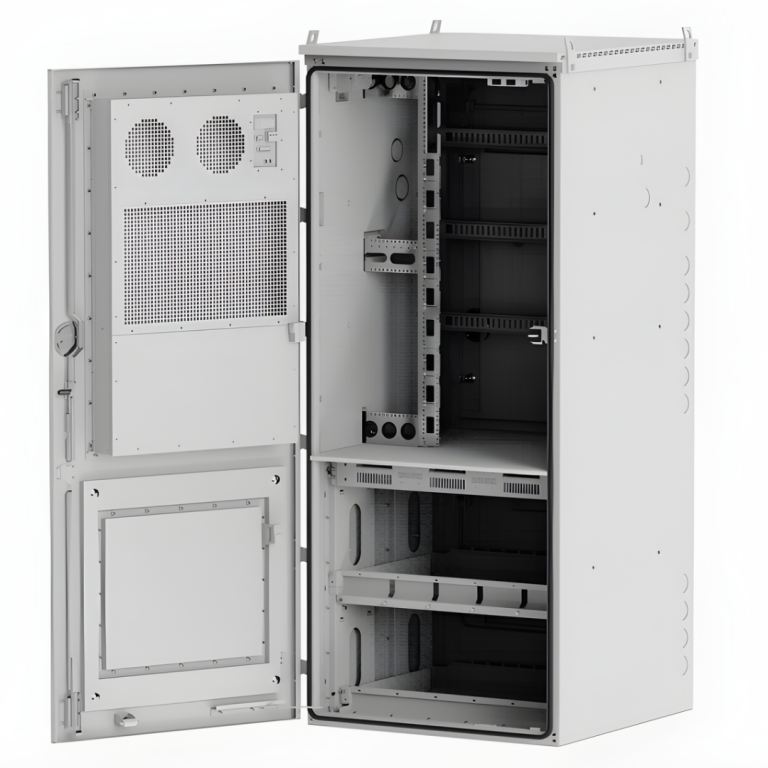
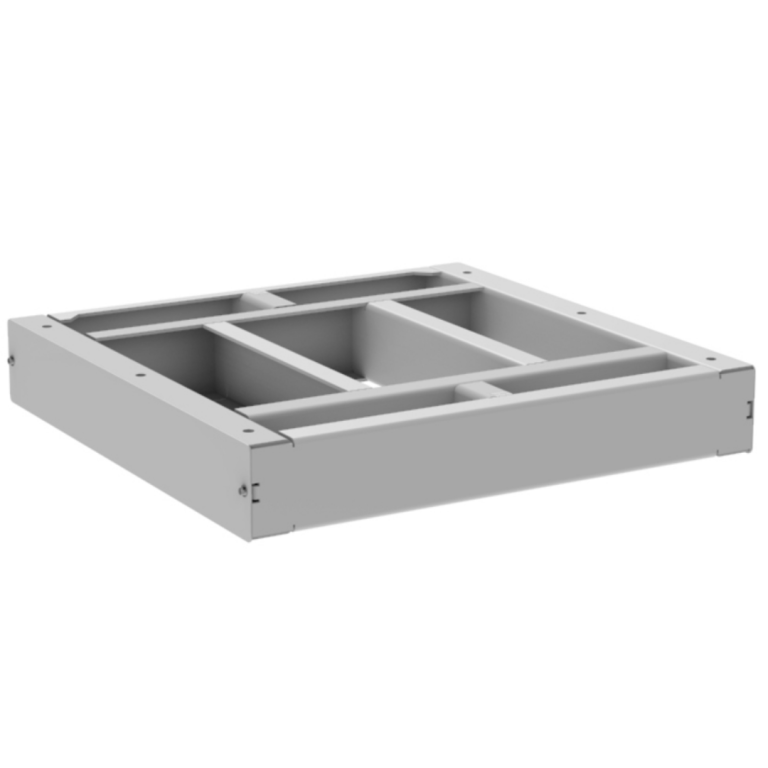
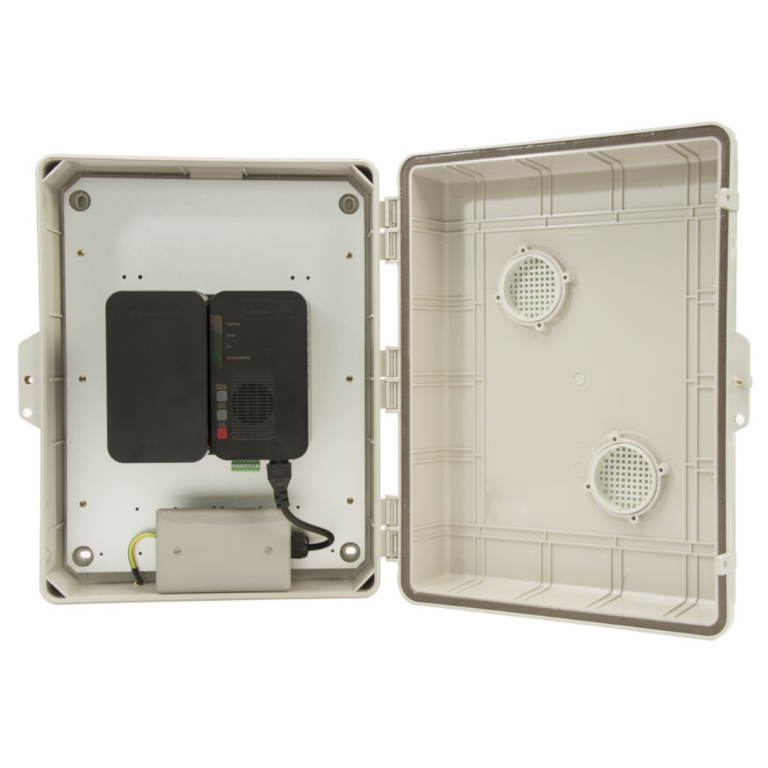
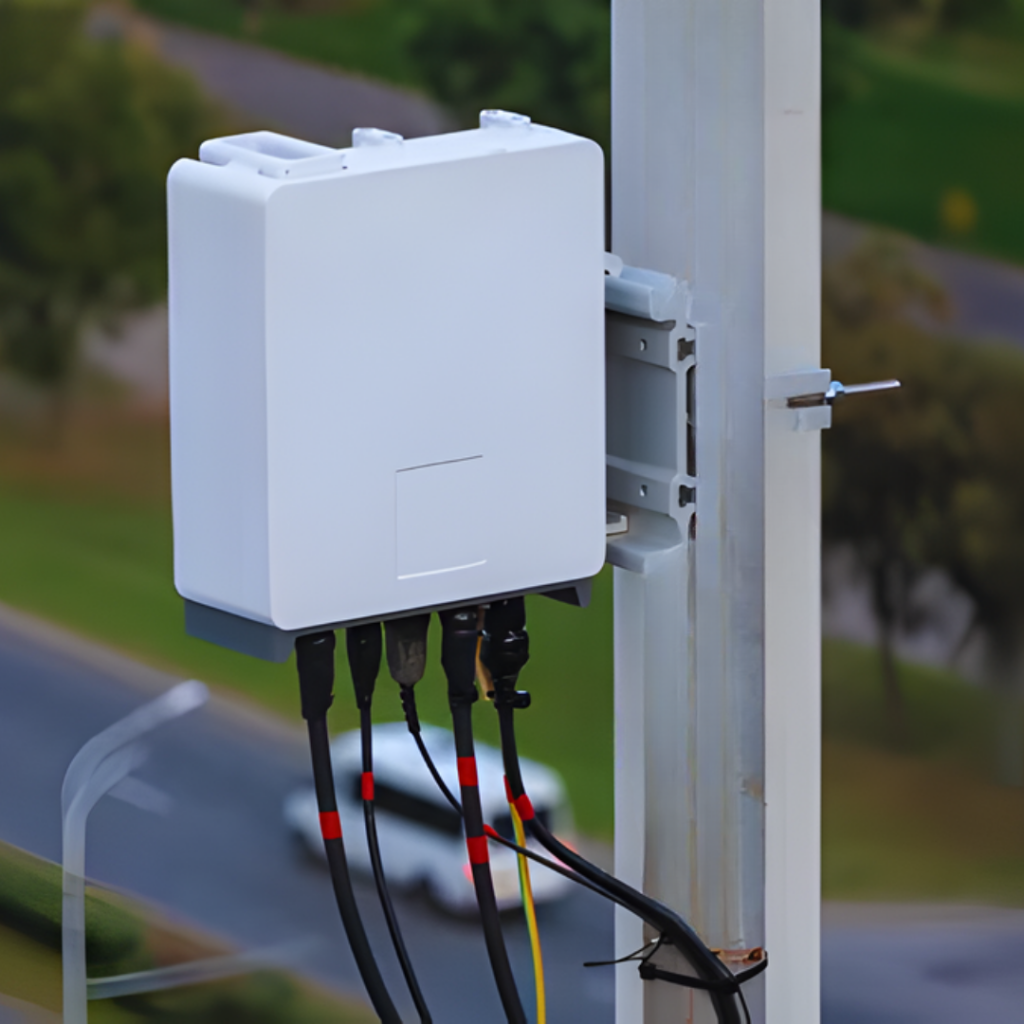
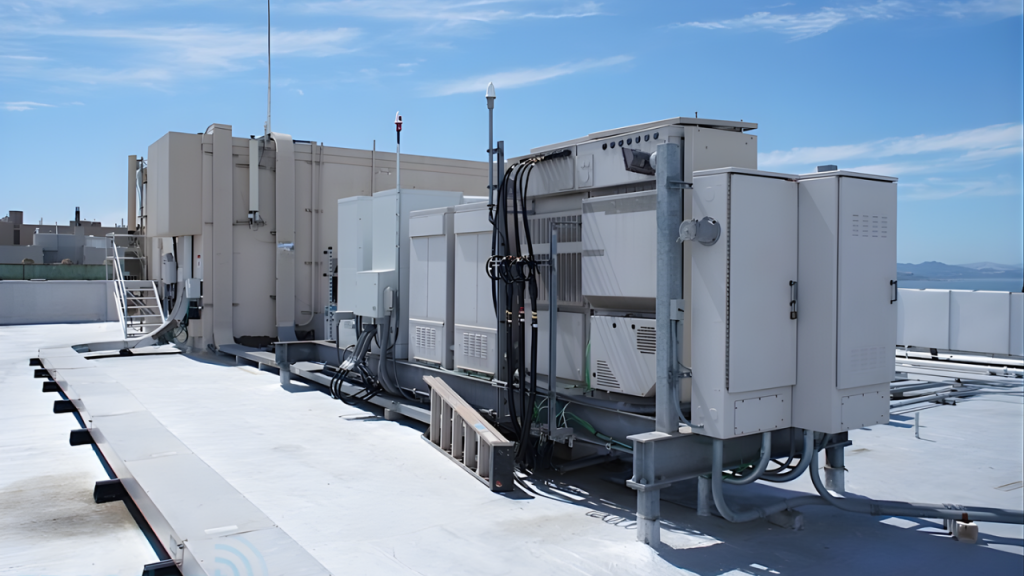
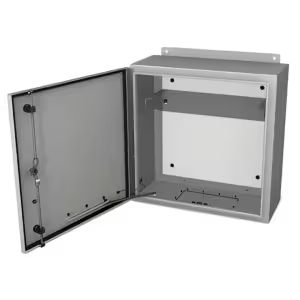
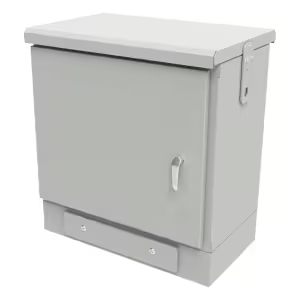
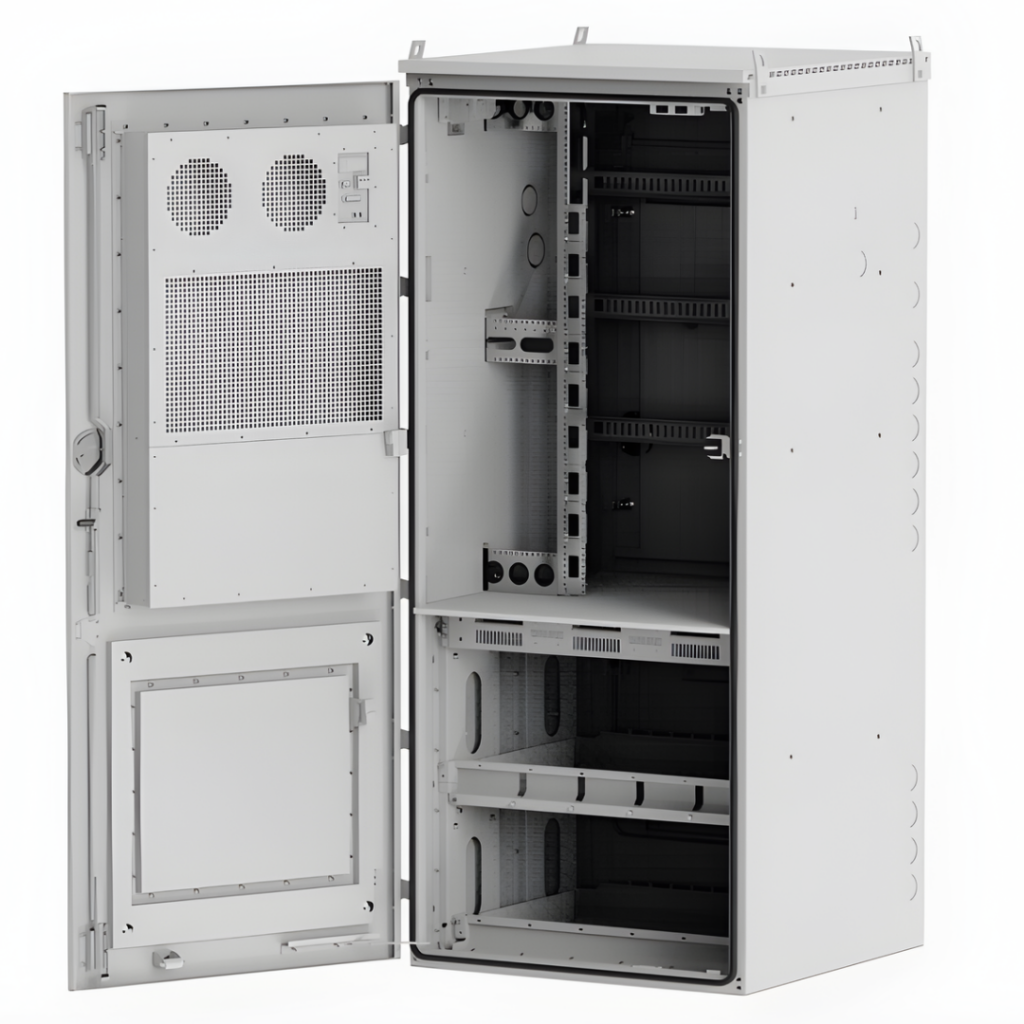
Tower-based cellular networks depend on ground-level equipment shelters housing the electronics that connect antennas to core network infrastructure. Macro Cell Site Cabinets deliver environmentally controlled enclosures protecting baseband processors, power systems, and backhaul equipment at tower foundations. 
HY D R O L Y SIS RESIS T ANCE
Material & Grade
  • Cold Rolled Steel (CRS) – SPCC
  • Galvanized Steel – SGCC
  • Stainless Steel – SS304, SS316
  • Aluminum Sheet – 5052, 6061
  • Sheet thickness – Up to 3.0mm capable
  • Maximum capable – 2400mm (H) x 1800mm (W) x 900mm (D)
  • Custom sizes available per site requirements
  • Powder Coating – RAL 9005, RAL 7035, Custom RAL colors
  • Thickness – 80-120 microns (outdoor grade)
  • Hot-Dip Galvanizing + Powder Coating
  • Marine-grade epoxy coating
  • UV-resistant finish
  • CNC Laser Cutting
  • CNC Punching & Bending
  • TIG/MIG Welding
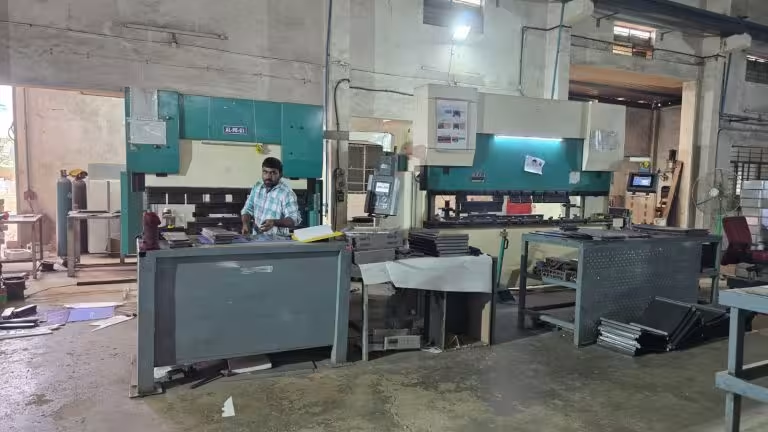
  • CNC Press Brake Forming
  • Seam welding for weatherproofing
  • Reinforced structural framing
  • Stainless Steel 304/316 Hardware
  • Weather-sealed hinges (heavy-duty) 
  • Multi-point locking systems
  • Grounding lugs & busbars
  • Equipment mounting rails (19″ rack compatible)
  • Cable management systems

Product Description

These outdoor structures accommodate high-density equipment installations with footprints reaching 2400mm in height and climate control systems managing thermal loads to 15kW. Weatherproof construction maintains controlled internal environments despite external temperature extremes from -40°C to +55°C. By integrating active cooling with secure equipment mounting, these cabinets support uninterrupted cellular service across urban, suburban, and rural coverage zones. 

Mounting Type
  • Ground/Pad Mount with reinforced base
  • Concrete foundation anchoring
  • Floor standing with seismic provisions
  • Leveling feet adjustable
  • Tower base integration
  • Walk-in configurations
  • Standard – IP55 (dust/water jet protected) 
  • Enhanced – IP65 (dust-tight/water jet protected)
  • Premium – IP66 (heavy water jet protected)
  • Outdoor tower site rated
  • Cable glands – M32, M40, M50, M63, M75, M90
  • Bottom/Side entry configurations
  • Fiber and coax cable provisions
  • High-capacity cable management
  • Conduit knockout sizes – 40mm to 150mm
  • Fire-rated penetrations 
  • Single or Double door configurations
  • Walk-in access (large cabinets)
  • 180° door opening with hold-open
  • Removable panels for equipment installation
  • Emergency egress provisions
  • High-security locking systems
  • Natural convection with louvers
  • Forced air cooling with multiple fans
  • Heat exchanger systems
  • Air conditioning (up to 15kW capacity)
  • Operating Temperature – -40°C to +55°C
  • Humidity control provisions
  • GR-487-CORE (Network Equipment)
  • Telcordia GR-63-CORE (NEBS Level 3)
  • IEC 60529 (IP Rating)
  • ETSI EN 300 019 (Environmental)
  • TIA-942 (Telecommunications Infrastructure)
  • CE Marked
  • RoHS Compliant
  • ISO 9001 –2015 Manufacturing 

Technical Advantages

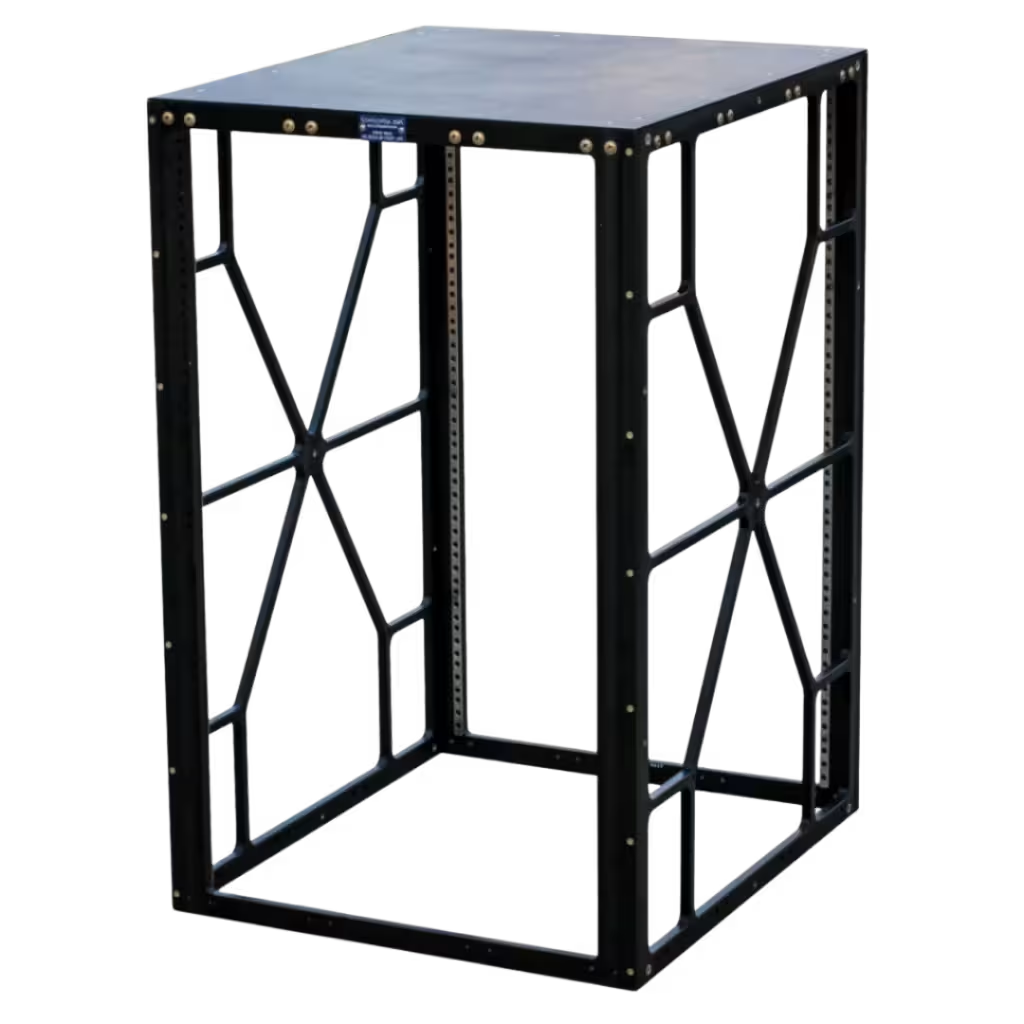
Tower sites often accommodate multiple carriers sharing infrastructure costs while maintaining operational independence between networks. To support this model, cabinet interiors partition into separate equipment zones with individual doors, power feeds, and cable entries for each operator. Internal framework using welded steel construction provides mounting surfaces for standard telecommunications racks without requiring floor-to-ceiling anchor points. 

Equipment arrangements follow telecommunications industry conventions with rectifiers and battery systems occupying lower cabinet zones due to weight concentrations. Baseband processing equipment and transmission gear mount at mid-height positions optimizing cable routing to tower-mounted antennas. Furthermore, overhead cable trays organize fiber optic and coaxial runs between equipment bays while maintaining minimum bend radius specifications throughout the pathway. 

Let's Get Started

Need reliable Enclosures for your next project? Get in touch with us today, and we’ll help you find exactly what you need!

Industry Applications

Metropolitan Coverage Networks

Consolidates cellular infrastructure for urban tower sites serving high subscriber densities with multiple frequency bands and technology generations. 

Interstate Highway Systems

Provides continuous mobile coverage along major transportation corridors where towers space at regular intervals supporting vehicle communications. 

Regional Tower Hubs

Manages aggregation equipment collecting traffic from surrounding small cells and distributed antenna systems before routing to core networks. 

Border Security Communications

Houses surveillance network equipment and encrypted communications systems supporting customs and border protection operations. 

Disaster Recovery Sites

Contains mobile switching equipment and emergency broadcast systems activated during natural disasters when primary facilities fail. 

Agricultural Connectivity Programs

Extends cellular coverage to farming regions supporting precision agriculture applications and rural broadband initiatives.

Macro Cell Site Cabinets

Site-Optimized Tower Infrastructure

Installation contexts range from greenfield tower construction to equipment upgrades at established sites with space constraints. Macro Cell Site Cabinets arrive in modular sections allowing assembly on-site when access roads cannot accommodate fully assembled units, or in pre-assembled configurations for rapid deployment. 

Frigate engineers mounting systems addressing local conditions including seismic activity, flood zones, and high wind exposure. Foundation designs account for combined equipment weight, structural loading, and environmental forces ensuring stable long-term installation without settlement or structural deflection over typical 20-year facility lifespans. 

Macro Cell Site Cabinets

Having Doubts? Our FAQ

Check all our Frequently Asked Questions

1. How does Frigate address multi-carrier equipment separation in shared Macro Cell Site Cabinets?

Shared cabinets stay maintainable when separation is built into the layout, using – 

  • Partitioned rack zones or compartmentalized bays per carrier 
  • Dedicated cable pathways, labeling, and service loops 
  • Access control options aligned to site governance 

With Frigate, the separation scheme can be customized to carrier count and boundary rules. 

What power distribution redundancy options are available in Macro Cell Site Cabinets for mission-critical installations?

Redundancy can be designed into the cabinet power layer through – 

  • Dual feed inputs where the site supports it 
  • Redundant distribution paths to critical loads 
  • Reserved space for switching and backup power interfaces 

Frigate configures the power architecture around uptime targets and utility constraints. 

Can Macro Cell Site Cabinets accommodate future capacity expansion without requiring complete cabinet replacement?

Capacity growth is easier when expansion allowances are planned up front, including – 

  • Reserve rack space and additional mounting positions 
  • Cable management sized for future terminations 
  • Cooling and power headroom for phased upgrades 

Frigate can align expansion planning to rollout forecasts and equipment roadmaps. 

How does Frigate manage condensation control in Macro Cell Site Cabinets operating in high-humidity coastal environments?

In coastal humidity, condensation control depends on sealed interfaces, controlled airflow, and corrosion-resistant materials. Frigate designs cabinet layouts to avoid moisture traps near electronics and can tailor environmental control integration to the site’s dew point and equipment load profile. 

What fire suppression systems can be integrated into Macro Cell Site Cabinets containing high-value equipment?

Fire suppression integration starts with making room for the chosen system and keeping it serviceable. Frigate provisions mounting interfaces and cabinet zoning so suppression hardware fits cleanly without blocking airflow, cabling, or maintenance access, with details tailored to the protection strategy selected for the site. 

How does Frigate size air conditioning capacity for Macro Cell Site Cabinets with variable equipment loads?

AC sizing is based on heat load, duty cycle, ambient extremes, and airflow resistance created by racks and cable routing. Frigate selects capacity and controls to handle peak conditions without short cycling, then adjusts cabinet layout to support efficient supply and return airflow paths. 

Can Macro Cell Site Cabinets support both legacy 2G/3G equipment and modern 5G infrastructure simultaneously?

Mixed-generation builds work when the cabinet is planned for differences in size, power, and cabling, such as – 

  • Multi-vendor rack mounting and depth requirements 
  • Segregated routing for legacy and 5G cabling 
  • Power distribution sized for varied load types 

Frigate can tailor the internal arrangement to the migration plan and equipment mix. 

What emergency egress provisions does Frigate incorporate into walk-in Macro Cell Site Cabinet designs?

Walk-in safety is supported through layout and hardware choices, including – 

  • Door configurations that maintain a clear exit path 
  • Aisle and equipment placement that avoids pinch points 
  • Latching and hardware aligned to site safety rules 

Frigate adapts egress provisions to cabinet size and operator standards. 

How does material selection affect Macro Cell Site Cabinet performance in extreme temperature environments?

Extreme temperatures stress both structure and finish systems, so selection focuses on – 

  • Materials that retain rigidity across thermal swings 
  • Coatings suited to UV exposure and thermal cycling 
  • Corrosion-resistant options for harsh outdoor sites 

Frigate matches material stacks to the climate zone and service life expectations.

What remote monitoring capabilities can be integrated into Macro Cell Site Cabinet environmental management systems?

Remote monitoring is typically enabled through provisions for – 

  • Temperature and humidity sensor placement 
  • Door-open, power status, and alarm interfaces 
  • Telemetry module routing for NOC connectivity 

Frigate can scope monitoring to fit the maintenance model and reporting needs. 

Get Clarity with Our Manufacturing Insights

We'd love to Manufacture for you!

Submit the form below and our representative will be in touch shortly.

LOCATIONS

Registered Office

10-A, First Floor, V.V Complex, Prakash Nagar, Thiruverumbur, Trichy-620013, Tamil Nadu, India.

Operations Office

9/1, Poonthottam Nagar, Ramanandha Nagar, Saravanampatti, Coimbatore-641035, Tamil Nadu, India. ㅤ

Other Locations

GENERAL ENQUIRIES

Get Quote
Support All File Formats Including - STEP | STP | SLDPRT | STL | DXF | IPT | X_T | X_B | 3DXML | CATPART | PRT | SAT | 3MF | JT files

LOCATIONS

Registered Office

10-A, First Floor, V.V Complex, Prakash Nagar, Thiruverumbur, Trichy-620013, Tamil Nadu, India.

Other Locations

GENERAL ENQUIRIES

Get Your Quote Now

New Get Quote form

Macro Cell Site Cabinets

Need reliable wires and cables for your next project? Get in touch with us today, and we’ll help you find exactly what you need!

Get Latest Price

Get Price Form

Macro Cell Site Cabinets

Need reliable Machining for your next project? Get in touch with us today, and we’ll help you find exactly what you need!

Get Latest Price

Get Price Form