












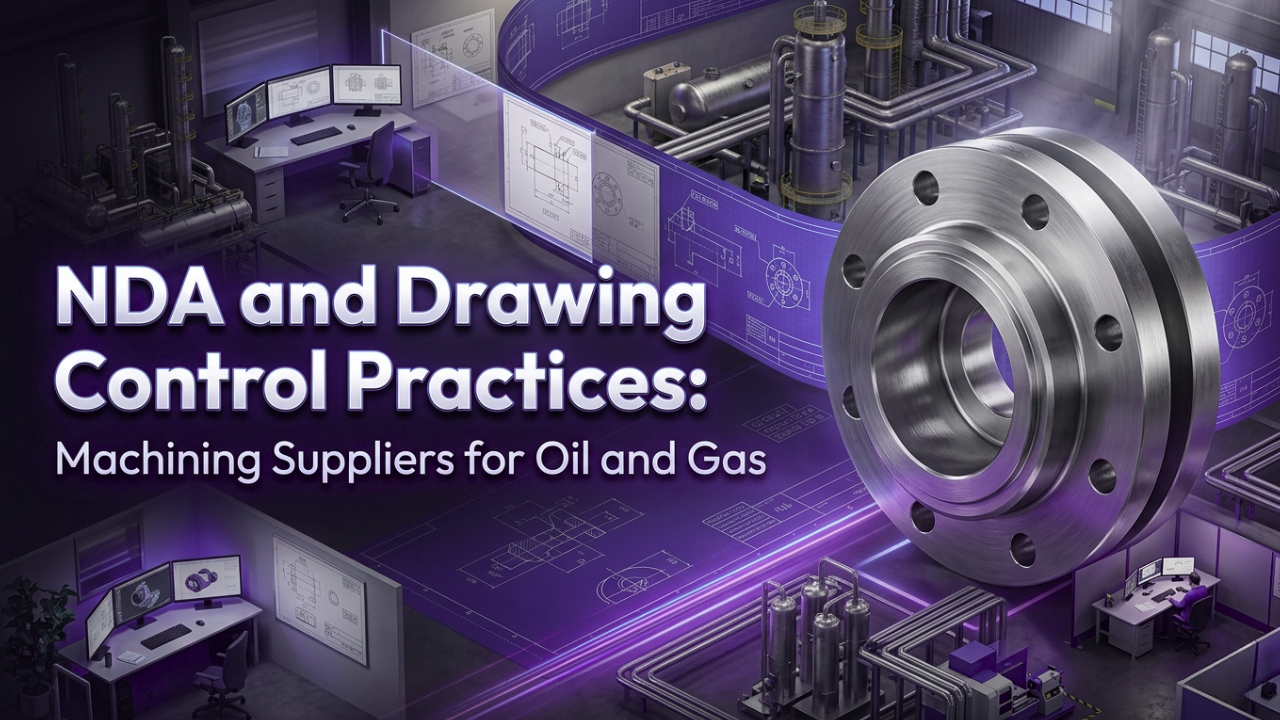
Companies frequently collaborate with external machining suppliers to manufacture precision components in oil and gas industry. These suppliers require access to sensitive engineering drawings, CAD models, and technical specifications to produce parts accurately. However, sharing such information without proper safeguards can expose companies to serious intellectual property risks.
A structured NDA for machining suppliers combined with strong drawing control practices helps organizations collaborate safely with machining vendors. It ensures that proprietary engineering knowledge remains protected while suppliers receive the information required to manufacture components efficiently.
This article explores the importance of NDAs, best practices for managing technical drawings, and practical strategies for protecting engineering intellectual property when working with machining suppliers for oil and gas sector.
Why Intellectual Property Protection Matters in Oil and Gas Manufacturing
Oil and gas equipment manufacturers invest heavily in research, engineering, and product development. Complex components such as valves, subsea equipment, drilling components, and pressure control systems often involve unique design methodologies.
When this information is shared with suppliers, there is always a risk that proprietary designs may be exposed.
Common risks include –
- Suppliers reusing engineering designs for other customers
- Unauthorized sharing of technical drawings
- Reverse engineering of proprietary components
- Leakage of manufacturing processes
These risks highlight the importance of establishing clear legal and operational safeguards. Companies must actively protect intellectual property in contract manufacturing through carefully structured agreements and supplier management processes.
Implementing a strong NDA for machining suppliers for oil and gas ensures that vendors legally commit to protecting confidential information before receiving any design documentation.
Additionally, an engineering drawing confidentiality agreement helps define how drawings are stored, accessed, and used by suppliers. This creates clear expectations and accountability when working with multiple manufacturing partners.
Organizations should also focus on IP protection for CNC machining suppliers for oil and gas, especially when sharing machining programs or advanced manufacturing strategies that provide a competitive advantage.
Key Elements of an NDA for machining suppliers for oil and gas
A well-drafted NDA for machining suppliers is essential for protecting engineering data shared with external vendors. The agreement should clearly define how technical information will be handled during the manufacturing relationship.
In oil and gas supply chains, companies typically implement a detailed manufacturing NDA for oil and gas suppliers that covers multiple aspects of supplier collaboration.
Definition of Confidential Information
The agreement should clearly identify what information is considered confidential. This may include –
- CAD models and design files
- Engineering drawings
- Product specifications
- Manufacturing procedures
- Tolerances and inspection requirements
These provisions ensure that the supplier NDA for technical drawings protects the full scope of engineering documentation shared with suppliers.
Permitted Use of Technical Information
The NDA must specify that suppliers may only use the shared information for the agreed manufacturing project.
Suppliers should not –
- Use designs for other customers
- Reproduce components independently
- Share drawings with third parties without approval
Such restrictions strengthen intellectual property protection in machining contracts and reduce the risk of design misuse.
Supplier Access and Internal Control
Companies should also define how information is accessed inside the supplier organization. Only authorized personnel should be allowed to view confidential files.
This approach helps secure drawing sharing with manufacturing vendors while maintaining operational transparency.
Confidentiality Duration
A comprehensive engineering drawing confidentiality agreement should include confidentiality obligations that remain valid even after the supplier relationship ends.
This ensures long-term protection for proprietary designs.
Drawing Control Practices for Supplier Collaboration
Signing an NDA for machining suppliers for oil and gas is only the first step. Companies must also implement robust document control systems to ensure that sensitive drawings are shared securely.
Controlled Drawing Distribution
Engineering teams should only release drawings required for a specific manufacturing task. Suppliers should not receive complete assemblies unless absolutely necessary.
This controlled distribution works alongside a supplier NDA for technical drawings, reducing the exposure of sensitive product architecture.
Revision Management
Proper revision control prevents outdated or incorrect drawings from being used during manufacturing.
Effective revision management includes –
- Version tracking for engineering drawings
- Notification of design changes to suppliers
- Removal of obsolete documents
These practices help maintain intellectual property protection in machining contracts while ensuring manufacturing accuracy.
Watermarking and File Identification
Many companies watermark engineering drawings with supplier identification details. If a drawing is leaked, it becomes easier to trace the source.
This additional layer of accountability strengthens IP protection for CNC machining suppliers and discourages misuse of technical documentation.
Secure Document Sharing Systems
Organizations should avoid sending engineering drawings through unsecured channels such as email attachments or messaging apps.
Instead, they should use secure systems designed to secure drawing sharing with manufacturing vendors.
Such platforms allow companies to –
- Control document access permissions
- Track supplier downloads
- Maintain document history
- Restrict file duplication
Combining these tools with a strong NDA for machining suppliers for oil and gas significantly reduces intellectual property risks.
CNC Machining Confidentiality Risks
CNC machining suppliers often receive more than just drawings. They may also receive CAM programs, machining strategies, and fixture designs.
These elements represent valuable manufacturing expertise that companies must protect.
Risks include –
- Suppliers reusing machining strategies for other clients
- Unauthorized sharing of CNC programs
- Reverse engineering of proprietary tooling setups
To address these risks, companies must implement IP protection for CNC machining suppliers for oil and gas alongside strict supplier agreements.
Many manufacturers also include a CNC machining confidentiality agreement template when sharing CAM programs or toolpath data. This document clearly states that machining programs are confidential and must not be reused.
Using a CNC machining confidentiality agreement template together with a manufacturing NDA for oil and gas suppliers ensures layered protection for engineering and manufacturing knowledge.
Managing Multi-Supplier Manufacturing Projects
Oil and gas equipment manufacturing often involves multiple suppliers producing different parts of a larger system.
Without proper controls, suppliers could potentially reconstruct the entire product design by combining shared drawings.
To prevent this risk, companies should –
- Divide manufacturing across multiple vendors
- Share only the required component drawings
- Limit supplier access to complete assemblies
This approach helps strengthen intellectual property protection in machining contracts.
At the same time, companies must ensure that each supplier signs an NDA for machining suppliers before receiving any design information.
Combining this approach with systems designed to secure drawing sharing with manufacturing vendors creates a strong intellectual property protection framework.
How Frigate Protects Engineering Drawings While Executing Manufacturing
Oil and gas engineering drawings contain proprietary dimensions, material specifications, and process-critical information. Exposure of such data can lead to intellectual property risks and commercial loss. Managing multiple machining vendors increases that risk if confidentiality is not structurally controlled.
Frigate is a manufacturing execution partner that embeds confidentiality controls directly into machining operations. Protection is built into workflows, supplier engagement, and document handling practices, ensuring secure execution without data leakage.
Below is how Frigate implements structured engineering drawing protection.
Structured NDA Enforcement
Every machining engagement begins with validated Non-Disclosure Agreements. NDAs are enforced not only between Frigate and the customer, but also with approved machining partners.
Execution includes –
- Mandatory NDA verification before drawing access
- Documented compliance records for each supplier
- Restricted onboarding until confidentiality terms are completed
- Prohibition of secondary sharing without approval
This ensures NDA compliance becomes part of supplier qualification, not a separate legal formality.
Controlled Drawing Distribution
Engineering drawings are shared strictly on a need-to-know basis. Full drawing packages are not distributed without defined approval.
Execution controls include –
- Access limited to authorized supplier contacts
- Sharing only relevant files for specific machining scope
- Secure transmission channels
- Prevention of uncontrolled duplication
Controlled exposure minimizes risk while maintaining operational efficiency.
Centralized Document and Version Control
All technical documentation is maintained within a centralized internal control system.
Execution measures include –
- Revision-numbered drawings
- Approved version release protocols
- Archived outdated revisions
- Clear audit trail for document handling
This prevents outdated files from circulating and ensures suppliers work with current approved designs.
Structured Supplier Communication
Uncontrolled communication channels often create intellectual property exposure. Frigate centralizes supplier communication to maintain control.
Execution includes –
- Documented technical clarifications
- Controlled approval workflows
- Restricted direct file exchange outside defined channels
Information flow remains traceable and managed at all times.
Secure RFQ and Vendor Engagement
RFQ stages present significant risk due to multi-vendor distribution. Frigate implements a controlled RFQ process.
Execution framework includes –
- NDA validation before technical file release
- Limited access to shortlisted vendors
- Structured documentation of commercial and technical discussions
- Controlled drawing release stages
This approach balances competitive sourcing with IP protection.
Internal Confidentiality Controls
Operational discipline is reinforced through internal policies and controlled access mechanisms.
Execution measures include –
- Employee confidentiality agreements
- Role-based access permissions
- Restricted drawing visibility based on project assignment
- Periodic compliance monitoring
Confidentiality becomes embedded within daily operational procedures.
Building a Strong Confidentiality Culture
Protecting engineering intellectual property is not only about legal agreements and software tools. It also requires building a culture of confidentiality across engineering, procurement, and supplier management teams.
Organizations should train employees on –
- When engineering drawings can be shared
- What information should remain confidential
- How to communicate with suppliers securely
Suppliers should also be educated about their responsibilities under the NDA for machining suppliers for oil and gas and related agreements.
Providing suppliers with a CNC machining confidentiality agreement template can help reinforce expectations when sharing manufacturing programs or advanced machining strategies.
By combining clear policies, secure technology, and strong supplier agreements, companies can significantly reduce intellectual property risks.
Conclusion
Oil and gas manufacturers depend heavily on machining suppliers to produce critical components. However, sharing engineering drawings and manufacturing data without proper safeguards can expose companies to intellectual property risks.
Implementing a strong NDA for machining suppliers establishes the legal foundation for protecting confidential information. When combined with structured drawing control processes, secure document sharing systems, and supplier management platforms, companies can collaborate with vendors safely.
Practices such as using an engineering drawing confidentiality agreement, strengthening IP protection for CNC machining suppliers for oil and gas, and implementing a comprehensive manufacturing NDA for oil and gas suppliers ensure that proprietary designs remain protected.
At Frigate, we combine precision machining expertise with strict data-handling protocols, ensuring that your drawings, CAM programs, and process knowledge remain confidential throughout production. From RFQ to final inspection, your engineering IP is safeguarded without slowing down delivery or impacting quality.
If you’re evaluating machining partners for critical oil & gas components, Get an Instant Quote from Frigate today to see how we protect your designs while delivering precision parts at scale.