








Procurement leaders sourcing critical valve parts rarely struggle with machining knowledge. The real concern is knowing the exact machining cost structure before committing to production.
Supplier quotes for complex valve components often vary widely even when designs remain identical. Variations typically originate from machining strategy, cycle time assumptions, tooling requirements, and fixture complexity.
Buyers sourcing high-precision valve parts rely on Should cost modeling services for valve components to verify supplier pricing and establish a reliable machining baseline.
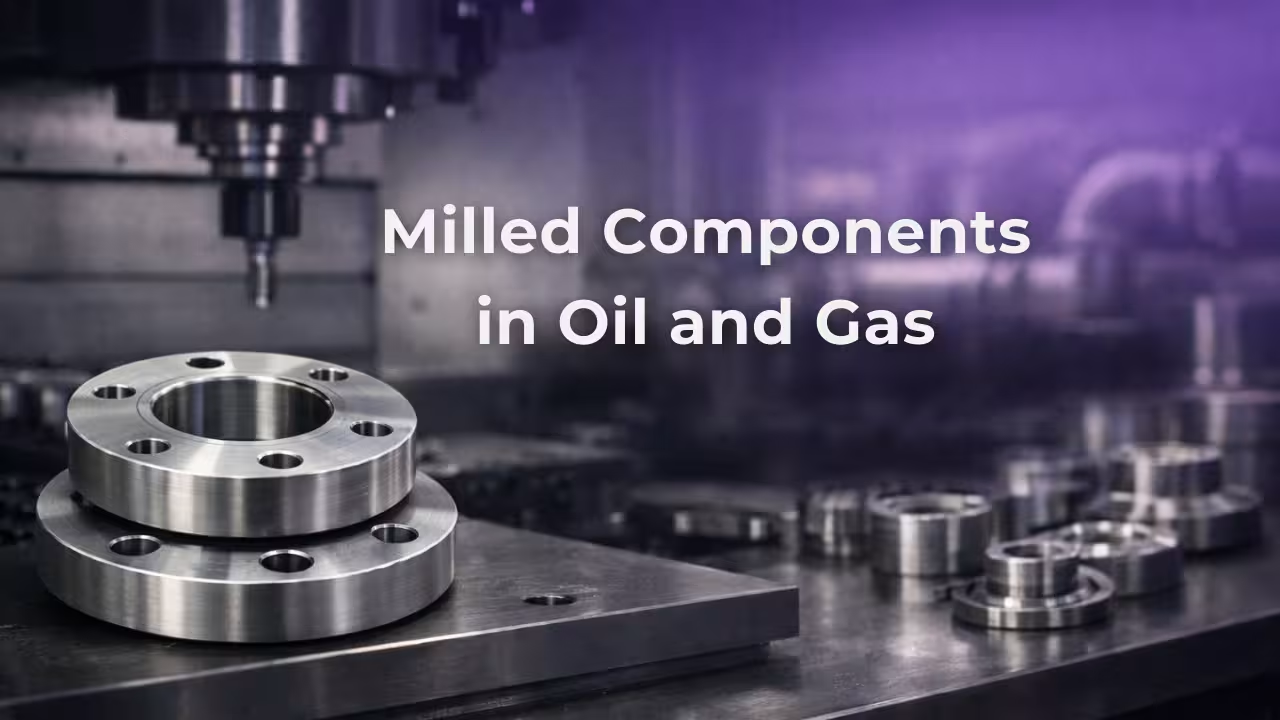
Teams responsible for sourcing Milled Components in Oil and Gas require more than theoretical analysis. A validated machining route, feature-level costing, and cycle-time backed estimation allow procurement teams to understand the real production cost before awarding contracts.
Frigate delivers Should cost modeling services for valve components with detailed machining cost breakdowns and then executes the production using the same validated machining strategy. Procurement teams therefore receive engineering-verified cost models combined with manufacturing execution capability.
Supplier Quote Validation for Milled Components in Oil and Gas
Procurement teams sourcing Milled Components in Oil and Gas usually receive quotations that vary between suppliers even for identical valve drawings. Hidden differences often exist in machining strategy.
Frigate performs cost modeling for oil and gas valve manufacturing to validate those quotations through production-level cost simulation.
Detailed machined valve component cost estimation typically evaluates –
- Raw material selection and machining hardness
- Multi-axis milling complexity
- Turning operations and bore machining
- Setup changes and fixture requirements
- Inspection and quality validation
Engineering teams working with Frigate gain immediate clarity on oil and gas valve component manufacturing cost before selecting suppliers.
Transparent Should cost modeling services for valve components allow procurement teams to confidently approve production budgets.
Feature-Based Should Cost Analysis for Turned and Milled Parts
Valve components contain multiple machining features that directly impact cost. Frigate performs should cost analysis for turned and milled parts by breaking the component into machinable elements.
Each feature receives its own machining cycle and cost evaluation.
Key feature groups analyzed include –
- Internal bore machining
- Deep cavity milling
- Threading and sealing surfaces
- Multi-axis contour milling
- Slotting and pocket machining
Such feature-level costing allows accurate machined valve component cost estimation rather than generic machining averages.
Procurement teams sourcing Milled Components in Oil and Gas gain clear visibility into how each machining feature contributes to the final cost.
Production-Ready Cost Modeling for Oil and Gas Valve Manufacturing
Many cost studies stop at theoretical estimates. Frigate performs cost modeling for oil and gas valve manufacturing using real machining logic tied to production execution.
Engineering teams simulate –
- Machine utilization
- Cycle time per operation
- Tool change intervals
- Fixture repositioning
- Secondary machining requirements
This process produces a reliable CNC turned component cost breakdown for each machining step.
Procurement leaders therefore receive a cost structure that mirrors actual machining performance.
Frigate’s Should cost modeling services for valve components combine engineering costing with manufacturing capability, allowing companies to transition directly from cost validation to production.
Machined Valve Component Cost Estimation with Operation-Level Transparency
Valve component machining involves several process stages that must be individually evaluated to determine accurate cost.
Frigate provides operation-level cost modeling that includes material, machining time, tooling consumption, and inspection cost.
Typical Cost Structure for Valve Components
| Cost Element | Cost Driver | Impact on Valve Manufacturing |
| Raw Material | Alloy grade, forging size | Drives base machining difficulty |
| CNC Turning | Bore machining, facing operations | High cycle time for thick valve bodies |
| CNC Milling | Deep pockets, contour milling | Major driver for Milled Components in Oil and Gas |
| Tooling Cost | Cutter wear, specialty tools | Significant in high alloy materials |
| Fixture Cost | Multi-setup machining | Impacts cycle efficiency |
| Inspection | CMM validation, pressure checks | Required for valve certification |
This structured model provides a detailed CNC turned component cost breakdown for procurement teams.
Frigate’s engineering approach supports accurate precision machining cost analysis for valves used in high-pressure applications.
CNC Turned Component Cost Breakdown for Complex Valve Parts
Valve bodies, stems, and trim assemblies often require extensive turning operations before milling begins.
Frigate evaluates these operations using should cost analysis for turned and milled parts.
Turning cost typically depends on –
- Bore depth and diameter
- Wall thickness of valve body
- Thread machining complexity
- Surface finish requirements
Engineering analysis generates a detailed CNC turned component cost breakdown, ensuring the machining time reflects actual production conditions.
Procurement teams sourcing Milled Components in Oil and Gas therefore receive an accurate baseline for supplier comparison.
Precision Machining Cost Analysis for Valves Used in High-Pressure Applications
Valve components used in upstream and high-pressure systems require strict dimensional tolerances.
Frigate performs precision machining cost analysis for valves by incorporating tolerance-driven machining passes and inspection cycles.
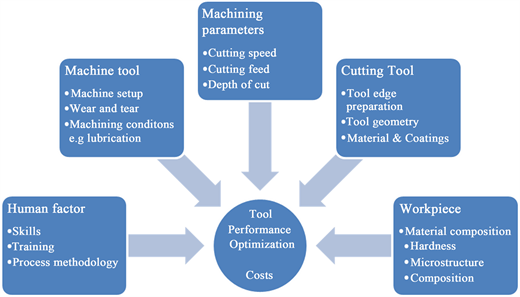
Machining cost often increases due to –
- Multiple finishing passes
- Surface roughness requirements
- Seat pocket geometry precision
- Stem interface accuracy
Accurate machined valve component cost estimation ensures procurement teams fully understand tolerance-driven machining costs.
Detailed Should cost modeling services for valve components allow engineering teams to validate whether supplier machining strategies align with expected tolerances.
Valve Body and Trim Machining Cost Estimation
Valve body and trim assemblies represent the most machining-intensive components within valve systems.
Frigate performs detailed valve body and trim machining cost estimation using feature-level machining analysis.
Typical machining features evaluated include –
- Deep internal bore machining
- Seat pocket machining
- Port milling operations
- Multi-axis contour surfaces
Such feature-based costing produces an accurate oil and gas valve component manufacturing cost.
Engineering teams sourcing Milled Components in Oil and Gas gain complete cost transparency before production approval.
Machined Parts Cost Engineering Services with Production Execution
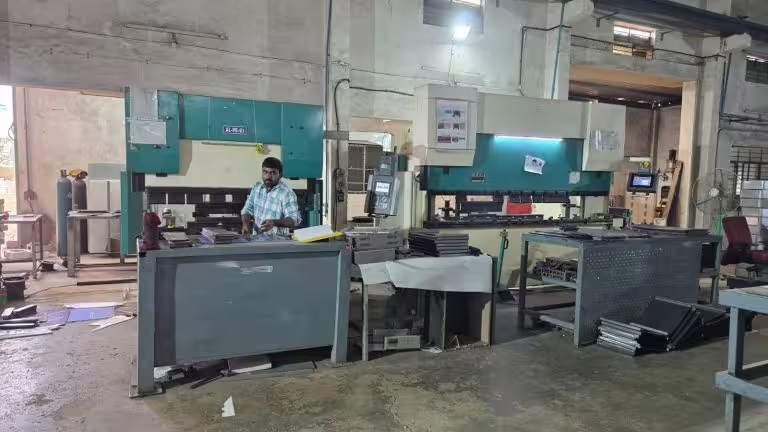
Traditional cost consulting firms provide reports but cannot execute manufacturing. Frigate delivers machined parts cost engineering services combined with production capability.
Engineering teams perform –
- Detailed cost modeling
- CNC program strategy validation
- Fixture design planning
- Production cycle simulation
Once Should cost modeling services for valve components are finalized, Frigate can immediately begin machining production.
This approach ensures the machined valve component cost estimation aligns with actual shop-floor performance.
Procurement teams benefit from a seamless transition between cost validation and production supply.
Cost Modeling Support for Global Valve Procurement Programs
Global sourcing teams often evaluate suppliers across multiple regions. Differences in machining capability frequently result in inconsistent pricing.
Frigate’s cost modeling for oil and gas valve manufacturing standardizes cost evaluation across suppliers.
Engineering analysis allows procurement teams to –
- Validate supplier machining assumptions
- Benchmark cycle times
- Compare machining strategies
- Identify inflated quotations
Accurate should cost analysis for turned and milled parts gives procurement leaders the technical data needed for supplier negotiations.
Reliable oil and gas valve component manufacturing cost benchmarks improve sourcing efficiency across global supply chains.
Why Valve Manufacturers Use Frigate for Cost Breakdown and Production
Valve manufacturers and EPC companies evaluating machining partners usually look for two things – accurate cost transparency and reliable production execution. Many consulting firms can provide costing reports, but very few companies can convert that cost model directly into production.
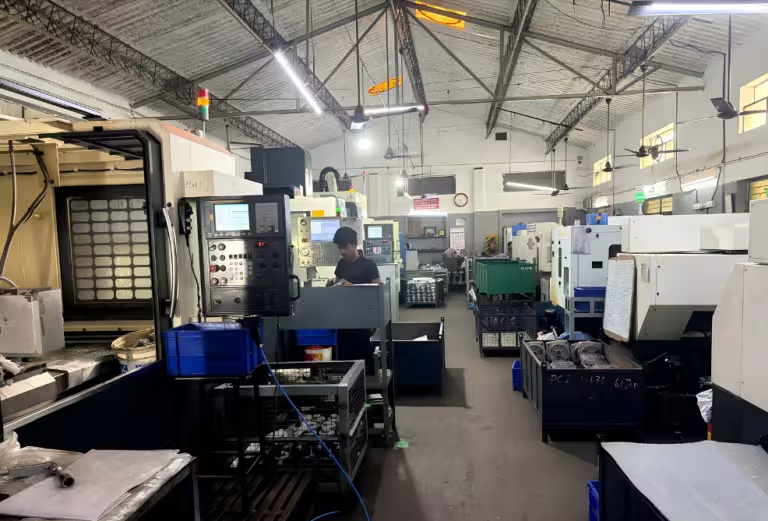
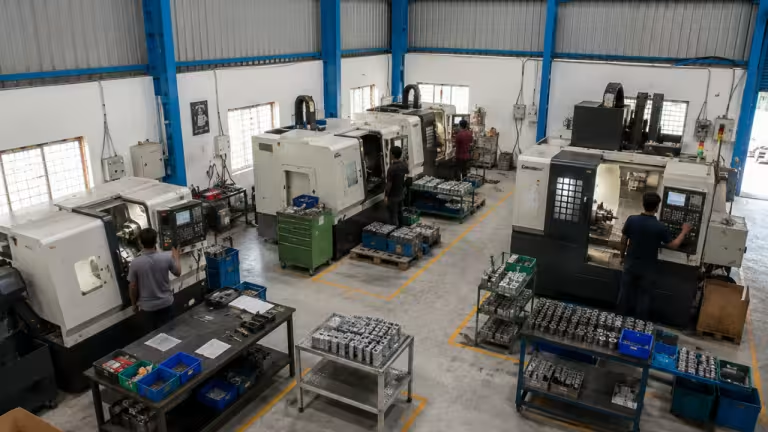
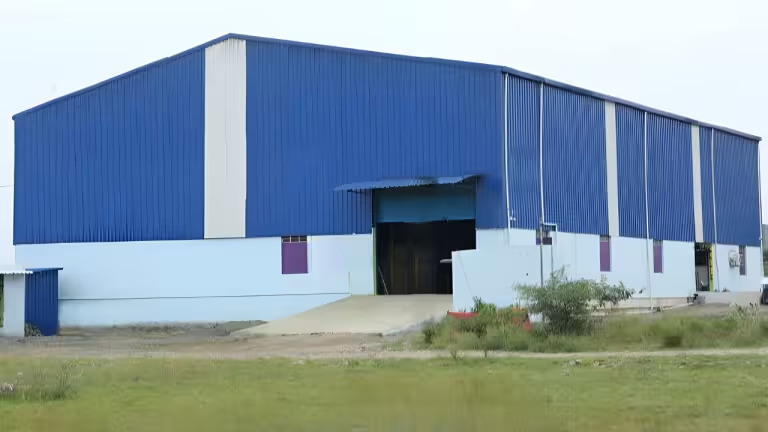
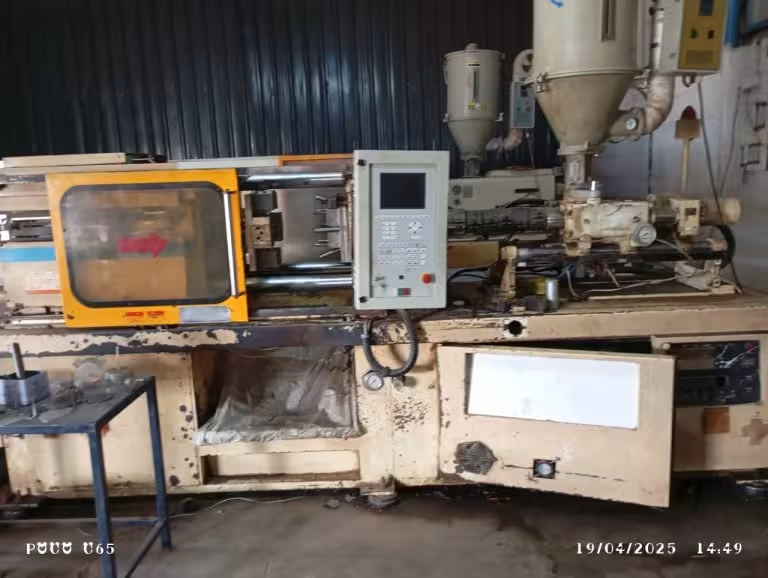
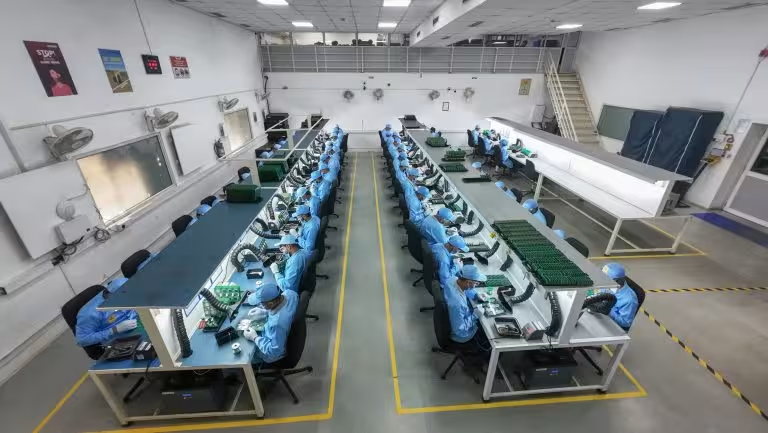
Frigate operates as a manufacturing partner. Engineering teams at Frigate analyze machining cost structures, validate the machining strategy, and then execute the production using the same process plan. This ensures that the cost model reflects actual shop-floor manufacturing conditions.
Companies producing Milled Components in Oil and Gas rely on Frigate because the cost breakdown is created by the same engineering teams that machine the parts.
Feature-Level Cost Modeling Built Around Real Machining Operations
Complex valve components contain multiple machining features that significantly influence cost. Frigate performs Should cost modeling services for valve components by breaking the part geometry into machinable elements and mapping each element to a machining operation.
Engineering teams analyze –
- Internal bores and stepped bore machining
- Deep cavity milling and pocket machining
- Multi-axis contour surfaces
- Threading and sealing interfaces
- Port and flow path machining
Each feature is assigned a machining cycle and tooling requirement. This allows Frigate to produce highly detailed machining cost structures instead of generalized estimates.
This feature-driven modeling supports accurate machined valve component cost estimation and improves cost predictability for complex valve designs.
Production-Ready Machining Strategy Instead of Theoretical Cost Reports
Traditional cost reports often stop at estimation. Frigate builds production-ready machining strategies during the cost modeling phase.
Engineering teams evaluate –
- Optimal CNC machine platform
- Multi-axis machining requirements
- Setup sequence planning
- Toolpath optimization
- Fixture design requirements
The same machining route used in the cost model becomes the foundation for production machining. This approach strengthens cost modeling for oil and gas valve manufacturing because the analysis is directly tied to manufacturing execution.
Valve manufacturers therefore receive a cost model that reflects how the component will actually be machined.
Machining Cycle Validation Based on Shop-Floor Performance
Machining cycle time is one of the most important variables affecting oil and gas valve component manufacturing cost. Frigate validates machining cycle assumptions using production-level engineering analysis.
Cycle validation includes –
- Tool engagement time analysis
- Feed rate optimization
- Tool change intervals
- Machine idle time analysis
- Multi-setup cycle impact
This process produces a precise CNC turned component cost breakdown, ensuring that machining cost reflects real machine utilization rather than simplified assumptions.
Engineering teams responsible for sourcing Milled Components in Oil and Gas benefit from realistic cycle-time driven costing.
Precision Machining Cost Analysis for Critical Valve Components
Valve components used in oil and gas operations require strict dimensional accuracy and surface finish control. Frigate performs precision machining cost analysis for valves by incorporating tolerance-driven machining passes and inspection requirements.
Engineering analysis evaluates –
- Seat pocket machining accuracy
- Stem sealing surface precision
- Bore concentricity requirements
- Surface roughness specifications
- Additional finishing passes
These machining requirements are integrated into the machined valve component cost estimation, ensuring that tolerance-driven operations are fully reflected in the cost model.
Valve Body and Trim Machining Cost Estimation
Valve bodies and trim assemblies represent some of the most machining-intensive parts in valve manufacturing. Frigate provides valve body and trim machining cost estimation using detailed feature-level engineering analysis.
Key machining operations evaluated include –
- Deep bore machining for valve body cavities
- Multi-axis port machining
- Seat pocket finishing
- Trim interface machining
This approach delivers a clear understanding of how each machining feature contributes to overall oil and gas valve component manufacturing cost.
Companies producing Milled Components in Oil and Gas therefore gain accurate cost visibility for their most complex parts.
Seamless Transition from Cost Modeling to Manufacturing
One major advantage of working with Frigate is the ability to move directly from cost modeling to production manufacturing.
Once Should cost modeling services for valve components are completed, Frigate’s manufacturing team can immediately begin –
- CNC program development
- Fixture manufacturing
- Pilot machining validation
- Full production machining
The cost model, machining strategy, and production plan remain aligned throughout the manufacturing lifecycle.
Conclusion – Cost Clarity That Moves Straight to Production
Supplier quotes for complex valve parts often vary due to differences in machining strategy, cycle time assumptions, and tooling requirements. Procurement teams sourcing Milled Components in Oil and Gas need a reliable cost baseline before approving production.
Frigate delivers Should cost modeling services for valve components with detailed machining breakdowns and production-ready process planning. Engineering teams provide accurate machined valve component cost estimation, validate machining strategies, and then execute manufacturing using the same cost-backed production plan.
Share your valve component drawings with Frigate’s engineering team and receive a production-backed cost model for your next machining program.