








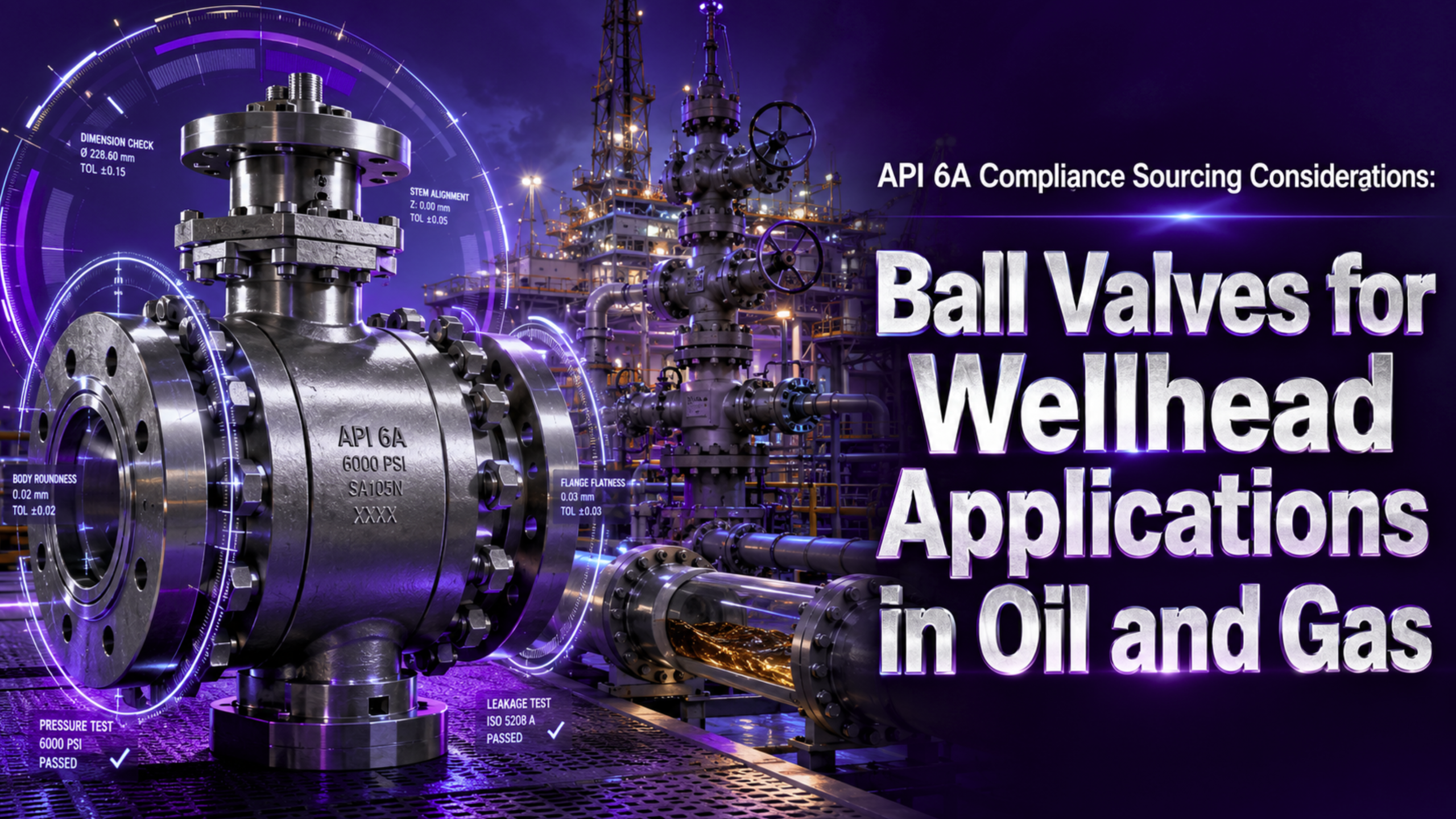
Procurement teams handling wellhead packages are not looking for another basic article. They are looking for sharper decision support around vendor evaluation, compliance alignment, documentation readiness, manufacturing control, and delivery confidence. That is exactly where this discussion is focused.
Projects requiring API 6A compliant ball valves for wellhead applications are usually tied to strict review cycles, project schedules, and internal accountability. Evaluation of API 6A compliant ball valves for wellhead applications is rarely based on catalogue claims alone. Buyers move faster when the manufacturer can support exact requirement matching, document control, inspection preparedness, and production-backed commitments from the quotation stage itself.
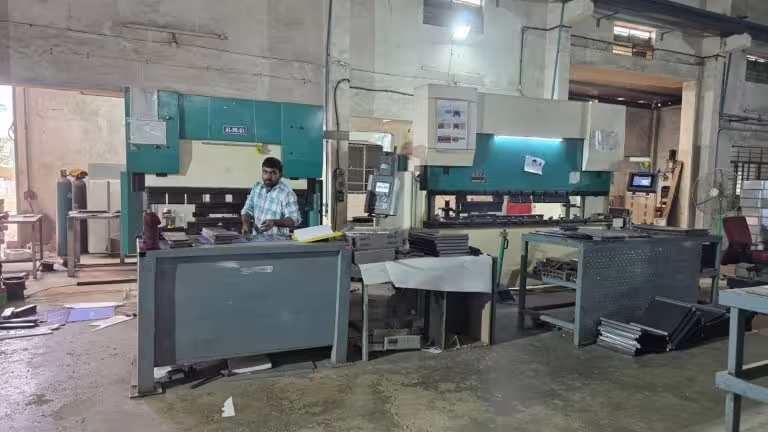
Frigate manufactures API 6A compliant ball valves for wellhead applications with a project-oriented approach built around requirement review, production feasibility, testing discipline, and document accuracy. That matters when procurement teams want clarity before release of order, not after avoidable gaps appear.
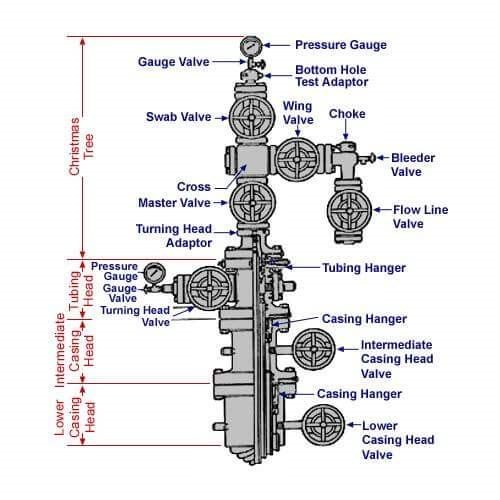
Vendor Shortlisting Criteria That Matter at RFQ Stage
RFQ comparison becomes weak when teams only compare price and delivery lines. Better evaluation looks at how accurately the manufacturer has responded to the actual requirement, how clearly deviations are captured, and how confidently the order can move into production and inspection.
Buyers reviewing API 6A ball valve manufacturers for oil and gas should check whether the quotation reflects the precise scope or whether it is built around a broad standard response. The stronger API 6A ball valve manufacturers for oil and gas are the ones that respond with tighter alignment on pressure class, material scope, traceability expectations, documentation package, inspection needs, and testing responsibility.
A stronger review at this stage usually includes –
- scope match against RFQ and data sheet
- pressure and material alignment
- documentation commitment before order release
- testing and inspection understanding
- traceability control and marking requirements
- clarity on exclusions and deviations
- lead-time backed by actual manufacturing readiness
Frigate supports buyers at this level by responding as a manufacturer with production awareness, not as a trading source passing forward generic claims. Teams planning to buy API 6A certified ball valves need that level of confidence because internal approvals often depend on the quality of the technical and documentation review.
Quote-Level Requirement Matching Before Purchase Order Release
A quotation can look acceptable and still create project friction later. Many delays start when requirement matching is assumed instead of documented properly. Buyers should review API 6A valve compliance requirements while evaluating the quotation rather than after order placement.
Manufacturers offering wellhead ball valve suppliers API 6A related capabilities are often compared on price first, but that approach misses the bigger risk. Buyers should instead verify whether the manufacturer has clearly defined what is covered, what documents will be issued, how traceability will be maintained, and how testing will be handled. Clearer offers reduce clarification loops and help internal teams move from technical review to order placement with better confidence.
Frigate approaches this phase through structured requirement mapping. Teams evaluating ball valves for Wellhead systems oil and gas benefit when the offer is aligned with actual operating requirements, project documentation needs, and manufacturing readiness from the beginning. That reduces the common back-and-forth that slows approval and order release.
Checklist for Evaluating API 6A Wellhead Ball Valve Orders
| Checkpoint | What buyer should confirm | Why it matters |
| RFQ scope match | Offered valve matches data sheet, end connection, service condition, and project notes | Prevents post-award mismatch |
| Compliance alignment | Requirement-specific compliance scope is clearly acknowledged | Reduces approval-stage confusion |
| Documentation package | Certificates, reports, traceability papers, test records, and submission flow are defined | Improves review speed |
| Material confirmation | Material class and metallurgy notes are understood correctly | Helps avoid rejection risk |
| Inspection preparedness | Witness points, third-party inspection requirements, and testing sequence are clear | Prevents dispatch hold-ups |
| Production readiness | Delivery is based on machining, assembly, testing, and documentation feasibility | Improves reliability |
| Deviations and exclusions | All exclusions are listed clearly in the quotation | Protects buyer from hidden gaps |
| Marking and traceability | Identification, traceability records, and marking requirements are acknowledged | Supports oil and gas acceptance |
| Final release coordination | Product, paperwork, inspection, and dispatch plan are aligned | Supports smoother project execution |
A structured checklist usually saves more time than repeated correction after order release. Frigate supports this process through manufacturing-led review and tighter coordination between quotation, documentation, testing, and production planning.
Manufacturer Capability Has More Value Than Brand Familiarity
Approved status or market visibility alone does not guarantee smooth execution. Stronger results come when the manufacturer has real control over machining, assembly, testing, quality records, and final documentation. Buyers comparing API 6A ball valve manufacturers for oil and gas should look beyond brand recall and assess execution discipline across the full order cycle.
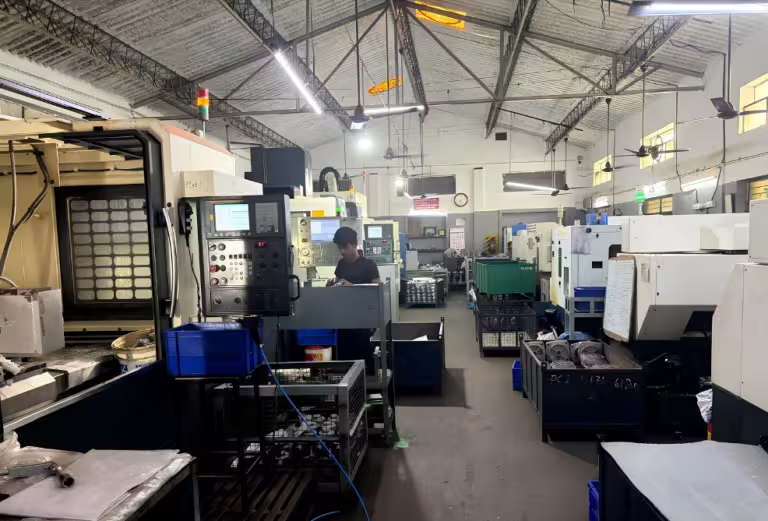
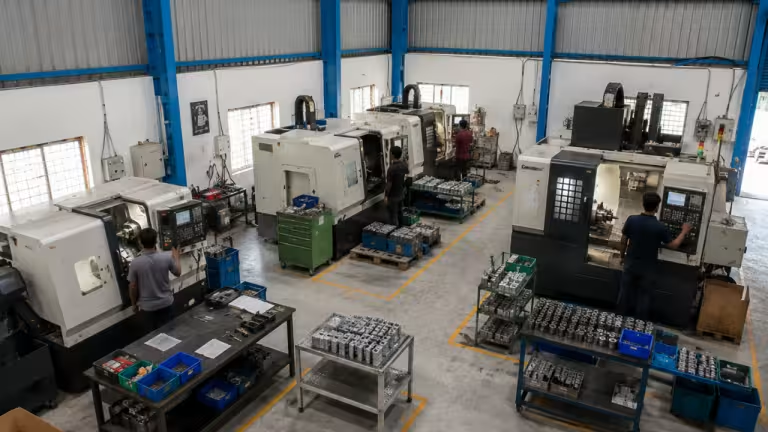
Teams that need to buy API 6A certified ball valves are often dealing with project pressure, package deadlines, and internal review dependencies. That is why manufacturer capability matters more than a polished product list. Frigate manufactures to requirement, supports project-specific review, and aligns order handling with production and quality workflows rather than relying on generic stock-led positioning.
For orders involving API 6A certified oilfield ball valves, procurement teams should assess whether the manufacturer can maintain consistency from quote to dispatch. That includes documentation accuracy, traceability, testing readiness, and product release control. Frigate is positioned around that kind of execution discipline because manufacturing responsibility sits at the centre of the process.
Documentation Discipline Decides How Smoothly Orders Move
Project delays are often caused by incomplete or inconsistent records, not only by the valve itself. Documentation capability should be evaluated early because wellhead packages usually involve multiple review points across EPC teams, QA teams, inspection agencies, and end users.
Buyers assessing API 6A compliant ball valves for wellhead applications should examine whether the manufacturer is ready to support the required documentation package with accuracy and timing. Orders for API 6A compliant ball valves for wellhead applications move more cleanly when test reports, traceability documents, compliance records, and inspection-related submissions are prepared in line with the approved scope.
Teams working around wellhead valve procurement standards already understand that documentation quality directly affects project movement. Frigate supports those standards through tighter coordination between engineering review, production control, testing, and final documentation release.
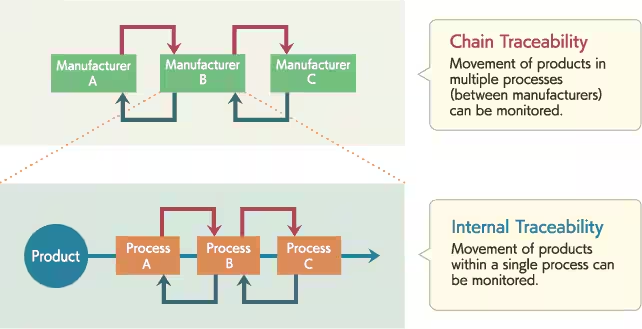
Documentation review should cover points such as –
- traceability records linked to actual manufacturing lots
- compliance documents aligned with project requirement
- testing records prepared in the required format
- inspection documents available at the right stage
- revision control for submitted records
- clear linkage between quotation, order, and final documentation
Delivery Commitments Should Be Based on Manufacturing Reality
Lead time is one of the most sensitive points in project buying. A promise on paper is not enough. Buyers should verify whether the timeline is connected to actual material planning, machining capacity, assembly flow, testing infrastructure, and documentation release.
Manufacturers being assessed against wellhead ball valve suppliers API 6A search terms or procurement requirements should be reviewed for production discipline, not just response speed. Better manufacturing partners do not commit on sales optimism. They commit on real process visibility and capacity planning.
This becomes more important when projects require high pressure API 6A ball valves for upstream operations because testing, inspection, and document release can affect the final dispatch date. Frigate addresses delivery planning with a manufacturing-first view so buyers are not left managing escalation after order confirmation. Customers planning to buy API 6A certified ball valves benefit when the promised timeline is tied to actual production readiness.
Early Risk Elimination Makes Order Execution Cleaner
Most project issues are visible during quotation review if teams examine the right points carefully. Weak requirement matching, unclear exclusions, vague compliance language, unsupported documentation assumptions, or unrealistic delivery positions usually appear before finalization. Removing these issues early leads to smoother execution later.
Projects linked to API 6A valve compliance requirements need exact review, not broad assumptions. The same applies to ball valves for wellhead systems oil and gas, where order-specific requirements can influence manufacturing sequence, testing scope, inspection planning, and document submission.
Frigate helps eliminate these gaps before they become production or approval problems. That is especially valuable for programs involving API 6A certified oilfield ball valves where technical alignment and traceability expectations are tighter. Stronger front-end review usually results in cleaner approvals, fewer clarification loops, and more stable execution after order release.
Why Frigate Is the Right Manufacturing Partner for API 6A Wellhead Ball Valves?
Project-driven valve procurement requires more than product availability. Buyers need a manufacturing partner that can align with technical requirements, documentation expectations, inspection processes, and delivery schedules without creating avoidable delays during execution. That is where Frigate fits well for oil and gas wellhead requirements.
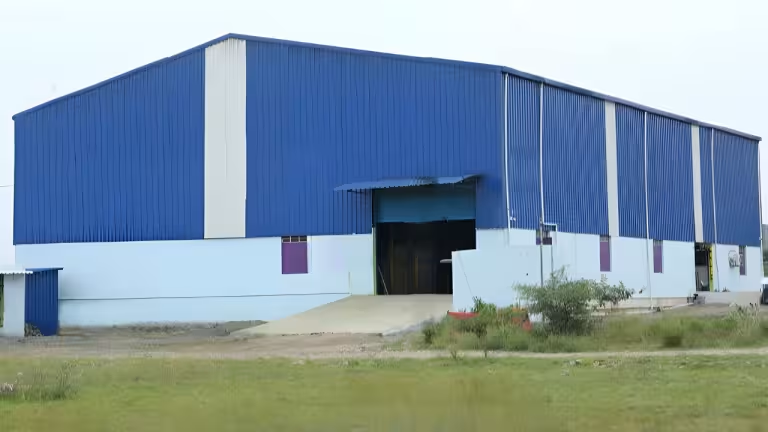
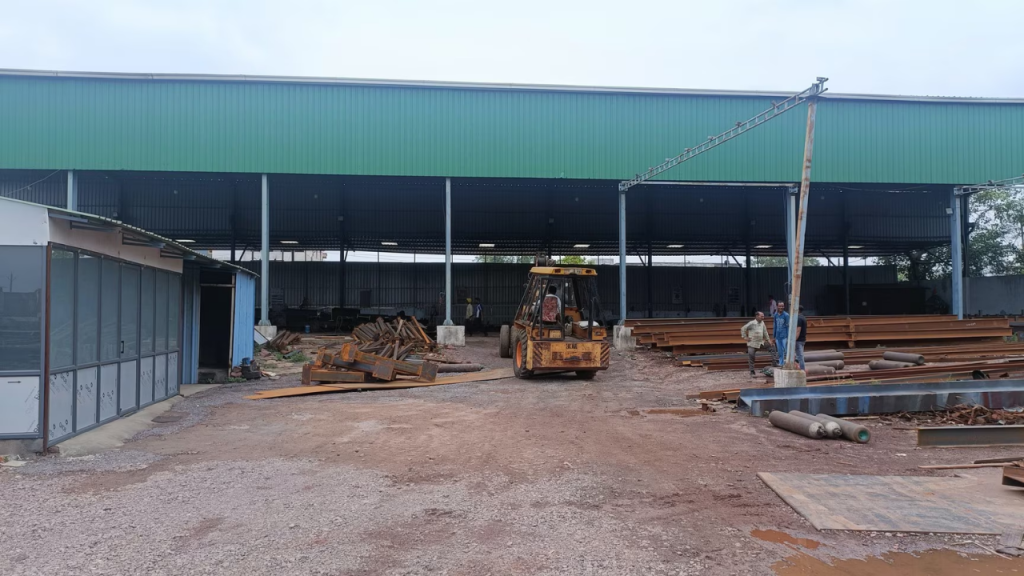
Frigate is a manufacturer, not a sourcing intermediary or a catalogue-driven trading company. This matters because procurement teams often need direct manufacturing accountability, especially when approval timelines are tight and project requirements must be controlled with accuracy from quotation stage to dispatch.
Requirement-Led Manufacturing Approach
Customers evaluating API 6A compliant ball valves for wellhead applications usually need a manufacturer that can work directly against RFQ details instead of responding with a broad standard offer. Requirement-led manufacturing helps ensure that the offered valve package is aligned with the actual project scope, documentation needs, and execution plan.
Frigate follows this approach by reviewing order requirements with attention to –
- application-specific scope
- pressure and service conditions
- material and traceability expectations
- testing and inspection requirements
- project documentation needs
- dispatch and release coordination
This helps reduce the mismatch that often appears when quotation, production planning, and final documentation are not aligned from the beginning.
Better Control from Quotation to Dispatch
For wellhead projects, execution quality is often decided long before production starts. A manufacturer must be able to maintain consistency across quotation review, order acknowledgement, production planning, testing, quality documentation, and final shipment readiness.
Frigate supports that control across the full order cycle by helping customers manage –
- clearer requirement mapping at quotation stage
- better alignment between approved scope and manufacturing plan
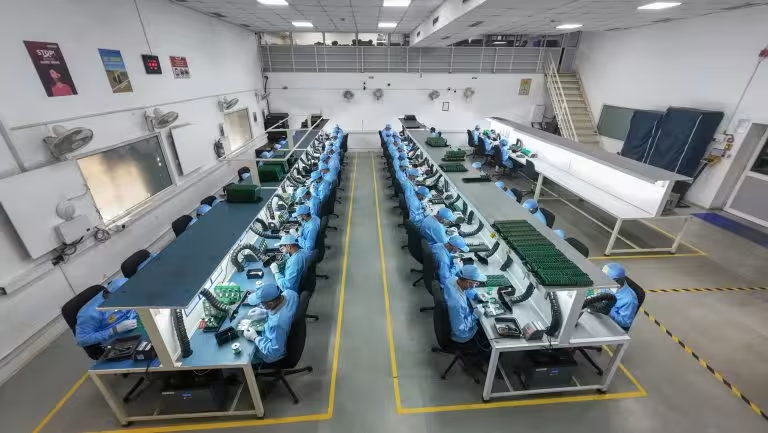
- tighter coordination between quality, testing, and documentation
- smoother preparation for inspection and final release
- fewer gaps between internal review and dispatch execution
This is especially useful for customers who want stronger control over project movement without repeated clarification at every stage.
Stronger Fit for Documentation-Heavy Orders
Many wellhead valve orders are linked to structured documentation requirements, traceability expectations, and inspection checkpoints. These projects require a manufacturer that understands how documentation affects approval flow and delivery timing, not just product completion.
Frigate is well suited for orders that involve –
- tighter review cycles
- project-specific documentation requirements
- traceability-sensitive applications
- inspection-heavy execution plans
- urgent timelines with controlled manufacturing needs
- high accountability across procurement and QA teams
That level of alignment helps customers avoid delays caused by incomplete records, approval-stage confusion, or disconnect between manufactured scope and submitted documents.
Direct Manufacturing Accountability for Project Teams
Teams handling wellhead valve procurement standards often prefer to work directly with a manufacturer that owns the production process and understands how approval stages influence shop-floor planning, testing schedules, and dispatch timing. Direct accountability becomes more valuable when orders are complex, quality-sensitive, or time-bound.
Frigate supports this requirement by maintaining closer alignment across –
- manufacturing
- quality control
- testing
- traceability management
- documentation preparation
- final delivery coordination
This gives project teams better confidence that execution will stay connected to the approved requirement, rather than being managed through multiple disconnected layers.
Better Support for High-Responsibility Oil and Gas Orders
Customers sourcing API 6A compliant ball valves for wellhead applications often need more than a finished product. They need confidence that the manufacturer can support the practical demands of project execution, including review discipline, documentation readiness, inspection planning, and controlled production movement.
Frigate manufactures API 6A compliant ball valves for wellhead applications with that execution-focused approach. This helps reduce confusion between quotation, production, quality review, and final release, while giving procurement and QA teams a more dependable path from requirement review to dispatch.
Conclusion
Better procurement results come from choosing the right manufacturer. Price alone is not enough. Availability alone is not enough. Orders for API 6A compliant ball valves for wellhead applications move faster with the right manufacturing support. That support includes accurate requirement matching. It also includes controlled documentation, disciplined testing, inspection readiness, and realistic delivery planning.
Frigate manufactures API 6A compliant ball valves for wellhead applications for oil and gas projects. These projects cannot afford delays. Buyers looking for high pressure API 6A ball valves for upstream operations can connect with Frigate. Frigate offers project-focused manufacturing support. It also offers stronger documentation handling and more reliable order execution.