


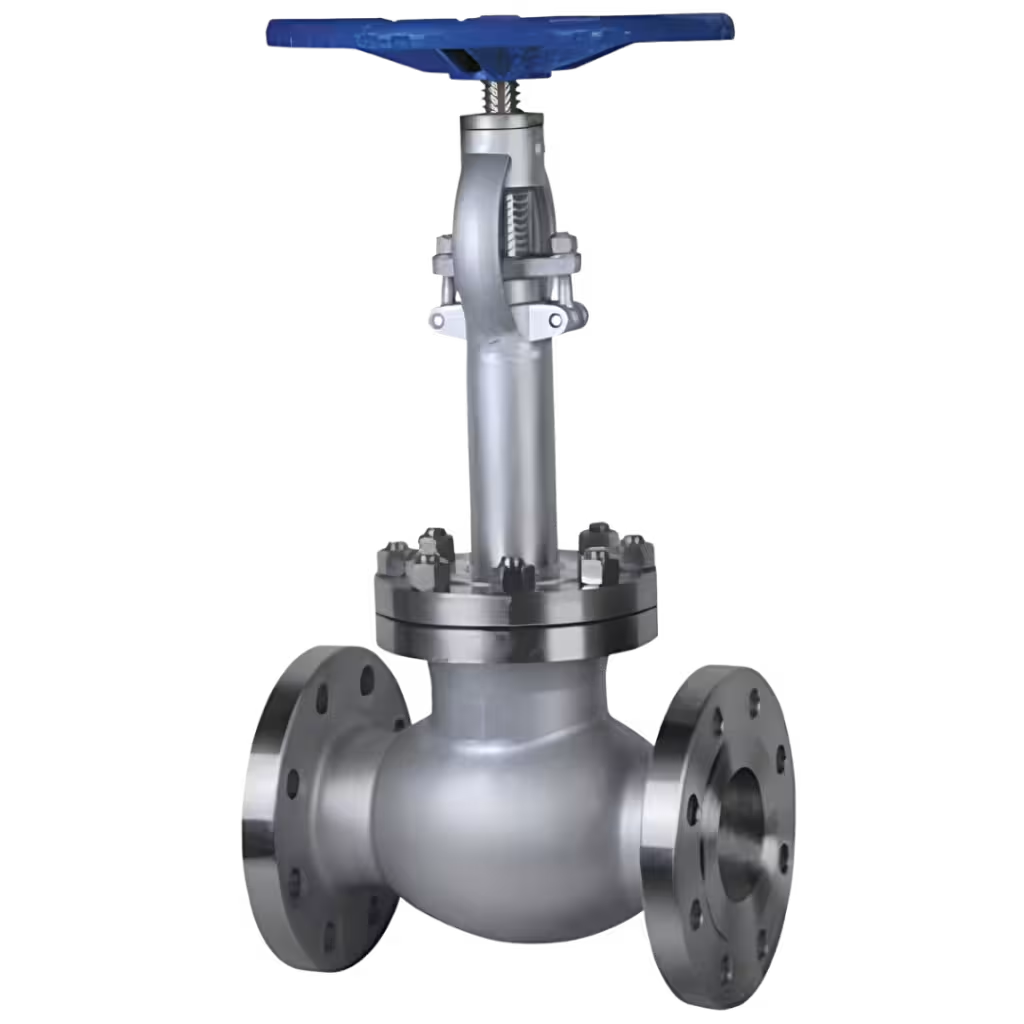


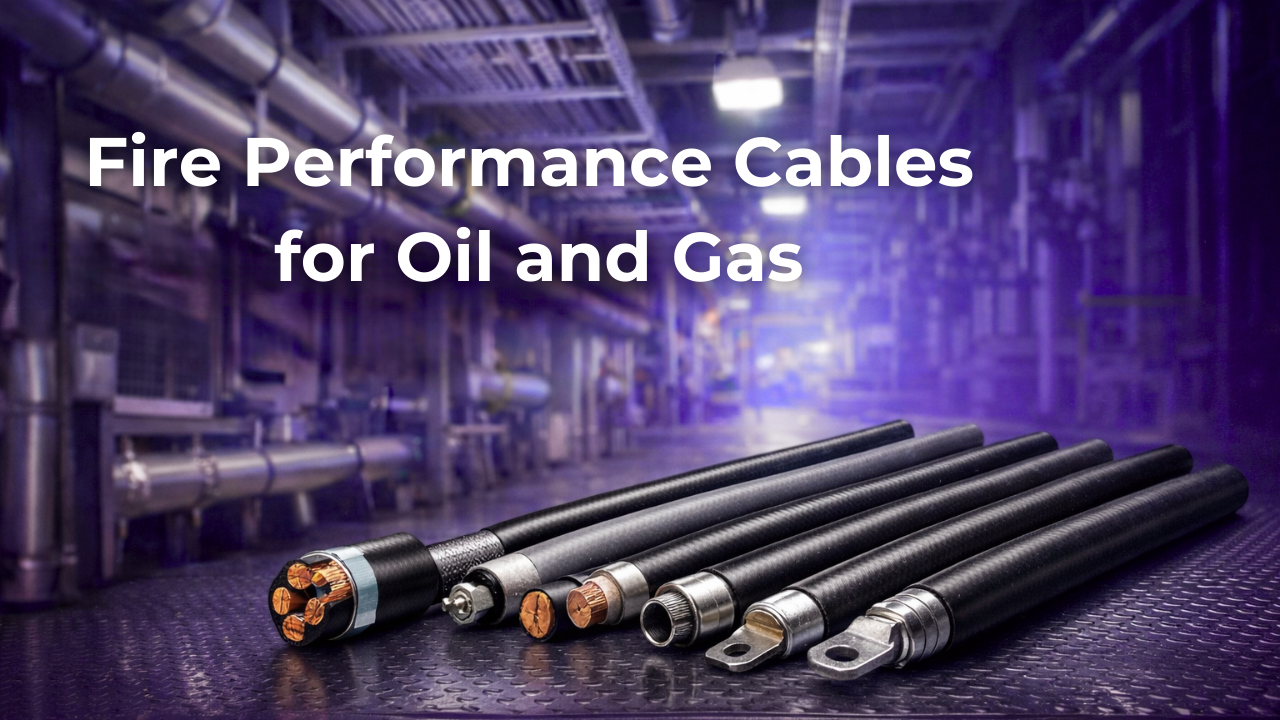
Oil and gas facilities operate under continuous exposure to flammable gases, volatile liquids, high temperatures, and corrosive chemicals. Electrical systems act as the nervous system of these facilities. They power emergency shutdown valves, fire alarm panels, gas detection systems, communication networks, and critical control instrumentation.
A single cable failure during a fire can disable life-saving systems within minutes. Industry loss data shows that electrical failures contribute to a significant percentage of fire-related shutdown escalations in energy facilities. Fire spreads quickly. Temperatures can exceed 900°C. Standard cables melt long before that point.
That is why Fire Performance Cables for Oil and Gas are engineered differently. They are designed to maintain circuit integrity during fire exposure, mechanical shock, and water spray. These cables are not simply about flame resistance. They are about survival under extreme conditions.
Poor sourcing decisions often result in –
- Failure to maintain circuit continuity during emergencies
- Non-compliance with international standards
- Increased insurance and audit risks
- Expensive downtime and system replacement
A structured evaluation process ensures that Fire Performance Cables for Oil and Gas meet performance, compliance, and long-term operational expectations.
Why Fire Survival Standards and Certifications Cannot Be Overlooked
Fire safety compliance forms the technical foundation of cable selection. Oil and gas projects must meet strict global and regional fire performance standards. Without verified certification, project approval can be delayed or rejected.
Key fire survival standards include –
- IEC 60331 – Measures circuit integrity during flame exposure
- BS 6387 – Evaluates performance under fire, water spray, and mechanical shock
- UL 2196 – Assesses fire-resistive cable systems
- IEC 60754 – Tests halogen gas emission
- IEC 61034 – Measures smoke density
Flame-retardant cables only limit flame spread. They do not guarantee continued electrical operation. Fire-resistant cables, on the other hand, are designed to keep circuits functioning for 90, 120, or 180 minutes during direct fire exposure.
Fire tests simulate real-world emergency conditions –
- Flame temperatures between 750°C and 950°C
- Mechanical shock during burning
- Water spray from firefighting systems
Compliance must be verified through third-party test reports. Batch traceability and inspection documentation must also align with project specifications.
Reliable sourcing of Fire Performance Cables for Oil and Gas ensures full regulatory compliance and reduces inspection risks.
How Harsh Environments Demand More Than Just Basic Cable Protection
Oil and gas sites expose cables to conditions far beyond typical industrial settings. Offshore platforms face salt mist and humidity. Refineries encounter chemical vapors and hydrocarbon spills. Desert pipelines endure intense UV radiation and high ambient temperatures.
Environmental resistance must address –
- Oil and hydrocarbon exposure
- Corrosive chemical contact
- Continuous vibration from rotating equipment
- Wide temperature ranges from -40°C to +120°C
- Ultraviolet degradation
Cable sheath materials such as LSZH thermoset compounds improve chemical and heat resistance. Tinned copper conductors enhance corrosion protection. Armoring provides mechanical durability in high-risk areas.
Mechanical protection options include –
- Galvanized steel wire armoring (GSWA)
- Aluminum wire armoring (AWA)
- Steel tape armoring for impact zones
Vibration fatigue can weaken poorly constructed cables over time. Robust insulation and conductor design prevent micro-fractures and ensure long service life.
Durability under environmental stress directly influences the reliability of Fire Performance Cables for Oil and Gas across their 25–30 year operational lifecycle.
What Truly Ensures Circuit Integrity During a Fire Emergency
Fire emergencies escalate rapidly. Standard thermoplastic insulation melts at relatively low temperatures. Fire survival cables use specialized construction techniques to withstand extreme heat.
Advanced cable construction often includes –
- Mica-glass tape wrapping around conductors
- Cross-linked polyethylene (XLPE) or ethylene propylene rubber (EPR) insulation
- Fire-resistant bedding layers
- Low Smoke Zero Halogen outer sheathing
Mica tape forms a protective ceramic barrier during fire exposure. This barrier prevents conductor short-circuiting even at high temperatures.
Emergency systems rely heavily on Fire Performance Cables for Oil and Gas, including –
- Emergency shutdown systems (ESD)
- Fire alarm networks
- Gas detection systems
- Emergency lighting
Circuit integrity testing ensures that cables continue transmitting signals under fire combined with mechanical shock and water spray. This testing replicates real emergency conditions.
Smoke emission is another critical factor. Toxic gases and dense smoke increase evacuation risk. Low Smoke Zero Halogen cables significantly reduce hazardous emissions, improving visibility and safety.
Technical validation of fire endurance is essential when selecting Fire Performance Cables for Oil and Gas.
Why Cable Construction and Material Selection Define Long-Term Reliability
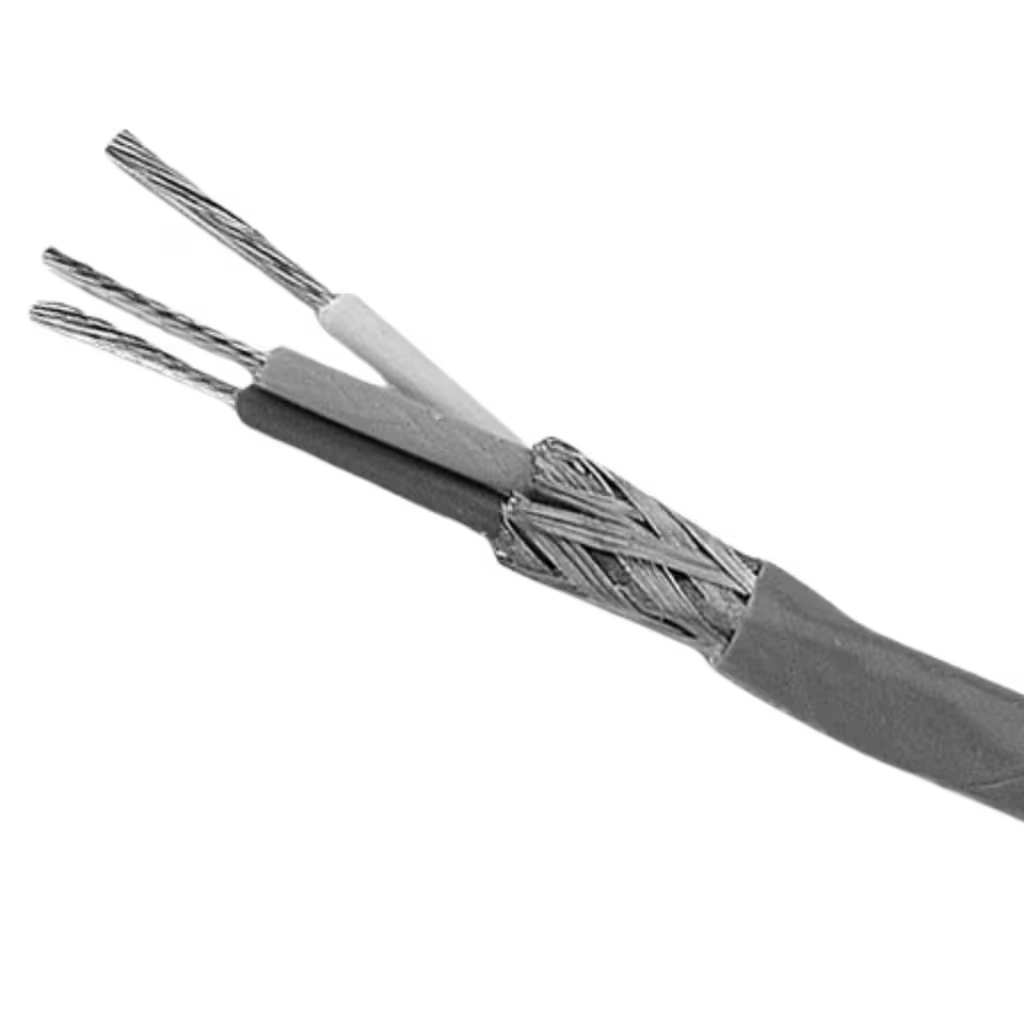
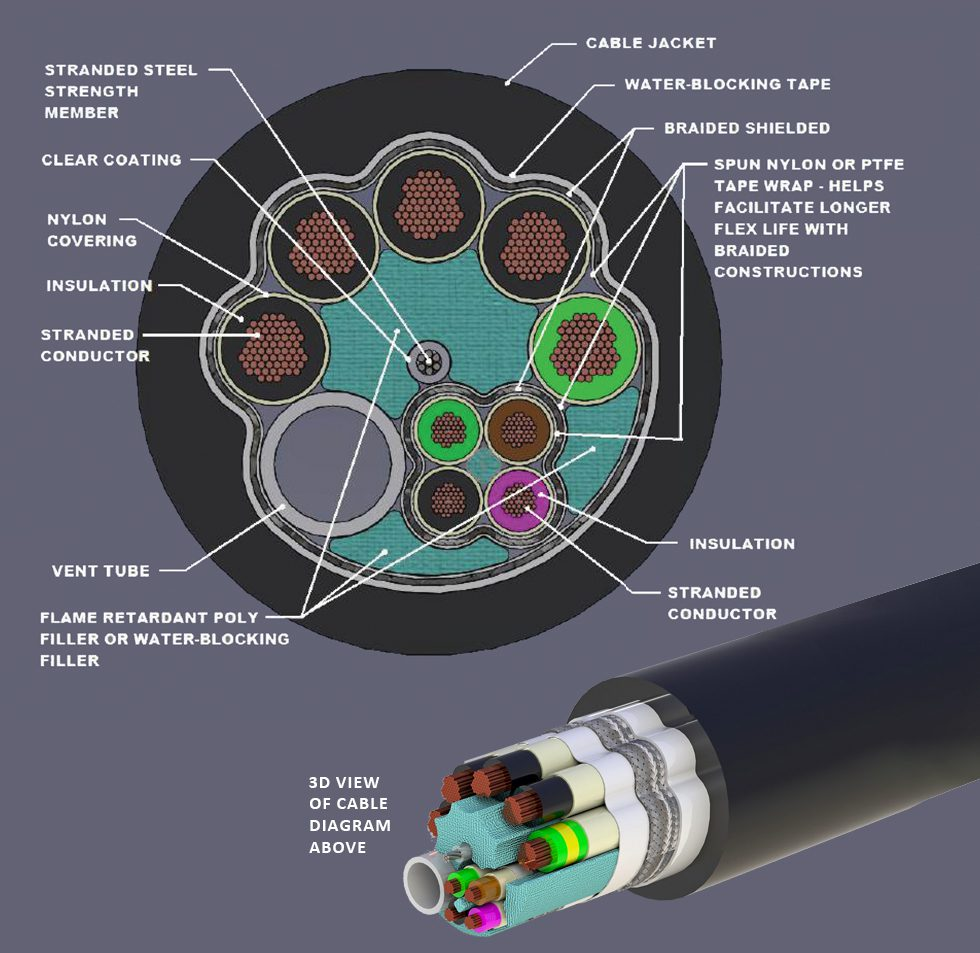
Every layer of a cable contributes to performance. Conductor material, insulation type, shielding, and outer sheath all influence durability and safety.
Technical evaluation should consider –
- Annealed copper or tinned copper conductors
- Conductor flexibility class (Class 2 or Class 5)
- Insulation materials such as XLPE or EPR
- Mica-based fire barriers
- Metallic shielding for EMI protection
- Chemical-resistant outer sheathing
Tinned copper improves resistance to corrosion, particularly in offshore environments. XLPE insulation offers superior thermal performance compared to PVC. Shielding protects sensitive instrumentation signals from electromagnetic interference.
Proper selection prevents both under-specification and unnecessary cost escalation. Power distribution cables require different configurations compared to instrumentation or control cables.
Optimized design ensures that Fire Performance Cables for Oil and Gas deliver electrical stability under both normal and emergency conditions.
How Supply Chain Strength and Documentation Impact Project Success
Technical excellence must be matched by reliable manufacturing and delivery capability. Oil and gas projects operate under strict construction timelines. Delayed cable supply can halt commissioning schedules.
Supplier evaluation should include –
- Production capacity and scalability
- Raw material sourcing stability
- Quality control procedures
- Routine and type testing facilities
- Compliance documentation management
Each drum of Fire Performance Cables for Oil and Gas must include –
- Batch traceability numbers
- Test certificates
- Inspection reports
- Compliance declarations
Factory audits often assess production consistency and testing infrastructure. Transparent documentation simplifies regulatory inspections and reduces project uncertainty.
Reliable supply chain management minimizes the risk of inconsistent quality, shipment damage, or certification discrepancies.
Looking Beyond Price – Evaluating Total Cost of Ownership
Initial purchase price represents only a fraction of lifecycle cost. Downtime during cable replacement can cost thousands or even millions per hour depending on facility capacity.
Long-term cost evaluation must include –
- Service life expectancy
- Installation efficiency
- Maintenance frequency
- Fire survival rating
- Warranty and technical support
High-quality Fire Performance Cables for Oil and Gas reduce replacement frequency and lower emergency repair costs. Studies show that preventive investment in durable components can reduce total lifecycle expenditure by up to 30%.
Reliable fire survival performance also protects revenue by minimizing shutdown duration during emergencies.
Lifecycle-focused sourcing improves operational resilience and financial efficiency.
Why Frigate Delivers Confidence in Fire Performance Cables for Oil and Gas
Fire safety systems within oil and gas facilities operate under extreme pressure. Electrical networks must remain functional during high-temperature fires, mechanical shock, and chemical exposure. Any compromise in cable performance can disable emergency shutdown systems, fire alarms, or gas detection networks. Frigate focuses on delivering engineered reliability, regulatory compliance, and documented performance assurance across every project involving Fire Performance Cables for Oil and Gas.
Strict Compliance with Global Fire Survival Standards
Compliance forms the technical backbone of fire-resistant cable manufacturing. Frigate designs cables to meet and exceed internationally recognized standards such as –
- IEC 60331 for circuit integrity under flame
- BS 6387 for fire, water spray, and mechanical shock performance
- UL fire-resistive cable requirements
- IEC 60754 for halogen gas emission limits
- IEC 61034 for smoke density control
Each cable design undergoes structured validation to ensure it performs for 90, 120, or 180 minutes under simulated fire exposure conditions. Testing is not limited to flame resistance alone. Performance under combined stress conditions reflects real emergency scenarios in refineries and offshore platforms.
Advanced Fire-Resistant Construction Technology
Sustained circuit integrity during fire depends on intelligent material engineering. Frigate integrates mica-glass tape wrapping around conductors. During extreme heat exposure, mica forms a stable ceramic barrier that prevents short-circuiting and conductor collapse.
Insulation systems use thermally stable materials such as –
- Cross-Linked Polyethylene (XLPE)
- Ethylene Propylene Rubber (EPR)
These materials maintain structural stability under continuous operating temperatures and short-term overload conditions. Such construction ensures that Fire Performance Cables for Oil and Gas continue transmitting power and signals even under temperatures approaching 950°C.
Low Smoke Zero Halogen Protection for Safer Evacuation
Fire emergencies often cause more damage through smoke and toxic gas than through flames. Frigate utilizes Low Smoke Zero Halogen (LSZH) sheath compounds to significantly reduce hazardous emissions during combustion.
Benefits of LSZH sheathing include –
- Reduced smoke density for improved visibility
- Lower toxic gas release
- Enhanced evacuation safety
- Reduced corrosion damage to surrounding equipment
These properties are particularly critical in enclosed refinery zones, offshore modules, and confined industrial spaces where ventilation is limited.
Mechanical Strength and Environmental Durability
Oil and gas facilities expose cables to vibration, hydrocarbons, UV radiation, and corrosive chemicals. Frigate incorporates structural features that enhance durability and extend service life.
Key design enhancements include –
- Tinned copper conductors for corrosion resistance
- Optimized stranding for vibration endurance
- Galvanized steel or aluminum armoring options
- Hydrocarbon-resistant outer sheathing
Environmental resilience ensures that Fire Performance Cables for Oil and Gas perform reliably across offshore, desert, and petrochemical environments with operational lifecycles exceeding 25 years.
Comprehensive Testing and Batch-Level Traceability
Quality control is embedded into every production stage. Before dispatch, cables undergo rigorous testing procedures such as –
- Conductor resistance measurement
- High voltage withstand testing
- Insulation resistance verification
- Dimensional accuracy inspection
- Fire endurance performance validation
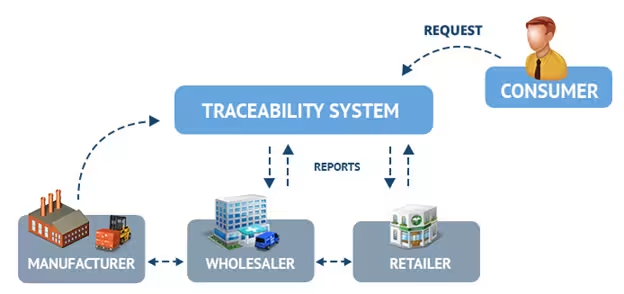
Each batch is assigned traceability documentation linking raw materials, production data, and inspection records. Such transparency simplifies regulatory audits and third-party inspections. Project stakeholders gain documented assurance of compliance and performance.
Custom Engineering for Project-Specific Demands
Oil and gas installations vary widely in design and risk profile. Frigate supports customized cable configurations tailored to –
- Offshore platforms exposed to salt-laden humidity
- Refinery process units with chemical exposure
- High-vibration compressor environments
- Instrumentation circuits requiring enhanced electromagnetic shielding
Engineering customization ensures that Fire Performance Cables for Oil and Gas align precisely with operational risk assessments and technical specifications.
Conclusion
Fire incidents remain one of the most critical risks within oil and gas operations. Electrical systems must remain functional during emergencies to protect personnel and infrastructure.
Thorough evaluation of standards compliance, environmental resistance, material construction, supply chain reliability, and lifecycle cost ensures optimal sourcing decisions. Structured technical assessment reduces uncertainty and enhances resilience.
Frigate offers dependable and compliant Fire Performance Cables for Oil and Gas engineered for demanding environments. Connect with Frigate to strengthen safety, ensure compliance, and secure long-term operational reliability.