
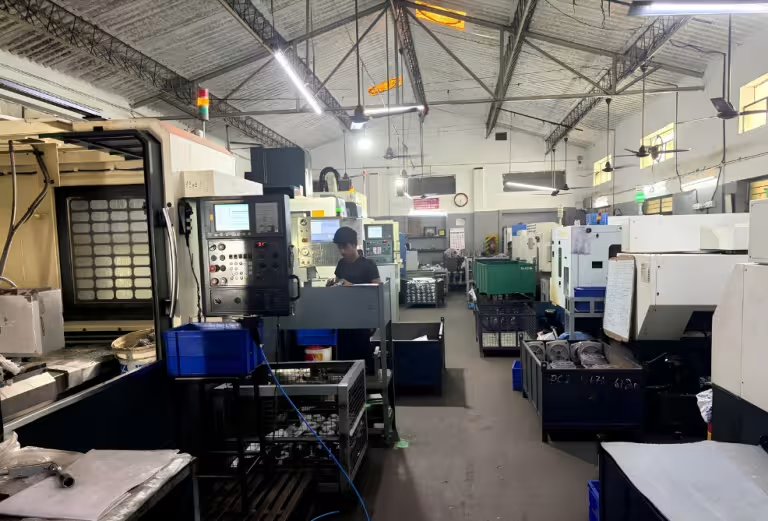

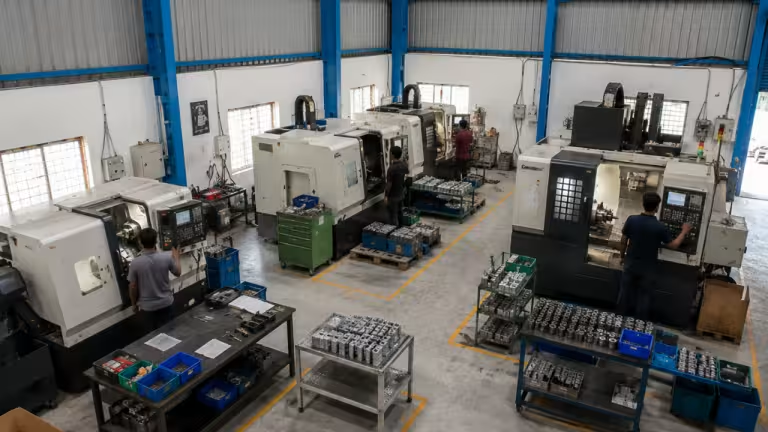

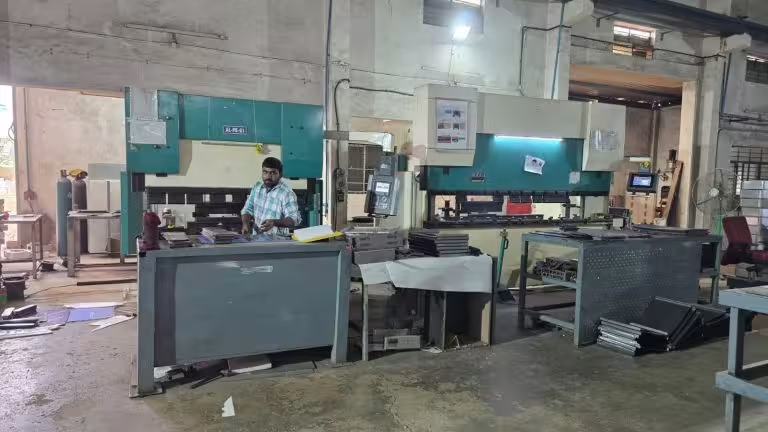






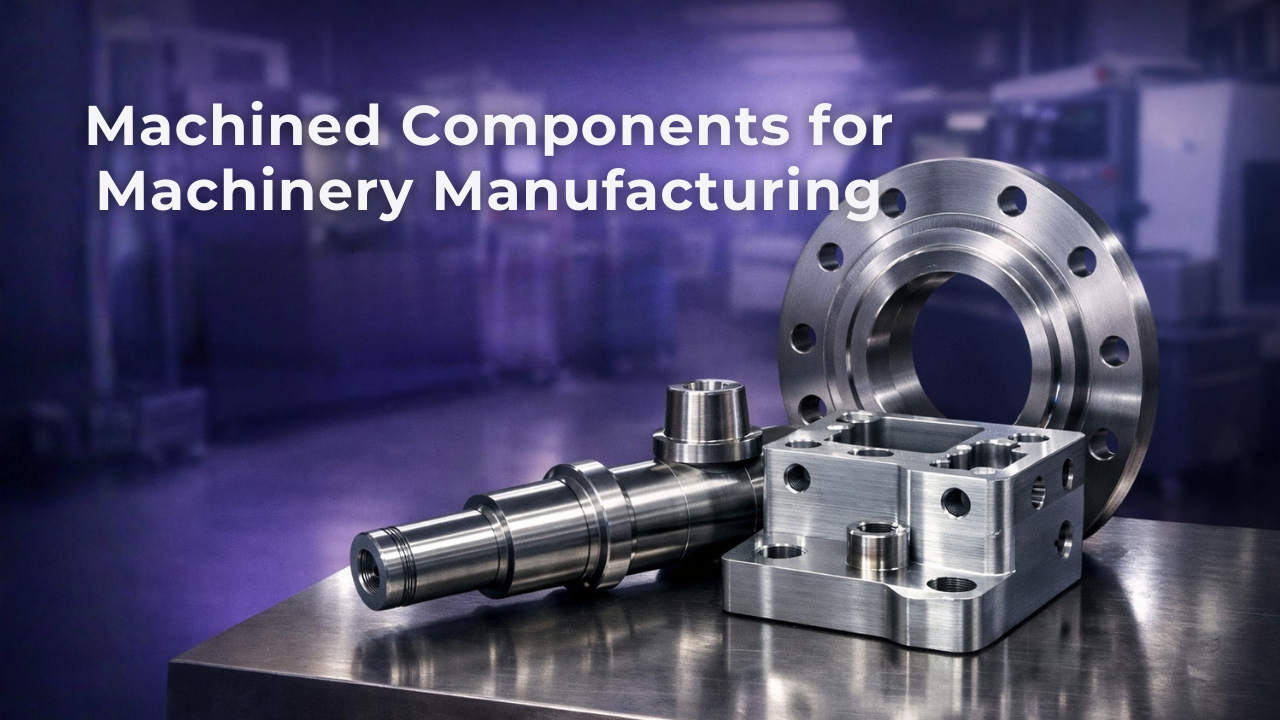
Machinery performance depends on precision, durability, and repeatability. Every rotating shaft, gearbox housing, guide rail, mounting plate, and structural bracket must perform under load without deviation. A dimensional error of 0.02 mm can create vibration, premature wear, or complete system shutdown. Because of this, Machined Components for Machinery Manufacturing directly influence equipment reliability, lifecycle cost, and operational safety.
Machining is not simply a metal cutting activity. It is a controlled engineering process involving material science, cutting mechanics, thermodynamics, tooling behavior, tolerance control, and quality verification. Industry data shows that machining operations account for 30–50% of total component production cost in heavy machinery and industrial equipment sectors. Rising energy costs, raw material volatility, and tighter quality expectations have increased cost sensitivity across supply chains.
Understanding the technical cost drivers behind Machined Components for Machinery Manufacturing helps reduce financial risk, improve supplier alignment, and protect long-term profitability.
Why Clear Cost Visibility Is Critical in Machined Components for Machinery Manufacturing Projects
Every machined component includes layered cost elements –
Cost challenges often begin with limited visibility into how machining expenses are calculated. Final quotations may present a single figure without explaining how machine time, tooling wear, programming effort, and inspection activities contribute to that number.
- Raw material acquisition and yield efficiency
- CNC machine hourly rate and cycle time
- CAM programming and setup labor
- Tool consumption and cutter replacement frequency
- Dimensional inspection and compliance documentation
- Scrap, rework, and process variation risk
Machine hourly rates vary significantly. A standard 3-axis CNC machining center may operate between $60–$90 per hour. Advanced 5-axis machining centers often exceed $120 per hour due to higher capital cost, maintenance requirements, and programming complexity.
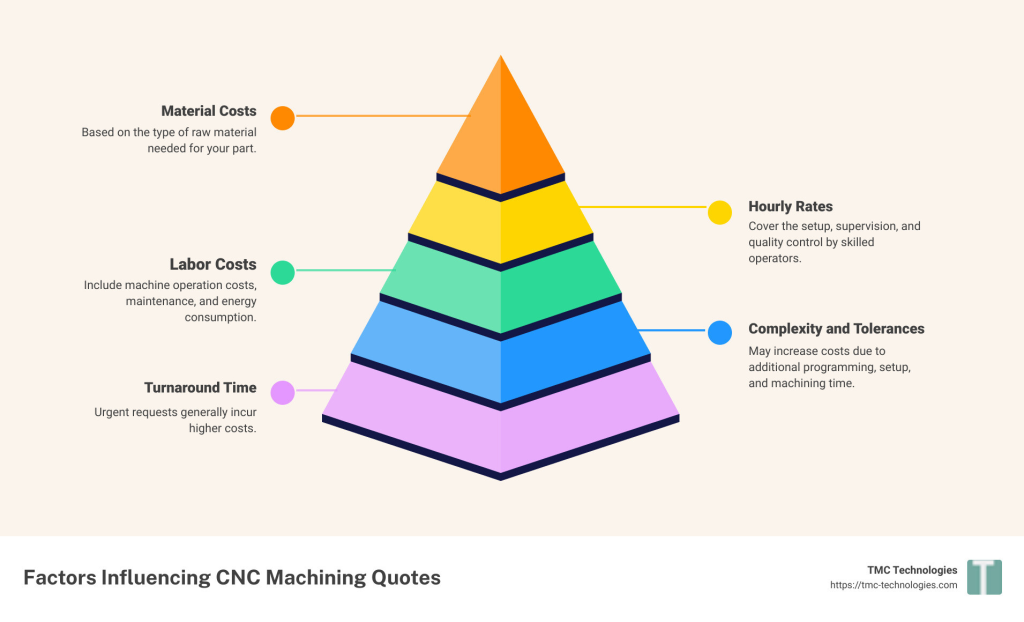
Cycle time becomes the primary multiplier. A part that requires 18 minutes per unit costs far less than one requiring 32 minutes on the same machine. Tolerance tightening further increases machining time. Achieving ±0.01 mm tolerance demands slower feed rates, multiple finishing passes, and additional inspection checkpoints.
Transparent cost modeling for Machined Components for Machinery Manufacturing improves –
- Forecast accuracy
- Margin protection
- Contract stability
- Engineering accountability
Clarity reduces friction across procurement and production planning.
How Material Selection Directly Influences Machining Efficiency and Overall Component Cost
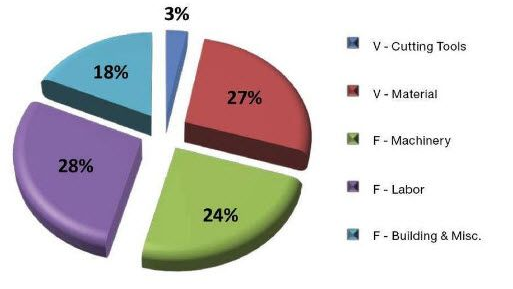
Material choice represents one of the largest contributors to machining cost. Raw material can account for 40–60% of the total component cost, especially in medium and large industrial parts.
However, cost impact extends beyond purchase price per kilogram.
Machinability index significantly affects production efficiency. Free-cutting steel offers machinability ratings near 100%, while titanium alloys may fall below 25%. Lower machinability means slower spindle speeds, reduced feed rates, and higher tool wear.
Technical factors influencing cost include –
- Hardness (HB or HRC levels)
- Tensile strength and yield strength
- Thermal conductivity
- Chip formation behavior
- Abrasiveness of alloy composition
Harder materials generate more heat at the cutting interface. Excess heat accelerates tool wear and increases tool replacement frequency. Carbide inserts and coated tools raise consumable cost.
Material yield also plays a major role. If a 12 kg billet produces an 8 kg finished part, yield stands at 67%. Remaining 33% becomes scrap chips. Lower yield increases effective material cost per usable part.
Additional cost elements include –
- Mill test certification
- Traceability documentation
- Special alloy sourcing lead time
- Heat treatment and stress relief processes
Balanced engineering decisions in Machined Components for Machinery Manufacturing consider mechanical performance, machinability, availability, and total lifecycle cost.
Why Design Complexity and Tight Tolerances Significantly Increase Machining Cost
Design geometry defines machining strategy. Complex features demand more toolpaths, additional setups, and specialized fixturing.
Cycle time remains the strongest cost driver. Each additional minute on a CNC machine multiplies overall cost. Studies show that reducing cycle time by 15% can decrease total manufacturing expense by nearly 10%, depending on overhead allocation.
Cost-increasing design elements include –
- Deep cavities requiring long tool reach
- Thin wall sections causing vibration and chatter
- Sharp internal corners requiring small-diameter tools
- Multi-axis contouring surfaces
- Tight concentricity and perpendicularity requirements
Surface finish requirements below Ra 0.8 µm often require secondary operations such as grinding or honing. Secondary processes add handling time, machine time, and inspection effort.
Geometric Dimensioning and Tolerancing (GD&T) complexity further increases inspection workload. Every additional control point requires measurement validation, adding labor and equipment usage.
Design for Manufacturability (DFM) reduces cost in Machined Components for Machinery Manufacturing by –
- Aligning tolerances with functional necessity
- Standardizing hole sizes and depths
- Simplifying internal features
- Reducing unnecessary aesthetic specifications
Engineering simplification can reduce machining time by 20–30% without affecting performance.
How Production Volume and Batch Strategy Shape Unit Cost Economics
Production volume determines how fixed costs distribute across units. Programming, fixture development, and process validation are non-recurring engineering efforts.
Typical fixed cost components include –
- CNC program development
- Fixture and jig design
- First Article Inspection (FAI) preparation
- Process capability validation
Low-volume production spreads these costs across fewer units, increasing per-part cost. Small batch production often results in 20–40% higher unit cost compared to optimized medium-volume runs.
Higher volumes improve machine utilization and tool amortization. However, large inventory introduces financial risk through capital lock-up and potential engineering changes.
Batch size impacts –
- Tool wear optimization
- Workforce scheduling efficiency
- Cash flow management
- Supply continuity
Careful production planning ensures stable pricing for Machined Components for Machinery Manufacturing while maintaining flexibility.
Why Quality Assurance and Compliance Requirements Add Measurable Cost Layers
Precision machining requires strict quality control. Inspection activities may account for 10–20% of total production time in high-tolerance components.
Quality systems may include –
- Coordinate Measuring Machine (CMM) validation
- Surface roughness measurement
- Hardness testing
- Dimensional report generation
- Statistical Process Control (SPC) monitoring
Higher tolerance classes require more inspection checkpoints. Additional documentation increases administrative workload.
Cost of failure exceeds prevention cost. Machinery downtime can cost thousands of dollars per hour. Warranty claims and corrective maintenance multiply lifecycle expense.
Effective quality control in Machined Components for Machinery Manufacturing focuses on –
- In-process measurement systems
- Digital traceability
- Root cause corrective action
- Continuous process improvement
Balanced quality investment ensures reliability without unnecessary cost inflation.
How Supply Chain Stability and Lead Time Pressure Influence Machining Cost
Supply chain conditions directly affect machining economics. Metal price fluctuations have exceeded 20% annually in certain categories. Freight and energy costs also vary significantly.
Lead time compression increases cost through –
- Overtime shifts
- Priority material procurement
- Expedited logistics
- Machine schedule disruption
Engineering changes after machining begins introduce scrap risk. Design modifications can increase cost by 20–25% due to reprogramming and material loss.
Stable supplier partnerships improve predictability in Machined Components for Machinery Manufacturing by ensuring –
- Long-term material agreements
- Reserved production capacity
- Consistent process standards
- Clear communication channels
Resilient supply chains support consistent cost control.
How Frigate Systematically Reduces Cost Drivers in Machined Components for Machinery Manufacturing
Cost control in Machined Components for Machinery Manufacturing requires structured engineering, disciplined machining, and controlled supply chain management. Frigate reduces cost drivers through technical validation, process optimization, and transparent execution across every production stage.
Engineering-Led Cost Optimization from the Design Stage
Cost reduction begins at the drawing stage. Early Design for Manufacturability (DFM) analysis eliminates unnecessary complexity before machining starts.
Engineering review focuses on –
- Tolerance alignment with functional requirements
- Tool accessibility and feature feasibility
- Material grade optimization based on machinability
- Reduction of secondary operations
Tolerance rationalization lowers machining time and inspection effort. Material review improves cutting efficiency and reduces tool wear. Early engineering alignment prevents rework and cost escalation in Machined Components for Machinery Manufacturing.
Advanced Multi-Axis CNC Machining for Setup and Cycle Time Reduction
Multi-axis CNC platforms reduce multiple setups and part repositioning. Fewer setups improve geometric accuracy and lower labor time.
Benefits include –
- Reduced non-cutting time
- Improved dimensional consistency
- Shorter total cycle duration
- Lower cumulative tolerance error
Setup consolidation can reduce overall production time by 10–20%, directly lowering machine hour cost in Machined Components for Machinery Manufacturing.
Tool Life Monitoring and Optimized Cutting Parameters
Tool wear directly impacts cost and part quality. Frigate tracks tool usage and performance to prevent unexpected failures.
Systems monitor –
- Tool engagement time
- Wear progression
- Cutting force variation
Optimized spindle speed and feed rates balance productivity with tool life. Controlled tooling reduces scrap, stabilizes surface finish, and lowers consumable expenses in Machined Components for Machinery Manufacturing.
Structured Quality Management to Minimize Rework and Failure Cost
Preventive quality systems reduce downstream risk. Real-time inspection and Statistical Process Control (SPC) detect variation early.
Quality framework includes –
- In-process dimensional checks
- CMM validation
- Digital traceability
- Root cause corrective action
Early detection reduces batch rejection and rework. Strong quality control lowers lifecycle failure cost in Machined Components for Machinery Manufacturing.
Scalable Production Scheduling for Stable Cost Control
Efficient scheduling improves machine utilization and reduces overtime dependency. Balanced capacity planning prevents urgent production premiums.
Key advantages –
- Lower idle time
- Reduced expedited logistics
- Optimized batch sequencing
- Stable workforce allocation
Consistent scheduling protects margin stability across production volumes in Machined Components for Machinery Manufacturing.
Strategic Raw Material Sourcing to Reduce Volatility Risk
Long-term supplier partnerships stabilize material pricing and ensure consistent availability.
Sourcing strategy supports –
- Price predictability
- Certified material traceability
- Lead time reliability
- Inventory optimization
Stable procurement reduces cost fluctuation risk in Machined Components for Machinery Manufacturing.
Transparent Cost Breakdown for Data-Driven Decisions
Every project includes a structured cost analysis covering –
- Material allocation
- Machine time consumption
- Tooling usage
- Inspection effort
- Secondary operations
Clear visibility enables informed design adjustments and production planning. Transparency strengthens long-term cost efficiency in Machined Components for Machinery Manufacturing.
Focus on Sustainable Cost Efficiency Over Short-Term Price Cuts
Short-term price reductions often compromise precision or process stability. Frigate prioritizes long-term efficiency through –
- Continuous process improvement
- Scrap reduction initiatives
- Yield optimization
- Machine uptime enhancement
Sustained engineering discipline ensures controlled, repeatable cost structures in Machined Components for Machinery Manufacturing while maintaining high performance standards.
Conclusion
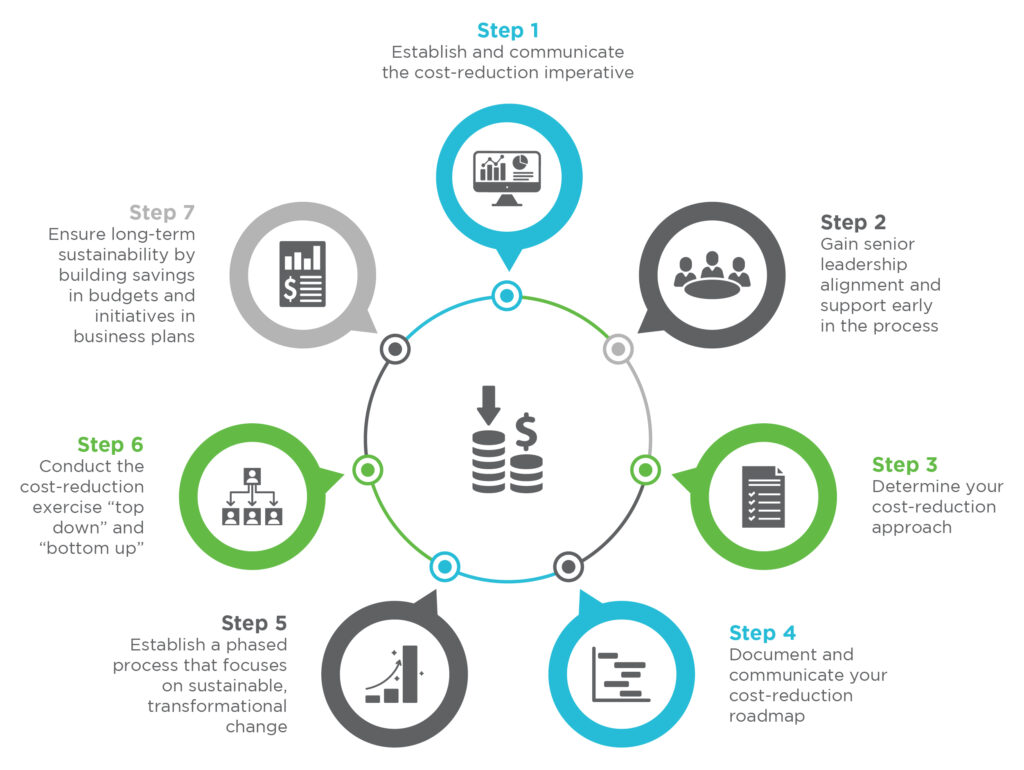
Cost structure in Machined Components for Machinery Manufacturing depends on material engineering, design geometry, machining cycle time, batch strategy, quality compliance, and supply chain stability.
Small technical improvements in tolerance alignment, toolpath optimization, or yield enhancement can significantly reduce total production expense. Strategic engineering collaboration and transparent costing models strengthen long-term profitability.
Connect with Frigate to improve machining efficiency, stabilize cost structures, and enhance reliability across machinery manufacturing operations.