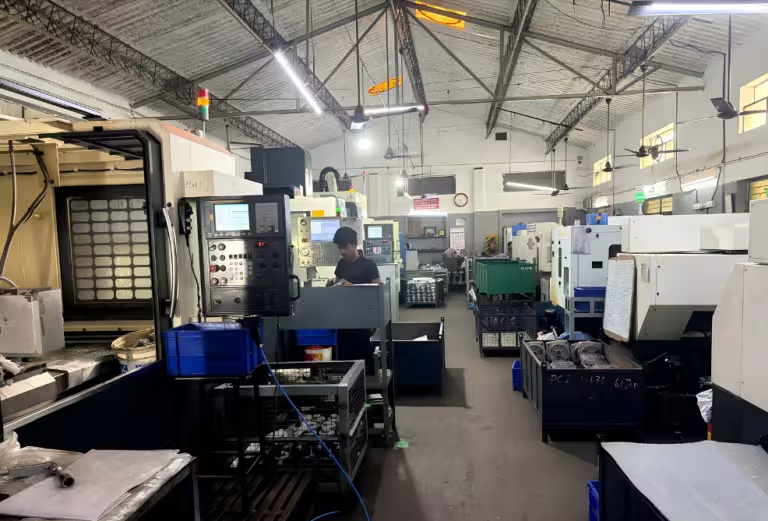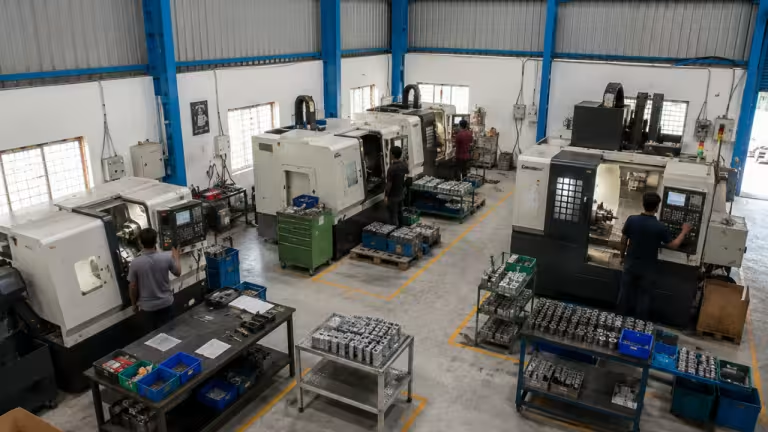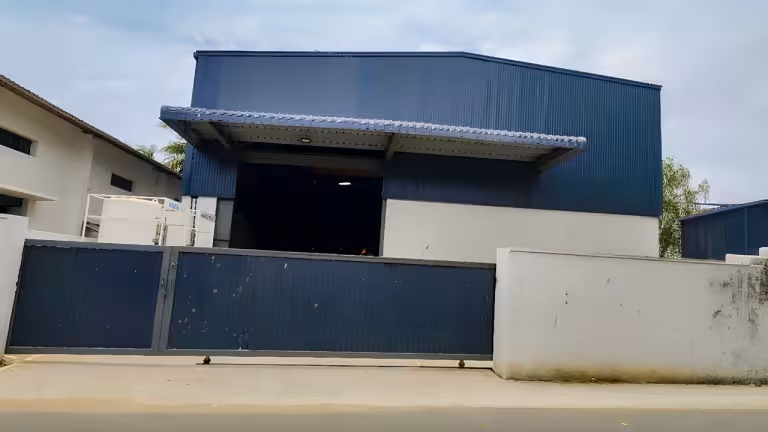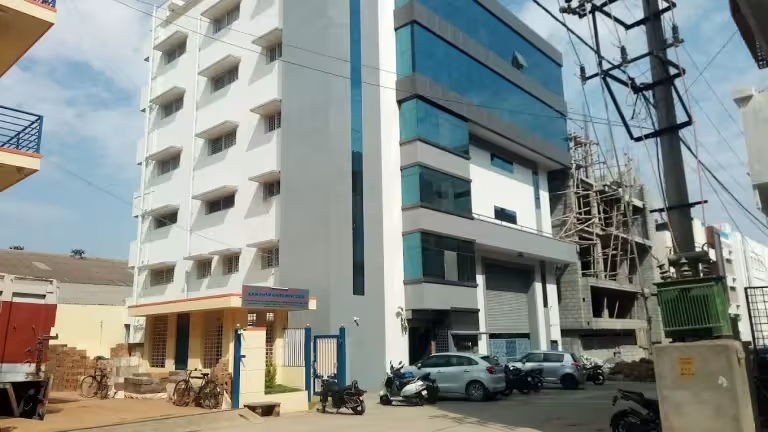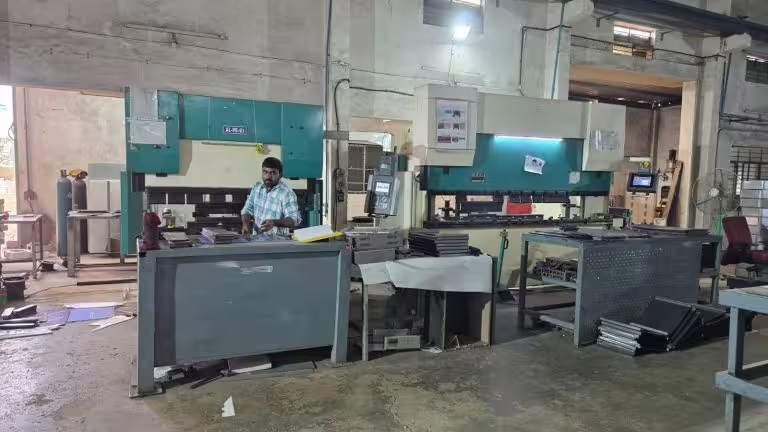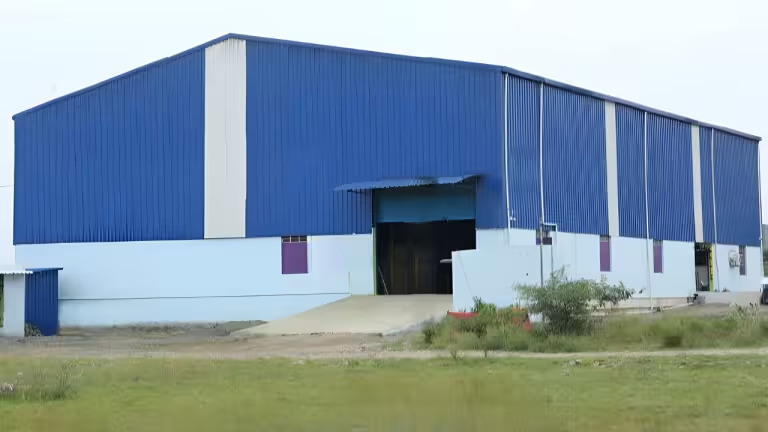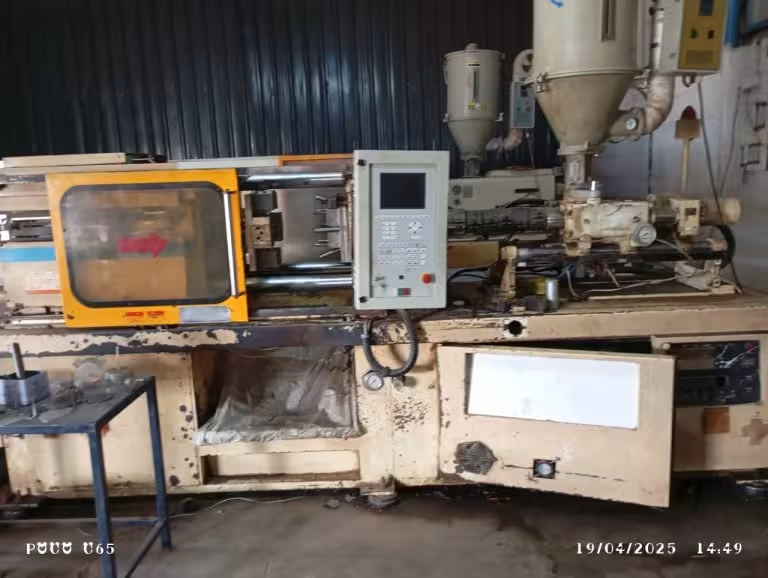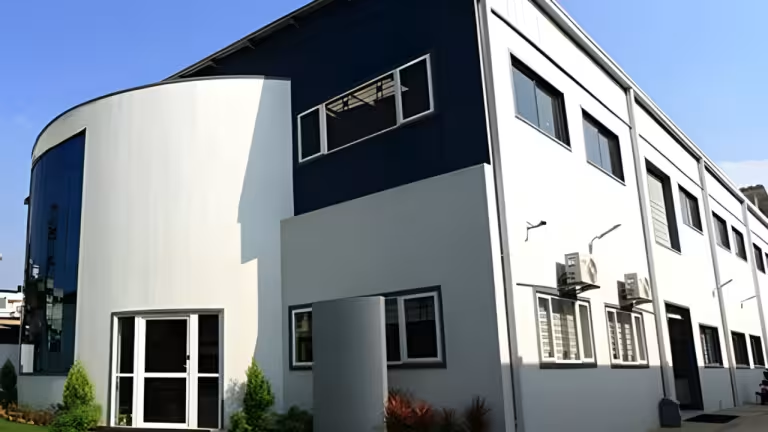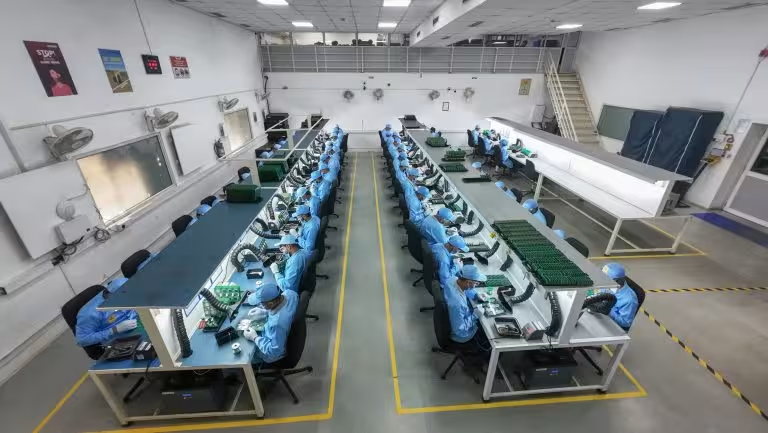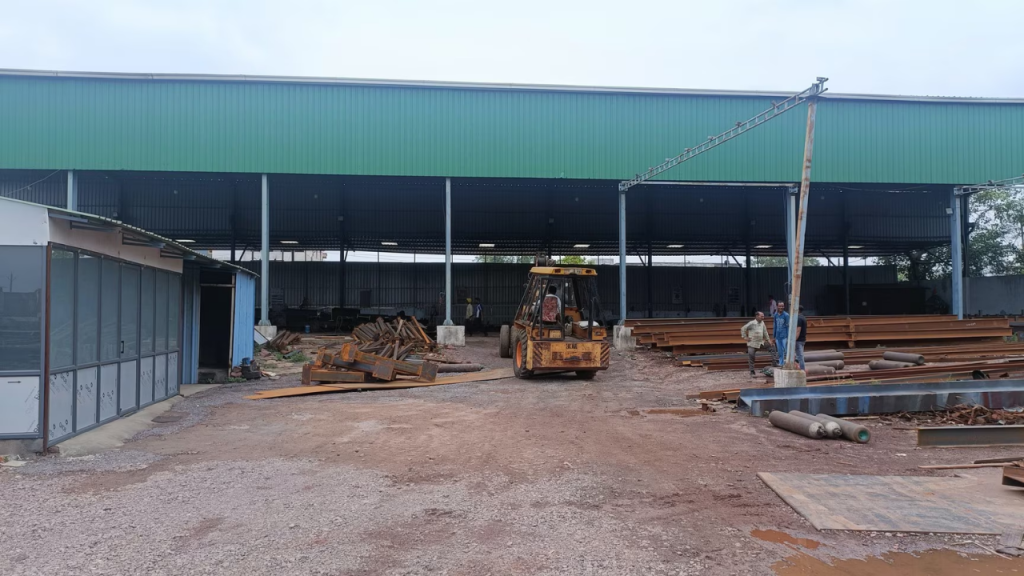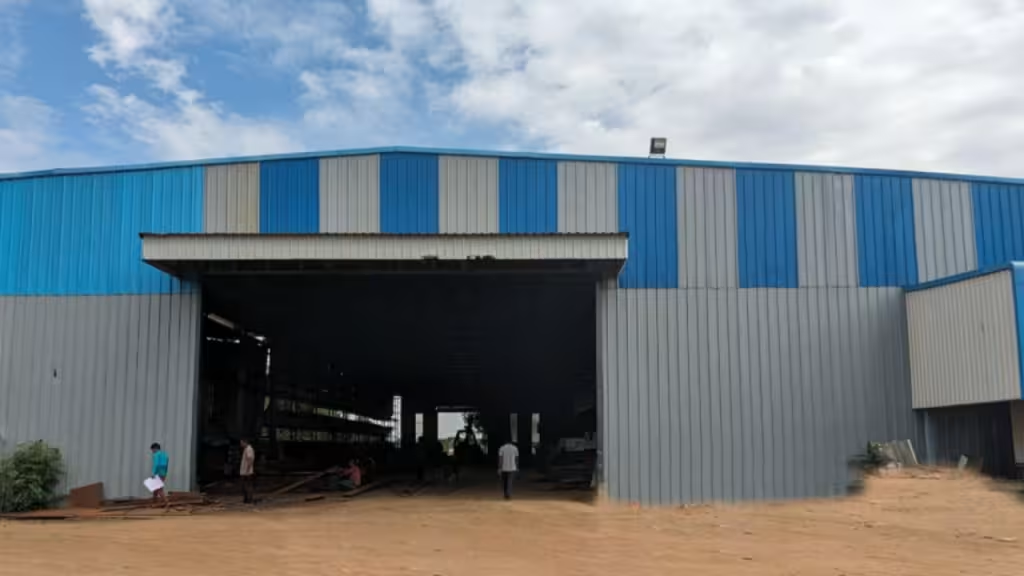
High-precision manufacturing capabilities for metal, plastic, electrical, and assembly requirements.
Manufacturing support for precision parts, assemblies, and production-ready components across demanding industries.
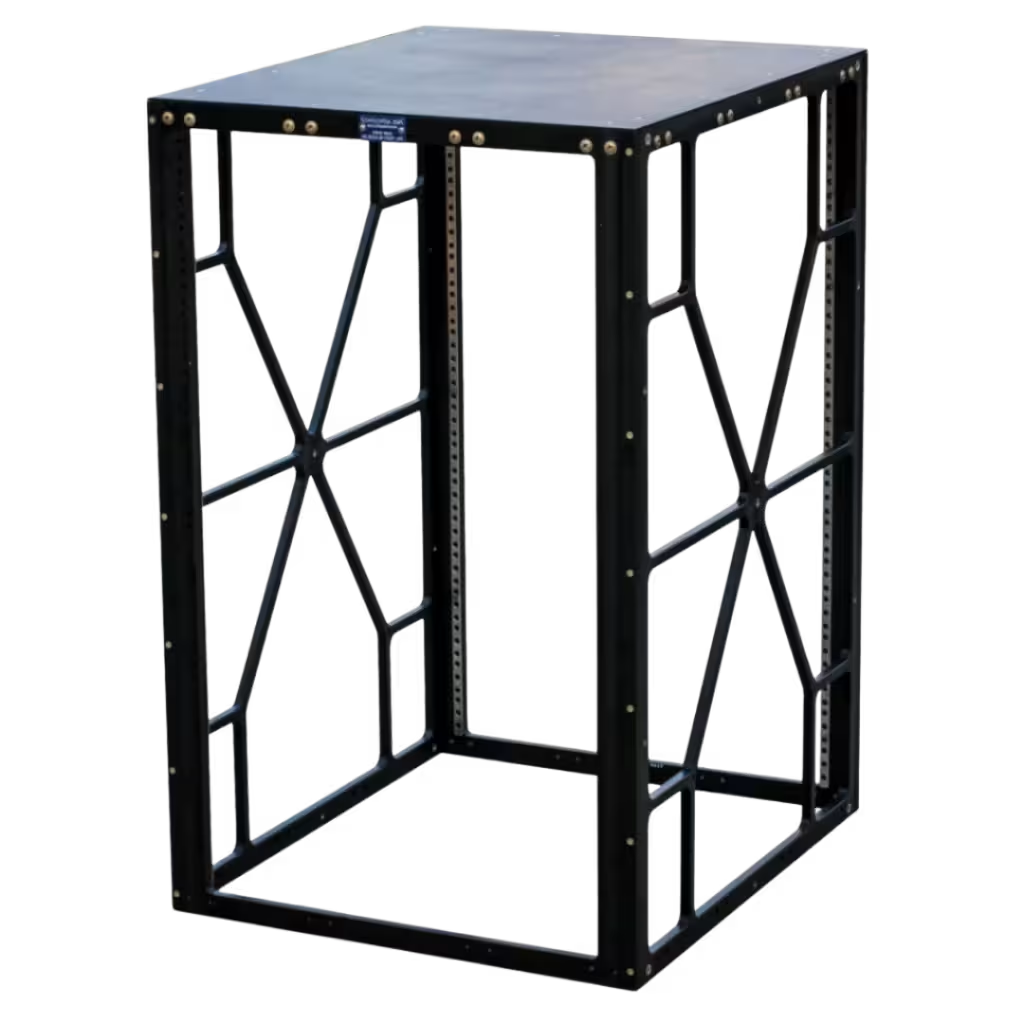
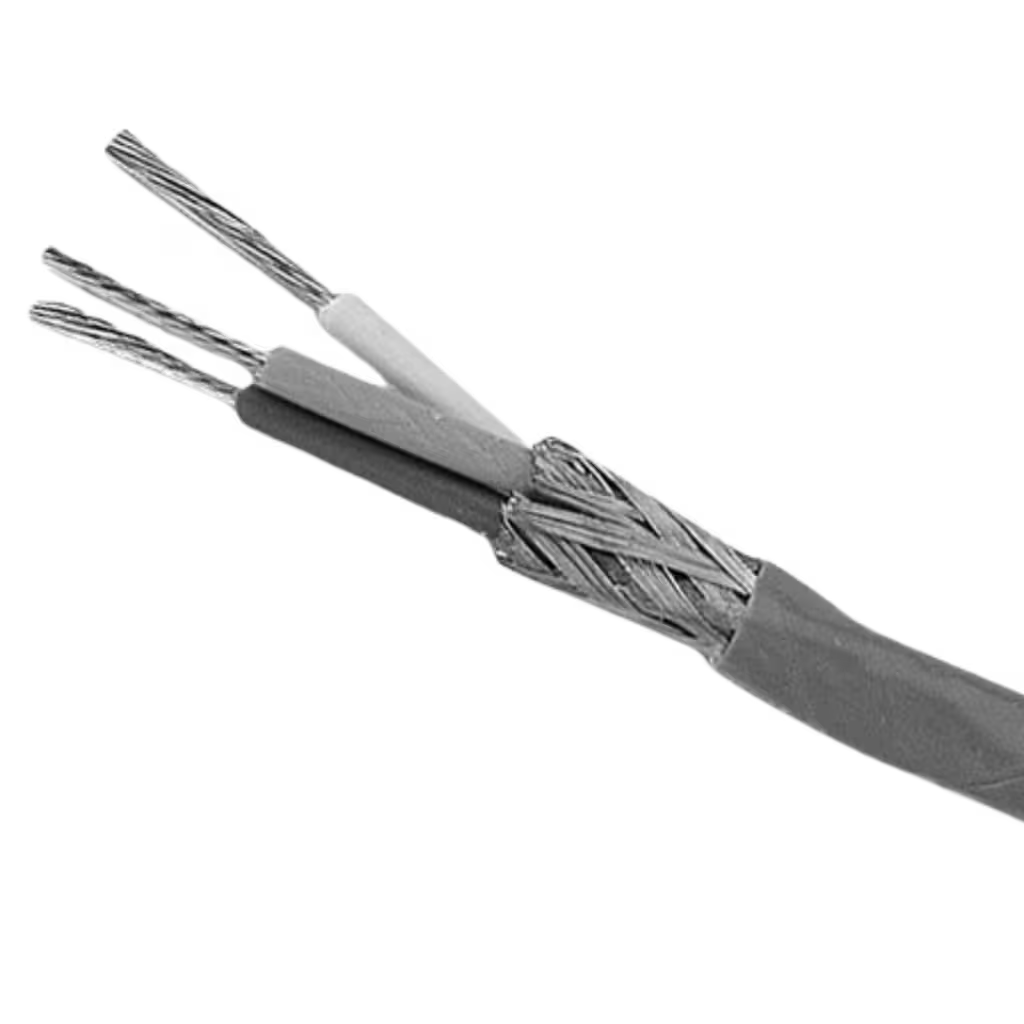
Manufacturing support for enclosures, Bento Box assemblies, cables, wiring harnesses, and BESS components.
High-strength fasteners, landing gear parts, and structural assemblies.
Metal frames, brackets, and assemblies for appliances and home equipment.
Forged housings, armor brackets, and mission-critical structural parts.
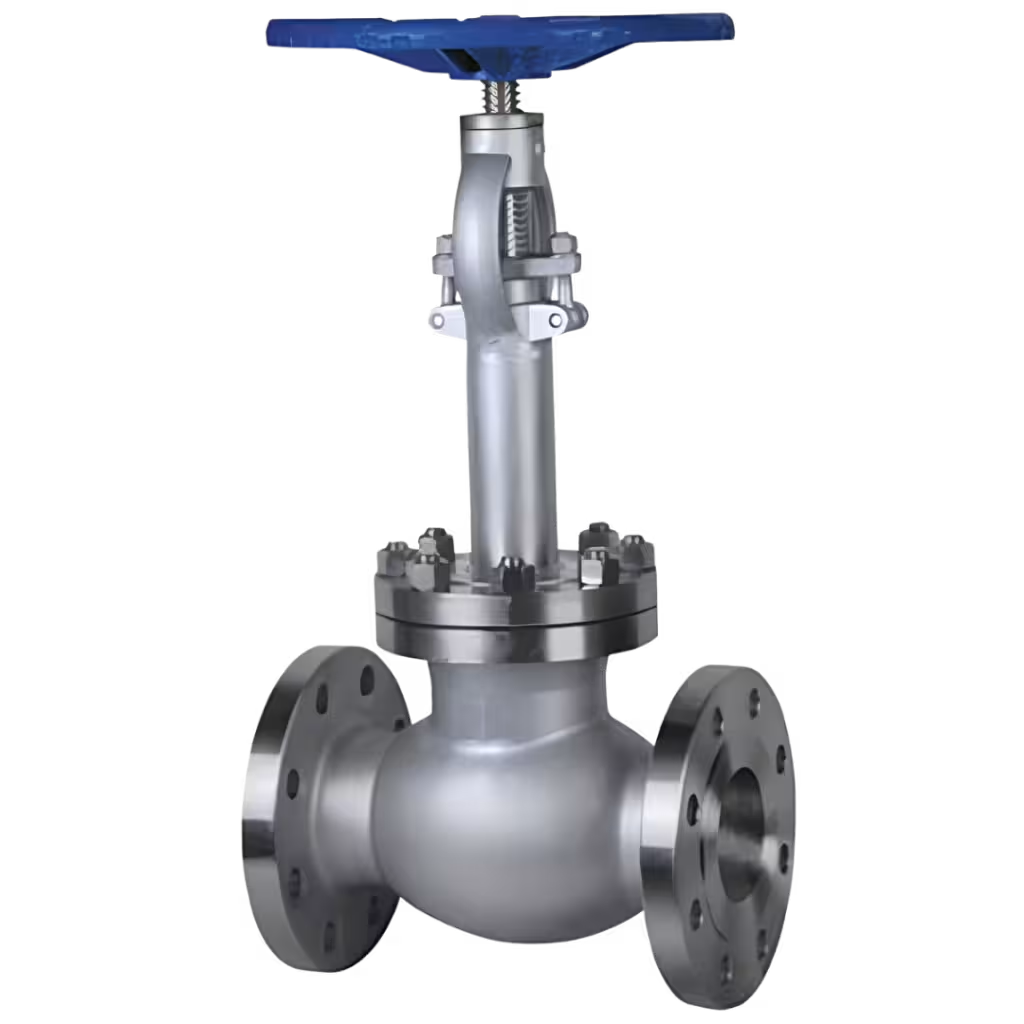
Valve bodies, flange blocks, and downhole drilling components.
Solar mounting parts, wind turbine brackets, and battery enclosures.
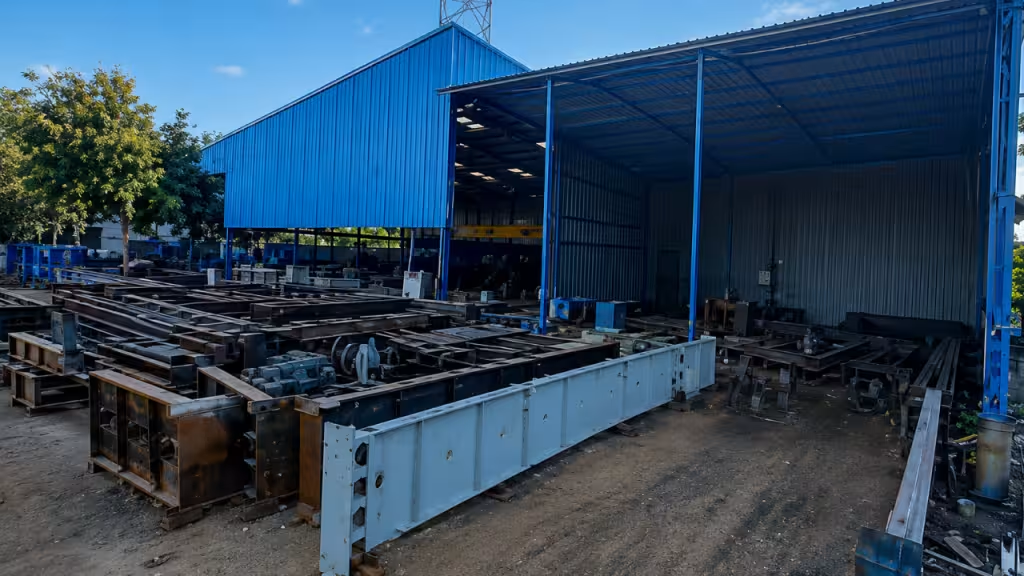
Large welded frames, PEB structures, and assemblies for industrial equipment.
Capacitor banks connected in parallel without proper impedance balancing are prone to internal circulating currents. These currents are not externally visible but contribute to accelerated insulation degradation, dielectric heating, and uneven aging. Balancing reactors are calculated to create an inductive voltage drop proportional to the flowing current, effectively damping inter-bank current oscillations. Reactance values are selected based on the rated current, frequency, and capacitor tolerance spread to ensure that the maximum current deviation remains within ±5% under all operating conditions.
High-order harmonics present in industrial environments can interact with capacitor banks to form resonant circuits, especially at the 5th, 7th, or 11th harmonic. The inclusion of a balancing reactor modifies the parallel resonance frequency of each bank and decouples them from each other, reducing the risk of harmonic amplification. This tuning ensures the system avoids harmonic resonance near known distortion frequencies and contributes to overall network impedance shaping.
Capacitor overheating typically results from excessive RMS current, often originating from unequal reactive current sharing. Balancing reactors reduce RMS deviation by limiting high-frequency transient and steady-state inter-bank flows, which are otherwise unsupported by traditional protection systems. This inductive buffer minimizes the probability of dielectric breakdown and extends capacitor service life. Thermal design accounts for continuous operation at full load with hot-spot temperature calculations based on IEC 60076-6 standards.
Need reliable Reactors for your next project? Get in touch with us today, and we’ll help you find exactly what you need!
Used to equalize current distribution across multiple capacitor groups, preventing circulating currents and ensuring uniform reactive power compensation.
Stabilizes reactive current flow among capacitor stages, reducing unbalanced loading and extending capacitor lifespan in automated compensation systems.
Improves current symmetry between fixed and switched capacitor banks, avoiding dynamic current imbalances during fast reactive power transitions.
Decouples filter branches to prevent resonance interaction and ensures accurate tuning of each filter stage in harmonic-prone systems.
Dampens transient circulating currents between capacitor groups under rapid load variation, maintaining thermal limits and protecting dielectric insulation.
Ensures balanced current sharing across trackside capacitors under varying inductive load conditions and prevents excessive capacitor stress.
Balancing reactors are typically specified with reactance values ranging between 0.5% to 5% of the capacitor bank impedance, with tolerances tight enough to ensure minimal power losses while achieving effective current balancing. Core material, flux density, air-gap profile, and thermal margins are engineered based on system operating voltage, frequency, and harmonic profile. High-voltage designs up to 33 kV are supported with dry-type or resin-cast construction, offering mechanical rigidity and high partial discharge immunity.
Protection coordination becomes more predictable when current through each capacitor group is stabilized. Balancing reactors reduce nuisance tripping of overload and unbalance relays by eliminating peak deviations in capacitor current. Additionally, they prevent saturation of current transformers used in protection and monitoring circuits. Thermal sensors, embedded RTDs, or thermistors can be integrated into the reactor body for predictive maintenance and condition monitoring.
Check all our Frequently Asked Question
Frigate evaluates the harmonic spectrum of the site, including THD levels and dominant harmonic orders, before designing the reactor. The reactor’s inductance is tuned to avoid resonant amplification with capacitor banks under distorted waveforms. Core materials are selected for low-loss performance under non-sinusoidal currents. This ensures thermal stability and resonance avoidance in harsh harmonic conditions.
Frigate designs balancing reactors up to 33 kV with precise inductance control and partial discharge resistance. Each unit is built using high-grade insulation and vacuum pressure impregnation to handle environmental stress and electrical transients. Terminal spacing and creepage distances meet IEC and IEEE standards for high-voltage installations. The reactors integrate seamlessly into busbar and GIS systems without derating.
Cable length variations lead to different impedance paths, creating current flow imbalances between capacitor banks. Frigate uses detailed impedance modeling of the installation to determine appropriate reactor values for each group. The balancing reactor introduces controlled reactance to normalize current distribution regardless of cable route. This approach ensures stable power factor correction and reduces capacitor overheating.
Yes, Frigate designs balancing reactors to handle fast switching conditions common in APFC systems. Reactors are sized to limit transient inrush and manage harmonic stress during rapid step changes. Materials and core geometry are selected to avoid saturation during frequent capacitor bank operations. This enhances operational reliability and ensures compliance with reactive power demand.
Each reactor is thermally rated using IEC 60076-6 guidelines with a focus on hotspot temperature limits and continuous load endurance. Frigate simulates overload behavior under 110–120% rated current for thermal margin verification. Coil windings are designed with optimal airflow and insulation class F or H, depending on duty cycle. Sensors can be embedded for condition monitoring and predictive maintenance planning.
Submit the form below and our representative will be in touch shortly.
10-A, First Floor, V.V Complex, Prakash Nagar, Thiruverumbur, Trichy-620013, Tamil Nadu, India.
9/1, Poonthottam Nagar, Ramanandha Nagar, Saravanampatti, Coimbatore-641035, Tamil Nadu, India. ㅤ
10-A, First Floor, V.V Complex, Prakash Nagar, Thiruverumbur, Trichy-620013, Tamil Nadu, India.
Need reliable wires and cables for your next project? Get in touch with us today, and we’ll help you find exactly what you need!
Need reliable Machining for your next project? Get in touch with us today, and we’ll help you find exactly what you need!