








In the domain of precision production — whether it’s aerospace components in India or automotive precision parts in Europe — one concept underpins so much of what we do: the tolerance cost curve. Understanding it helps manufacturing decision-makers avoid paying for precision that doesn’t add value.
In this blog, we will walk you through how tolerance affects cost, what a smart tolerance strategy looks like, and how precision machining services and inspection systems tie into all of this.
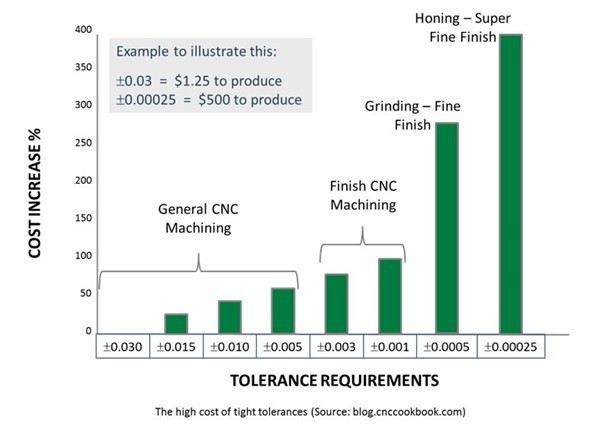
The Hidden Cost Behind Microns
In many manufacturing circles the thinking goes: “If I cut the tolerance in half, cost doubles.” It sounds logical. But when you analyze the precision manufacturing services world more closely, the math doesn’t work out that nicely. The relationship between tighter tolerances and cost is non-linear — it escalates faster than most expect.
This matters because many industrial parts, especially in aerospace and automotive, end up with very tight tolerances by default — as a compliance or assurance measure, rather than because the function demands it. Using a “just in case” tolerance specification can quietly inflate costs of machining, inspection, tooling, and fixturing.
What decision-makers need is not simply “Can we machine to ±0.01 mm?” but “Do we need ±0.01 mm?” and “What does that do to cost?” We’ll explore how machining process optimization, precision engineering solutions, and tolerance management systems help answer those questions.
Understanding the Tolerance Cost Curve
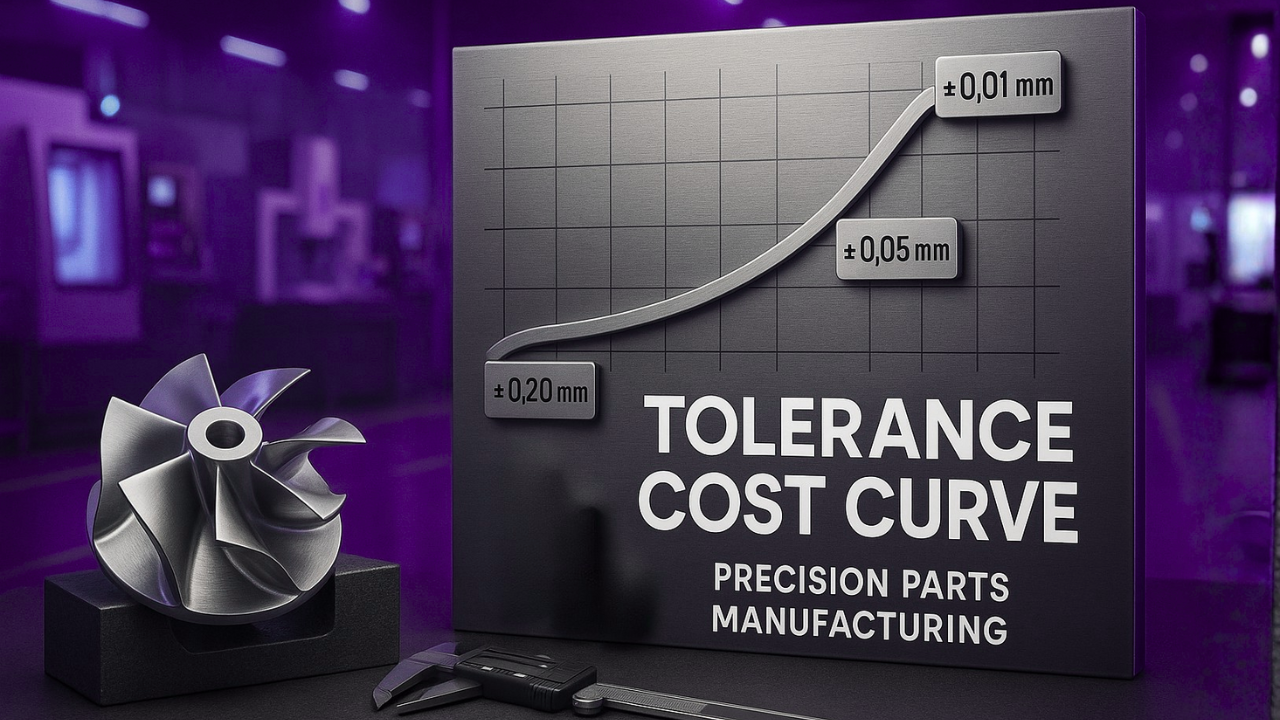
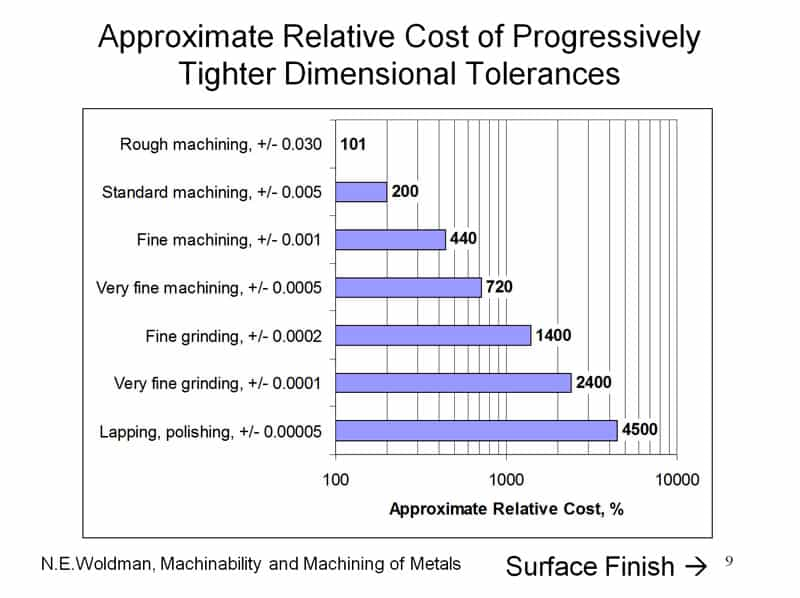
When we talk about the tolerance cost curve, we mean the relationship between the dimension of tolerance (how tightly you specify a feature) and the cost to manufacture and inspect that feature. Research shows that the tighter the tolerance, the more dramatic the cost escalation — not linear, but exponential in many cases.
For example: moving from ±0.05 mm tolerance to ±0.02 mm may raise costs by around 50%. But going further from ±0.02 mm to ±0.01 mm can multiply costs several times, due to hidden technical challenges.
Why does this happen?
- Slower feed rates and finer cuts: to hold tighter dimensions you often must reduce spindle speed or feed, increasing machining time.
- Stronger fixturing and less deflection margin: even small micro deflection becomes critical at very tight tolerances.
- Thermal drift and environmental control: small temperature changes now matter; you may need climate control or thermal compensation.
- Inspection becomes more demanding: measuring finer tolerances takes more time, more advanced equipment, and more operator skill.
- Higher scrap and rework risk: anywhere near the edge of process capability increases rejection or rework.
In effect, you cross a process-capability threshold: beyond that, every extra micron costs more than you might think. Decision-makers in manufacturing must understand where their processes sit on that curve.
Why Over-Specifying Tolerances Costs Millions
Many design drawings include “safety tolerances” — very tight values included out of caution or tradition, rather than based on function. This is where the cost bleeds quietly.
If tolerances are tighter than the function actually demands:
- You pay for longer machining time and special tooling.
- You pay more inspection cost, maybe even 100% inspection rather than statistical sampling.
- You restrict supplier options — only certain shops can hold those tolerances, giving less competition.
- You increase lead time and risk and often increase cost per part.
As one study states: “The most expensive tolerance is often the one that doesn’t add functional benefit.”
Mini Case Study #1 (Automotive precision parts): A European automotive supplier discovered on analyzing CAD drawings that multiple non-critical features were specified at ±0.01 mm, though the assembly would allow ±0.03 mm without impact. By relaxing the non-critical tolerances to ±0.03 mm and focusing only critical features on ±0.01 mm, they reduced machining cost by ~22 % and inspection backlog dropped significantly.
So, if you’re a procurement or operations manager in a precision machining supplier or industrial parts supplier, you should ask: what if some tolerances can be relaxed without harming performance?
The Science of Precision Manufacturing Services
When you operate in high-end arenas such as aerospace part manufacturing or advanced automotive components, you engage in precision engineering solutions and machining process optimization. Here, tolerances aren’t arbitrary — they align with process capability limits.
Key aspects of this science include:
- Assessing your machine tools, repeatability, and setup variation. If your machine can reliably hold ±0.02 mm, asking for ±0.005 mm may force extra ops or inspection.
- Matching features to process: some features require ±0.01 mm for safety; others might be fine at ±0.02 or ±0.03.
- Using in-process feedback, real-time metrology and better fixturing to keep accuracy high.
- Optimizing tool paths, tool wear, speeds and feeds to keep cost in check.
Use Case Example (Aerospace): A U.S. aerospace parts manufacturer needed a blade root with ±0.01 mm tolerance for performance reasons. They implemented real-time compensation for thermal drift and used high-precision CMM inspection. However, they identified casing mounting holes which had the same ±0.01 mm spec but functionally only required ±0.02 mm. By changing those specs accordingly, they cut inspection time by 35 % and changed machining cost significantly.
The message: precision is necessary—but specify where it matters, optimize the process, and ensure you know the cost impact of each micron.
The Role of Inspection and Data in Precision Economics
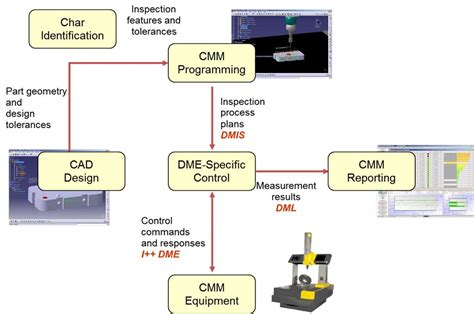
Once tolerances move into “tight” territory, inspection and data become key cost levers. The term industrial component inspection covers everything from coordinate measuring machines (CMMs), automated optical inspection, to in-process gauging. Tolerance decisions ripple into inspection cost and lead time.
What to consider:
- The tighter the tolerance, the longer the inspection takes (or the more automated and expensive the equipment becomes).
- Tolerance stack-up: If multiple parts in assembly each have tight tolerances, the cumulative variation can be bigger than one tight spec. A tolerance analysis vendor can help quantify this.
- Real-time data can support tolerance optimization: by analyzing actual manufacturing variations you can relax tolerances where you see process stability.
- Launching a tolerance management system helps align design tolerance, machining capability, inspection feedback, and cost data.
Mini Case Study #2 (Industrial parts supplier): An industrial parts supplier used a tolerance management system linked to their inspection data and found that nearly 40 % of the features routinely held much better than the spec. They relaxed the spec selectively, reducing scrap and rework, and improved throughput.
Inspection is not just a quality overhead—it is a cost and capability signal. When you understand inspection cost and variation data, you can apply smarter tolerance controls and reduce wasted cost.
From Guesswork to Insight – Value-Driven Tolerancing
Here’s where manufacturing economics meets engineering judgement. The term value-driven tolerancing reflects this: you specify tolerances based on the value they deliver, not simply because “we always do it”.
Decision-makers should ask:
- Does this tolerance dimension affect function, safety, or performance?
- Is the process capable of consistently holding it?
- What happens if we loosen it in one step? How much will I save vs performance risk?
- Could we accept slightly looser tolerance and reduce cost, lead time or complexity?
You can build a simple decision matrix for each critical feature:
- Function criticality (High / Medium / Low)
- Current specified tolerance
- Process capability (Cpk)
- Estimated cost impact of tighter tolerance
- Recommended tolerance
By guiding design reviews this way, you shift from “tightest possible” to “tight enough”. This approach also supports precision machining suppliers to negotiate more rational specifications, reduce costs, and increase competitiveness.
Often manufacturers see the benefit not when they tighten tolerances further but when they loosen what doesn’t need to be tight.
How Frigate Bridges Precision and Profit
In a world of complex machining, inspection and assembly chains, having a system that visualizes the tolerance cost curve is powerful. Enter a tolerance management system such as Frigate (hypothetical or vendor-agnostic) which links design, manufacturing metrics and cost.
What such a tool does:
- Maps tolerance vs cost across your product line, so you can see where you’re on the steep part of the curve.
- Highlights which feature genuinely need the tight tolerance and which are “over-engineered.”
- Enables precision cost analysis: showing how each extra micron of accuracy impacts tool life, inspection time, scrap rate and overall cost.
- Supports process capability limits: you can see which machining operations are already at the edge and therefore costly to push further.
Mini Case Study #3: A machine tool manufacturer using Frigate analysed 200 custom parts. They identified that about 30% of features required tolerances tighter than process capability supported without special setups. By adjusting specs accordingly, they reduced tooling wear by 28% and inspection cost per part by 33 %. They became more competitive as precision machining suppliers and improved their margin.
For decision-makers, this means you move from reaction (“our supplier says costing is high”) to insight (“here’s exactly which dimension is causing the escalation, and by how much”).
Industry-Specific Insights
Let’s apply this to three sectors: aerospace, automotive, and industrial equipment.
Aerospace part manufacturing: This sector often demands ultra-tight tolerances because of safety, weight, and performance. But even here, not every dimension needs the tightest spec. Using tolerance analysis, you can apply the tight tolerance only to critical mating surfaces or loads and relax elsewhere. This reduces costs while maintaining compliance.
Automotive precision parts: In automotive you have huge volumes. Even a small cost saving per part (by relaxing non-functional tolerances) can multiply to large savings over a production run. Automotive precision parts suppliers who adopt value-driven tolerancing win on cost and lead time.
Industrial equipment / machinery components: Here the goal is often cost-efficient manufacturing at moderate precision. A heavy industrial parts supplier might hold ±0.02 mm for bearing housing. Why specify ±0.005 mm if the application doesn’t need it? Using a precision manufacturing services strategy and linking design to cost allows you to be competitive and reduce over-engineering.
In each case, the common theme: understand your process capability, inspect actual performance data, and align tolerances to function and cost.
Precision Economics in Action – The New Competitive Advantage
What does all this mean for you as a manufacturing decision-maker in India or Europe? It means the competitive advantage lies not just in machine tools or materials, but in smarter tolerance management and cost-effective precision.
Consider these summary thoughts,
- The tightest possible tolerance is not always the best. It may cost you much more for a little extra benefit.
- Process capability is your friend. Known for each machine and each feature what it can reliably deliver.
- Inspection and data feed the cost curve. Don’t ignore them.
- Applying machining accuracy, tolerance optimization, and tolerance cost curve thinking across your supply chain is critical.
- Engage your design, tooling, manufacture and inspection teams early with a tolerance management system so that decisions on tolerance are informed by cost not guesswork.
- Suppliers who offer precision engineering solutions and understand the economics of tolerancing will help you, not just quote you.
Precision doesn’t mean perfection at any cost. Precision means fit for purpose, and cost-effective. In other words, precision with purpose.
Conclusion – From Precision to Purpose
In the manufacturing industry — especially in precision-demanding sectors like aerospace, automotive and industrial machinery — the cost of tolerances is often misunderstood. The notion that cost increases linearly with tighter tolerances is a myth. In reality, each extra micron of machining accuracy comes with hidden cost: slower feed, stronger fixturing, more inspection, more setup, greater scrap risk.
By applying value-driven tolerancing, using a tolerance management system, and partnering with suppliers who understand the tolerance cost curve and process capability limits, you can control cost while delivering performance.
So before your next design review or tolerancing discussion ask the simple but powerful question:
“Are we paying for precision, or just assuming it?”
When you shift from assumption to insight, you stop over-engineering, reduce costs, improve manufacturability — and you truly win in precision manufacturing. Get an instant quote from Frigate to see how smarter tolerancing can reduce costs and boost manufacturability of your parts.