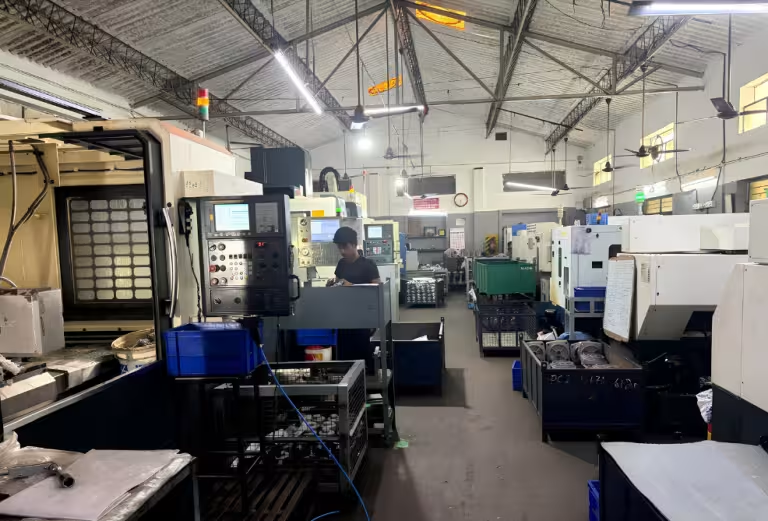

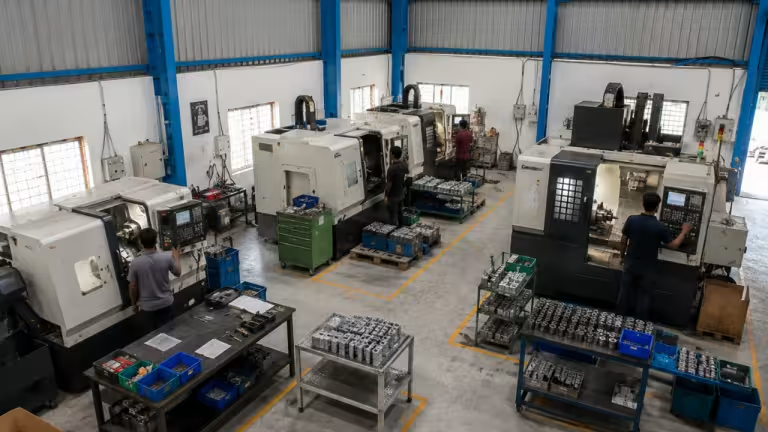








Aerospace programs depend on accuracy, stability, and long-term consistency. Every component created through Aerospace CNC Machining—whether it is a turbine blade seat, actuator housing, sensor bracket, or structural link—carries strict dimensional requirements that are measured down to microns. A small deviation can affect flight safety, reliability, or engine behavior.
Growing program complexity, fluctuating production volumes, and material constraints have increased pressure on machining teams. These challenges push both engineering and manufacturing partners to adopt smarter, more collaborative models. Risk sharing becomes a powerful framework because it allows both sides to divide responsibility for quality, cost, engineering adjustments, and production performance.
Aerospace research shows that over 67% of supply chain disruptions relate to machining constraints, tooling availability, and engineering revision delays. Collaborative models reduce these risks by improving transparency, aligning incentives, and promoting faster issue resolution.
A shared approach gives both partners confidence and control—something essential for long-running Aerospace CNC Machining programs.
Common Pain Points in Aerospace CNC Machining Partnerships
Aerospace machining is demanding. High precision, strict compliance, and unpredictable changes introduce friction that affects both sides of a partnership. These pain points often slow teams down or cause unexpected cost overruns.
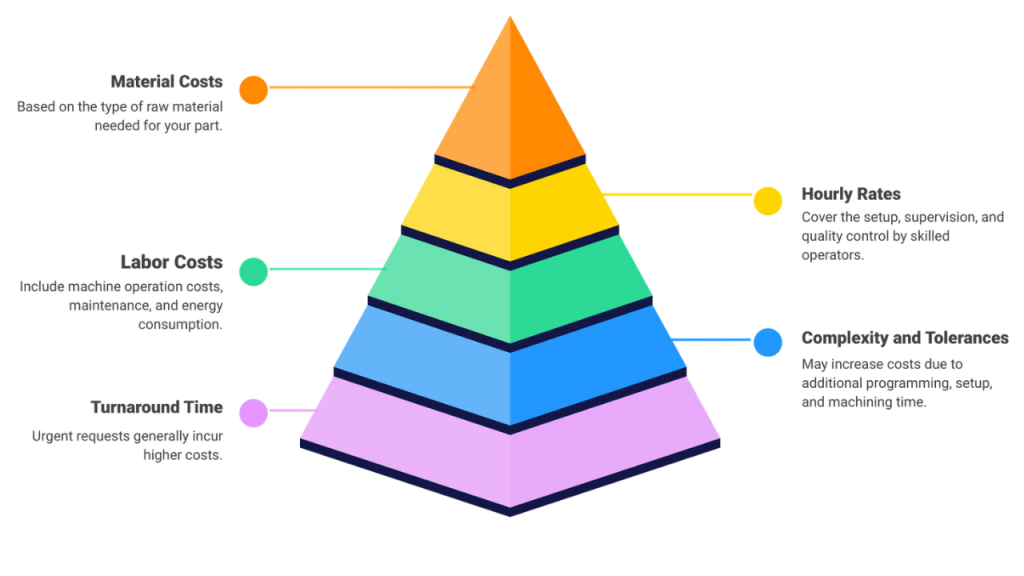
Deeper Look at the Most Common Challenges
- Heavy Upfront Costs
Aerospace machines, cutting tools, metrology equipment, and aerospace-grade fixtures require large investments. Specialized materials like titanium and Inconel add further cost pressure.
- Volatile Production Volumes
Program ramps, engineering changes, or customer-level shifts create sudden drops or spikes in machining demand. Such unpredictability makes capacity planning difficult.
- Extended Qualification Cycles
Aerospace components require multi-stage validation, FAIRs, PPAPs, and repeated inspections. Each change resets timelines and increases engineering workload.
- Strict Traceability Requirements
Every material, process, operator, and toolpath must be documented.
Statistics indicate that aerospace machining documentation requirements exceed industrial machining by nearly 40%.
- Quality and Tolerance Risks
Multi-axis machining creates chances for micro-errors that demand corrective action, rework, or scrap.
These challenges grow when both sides operate independently. Risk-sharing frameworks provide a structured way to distribute responsibilities and reduce pressure in Aerospace CNC Machining environments.
How Do Revenue-Sharing and Price Reduction Mechanisms Strengthen Financial Collaboration in Aerospace CNC Machining?
Financial alignment shapes long-term success. Revenue-sharing and cost-reduction mechanisms help balance financial exposure and encourage both sides to contribute toward efficiency and quality improvements.
Why Revenue Sharing Works
Revenue-sharing creates a financial structure where success benefits everyone involved.
When production increases or machining yields improve, both parties gain proportionally. This approach fosters trust and encourages both teams to support –
- Better forecasting
- Faster engineering support
- Process optimization
- Material planning
- Quality improvements
Such models feel natural within Aerospace CNC Machining, where program volumes can shift and machining strategies evolve.
Price Reduction Mechanisms That Motivate Improvement
Cost-down programs help reduce overall production expenses by rewarding –
- Cycle time reduction
Shorter toolpaths, smarter tooling, and optimized speeds/feeds improve output.
- Scrap reduction
Better stability in machining and fixture design reduces waste.
- Rework minimization
Joint engineering reviews help prevent repeat errors.
- Volume growth
Higher volumes create affordable pricing structures.
A practical example helps illustrate impact –
Reducing cycle time from 22 minutes to 18 minutes can save up to 18% per part, which becomes substantial across thousands of units.
Such shared savings strengthen long-term relationships built around Aerospace CNC Machining.
Risk Sharing Models That Strengthen Strategic Partnerships
Partners work best when responsibilities and benefits are clearly defined. Risk-sharing frameworks provide clarity and keep projects stable, even as challenges evolve.
Co-Investment Models
Co-investment means both sides share the cost of fixtures, automation, specialty tooling, or metrology systems.
This distributes financial pressure and ensures equipment readiness for complex machining work.
Shared Forecasting and Demand Planning
Collaborative forecasting helps partners plan machining capacity, material sourcing, and manpower allocation.
Accurate planning avoids sudden overloads or idle machines.
Joint Engineering Development
Engineering teams collaborate to refine toolpaths, perform DFMA (Design for Manufacturing and Assembly) reviews, and validate prototypes.
This reduces NPI-related delays.
Unified Quality Systems
Shared quality guidelines cut down duplicate testing, inspection bottlenecks, and revision loops.
A unified approach leads to faster approvals and smoother workflows.
Long-Term Pricing Structures
Pricing models based on predictable capacity commitments and stable volumes reduce financial stress.
These structures support confidence across long aerospace program cycles driven by Aerospace CNC Machining.
How Risk Sharing Improves Aerospace CNC Machining Performance?
Stronger collaboration speeds up processes, reduces waste, and improves stability.
Improved Production Flow
Partners who plan together avoid production bottlenecks.
Machine loads stay balanced, and parts move smoothly through machining and inspection.
Reduced Defect Rates
Early engineering collaboration helps catch errors sooner.
Studies show that collaborative machining environments reduce defects by up to 28%.
Faster Response to Engineering Changes
Shared responsibility simplifies communication and speeds up toolpath updates, fixture adjustments, and part validations.
Higher Machine Utilization
Machine utilization improves when both sides align schedules, material supplies, and tooling readiness.
Many teams see utilization improvements in the 20–35% range.
Greater Supply Chain Resilience
Risk-sharing ensures both parties prepare for disruptions, share spare capacity, and maintain backup plans for critical machining operations.
This stability is vital for long-running Aerospace CNC Machining programs.
How Do Teams Evaluate the Right Risk-Sharing Approach for Aerospace CNC Machining Partnerships?
Selecting the right model requires careful, technical evaluation of capabilities, performance history, and operational flexibility.
Key Factors to Assess
- Precision capability and certifications
AS9100, NADCAP (where relevant), and machining stability matter.
- Capacity readiness
Ability to scale when production increases.
- Tooling and fixturing strategy
Efficiency of setups and repeatability.
- Cost structure visibility
Transparency of setup cost, cycle time, and rework cost.
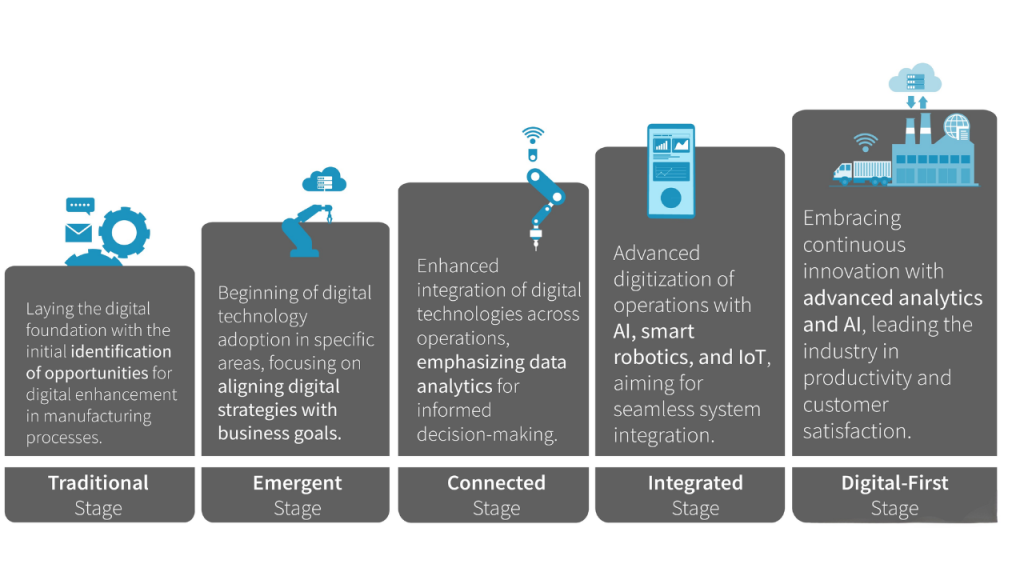
- Digital maturity
Real-time tracking, quality system integration, and traceability tools.
Critical Performance Metrics
- On-time delivery rates
- Scrap percentage
- Machine uptime
- Cpk/Ppk stability
- FAIR and documentation accuracy
- Responsiveness to engineering changes
These data points help determine the level of shared responsibility appropriate for Aerospace CNC Machining partnerships.
How Does Frigate Strengthen Modern Risk Sharing Models for Aerospace CNC Machining?
Frigate plays a crucial role in transforming how machining partnerships collaborate across complex aerospace supply chains. Teams working on Aerospace CNC Machining often struggle with limited data visibility, slow engineering updates, scattered communication, and unpredictable capacity readiness. Frigate solves these issues by creating a connected digital ecosystem where every machining insight, quality update, and supplier capability becomes visible and actionable.
A stronger technical foundation allows partners to distribute responsibility more evenly, reduce hidden risks, and accelerate decision-making.
The platform supports long-term machining programs by combining real-time intelligence, structured workflows, and clear traceability—elements essential for risk-sharing to function properly.
Real-Time Visibility Across Machining Operations
Frigate continuously tracks machining performance, machine loading, cycle-time behavior, deviation trends, and quality outcomes.
Teams get immediate insight into –
- Production flow
- Capacity bottlenecks
- Dimensional trends
- Tooling wear patterns
- Quality deviations
Such visibility reduces uncertainty and allows both partners to solve issues early rather than react late.
Automated Sourcing and Supplier Evaluation
Sourcing aerospace machining capacity requires careful evaluation of certifications, material capability, tolerance limits, and program experience.
Frigate automates this by –
- Assessing supplier qualifications
- Identifying available capacity
- Reviewing historical performance
- Highlighting machining expertise
This ensures teams choose partners aligned with their precision and compliance needs, strengthening the foundation for risk sharing.
Performance Dashboards for Objective Monitoring
Frigate provides dashboards that track –
- Machine utilization
- Average cycle times
- First-pass yield
- Scrap and rework percentages
- Inspection performance
These dashboards ensure both sides evaluate performance using the same data, removing assumptions and promoting fair, transparent collaboration in Aerospace CNC Machining.
Engineering Collaboration Tools for Faster Change Management
Engineering changes require updates to CAD models, CAM programs, fixtures, and inspection plans.
Frigate centralizes engineering activity by offering –
- Controlled document updates
- Change-status tracking
- Communication threads for quick issue resolution
- Structured workflows linking engineering, machining, and quality teams
Faster change handling directly improves program stability and reduces production downtime.
Digital Quality Audits for Seamless Compliance
Aerospace programs require precise documentation and compliance checks.
Frigate supports quality alignment through digital tools that simplify –
- FAIR submissions
- NCR tracking
- Traceability reports
- Corrective action workflows
- Audit readiness checks
This reduces the manual burden on teams and ensures compliance throughout the machining lifecycle.
Capability Mapping for Confident Partner Selection
Every machining supplier has strengths—certain materials, tolerances, machine configurations, or experience with specific aerospace parts.
Frigate maps these capabilities by analyzing –
- Machine types (3-axis, 5-axis, mill-turn, etc.)
- Material machining history
- Dimensional accuracy patterns
- Throughput capability
- Certification strength
This enables teams to confidently align work packages with the right partners, reducing technical risk from the start.
Deep Impact on Long-Term Aerospace CNC Machining Programs
Frigate simplifies collaboration and removes hidden barriers that typically slow down aerospace machining workflows.
The system enables –
- Shared responsibility
- Transparent reporting
- Predictable production outcomes
- Faster cross-team decisions
- More reliable long-term planning
Such clarity is essential for any risk-sharing model to succeed.
Aerospace programs last for years, sometimes decades—Frigate ensures the partnership stays aligned through every stage of Aerospace CNC Machining, from early development to full-rate production.
Conclusion
Risk-sharing models create balance, clarity, and stability across aerospace machining partnerships. Teams gain tighter control over cost, clearer ownership of engineering needs, stronger visibility into quality, and shared motivation for continuous improvement. Such alignment supports long-running Aerospace CNC Machining programs where precision and consistency matter every day.
Frigate helps aerospace machining teams simplify complexity, strengthen collaboration, and gain complete visibility across every machining activity.
Transparent data and clear performance insights make long-term partnerships more reliable and easier to manage.
Connect with Frigate to elevate your Aerospace CNC Machining partnerships and unlock smarter, sustainable risk-sharing models.