
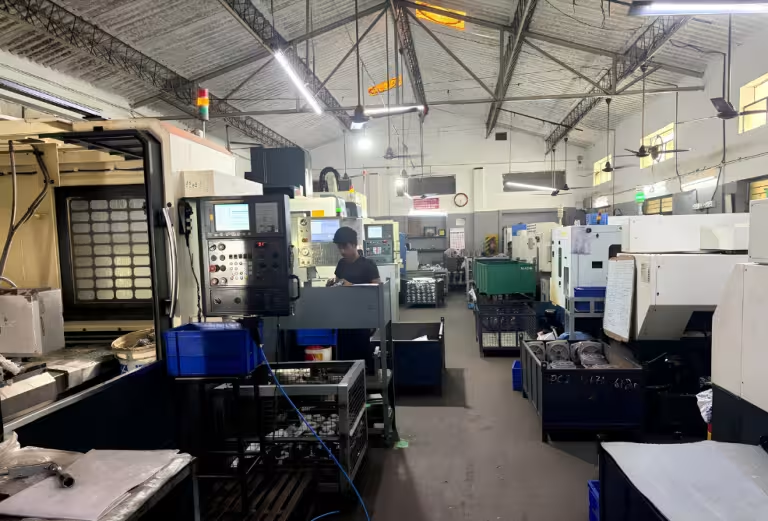

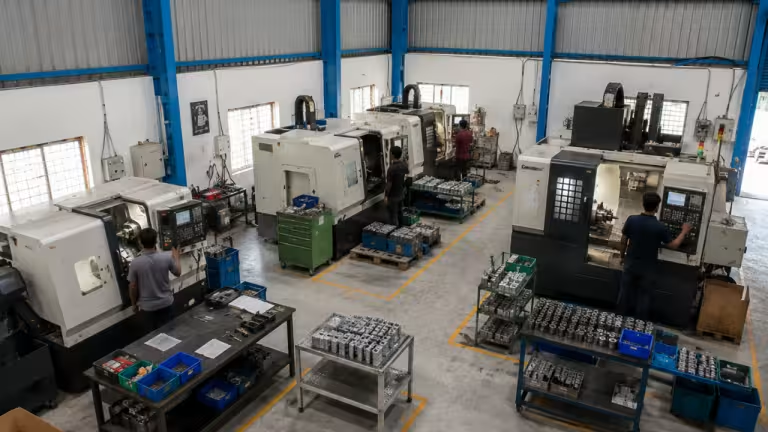

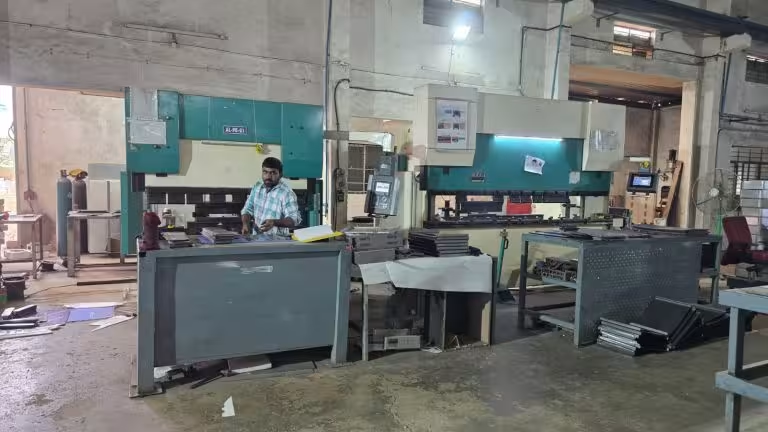






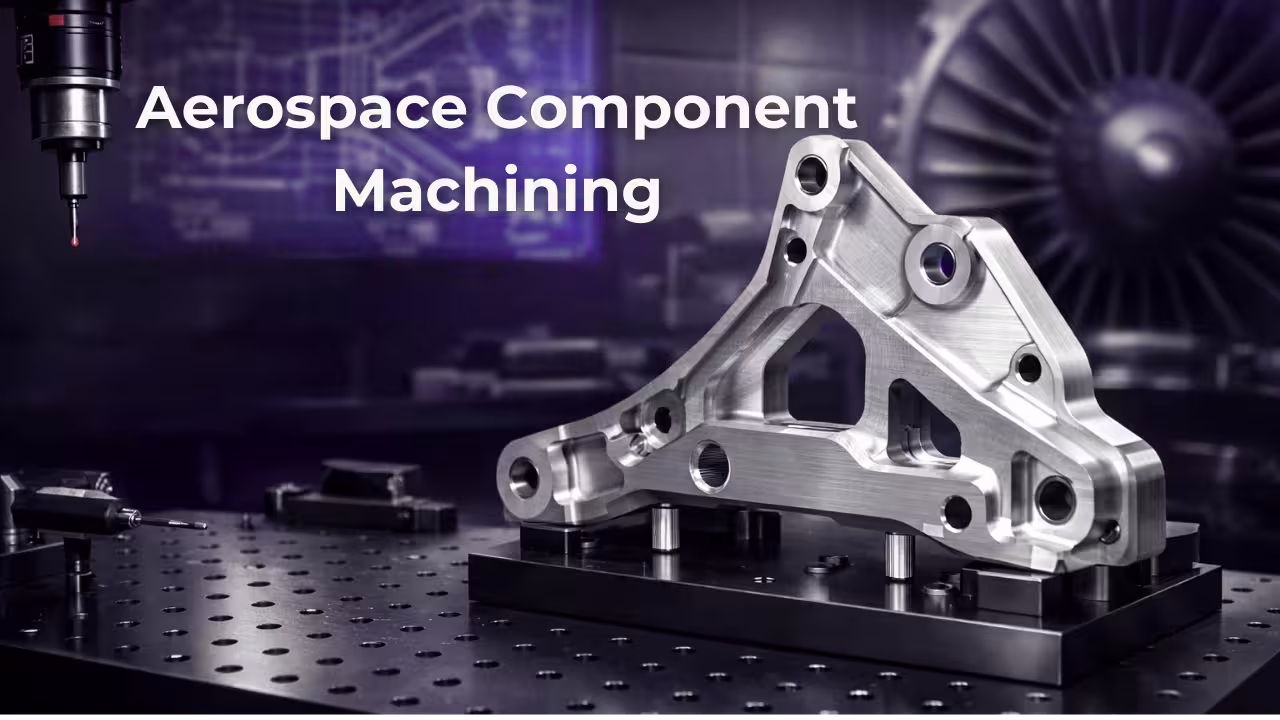
Aircraft components operate under continuous stress, vibration, pressure variation, and extreme temperatures. Structural brackets, engine mounts, housings, and landing gear components must perform reliably for thousands of flight cycles. A deviation smaller than a few microns can influence fitment, fatigue life, and aerodynamic performance.
Aerospace Component Machining involves producing precision parts from titanium alloys, Inconel 718, aluminum 7075-T6, stainless steel, and other high-performance materials. These materials are strong and lightweight, but they are also difficult to machine. Heat generation, tool wear, and dimensional instability must be carefully controlled.
Inspection ensures that every component meets strict engineering drawings and aerospace standards. Research across aerospace supply chains shows that poor quality can account for 15–20% of manufacturing costs, largely due to rework, scrap, and compliance delays. Strong inspection systems protect performance, reduce financial risk, and maintain supply chain reliability.
Why is Inspection a Strategic Necessity in Aerospace Component Machining?
Precision alone does not guarantee compliance. Verification proves that machining processes consistently deliver accurate results. Aerospace regulations require documented inspection at every stage of production.
A structured inspection framework within Aerospace Component Machining ensures –
- Compliance with AS9100 and NADCAP standards
- Validation of critical tolerances
- Prevention of tolerance stack-up
- Early detection of machining drift
- Reduction of scrap and rework
Undetected variation can result in rejected batches, delayed aircraft assembly, and contract penalties. A single non-conforming shipment may disrupt an entire production schedule.
Inspection converts manufacturing data into measurable proof of conformity. That proof supports certification approvals, audit readiness, and long-term supplier credibility. Continuous monitoring reduces operational uncertainty and strengthens program stability.
How is Micron-Level Dimensional Accuracy Achieved and Verified?
Modern aerospace components feature complex geometries created through 4-axis and 5-axis CNC machining. Thin walls, curved surfaces, and multi-angle bores demand extremely tight tolerances. Critical dimensions often fall within ±5 microns.
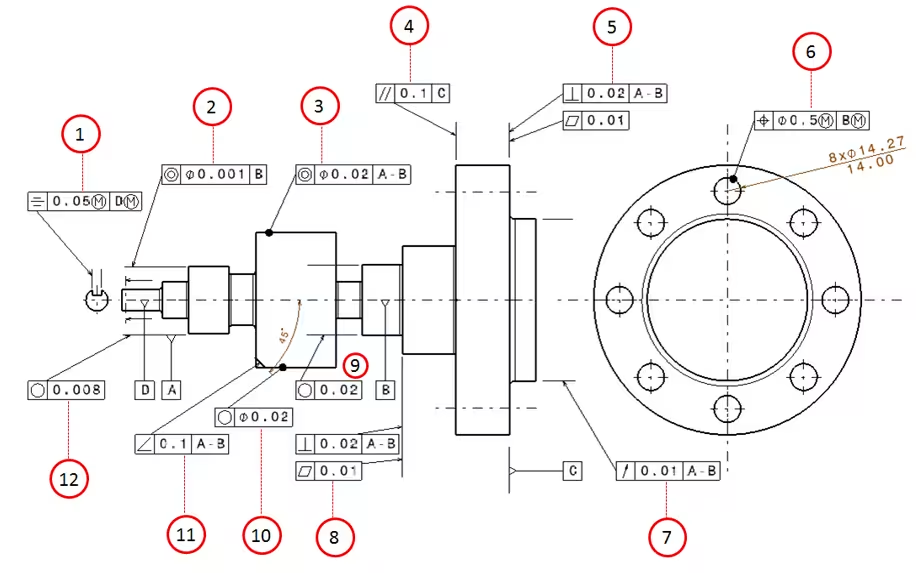
Geometric Dimensioning and Tolerancing (GD&T) defines how features relate to each other. Position tolerance ensures proper hole alignment. Flatness ensures effective sealing. Profile tolerance maintains aerodynamic precision.
Dimensional validation in Aerospace Component Machining relies on advanced metrology systems such as –
- Coordinate Measuring Machines (CMMs) for 3D probing
- Laser scanning systems for contour mapping
- Optical measurement for fine features
- Surface contour analysis equipment
Process capability indices such as Cp and Cpk measure stability. Aerospace OEMs often require Cpk values above 1.67 for critical features. Lower values signal variation risk and require corrective action.
Tolerance stack-up analysis evaluates cumulative dimensional effects during assembly. Small variations across multiple components can combine into major misalignment. Systematic inspection prevents this chain reaction.
Accurate dimensional control ensures structural stability, proper load distribution, and enhanced fatigue resistance.
Why Does Material Verification and Traceability Matter So Much?
Material composition directly affects mechanical strength, corrosion resistance, and fatigue life. Aerospace alloys must meet strict chemical and metallurgical specifications. Even minor deviations in alloy content can reduce performance.
Material control within Aerospace Component Machining typically includes –
- Validation of Mill Test Reports (MTRs)
- Heat number tracking and batch documentation
- Positive Material Identification (PMI) using XRF technology
- Hardness and tensile strength testing
- Supplier certification review
PMI confirms chemical composition without damaging the component. This process prevents material mix-ups and protects against counterfeit alloys.
Traceability links each finished part to its raw material batch, machining parameters, inspection results, and operator identification. Digital ERP-integrated systems maintain secure, revision-controlled documentation.
Audit findings frequently highlight missing or incomplete documentation as major non-conformities. Strong traceability systems reduce compliance risk and speed up certification approvals.
Material authenticity ensures structural reliability and protects long-term operational safety.
How Do Surface Integrity and Non-Destructive Testing Prevent Failures?
Surface quality directly influences fatigue life. Machining operations generate heat and stress that can alter material microstructure if not properly controlled. Residual stresses or microcracks may develop without visible signs.
Surface roughness is measured in Ra values. Functional aerospace surfaces typically require Ra between 0.8 µm and 1.6 µm. Critical sealing surfaces may demand even smoother finishes.
Non-Destructive Testing (NDT) methods detect hidden flaws without harming the component. Common techniques include –
- Ultrasonic Testing (UT) for internal void detection
- Magnetic Particle Inspection (MPI) for surface cracks
- Dye Penetrant Inspection (DPI) for fine surface defects
- Radiographic Testing (RT) for internal structural anomalies
Studies show that fatigue cracks often initiate at surface imperfections. Early detection significantly lowers failure probability.
Metallurgical analysis may also evaluate grain structure and heat-affected zones. Microhardness testing confirms that machining has not degraded material properties.
Comprehensive surface integrity management strengthens durability and extends service life in Aerospace Component Machining programs.
What Role Do First Article Inspection and Process Validation Play?
New aerospace programs require formal validation before full-scale production begins. First Article Inspection (FAI) verifies that initial production meets all engineering and specification requirements.
AS9102 standards guide FAI documentation. Ballooned drawings connect each feature to inspection results for complete traceability.
FAI typically includes –
- Full dimensional layout verification
- Material and certification review
- Special process validation
- Surface treatment confirmation
- Functional feature inspection
Process capability studies evaluate machine stability, cutting parameters, tool wear rates, and fixture rigidity. Consistency must be demonstrated before scaling production.
Process Failure Mode and Effects Analysis (PFMEA) identifies potential machining risks. High-risk operations receive enhanced inspection controls.
Structured validation reduces production delays, minimizes corrective actions, and ensures repeatability within Aerospace Component Machining operations.
How Do Digital Quality Systems Improve Aerospace Inspection Control?
Manual inspection records slow decision-making and increase human error. Digital quality systems enhance transparency and real-time visibility.
Integrated systems within Aerospace Component Machining enable –
- Automated CMM data collection
- Real-time Statistical Process Control dashboards
- Predictive analytics for tool wear monitoring
- Centralized document management
- Secure cloud-based traceability
Data analytics identify dimensional drift before tolerance limits are exceeded. Predictive monitoring allows preventive maintenance and reduces scrap.
Cybersecurity measures protect sensitive aerospace data. Controlled access and encrypted storage ensure regulatory compliance.
Digital inspection ecosystems improve audit readiness, accelerate approvals, and enhance supply chain confidence.
How Does Frigate Ensure Compliance and Reliability in Aerospace Component Machining?
Sustainable aerospace programs demand more than precision machining. They require structured quality systems, documented controls, and measurable process stability. Frigate embeds compliance into every stage of Aerospace Component Machining, ensuring that inspection is proactive rather than reactive. Quality assurance is integrated within production workflows to reduce risk, prevent variation, and maintain regulatory alignment.
The approach focuses on systematic validation, controlled execution, and data-driven monitoring.
Advanced Metrology Infrastructure for Dimensional Control
Precision measurement forms the foundation of compliance. Frigate utilizes Coordinate Measuring Machines (CMMs), high-resolution probing systems, and specialized gauges to verify complex geometries and micron-level tolerances.
Dimensional inspection capabilities support –
- Multi-axis feature verification
- GD&T compliance validation
- Surface contour measurement
- Tight tolerance confirmation within ±5 microns where required
Inspection programs are developed directly from engineering drawings. Ballooned drawings and digital measurement plans ensure that each critical feature is verified and recorded. Measurement data is stored securely for audit readiness and long-term traceability.
Consistent dimensional verification ensures proper assembly fit, structural stability, and fatigue resistance.
Structured Calibration and Measurement Assurance
Measurement accuracy depends on calibrated equipment. Frigate maintains scheduled calibration programs aligned with ISO and aerospace standards. All inspection instruments undergo periodic verification to maintain measurement integrity.
Calibration management includes –
- Traceability to national and international standards
- Documented calibration intervals
- Preventive maintenance of metrology equipment
- Environmental monitoring of inspection areas
Controlled calibration reduces the risk of measurement drift and protects dimensional accuracy across production cycles.
In-Process Inspection and Risk-Based Quality Control
Quality control does not begin at final inspection. Frigate integrates in-process inspection checkpoints at critical machining stages. High-risk operations such as deep cavity machining, thin-wall sections, and precision bores receive additional verification.
Control plans are developed through risk assessment methods such as Process Failure Mode and Effects Analysis (PFMEA). These plans define –
- Critical-to-quality characteristics
- Inspection frequency
- Measurement methodology
- Acceptance criteria
Early detection of variation prevents non-conforming batches and reduces costly rework. Process capability studies (Cp and Cpk analysis) confirm stability before scaling production volumes.
AS9100-Aligned Quality Management Systems
Regulatory compliance is essential in Aerospace Component Machining. Frigate’s quality management framework aligns with AS9100 standards, ensuring systematic documentation and controlled processes.
Quality management practices include –
- Documented standard operating procedures
- Corrective and preventive action systems (CAPA)
- Internal audits and continuous improvement reviews
- Supplier qualification and material verification protocols
Structured quality governance ensures that every component meets aerospace regulatory expectations and contractual requirements.
Digital Traceability and Data-Driven Monitoring
Complete traceability is critical for aerospace programs. Frigate utilizes digital documentation systems integrated with production and inspection data. Each component is traceable to its raw material batch, machining parameters, operator records, and inspection results.
Digital quality systems enable –
- Automated CMM data capture
- Real-time statistical process control (SPC)
- Secure storage of inspection records
- Rapid retrieval during audits
Continuous data monitoring allows early detection of dimensional trends or process drift. Predictive analysis supports preventive adjustments before tolerance limits are exceeded.
This structured digital ecosystem strengthens transparency, reduces compliance risk, and enhances supply chain confidence.
Commitment to Preventive Quality in Aerospace Component Machining
Reliability is achieved through prevention rather than correction. Frigate’s structured inspection framework minimizes uncertainty, protects production schedules, and ensures regulatory compliance across batch volumes.
Capability validation, controlled inspection checkpoints, and disciplined documentation practices work together to support consistent performance. The result is stable Aerospace Component Machining operations that meet engineering specifications and regulatory standards without compromise.
Frigate’s integrated quality approach ensures measurable, repeatable, and audit-ready aerospace manufacturing outcomes.
Conclusion
Aircraft components must perform flawlessly under demanding operational conditions. Structural integrity depends on precision machining, validated materials, controlled surface finish, and consistent process monitoring.
Frigate delivers dependable Aerospace Component Machining supported by rigorous inspection frameworks, advanced metrology systems, and complete digital traceability.
Connect with Frigate to strengthen aerospace quality assurance, enhance compliance confidence, and achieve consistent long-term manufacturing performance.