


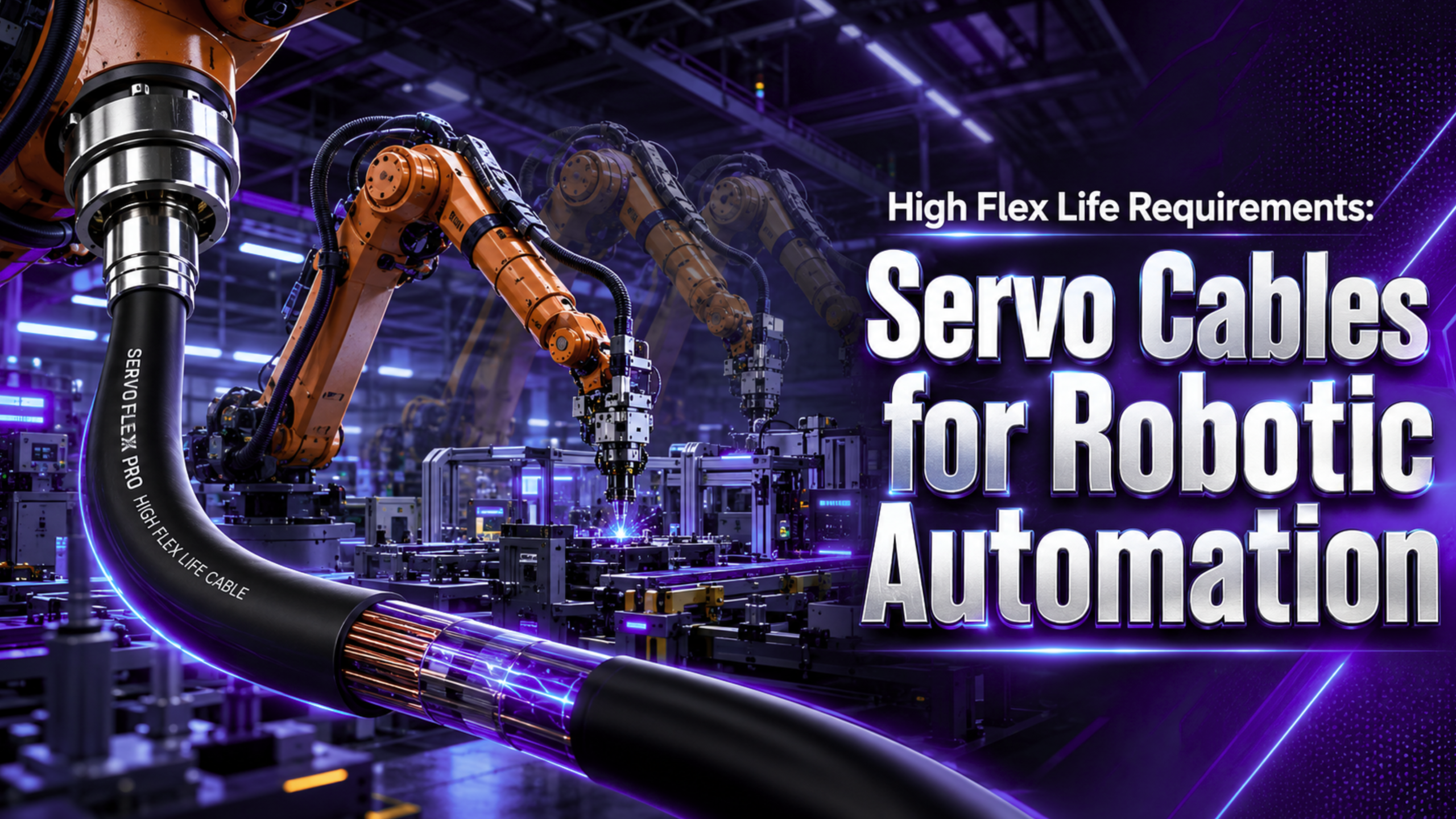
Robotic automation has changed how factories operate. Modern robotic arms move faster, carry heavier loads, and work longer hours than ever before. A single robot on an automotive welding line can perform more than 10 million motion cycles per year. Each movement depends on one critical link between the servo drive and the motor — the Servo Cable for Robotic Automation.
Continuous motion creates bending stress. Rotational axes create torsional stress. Electrical loads create heat. Harsh factory environments add oil, chemicals, and abrasion. Reliable automation therefore depends heavily on selecting a Servo Cable for Robotic Automation designed for extreme dynamic performance.
High flex life is not just a technical term. It directly impacts uptime, maintenance cost, signal accuracy, and long-term return on investment. The following sections explain why high flex performance matters and how the right engineering approach prevents costly failures.
Why High Flex Life Is the Backbone of Reliable Robotic Motion
Robots never stop moving during production. Every pick, weld, or placement creates repetitive bending and twisting inside the cable. A static cable cannot survive this environment.
A 6-axis articulated robot typically operates with –
- ±180° to ±360° torsion per meter
- Bend radii as low as 7.5x cable diameter
- Acceleration rates above 5 m/s²
- Continuous 24/7 duty cycles
Such movement quickly damages conventional cables. Copper conductors fatigue. Insulation cracks. Shielding breaks.
High flex life ensures that a Servo Cable for Robotic Automation withstands millions of motion cycles without electrical or mechanical failure. Premium cables are tested up to 20 million bend cycles under controlled laboratory conditions.
Reliable flex performance delivers –
- Reduced unplanned downtime
- Stable motor power transmission
- Accurate encoder feedback
- Lower maintenance frequency
Downtime costs in automated facilities often exceed $10,000 per hour. Flex durability directly protects operational continuity.
What Really Damages Servo Cables Inside Robotic Systems
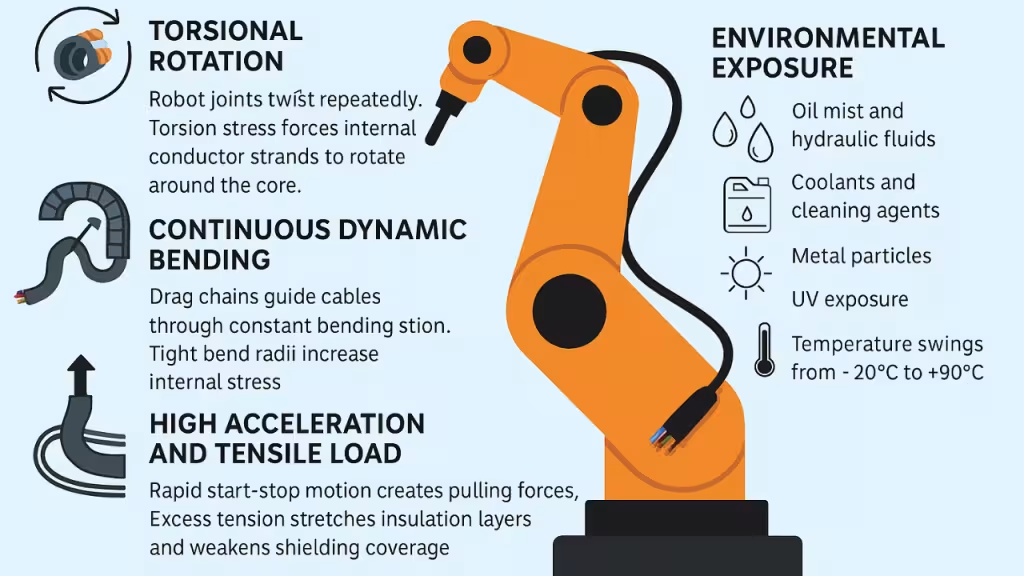
Mechanical stress inside robotic cells is complex. Several forces act on the cable at the same time.
Torsional Rotation
Robot joints twist repeatedly. Torsion stress forces internal conductor strands to rotate around the core. Poor strand design leads to micro-fractures and rising electrical resistance.
Continuous Dynamic Bending
Drag chains guide cables through constant bending motion. Tight bend radii increase internal stress. Repeated flexing eventually breaks weaker conductor constructions.
High Acceleration and Tensile Load
Rapid start-stop motion creates pulling forces. Excess tension stretches insulation layers and weakens shielding coverage.
Environmental Exposure
Factory environments expose cables to –
- Oil mist and hydraulic fluids
- Coolants and cleaning agents
- Metal particles
- UV exposure
- Temperature swings from -20°C to +90°C
Jacket material must resist chemical attack and abrasion.
Common failure symptoms of low-grade Servo Cable for Robotic Automation include –
- Jacket splitting
- Shield separation
- Feedback signal noise
- Servo drive alarms
- Unexpected robot stoppage
Mechanical durability and electrical reliability must work together.
Engineering Features That Define a High-Performance Servo Cable for Robotic Automation
Performance begins with design. A properly engineered Servo Cable for Robotic Automation integrates flexibility, electrical stability, and environmental resistance.
Ultra-Fine Copper Stranding
High strand-count conductors distribute mechanical stress evenly. Fine strands bend easily and reduce fatigue. Lower strand counts lead to early breakage.
Advanced Insulation Compounds
Material choice determines durability –
- TPE (Thermoplastic Elastomer) provides extreme flexibility
- PUR (Polyurethane) offers excellent oil and abrasion resistance
- Modified PVC compounds balance cost and performance
Each material must match the robot’s motion profile.
Shielding for EMI Stability
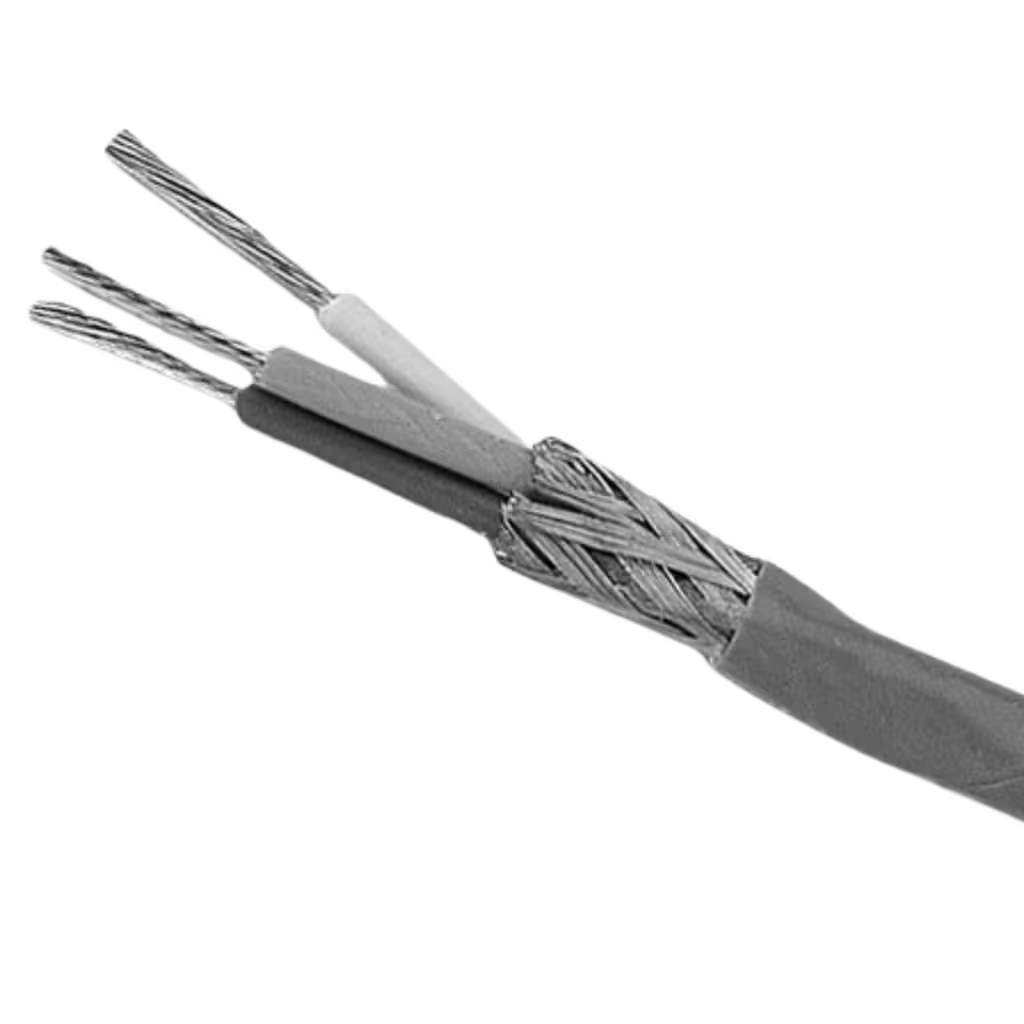
Servo systems carry power and encoder feedback signals. Electromagnetic interference disrupts positioning accuracy. Effective shielding includes –
- High-coverage braided copper
- Foil shielding layers
- Low transfer impedance construction
Proper shielding prevents signal distortion.
Optimized Core Geometry
Balanced lay lengths reduce torsional stress. Symmetrical core design improves heat dissipation and mechanical balance.
Mechanical Reinforcement
Tear-resistant jackets and tensile strength elements protect the cable during drag chain motion.
Rigorous Validation Testing
Reliable Servo Cable for Robotic Automation undergoes –
- Continuous bend testing up to millions of cycles
- Torsion simulation testing
- Oil immersion resistance tests
- Voltage withstand testing
- Flame retardancy verification
Validation ensures long-term stability under real-world conditions.
The Hidden Cost of Choosing the Wrong Servo Cable
Initial cable pricing often appears small compared to the cost of robotic systems. However, failure-related expenses escalate quickly.
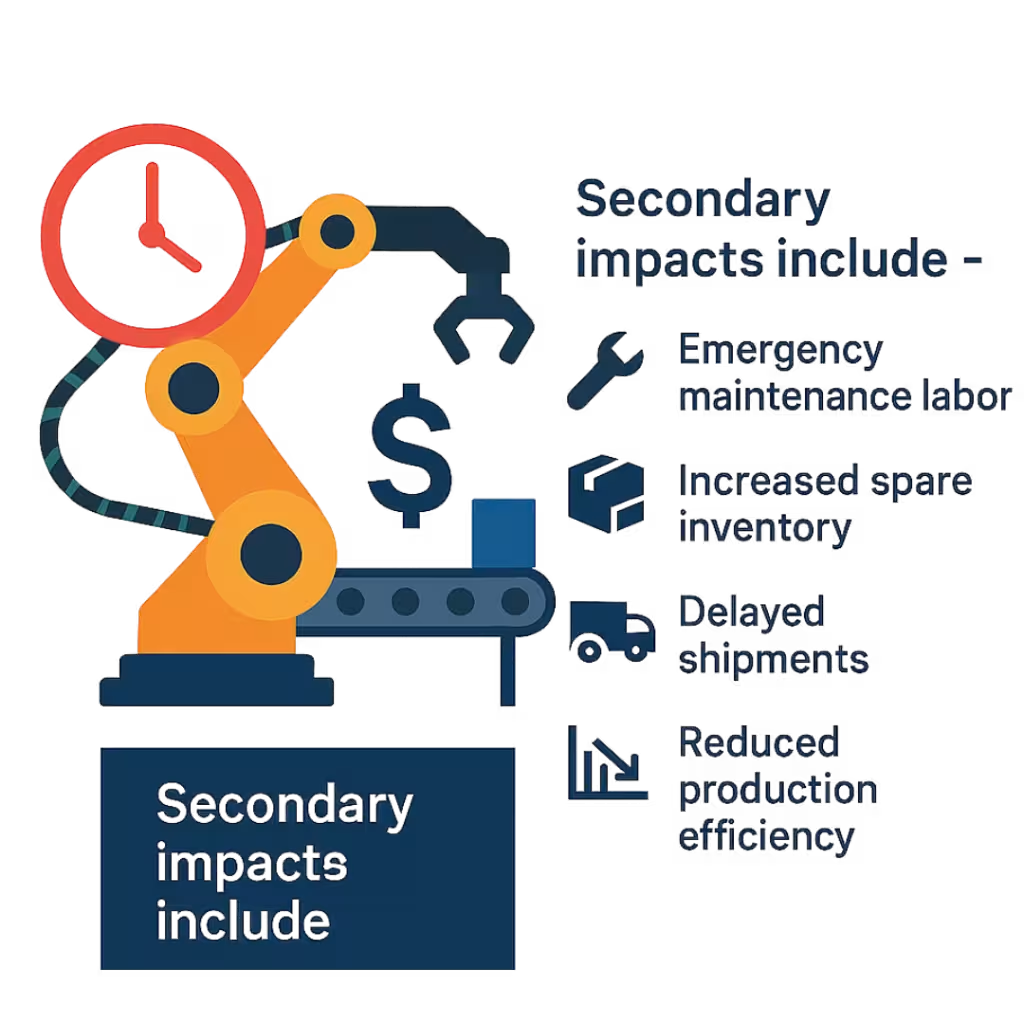
Consider a robotic production line operating 20 hours per day. Four hours of downtime due to cable failure may result in tens of thousands of dollars in direct production losses. Secondary impacts include –
- Emergency maintenance labor
- Increased spare inventory
- Delayed shipments
- Reduced production efficiency
Lower-quality Servo Cable for Robotic Automation may require replacement every 12–18 months. High-flex engineered cables may operate reliably for 3–5 years under identical conditions.
Total Cost of Ownership (TCO) analysis often shows that a 15–20% higher initial investment significantly reduces long-term operational cost.
Reliability drives profitability.
Why Sourcing the Right Servo Cable for Robotic Automation Is More Complex Than It Looks
Supplier capability plays a critical role in robotic automation success. Several sourcing challenges frequently appear.
Quality inconsistency across batches creates unpredictable performance. Limited torsion testing data reduces confidence. Customization constraints slow down integration.
Common procurement issues include –
- Lack of transparent mechanical test reports
- Incomplete compliance documentation
- Long or unstable lead times
- Limited hybrid cable options
- Weak traceability systems
Robotic cells often require customized Servo Cable for Robotic Automation configurations combining power cores, signal pairs, brake lines, and shielding into a single compact assembly.
Documentation must clearly provide –
- Material specifications
- UL and CE certifications
- Mechanical endurance reports
- Batch traceability records
Strong supplier engineering support reduces commissioning risk and project delays.
How Frigate Builds Confidence Through Engineered Flex Life Performance
High flex life performance does not happen by chance. It is the result of controlled design, material science, mechanical validation, and disciplined manufacturing. Frigate builds every Servo Cable for Robotic Automation with a clear understanding of robotic duty cycles, torsional stress patterns, and electrical stability requirements.
Robotic automation systems operate under continuous motion. Failure inside a cable assembly can shut down an entire production cell. Frigate addresses this risk by combining engineering depth with manufacturing consistency.
Application-Specific Material Engineering
Material selection directly determines flex durability and environmental resistance. Different robotic applications impose different stress conditions. Payload capacity, axis rotation range, ambient temperature, and exposure to oils all influence material choice.
Frigate evaluates –
- Expected torsion per meter
- Minimum bend radius requirements
- Acceleration and deceleration frequency
- Chemical exposure levels
- Operating temperature range
Oil-resistant PUR (Polyurethane) jackets are selected for abrasive and coolant-heavy environments. Flexible TPE (Thermoplastic Elastomer) compounds are chosen for high torsion robotic arms requiring extreme elasticity. Modified insulation systems are applied where dielectric strength and thermal endurance are critical.
Conductor insulation thickness, dielectric properties, and thermal class are engineered to maintain voltage stability under continuous motion. Careful compound formulation prevents jacket hardening, cracking, or deformation over time.
Every Servo Cable for Robotic Automation is aligned with real-world robotic stress conditions rather than generic specifications.
Mechanical Simulation and Accelerated Life Testing
Laboratory validation forms the backbone of flex life assurance. Frigate performs controlled dynamic testing to simulate actual robotic movement patterns.
Testing protocols include –
- High-speed continuous bend simulations reaching millions of cycles
- Controlled torsion rotation testing at defined angular limits
- Dynamic tensile load endurance testing under acceleration forces
- Oil immersion and chemical resistance exposure
- Thermal aging tests across extended temperature ranges
Bend testing replicates drag chain motion with defined travel lengths and speeds. Torsion testing measures rotational endurance at ±180° or higher, depending on design. Electrical continuity and impedance stability are monitored throughout testing.
Accelerated life cycle analysis predicts long-term behavior. Data-driven evaluation allows optimization of strand construction, shielding geometry, and jacket thickness.
Test results provide measurable assurance of durability. Performance claims are supported by documented validation.
Precision Manufacturing Controls
Manufacturing precision determines whether design intent translates into real-world reliability. Frigate controls critical production parameters to maintain consistency.
Ultra-fine copper strands are drawn and bunched under strict dimensional tolerances. Strand uniformity ensures balanced stress distribution during bending. Optimized lay length reduces internal torsional tension.
Shielding coverage is carefully controlled to maintain low transfer impedance. Braided copper shields are applied with defined optical coverage to prevent electromagnetic interference. Foil layers are integrated to improve high-frequency noise protection.
Extrusion processes are monitored for –
- Jacket thickness uniformity
- Concentricity control
- Surface integrity
- Adhesion between layers
Process control reduces variation between production batches. Every Servo Cable for Robotic Automation is manufactured with repeatable mechanical and electrical characteristics.
Custom Engineering Support for Robotic Applications
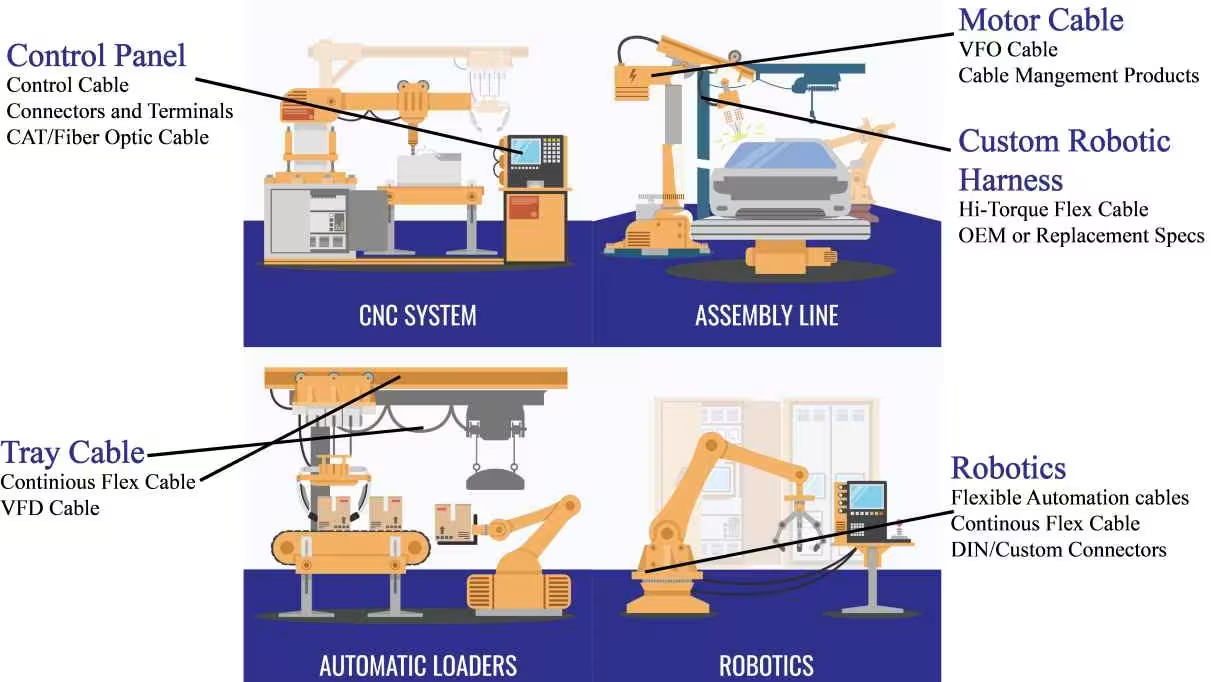
Robotic automation systems often require tailored cable assemblies. Standard configurations may not meet space constraints or electrical integration requirements.
Frigate provides engineering support for –
- Custom cable lengths to reduce installation stress
- Hybrid assemblies combining power cores, feedback pairs, and brake conductors
- Specific connector compatibility with leading servo motor brands
- Shield optimization for EMI-sensitive robotic environments
Integration complexity increases as robotic density rises. Compact routing, reduced cable weight, and improved flexibility all enhance robot performance.
Application-focused engineering ensures that each Servo Cable for Robotic Automation aligns with the mechanical architecture of the robotic system.
Structured Quality Assurance and Full Traceability
Consistency across high production volumes is critical for automation projects. Frigate implements structured inspection and traceability systems to maintain quality control.
Quality assurance includes –
- Incoming raw material verification
- In-process dimensional inspection
- Electrical continuity and resistance testing
- Shield integrity verification
- Final visual and mechanical inspection
Batch-level traceability records material origin, production parameters, and test outcomes. Documentation supports compliance requirements and long-term reliability tracking.
Uniform performance across shipments reduces variability risks during system installation and commissioning.
Delivering Operational Confidence
Robotic automation investments are significant. Cable reliability plays a direct role in protecting that investment. A well-engineered Servo Cable for Robotic Automation enhances –
- System uptime
- Motion accuracy
- Encoder signal stability
- Maintenance interval extension
- Total cost of ownership optimization
Frigate integrates material science, mechanical validation, precision manufacturing, and quality assurance into every cable solution. Engineered flex life performance builds confidence, supports predictable operation, and strengthens long-term automation reliability.
Conclusion
Robotic systems face constant bending, twisting, and environmental stress. Long-term performance depends heavily on selecting the right Servo Cable for Robotic Automation with proven flex life and mechanical durability. As automation grows globally, dependable Servo Cable for Robotic Automation solutions become critical for reducing downtime and maintaining motion accuracy.
Frigate provides engineered cable systems designed for high flex life and consistent reliability. Connect with Frigate to strengthen robotic automation performance and protect long-term operational efficiency.