Solar Inverter Enclosures — Without Metal Forming

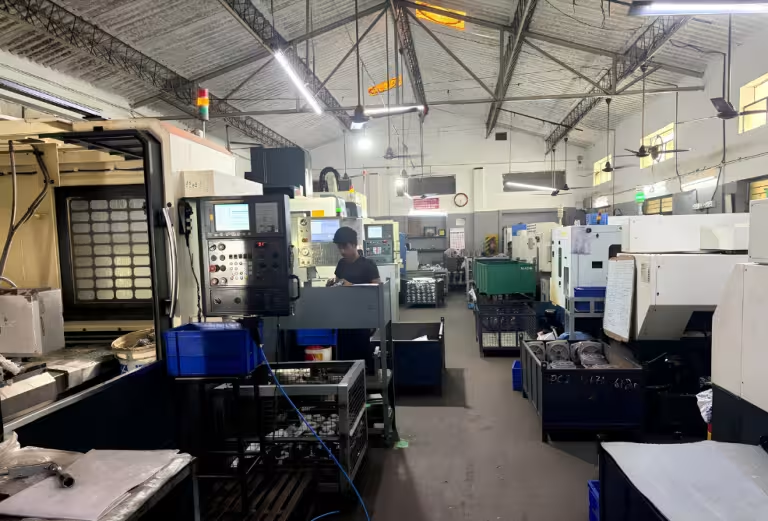
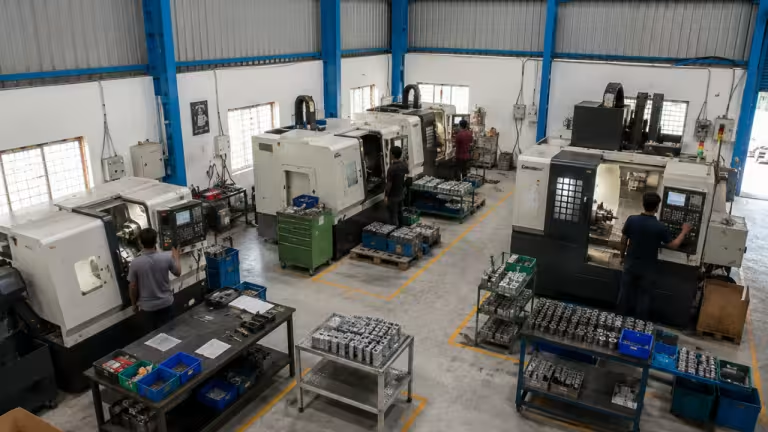
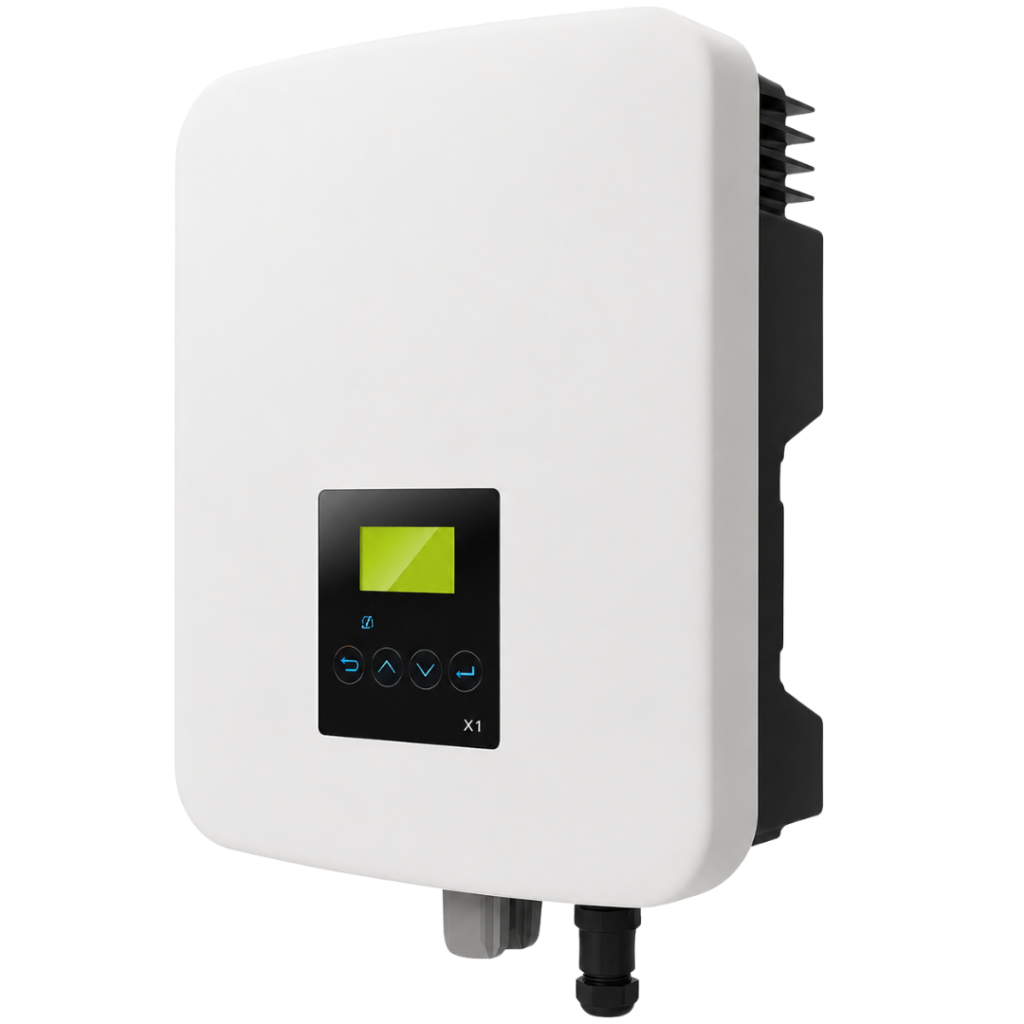
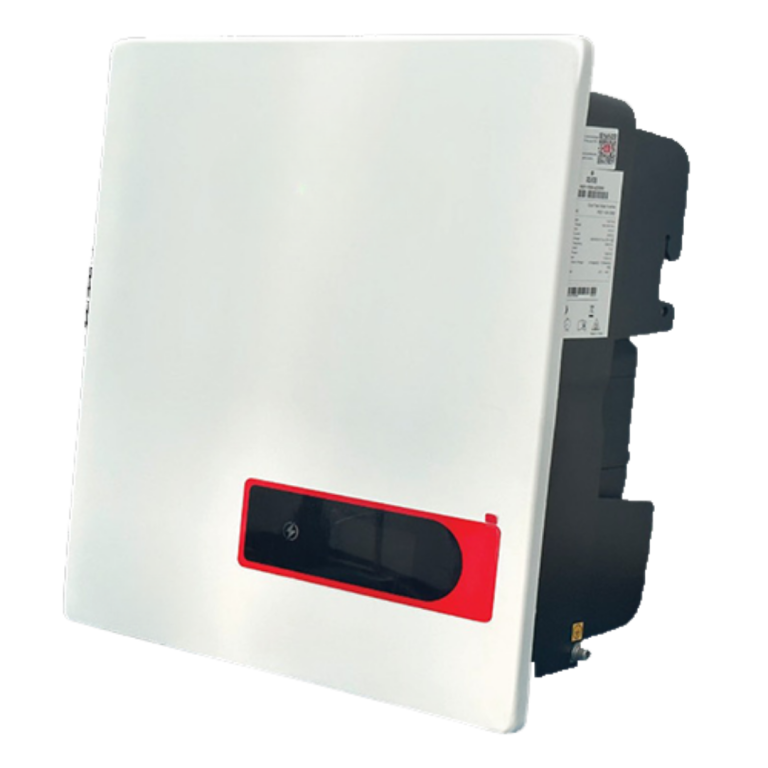
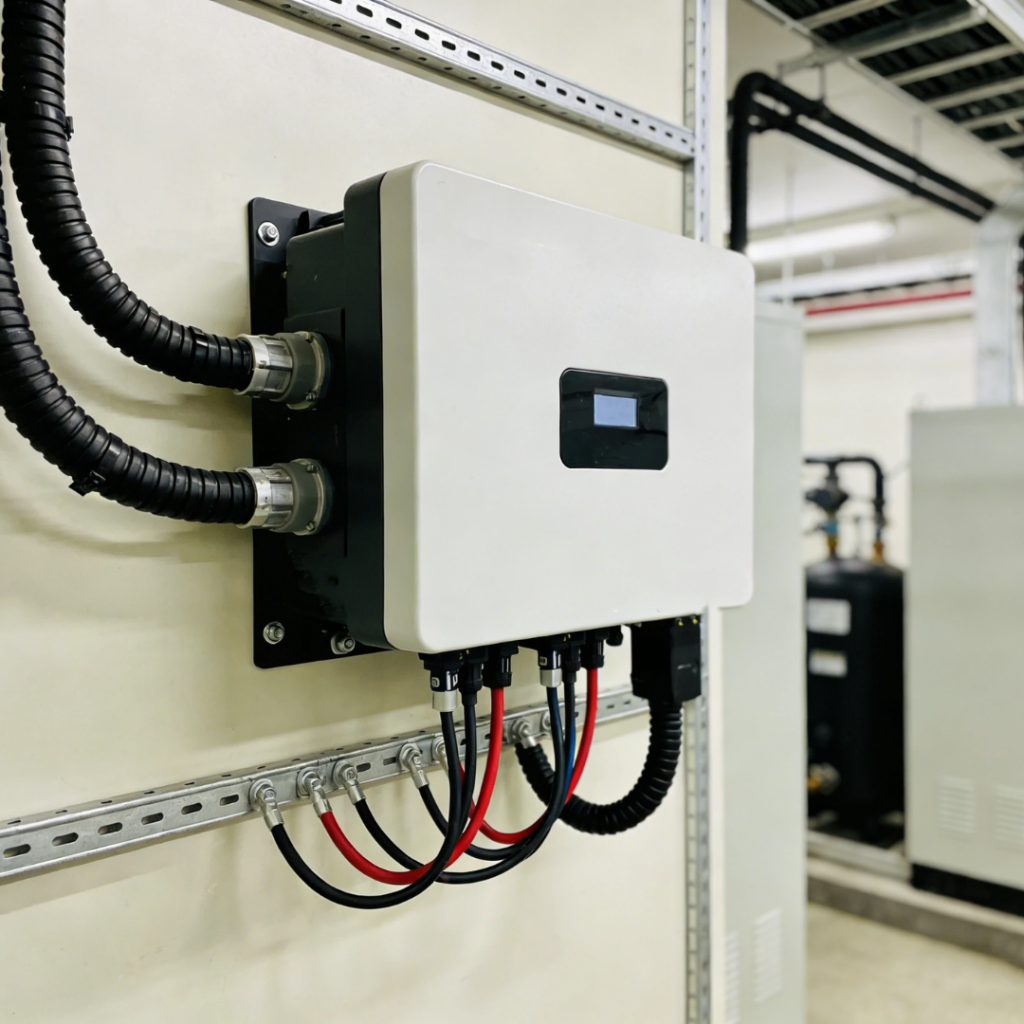
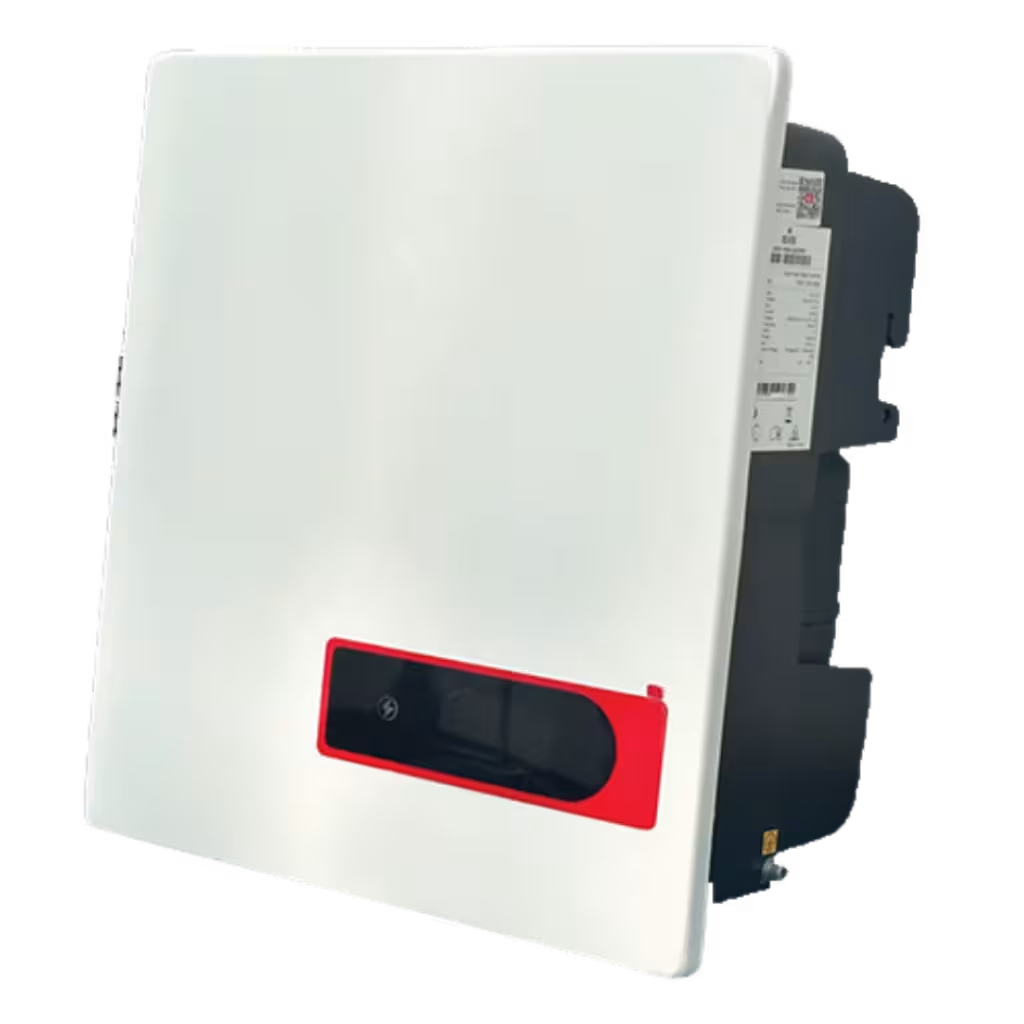
Aluminium solar inverter enclosures manufactured through die-casting and extrusion profile processes, not sheet metal fabrication. Integrated heatsink fins, gasket grooves, mounting bosses, cable entry lips, and internal rail features are built into the casting or extrusion geometry itself, eliminating the assembly steps and dimensional variation that fabricated enclosures introduce. Manufactured against your design package, with post-cast machining, surface finish, and IP sealing verified before dispatch. 

Die-Cast Alloy
ADC12 (JIS H5302); A380 (ASTM B85). A356 (ASTM B26).
Extrusion Alloy
6063-T5 & 6061-T6. Alloy confirmed per thermal and structural requirement at DFM stage.
Material Traceability
Full heat traceability from alloy ingot or billet certificate to finished enclosure.
As-Cast Dimensional Tolerance
±0.3 mm on non-critical as-cast dimensions (wall thickness, boss height, rib geometry). ±0.5 mm on larger format enclosures above 300 mm in any dimension.
Post-Machined Critical Tolerance
±0.1 – 0.2 mm on CNC-machined critical features:
*Die-cast and extruded enclosure programmes include a tooling design and build phase at first article stage that fabricated enclosure programmes do not.

Product Description

Die-casting produces the complete enclosure body in a single pour, integrated heatsink fin arrays, gasket groove profiles, boss features for PCB and component mounting, cable entry lips, and wall-mount flanges are all cast in without separate fabrication steps. There are no weld joints to introduce dimensional variation or corrosion initiation points, no formed sections to introduce spring-back, and no assembly operations between enclosure sub-components. The geometry is locked in the die and repeats with casting-to-casting consistency across the full production volume. 

Extrusion Profile Tolerance

Wall thickness: ±0.2 mm. Profile width and height: ±0.3 mm on dimensions up to 100 mm; ±0.4 mm above 100 mm.

Gasket Groove Machining

Gasket groove width, depth, and corner radius machined post-cast to ±0.1 mm. Groove profile designed for target gasket compression ratio.

Porosity Control — Process

High-pressure die-casting process parameters — injection speed, intensification pressure, die temperature, and degassing.

Pressure Tightness Testing

Pneumatic or hydraulic pressure leak test available for enclosures where IP67 immersion must be verified beyond gasket compression calculation.

Powder Coat — Die-Cast Substrate

Die-cast substrate pre-treatment: alkaline degreasing, acid etch, and chromate or zirconium conversion coating specifically formulated for ADC12 / A380 silicon-bearing alloys.

Colour Consistency

Spectrophotometer verification (ΔE ≤1.5) against approved first article colour standard on every production lot.

Salt Spray Resistance

≥500 hrs (powder coat on pretreated die-cast substrate); ≥1,000 hrs (Type III hard anodise on extrusion profile).

IP Rating

IP65 / IP66 / IP67 achievable depending on gasket specification, fastener clamp load, and cable entry gland selection.

Sealing System

Silicone (VMQ) and EPDM compression gaskets in machined groove. Gasket compression ratio 15–25% at assembled clamp load.

Environmental Compliance

RoHS 3 (EU 2015/863); REACH SVHC <0.1% w/w; WEEE compliant.

Technical Advantages

Frigate manufactures solar inverter enclosures through both high-pressure die-casting and aluminium extrusion profile processes, process selection is confirmed at DFM review based on the enclosure geometry, target volume, and performance requirements. Die-casting in ADC12, A380, or A356 alloy suits enclosures with complex three-dimensional geometry, multiple face features, integrated bosses and ribs, compound heatsink fin arrangements, and cable entry lips on more than one face, all produced in a single pour without assembly steps. 

As-cast dimensional tolerance runs ±0.3–0.5 mm with post-machined critical features held to ±0.1–0.2 mm; tooling is H13 steel die retained for the programme life, and the investment is best justified at medium to high production volumes. 

Let's Get Started

Need reliable Enclosure for your next project? Get in touch with us today, and we’ll help you find exactly what you need!

Industry Application

String Inverter OEM — High Volume

Die-cast enclosure bodies for high-volume string inverter production where consistent casting-to-casting geometry eliminates the dimensional variation that fabricated enclosures introduce across large production runs. Integrated heatsink fins remove the bonded heatsink assembly step from the inverter production line. 

Compact Residential Inverter Platforms

Die-cast two-piece enclosures for compact residential inverter formats where the external geometry, display integration, and heatsink configuration are all designed as a single casting. Cosmetic surface quality and dimensional repeatability meet premium product appearance requirements. 

MPPT Charge Controller Housings

Extruded profile enclosures for MPPT charge controller housings where the constant cross-section format suits the internal component layout and integrated fin arrays provide passive cooling without a separate heatsink component. 

Solar Street Lighting Control Enclosures

Compact die-cast IP67 enclosures for pole-mounted solar street lighting controller assemblies. Single-pour enclosure body with integrated cable entry lips, mounting lugs, and gasket seat — no assembly of separate components required at the enclosure level. 

Micro-Inverter & Module-Level Electronics

Die-cast enclosures for micro-inverter and power optimiser assemblies where compact geometry, IP67 rating, and integrated mounting features must all be achieved within a small envelope that fabricated enclosures cannot cost-effectively deliver. 

EV Charging Power Electronics Housings

Extruded and die-cast enclosures for EV charger power conversion module housings — integrated heatsink geometry for IGBT thermal management, IP65-rated cable entry, and cosmetic exterior finish for consumer-facing charging equipment. 

Solar Inverter Enclosures (without Metal Forming)

Frigate Approved Quality Management System

At Frigate, quality is built into every stage of manufacturing. Our approved Quality Management System ensures that every material component. 

Incoming Material Checking
In-Process Inspection
Final Dimensional Checking
Packaging Control

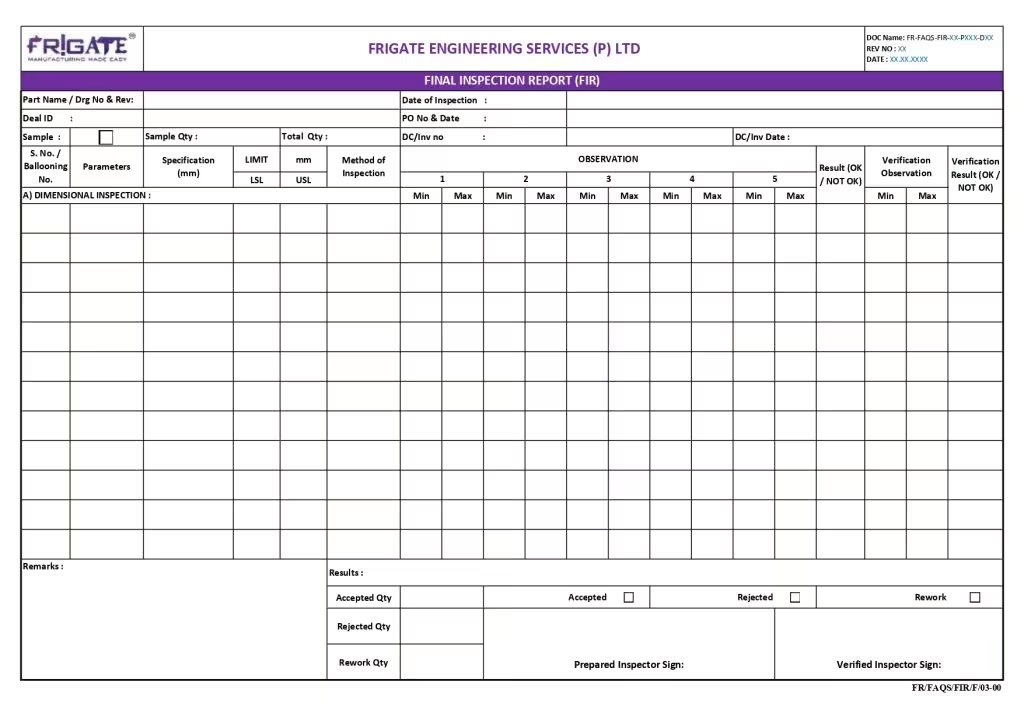
Quality Document

To help buyers evaluate our quality systems, we provide sample documents that reflect our inspection and reporting standards.

How We Delivered

Complex geometries engineered solutions that move businesses forward. 

Having Doubts? Our FAQ

We've designed our enclosure for die-casting but haven't finalised draft angles and parting line position. How early can Frigate engage on the design?

The earlier the better, and specifically before parting line position is finalised, because that decision affects every other feature on the casting. Parting line placement determines which faces can carry integrated features, which surfaces will have flash lines requiring post-machining, and where ejector pin marks will land. These are decisions that are essentially free to change at the STEP model stage and progressively more expensive to change as the tool design advances. Submit the current STEP file under NDA, even without draft angles applied and Frigate’s die casting team will review parting line options, flag features that create tooling complexity or porosity risk, and return written DFM feedback within 5 working days. 

Our enclosure needs IP67, how does Frigate verify that on a die-cast body where porosity could compromise the sealing interface?

IP67 on a die-cast enclosure requires two things to be right simultaneously: the gasket groove geometry must be machined to the correct width, depth, and surface finish to achieve the target compression ratio, and the casting wall in the sealing zone must be free of surface-connected porosity that would create a leak path under the gasket. Frigate addresses both, gasket grooves are post-machined rather than cast-as-produced, and the sealing wall sections are inspected by dye penetrant post-machining to confirm the surface is sound before the enclosure reaches the IP test stage. IP rating is then verified on assembled enclosures with seals and glands installed under IEC 60529 protocol, not inferred from drawing dimensions alone. If a casting fails the dye penetrant check, it is dispositioned before machining investment is applied to a compromised part. 

We're deciding between die-casting and extrusion for our enclosure. What's the practical difference in cost and lead time between the two tooling paths?

Die-cast tooling, an H13 steel die with core pulls and ejector system, is a significantly higher investment than an extrusion die, typically 3–5x the tooling cost depending on enclosure complexity. The payback is per-part cost at volume: once the die is built, casting cycle times are fast and per-unit cost drops sharply at scale. Extrusion tooling is comparatively low cost, an extrusion die for a profile enclosure body is a fraction of a die-cast tool which makes extrusion economically attractive at lower volumes and for programmes where the enclosure geometry suits a constant cross-section. The practical decision point comes down to geometry: if the enclosure needs features on multiple faces simultaneously, mounting bosses on the bottom, cable entry lips on the side, display window on the front, die-casting is the right process because extrusion cannot produce those features in a single operation. If the enclosure is essentially a tube with end plates, extrusion is faster to tool and lower cost to enter. Frigate’s DFM review will give a tooling cost indication for both processes against your geometry so the decision is based on actual numbers, not general guidance.

What happens to the die tooling if we need to re-source the enclosure to another manufacturer, do we own the tool?

Tooling ownership terms are defined in the supply agreement before first article, not left ambiguous until a re-sourcing event creates a dispute. The standard position for OEM-funded tooling is that the OEM owns the die, retains rights to the tool drawings, and has the right to retrieve or replicate the tool if supply is terminated. Frigate’s supply agreement specifies this explicitly: tool ownership, retrieval procedure, notice period, and what documentation, die drawings, shot parameters, machining programmes, transfers with the tool. If the tooling investment is being amortised across production volume rather than paid upfront, the ownership transition point is defined by the amortisation schedule. Bring tooling ownership requirements to the commercial discussion at enquiry stage, it is a standard part of how Frigate structures die-cast and extrusion programme agreements.

We'd love to Manufacture for you!

Submit the form below and our representative will be in touch shortly.

LOCATIONS

Registered Office

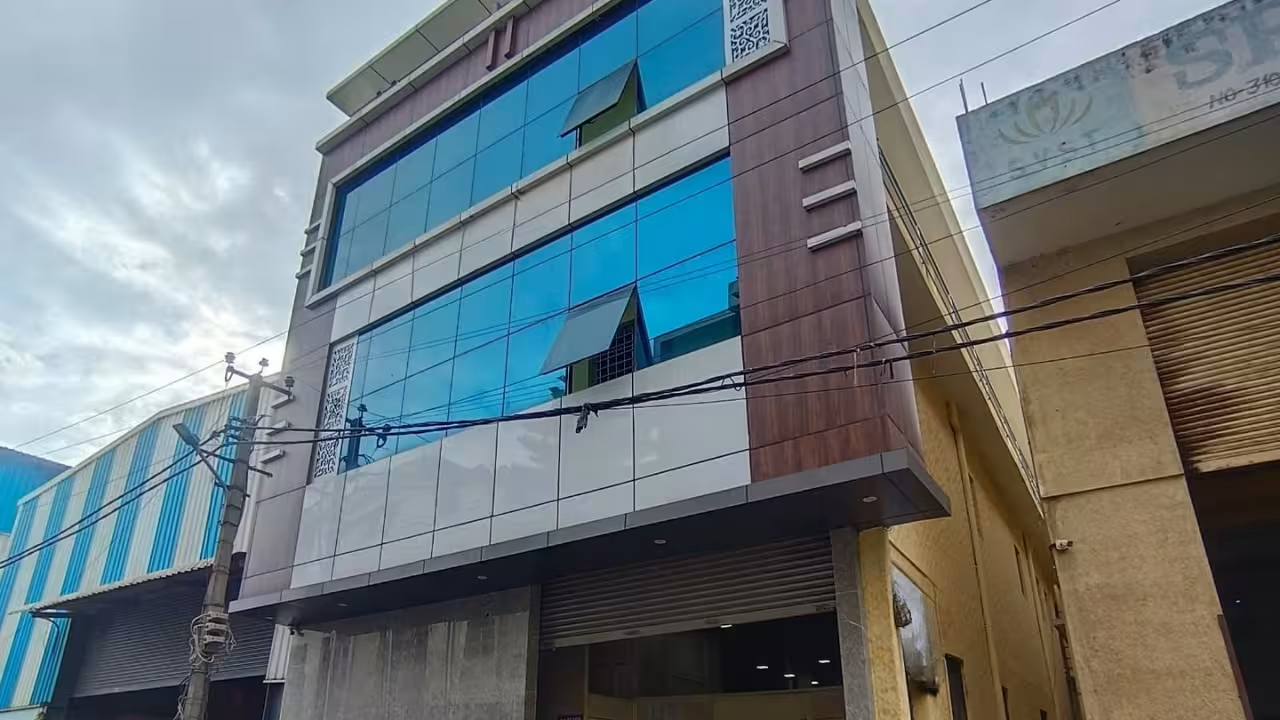
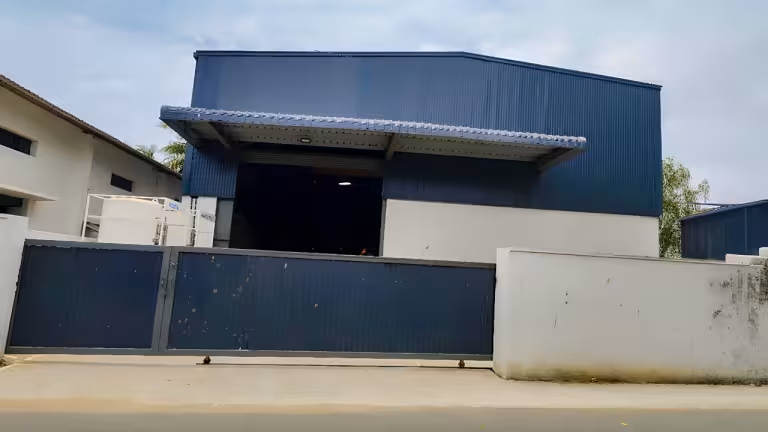
10-A, First Floor, V.V Complex, Prakash Nagar, Thiruverumbur, Trichy-620013, Tamil Nadu, India.

Operations Office

9/1, Poonthottam Nagar, Ramanandha Nagar, Saravanampatti, Coimbatore-641035, Tamil Nadu, India. ㅤ

Other Locations

GENERAL ENQUIRIES

Get Quote
Support All File Formats Including - STEP | STP | SLDPRT | STL | DXF | IPT | X_T | X_B | 3DXML | CATPART | PRT | SAT | 3MF | JT files

LOCATIONS

Registered Office

10-A, First Floor, V.V Complex, Prakash Nagar, Thiruverumbur, Trichy-620013, Tamil Nadu, India.

Operations Office

9/1, Poonthottam Nagar, Ramanandha Nagar, Saravanampatti, Coimbatore-641035, Tamil Nadu, India. ㅤ

Other Locations

GENERAL ENQUIRIES

Get Your Quote Now

New Get Quote form

Solar Inverter Enclosures — Without Metal Forming

Need reliable wires and cables for your next project? Get in touch with us today, and we’ll help you find exactly what you need!

Get Latest Price

Get Price Form

Solar Inverter Enclosures — Without Metal Forming

Need reliable Machining for your next project? Get in touch with us today, and we’ll help you find exactly what you need!

Get Latest Price

Get Price Form