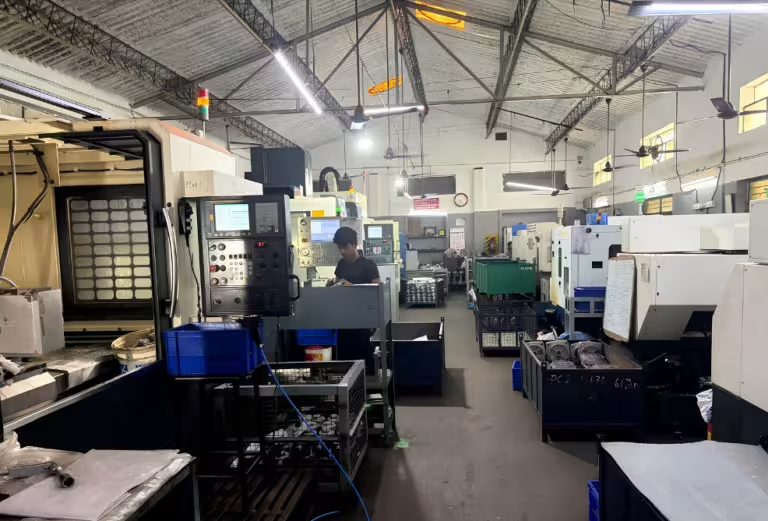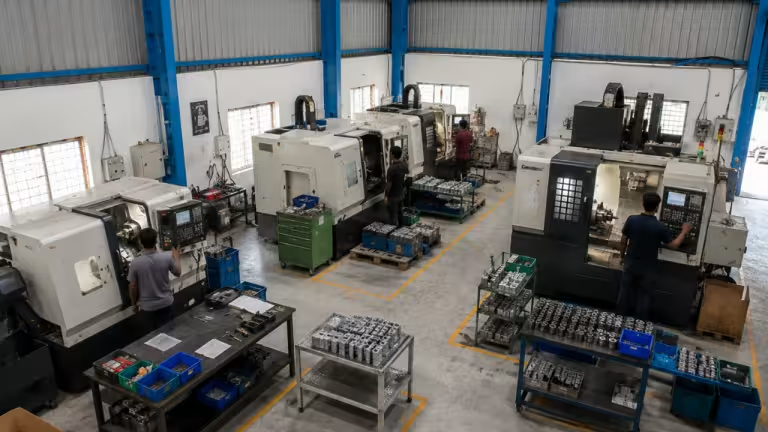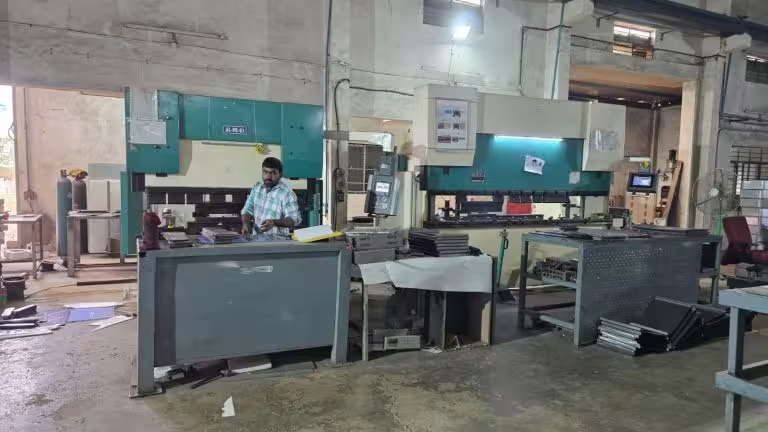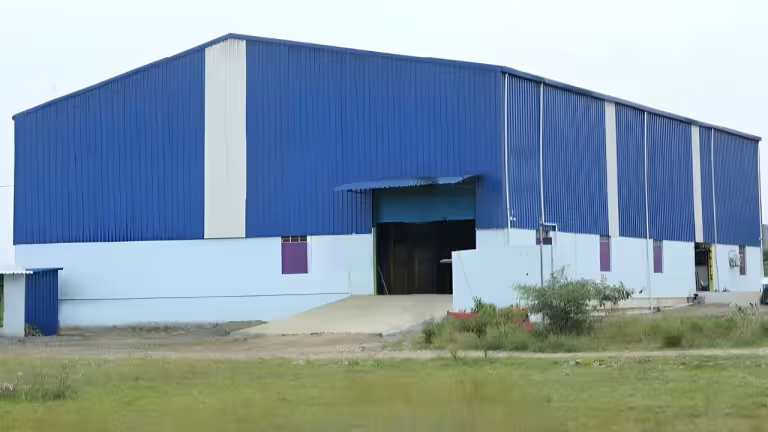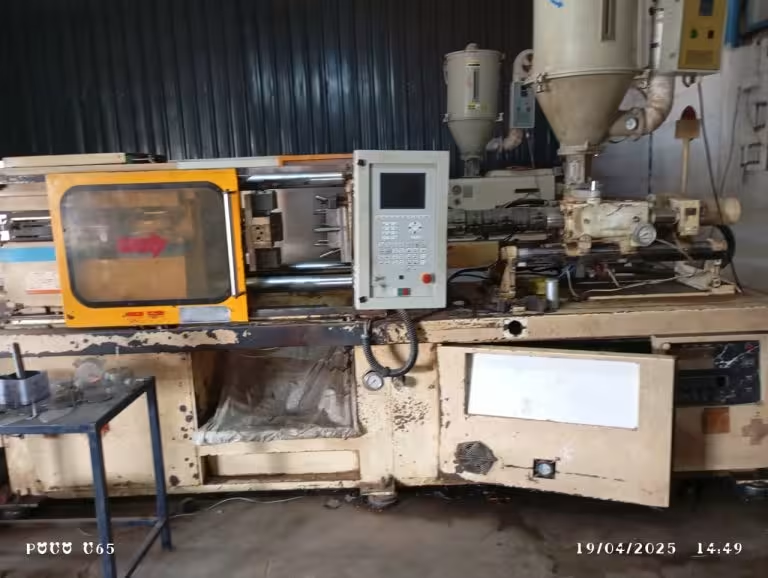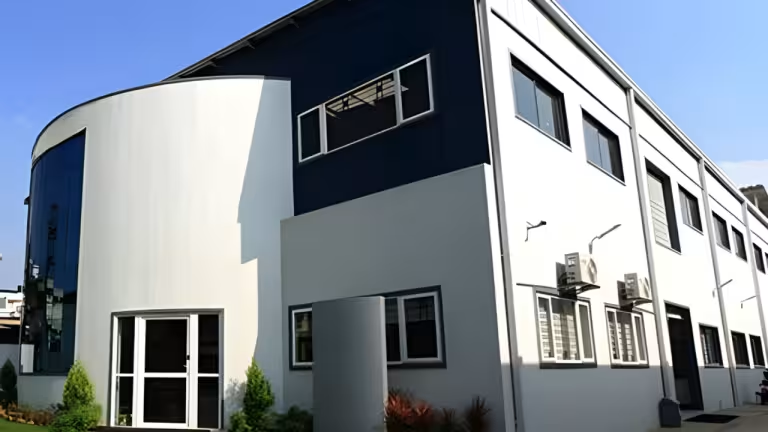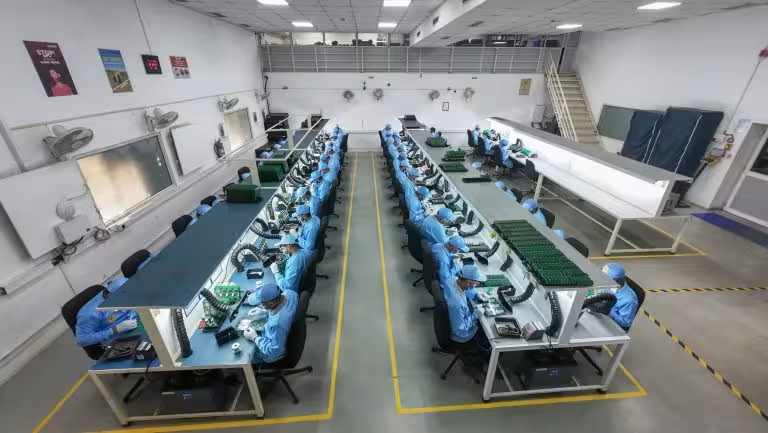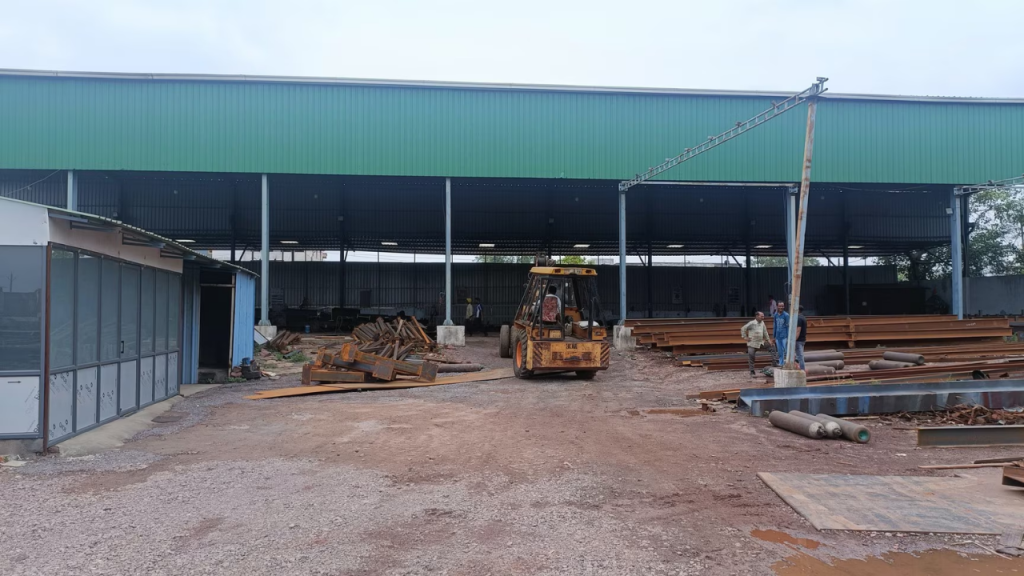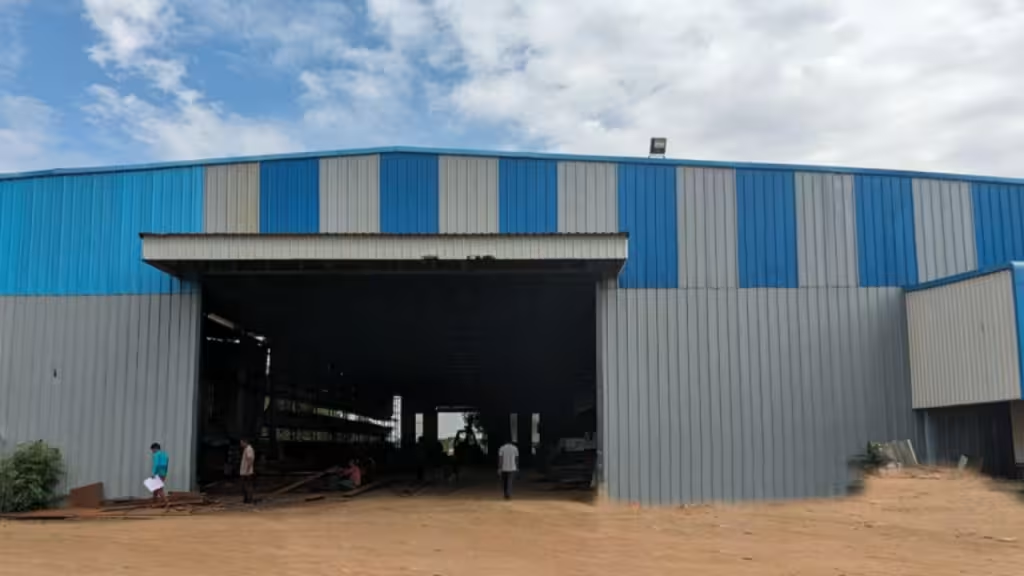
High-precision manufacturing capabilities for metal, plastic, electrical, and assembly requirements.
Manufacturing support for precision parts, assemblies, and production-ready components across demanding industries.
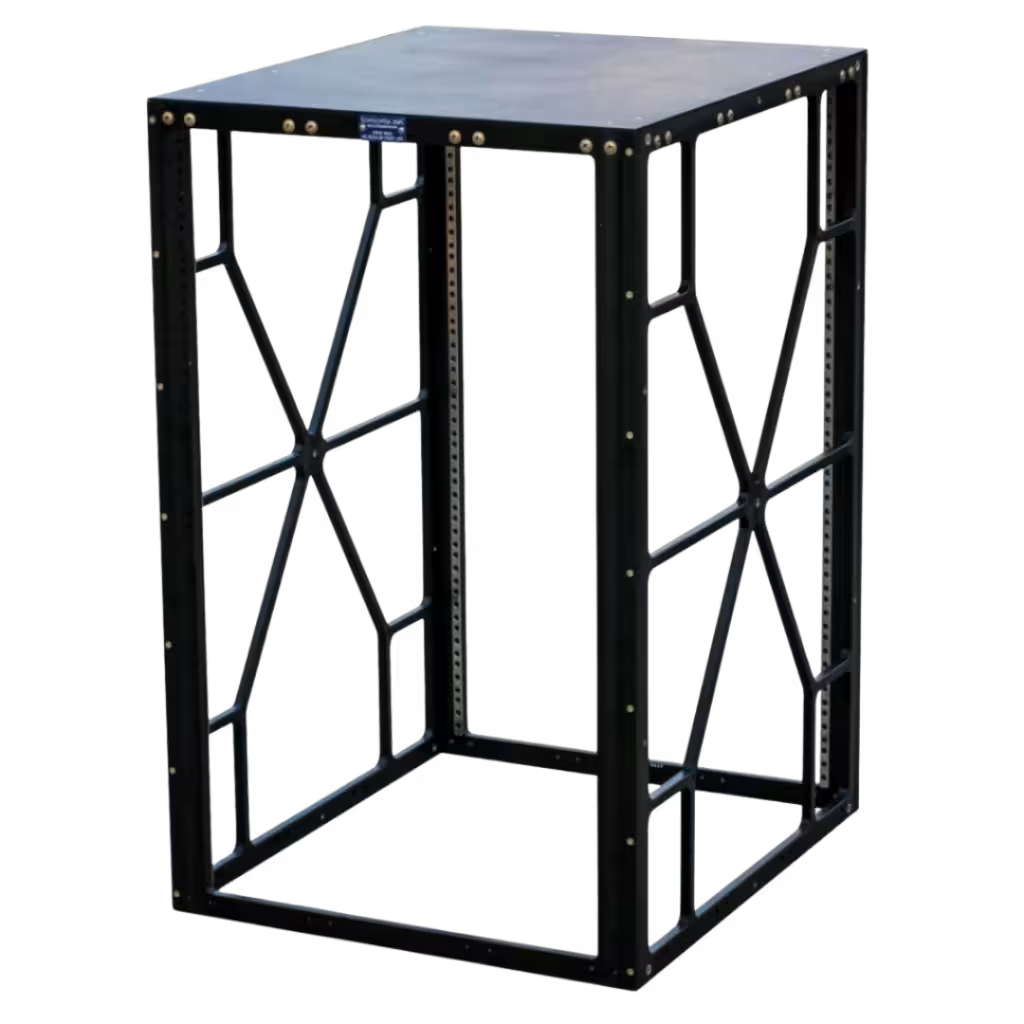
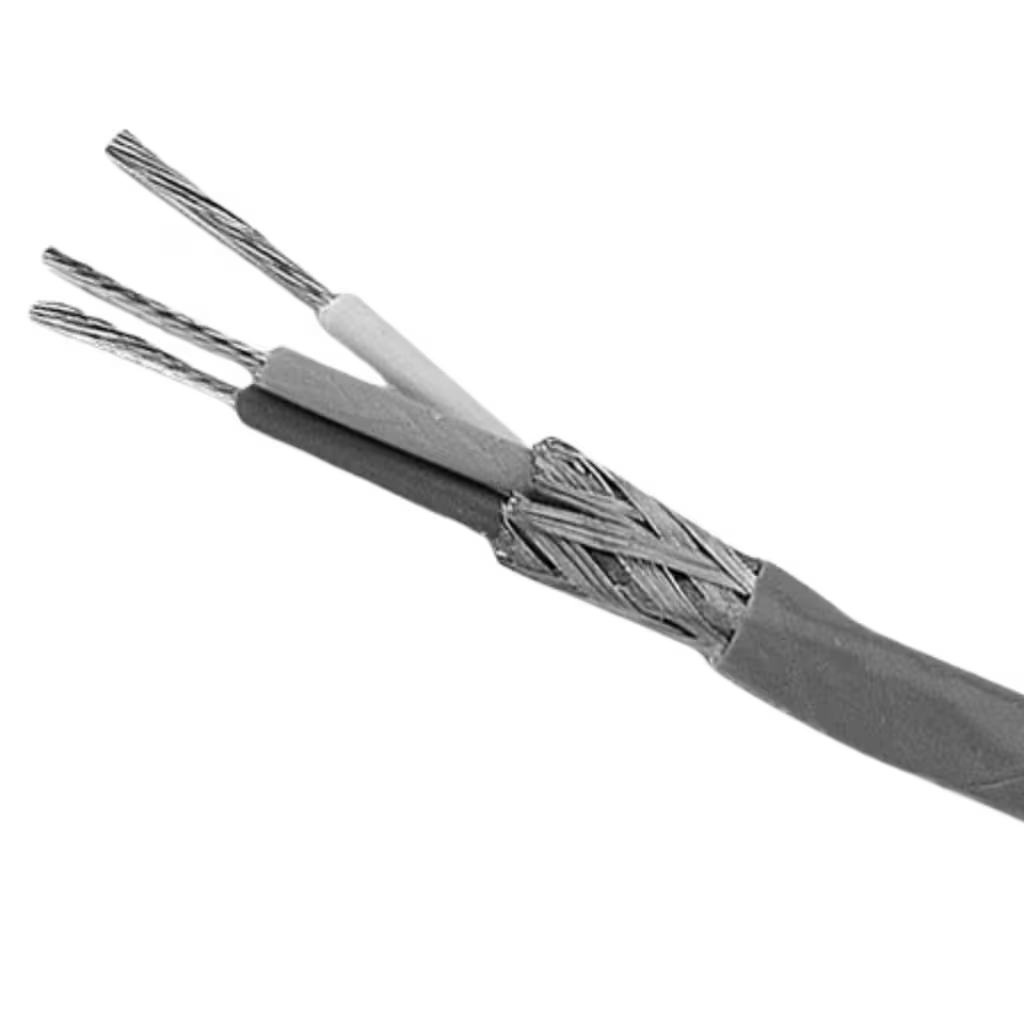
Manufacturing support for enclosures, Bento Box assemblies, cables, wiring harnesses, and BESS components.
High-strength fasteners, landing gear parts, and structural assemblies.
Metal frames, brackets, and assemblies for appliances and home equipment.
Forged housings, armor brackets, and mission-critical structural parts.
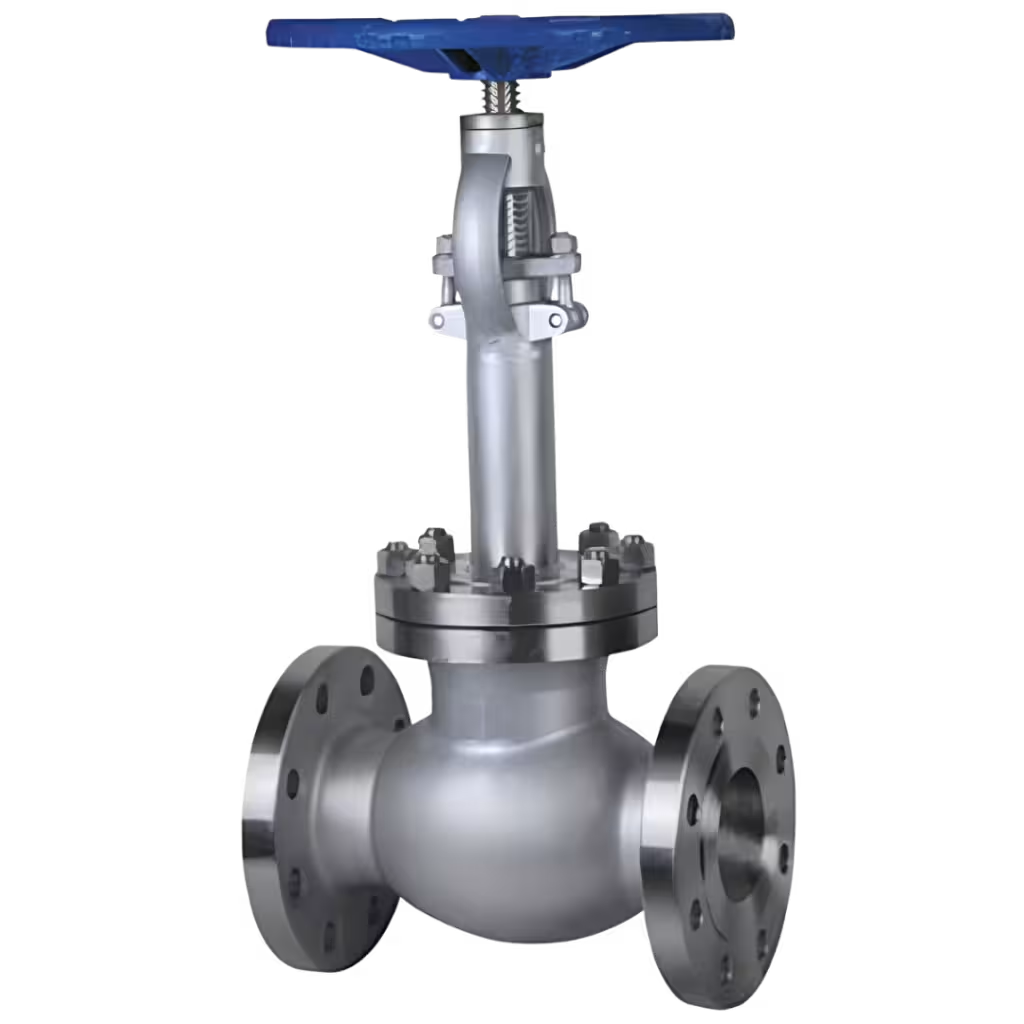
Valve bodies, flange blocks, and downhole drilling components.
Solar mounting parts, wind turbine brackets, and battery enclosures.
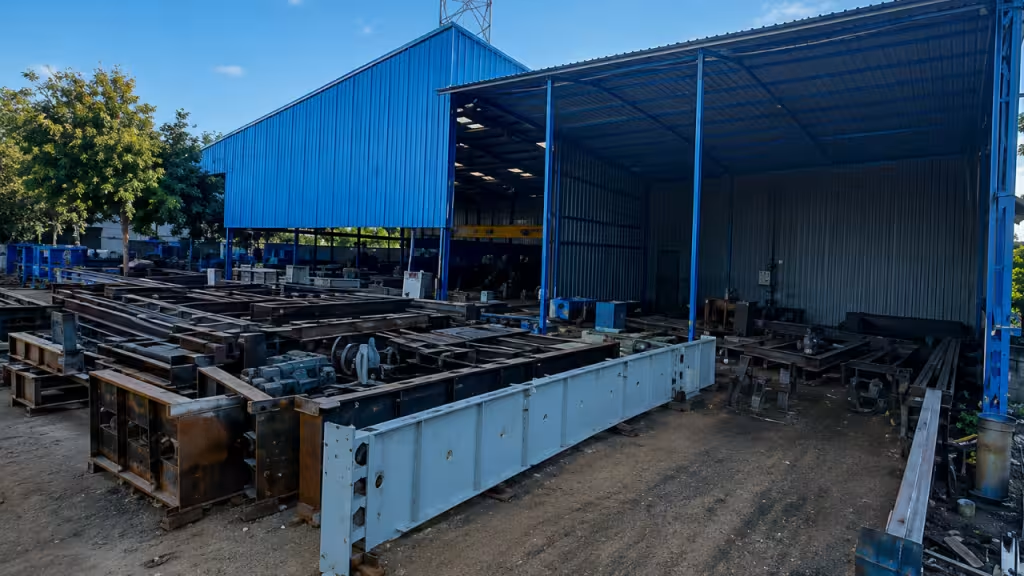
Large welded frames, PEB structures, and assemblies for industrial equipment.
High di/dt during switch transitions in boost topologies causes ripple that compromises downstream regulation. Our chokes use optimized core materials—like high-permeability ferrites or low-loss powder cores—tailored to suppress high-frequency ripple without magnetic saturation. This ensures stable operation in buck-boost and power factor correction (PFC) circuits.
Thermal loading is a key concern in densely packed power supplies. Our chokes are wound with high-current Litz or heavy-gauge copper conductors and potted with thermally conductive encapsulants. These features improve heat dissipation while maintaining low core and copper losses, even under continuous full-load conditions.
Inconsistent inductance under load affects current mode control and duty cycle stability. We design boost converter chokes to maintain a flat μe (effective permeability) profile across wide temperature and current ranges, using gapped or composite core configurations. This keeps the converter’s peak current limit predictable, improving overall reliability.
Need reliable Chokes for your next project? Get in touch with us today, and we’ll help you find exactly what you need!
Regulates high-frequency current in DC-DC converters for stable voltage supply to battery management and motor control systems.
Manages input current ripple in high-density DC-DC modules for base stations and optical network power infrastructure.
Filters switching transients and stabilizes current flow in boost converters for variable frequency drives and servo systems.
Maintains low noise and constant inductance under thermal stress in compact DC power distribution architectures.
Handles current ripple and magnetic saturation in maximum power point tracking circuits within solar energy harvesting systems.
Reduces voltage ripple and EMI in isolated boost converter sections powering sensitive diagnostic electronics like MRI and CT systems.
EMI compliance is a frequent bottleneck in converter certification. Our chokes are designed with controlled leakage flux and winding geometry that naturally attenuate differential-mode noise. By doing this, they reduce the burden on downstream EMI filters, helping your design meet CISPR and FCC limits more easily.
When switching frequencies rise above 100 kHz, core losses and skin effect become dominant. Boost converter chokes are frequency-tuned with core materials selected specifically for your switching range—whether for GaN, SiC, or high-efficiency MOSFET applications. This directly lowers converter losses and improves power density.
Check all our Frequently Asked Question
Frigate uses core materials with low thermal drift to maintain stable inductance across wide temperature ranges. Thermal aging is simulated during testing to check for shifts in B-H characteristics. Each choke is validated for performance up to 150°C ambient. This ensures reliable operation in compact, high-temperature converter enclosures.
Frigate selects core geometries and materials optimized for specific switching ranges, typically from 100 kHz to 1 MHz. Loss modeling is done using Steinmetz parameters specific to the application waveform. This allows Frigate to balance AC core loss with size and thermal limitations. Designs are verified with thermal imaging under dynamic conditions.
Frigate applies precise winding layouts to limit parasitic capacitance and control leakage flux. Toroidal or shielded core options are used where space permits. Fringing fields are modeled and minimized using controlled air gap placement. This reduces radiated emissions and supports easier EMI certification for the end equipment.
Frigate uses high-fill factor windings with flattened copper or Litz wire to reduce DCR. Mechanical stress points are supported with thermal adhesives or bobbin-integrated reinforcement. Winding geometry is optimized for minimal skin effect at high frequencies. This ensures long-term reliability under vibration and thermal cycling.
Submit the form below and our representative will be in touch shortly.
10-A, First Floor, V.V Complex, Prakash Nagar, Thiruverumbur, Trichy-620013, Tamil Nadu, India.
9/1, Poonthottam Nagar, Ramanandha Nagar, Saravanampatti, Coimbatore-641035, Tamil Nadu, India. ㅤ
10-A, First Floor, V.V Complex, Prakash Nagar, Thiruverumbur, Trichy-620013, Tamil Nadu, India.
9/1, Poonthottam Nagar, Ramanandha Nagar, Saravanampatti, Coimbatore-641035, Tamil Nadu, India. ㅤ
Need reliable wires and cables for your next project? Get in touch with us today, and we’ll help you find exactly what you need!
Need reliable Machining for your next project? Get in touch with us today, and we’ll help you find exactly what you need!