














Extruded Pipes, Tubes & Rods

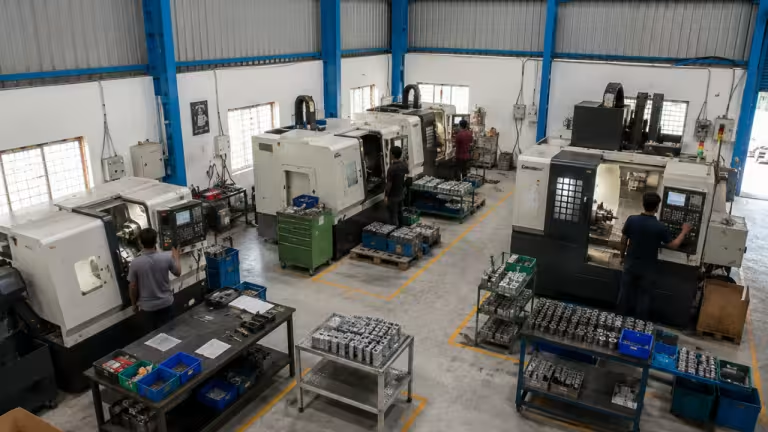
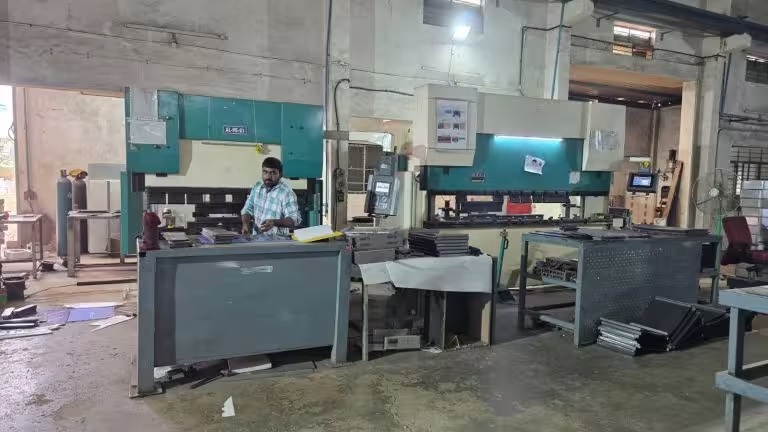
Frigate delivers extruded pipes, tubes, and rods, featuring smooth, uniform finishes straight from the extrusion process. Whether matte, glossy, or textured, our parts meet functional and aesthetic requirements, eliminating extra finishing steps and streamlining your operations. 

Extruded Pipes Tubes & rods

Our Clients

Trusted by Engineers and Purchasing Leaders 

Our Extruded Pipes, Tubes & Rods Products

Explore our range of high-quality Extruded Pipes, Tubes & Rods today.

CPVC Hot Water Pipe (ISASTM Standard) (1)
Pultruded FRP Solid Rod (2)
Industrial Rubber Hoses (Extruded Rubber) (3)
Extruded Conveyor Guide Rail
EMT Electrical Conduit (Extruded SteelAluminum) (2)
Extruded Square Aluminum Tube
Products_Flanges images (3)
6063 Aluminum Round Tube (extruded)

Words from Clients

See how global OEMs and sourcing heads describe their experience with our scalable execution.

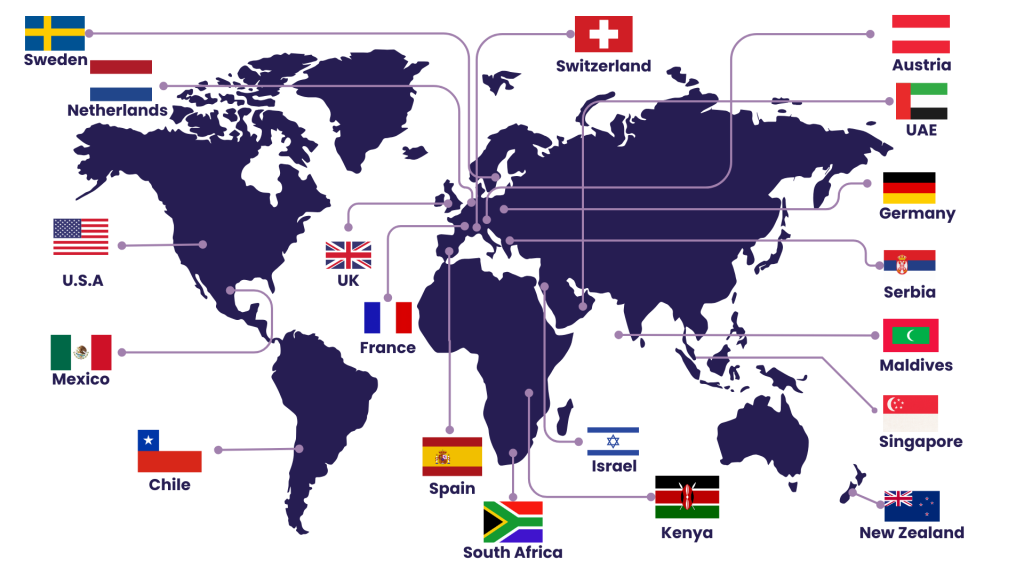
We export to 19+ countries

Frigate’s Global Presence

Frigate takes pride in facilitating “Make in India for the globe“.  As our global network of Frigaters provides virtually limitless capacity, and through our IoT enabled platform your parts go directly into production. By digitally and technologically enabling “the silent pillars of the economy” MSME and SME manufacturing industries, we are able to tap the huge potential for manufacturing to bring the best results for our clients.

Extruded Pipes Tubes & rods

100,000+

Parts Manufactured

250+

Frigaters

2000+

Machines

450+

Materials

25+

Manufacturing Process

Industry Applications

Heat Exchangers

Used in heat exchanger systems for efficient thermal transfer between fluids in HVAC, power plants, and industrial processes. 

Hydraulic Systems

Serve as conduits for high-pressure fluids in hydraulic machinery, ensuring structural integrity and minimal flow resistance.

Electrical Conduits

Protect and route electrical wiring in industrial, commercial, and residential infrastructure, offering mechanical protection and insulation. 

Automotive Fuel Lines

Utilized in fuel delivery systems for precise tolerance, chemical resistance, and long-term durability under thermal cycling.

Pneumatic Control Systems

Transmit compressed air in control systems requiring consistent internal diameters for accurate flow and response times.

Medical Device Components

Form structural parts in diagnostic and therapeutic equipment, offering biocompatibility and precision in fluid delivery paths.

Extruded Pipes Tubes & rods

Customized Alloys for Optimal Performance

We specialize in creating custom alloys tailored to your unique application needs. Whether you require higher tensile strength, superior electrical conductivity, or enhanced wear resistance, we provide precise solutions to improve performance and ensure reliability. Our advanced alloy formulations offer the flexibility and durability you need for demanding environments. 

Having Doubts? Our FAQ

Check all our Frequently Asked Questions

What is the maximum allowable tolerance for dimensional accuracy in extruded pipes, tubes, and rods?

The maximum tolerance for dimensional accuracy in extrusions depends on the material and size of the product. Typically, tolerances of ±0.1mm are achievable for small diameters, while larger extrusions may have tolerances up to ±0.5mm. Precision can be further enhanced with specialized processes such as multi-stage extrusion or high-precision tooling. 

How does the extrusion process affect the material's mechanical properties, such as tensile strength and hardness?

The extrusion process significantly influences material properties. For example, the high-pressure environment in extrusion can increase tensile strength by aligning the material's grain structure. Additionally, the cooling rate after extrusion can affect hardness, with faster cooling generally resulting in a harder product. Adjusting the alloy composition and heat treatment processes can further optimize these properties. 

How does the wall thickness affect the extrusion process and final product performance?

Wall thickness plays a crucial role in the extrusion process, as thinner walls are more challenging to extrude consistently and may result in defects such as warping or surface cracks. However, precise control over the extrusion speed and cooling rates can help maintain the integrity of thinner-walled products. In applications requiring high strength, thicker walls may be necessary to ensure structural reliability under stress. 

What materials are best suited for creating extruded pipes, tubes, and rods for high-temperature applications?

Materials such as stainless steel, titanium alloys, and high-temperature alloys like Inconel or Hastelloy are often used for high-temperature applications. These materials offer excellent thermal stability and resistance to oxidation, ensuring the extruded components retain their strength and dimensional stability even in environments exceeding 500°C. 

How does the extrusion speed affect the quality of the final product, particularly in terms of surface finish and internal consistency?

Extrusion speed has a direct impact on both the surface finish and the internal consistency of the product. Faster extrusion speeds can result in uneven cooling, leading to surface imperfections or internal voids. Slower extrusion rates allow for more controlled cooling, improving the surface finish and ensuring the material is homogenous throughout, reducing the risk of defects like porosity or inclusions. 

Can Frigate support custom extrusion profiles beyond standard pipes, tubes, and rods?

Yes. As a manufacturing partner, Frigate specializes in producing application-specific extrusion solutions. 

  • Custom dies are engineered to manufacture non-standard profiles and complex cross-sections. 
  • Our engineering team reviews your CAD models, drawings, and functional requirements before production. 
  • We optimize material selection, wall thickness, and dimensional tolerances for manufacturability. 
  • Prototypes can be produced quickly to validate performance before scaling to production. 
  • Our extrusion systems support consistent repeatability across high-volume manufacturing runs. 
What quality control processes does Frigate use for extruded components?

Frigate integrates strict quality checks throughout the manufacturing process. 

  • Dimensional inspections ensure tolerances meet project specifications. 
  • Material certification and traceability confirm alloy composition and mechanical properties. 
  • Surface finish inspections verify extrusion quality and appearance. 
  • Mechanical testing such as tensile and hardness tests validate performance requirements. 
  • Process monitoring and batch documentation ensure consistency across production runs. 
What secondary manufacturing services does Frigate offer after extrusion?

Frigate provides complete post-processing services to deliver ready-to-assemble components. 

  • Precision machining including cutting, drilling, threading, and milling. 
  • Surface finishing such as anodizing, polishing, passivation, or coating. 
  • Heat treatment to enhance strength, hardness, or durability. 
  • Custom cutting and length tolerance control for application-specific assemblies. 
  • Packaging and labeling designed for efficient logistics and supply chain integration. 
What production volumes can Frigate handle for extruded pipes, tubes, and rods?

Frigate supports both low-volume development and high-volume industrial manufacturing. 

  • Rapid prototype production for design validation and early-stage testing. 
  • Small batch manufacturing for specialized or niche applications. 
  • High-volume production runs with stable process controls and repeatability. 
  • Flexible production scheduling to align with your supply chain demands. 
  • Scalable tooling and extrusion capacity to support long-term supply programs. 
How does Frigate help optimize extrusion designs for cost and performance?

Frigate works collaboratively with customers to improve product efficiency and manufacturability. 

  • Design-for-manufacturing (DFM) reviews reduce unnecessary complexity. 
  • Material and alloy recommendations improve durability and cost efficiency. 
  • Wall thickness and profile optimization enhances structural strength while minimizing material usage. 
  • Extrusion process parameter optimization improves surface finish and dimensional stability. 
    • Engineering consultation ensures the final component performs reliably in its intended environment. 

We'd love to Manufacture for you!

Submit the form below and our representative will be in touch shortly.

LOCATIONS

Registered Office

10-A, First Floor, V.V Complex, Prakash Nagar, Thiruverumbur, Trichy-620013, Tamil Nadu, India.

Operations Office

9/1, Poonthottam Nagar, Ramanandha Nagar, Saravanampatti, Coimbatore-641035, Tamil Nadu, India. ㅤ

Other Locations

GENERAL ENQUIRIES

Get Quote
Support All File Formats Including - STEP | STP | SLDPRT | STL | DXF | IPT | X_T | X_B | 3DXML | CATPART | PRT | SAT | 3MF | JT files

LOCATIONS

Registered Office

10-A, First Floor, V.V Complex, Prakash Nagar, Thiruverumbur, Trichy-620013, Tamil Nadu, India.

Other Locations

GENERAL ENQUIRIES

Get Your Quote Now

New Get Quote form

Loading....